The Savage Rainstorm Battle of Cyborg 1989: The Forgotten Masterpiece Where Jean-Claude Van Damme and Vincent Klyn Redefined Raw Post-Apocalyptic Action
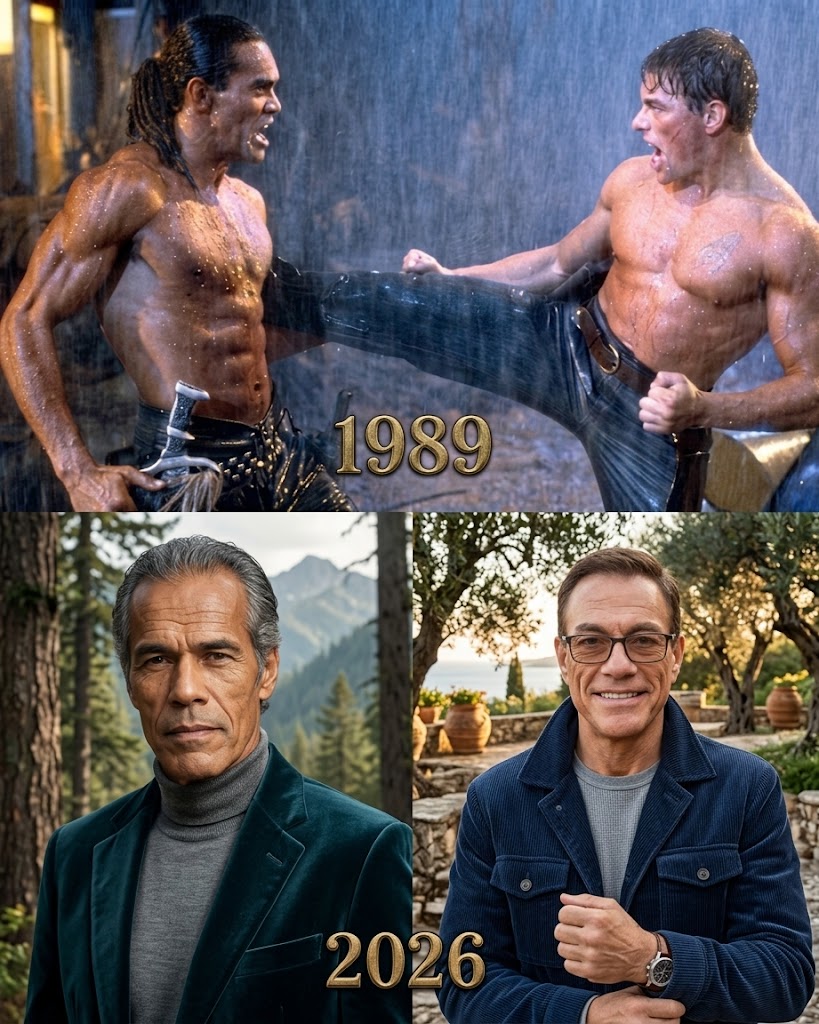
The Savage Rainstorm Battle of Cyborg 1989: The Forgotten Masterpiece Where Jean-Claude Van Damme and Vincent Klyn Redefined Raw Post-Apocalyptic Action
In 1989, the cinematic landscape was irrevocably altered by the arrival of a film that discarded the polished, neon-soaked aesthetics of contemporary science fiction in favor of something far more primal. “Cyborg” introduced audiences to a barren, suffocating future where civilization had decayed into a wasteland of plague and lawlessness. Survival was a luxury reserved only for the utterly ruthless. At the center of this collapsing universe stood Jean-Claude Van Damme as Gibson Rickenbacker, an exhausted, emotionally scarred warrior forced to confront Fender Tremolo, played with terrifying intensity by Vincent Klyn.
Their legendary final showdown, set against a relentless, torrential downpour, stands as a milestone of late-1980s action filmmaking. The confrontation transcends a simple martial arts sequence; it represents the ultimate collision between the dying embers of human morality and a savage new world order that recognizes only the law of violence. With rain mixing with sweat, mud, and the flicker of burning debris, every frame of this battle feels heavily weighted by desperation and genuine physical danger.
At the time of production, Van Damme was rapidly rising toward international superstardom, bridging the gap between “Bloodsport” and the massive mainstream successes of “Kickboxer” and “Lionheart.” In “Cyborg,” however, he deliberately steered his athletic persona into a much darker, more vulnerable territory. Gibson Rickenbacker was no clean-cut, charismatic champion; he was an exhausted soul fueled entirely by a need for survival and retribution. Van Damme utilized a raw, animalistic physicality that made his trademark kicks feel like desperate, heavy blows forged by ruin rather than choreographed exhibition.
Opposite him, Vincent Klyn delivered an unforgettable performance as the towering, remorseless Fender Tremolo. A former professional surfer possessing a naturally intimidating stature, Klyn gave the antagonist a chilling, silent malice. Fender did not merely exist as a standard villain; he embodied the cold, unfeeling nature of the post-apocalyptic wasteland itself, serving as a nightmare that Gibson could neither outrun nor ignore.
Decades after its initial release on the VHS market, this rain-slicked climax retains its cult status precisely because of its complete reliance on physical performance over artificial spectacle. There are no digital enhancements or effortless superhuman feats to dilute the impact of the choreography. The sequence captures a distinct era when action movies depended heavily on atmosphere, practical stunt work, and visceral intensity to captivate an audience. Thirty-five years later, the storm of “Cyborg” continues to rage in the minds of cinema purists, remaining a testament to a time when cinematic combat was dirtier, heavier, and completely uncompromising.