Roman Cargo Ship Discovered Beneath a Swiss Lake After Nearly 2,000 Years
Roman Cargo Ship Discovered Beneath a Swiss Lake After Nearly 2,000 Years
Archaeologists in Switzerland have uncovered the remains of what appears to be a Roman-era cargo ship resting beneath the waters of a Swiss lake, offering a rare glimpse into ancient trade networks that operated nearly 2,000 years ago.
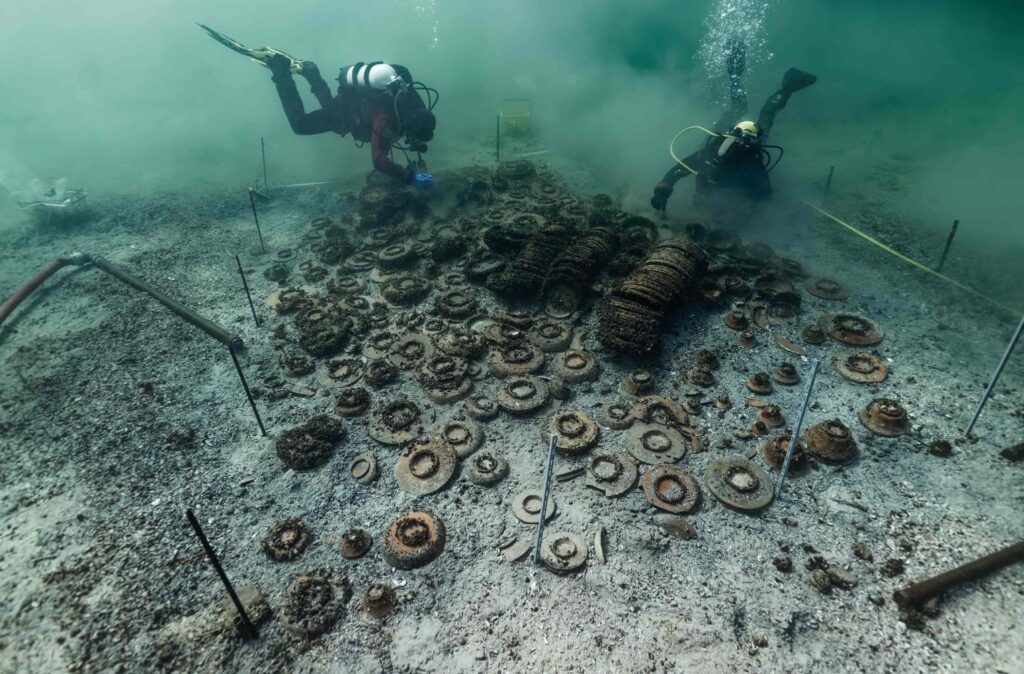
The vessel was discovered during underwater surveys using sonar imaging and diving expeditions near an ancient lakeside settlement once connected to Roman transportation routes across central Europe. Researchers believe the ship may date between the 1st and 3rd centuries AD, when the Roman Empire maintained extensive commercial activity throughout the region.

Initial examinations suggest the wooden vessel was used to transport goods such as ceramics, agricultural products, construction materials, or wine between Roman communities located around the lake and nearby river systems.
What makes the discovery especially important is the remarkable preservation of parts of the hull beneath layers of lake sediment. Unlike open ocean environments, freshwater lakes can sometimes protect wooden structures from saltwater corrosion and certain marine organisms, allowing archaeological remains to survive for centuries.
Historians note that lakes and rivers played a critical role in Roman logistics. Water transport was often faster and more efficient than overland travel, making cargo vessels essential for supplying military outposts, growing towns, and trade centers throughout the empire.
The ship’s construction techniques may also help researchers better understand regional variations in Roman shipbuilding. Wooden joints, fastening methods, and hull design can reveal whether the vessel was built locally or influenced by Mediterranean maritime traditions.
Despite dramatic online headlines suggesting “lost treasure ships” or hidden Roman mysteries, archaeologists emphasize that discoveries like this are valuable because they provide direct evidence of ordinary economic life during the Roman period rather than evidence of forgotten civilizations.
Still, the find highlights how much ancient history remains hidden beneath modern landscapes — even beneath quiet lakes that appear unchanged for centuries.
As conservation work continues, the ship may offer new insight into how Roman trade and transportation shaped daily life far beyond the empire’s famous cities and battlefields.