MOTHER REFUSED TO ACCEPT HER CHILD’S LIMITS — SO SHE INVENTED A WAY FOR THEM TO WALK TOGETHER
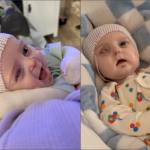
When Debby Elnatan looked at her child, she didn’t see limitations.
She saw a child full of potential, curiosity, and dreams — someone who deserved the chance to stand tall, explore the world, and experience life beyond the view from a chair.
Her child was born with cerebral palsy, a condition that affected mobility and made independent walking difficult. While many accepted that this would shape much of the child’s future, Debby found herself imagining a different possibility.
She watched other children run through parks, chase friends, and discover the world one step at a time. Meanwhile, her own child spent much of those early years sitting and watching from the sidelines.
For Debby, that reality was difficult to accept.
Instead of giving up, she decided to create something herself.
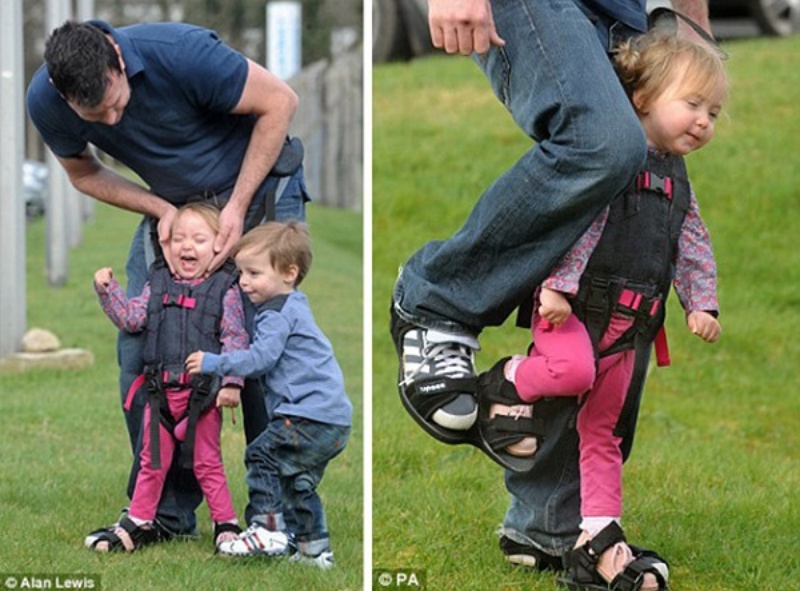
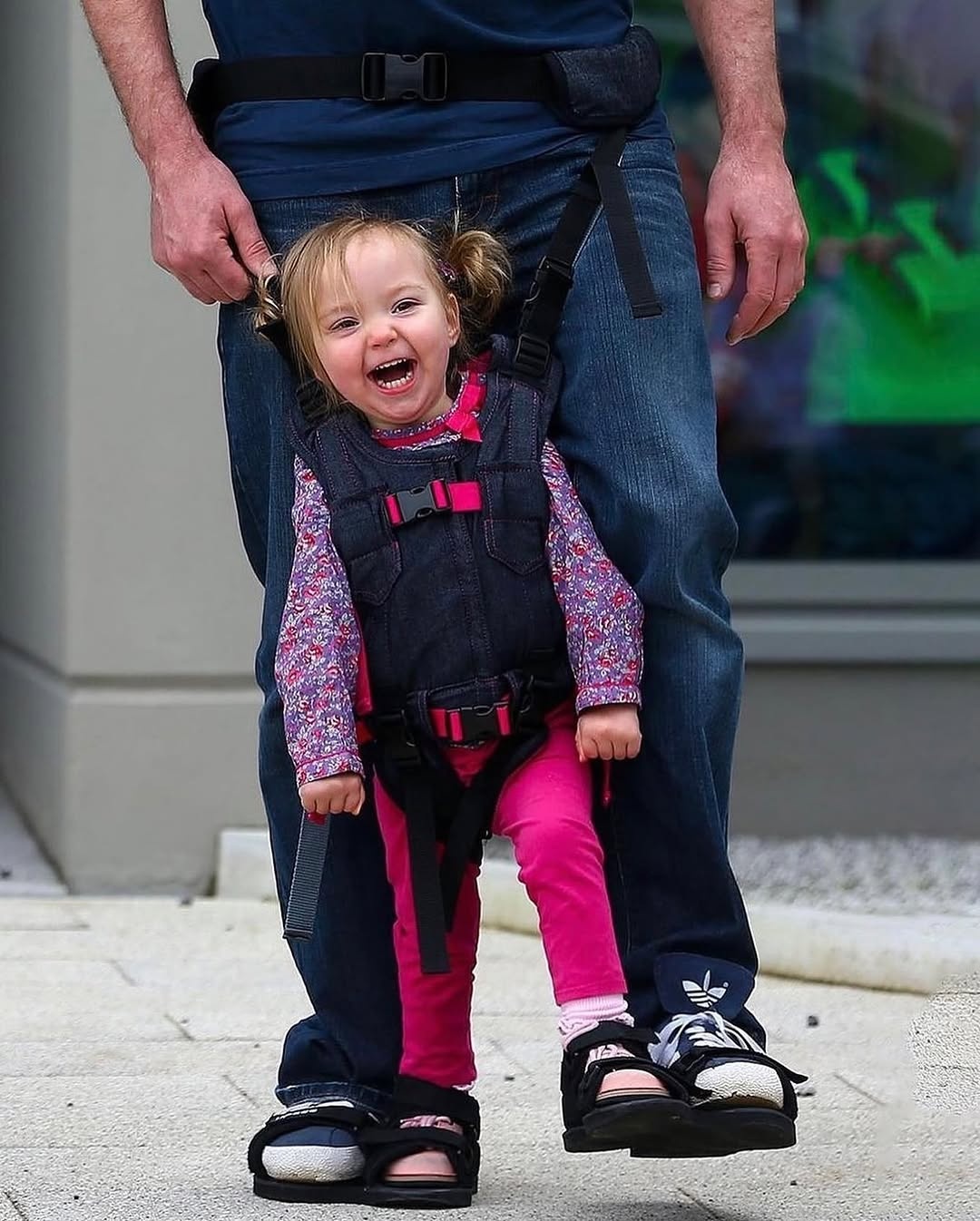
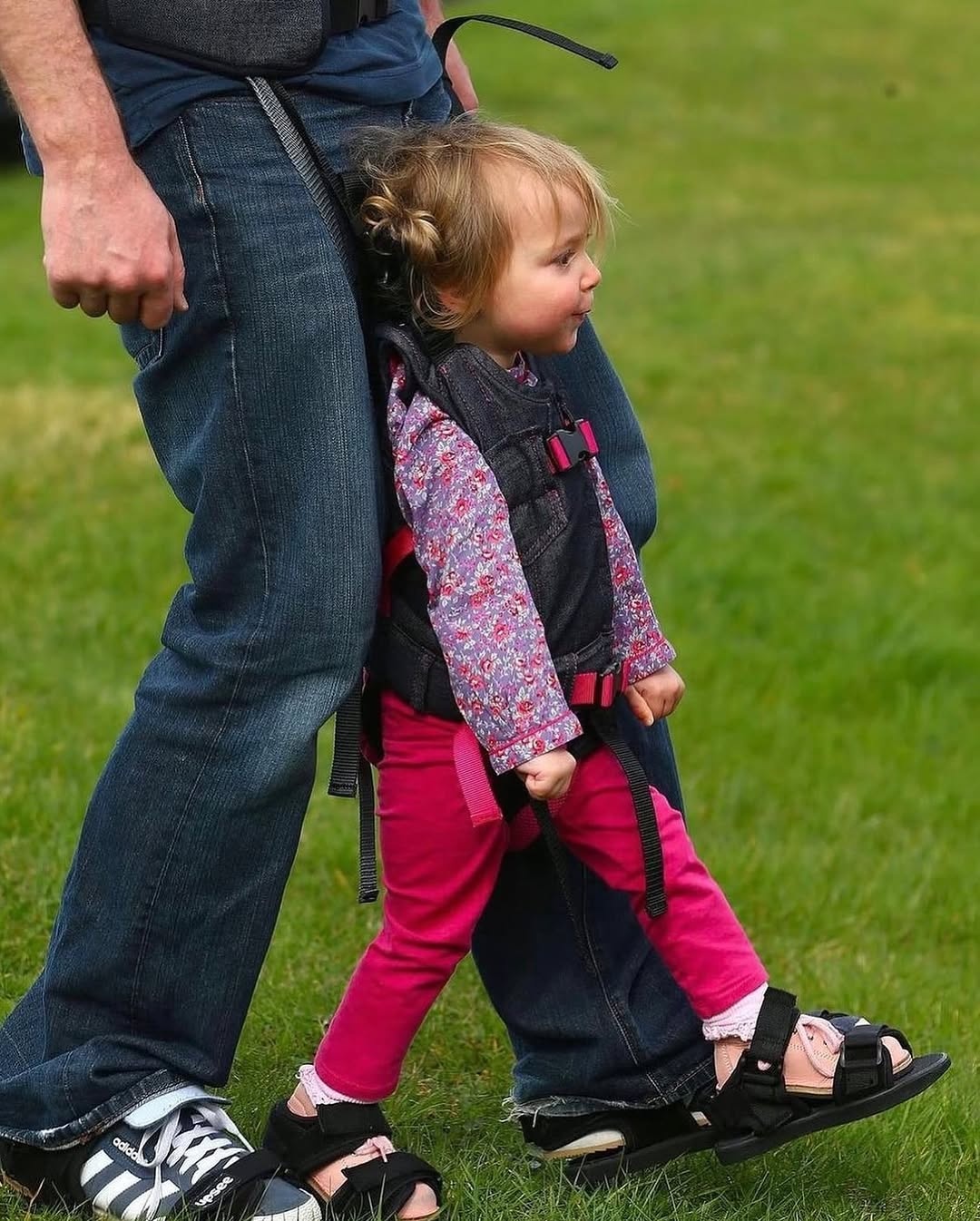
Driven by love, determination, and countless hours of trial and error, Debby developed a unique system of harnesses and specially connected sandals designed to allow an adult and child to walk together in perfect coordination.
The concept was simple but powerful.
The child would be safely attached to the adult’s body, while their feet rested on supportive footplates connected to the adult’s footwear. With every step the adult took, the child could experience the natural rhythm of walking — feeling movement, balance, and the joy of being upright.
For the first time, the child was able to experience the world from a new perspective.
What began as a homemade solution soon revealed something much greater.
The invention, later known as the Upsee, offered more than physical support. It provided confidence, connection, and opportunities that many families had long hoped for. Children with mobility challenges could engage with their surroundings in ways they had never experienced before — moving through parks, exploring new places, and sharing everyday moments alongside their loved ones.
As news of the invention spread, families around the world began reaching out. Many saw not just a device, but a symbol of hope.
For Debby, however, the goal had always been simple.
She wanted her child to feel included.
She wanted them to experience the excitement of movement, the freedom of exploration, and the simple happiness of taking part in everyday life.