Moka didn’t slow down.
- LongVo
- June 29, 2026
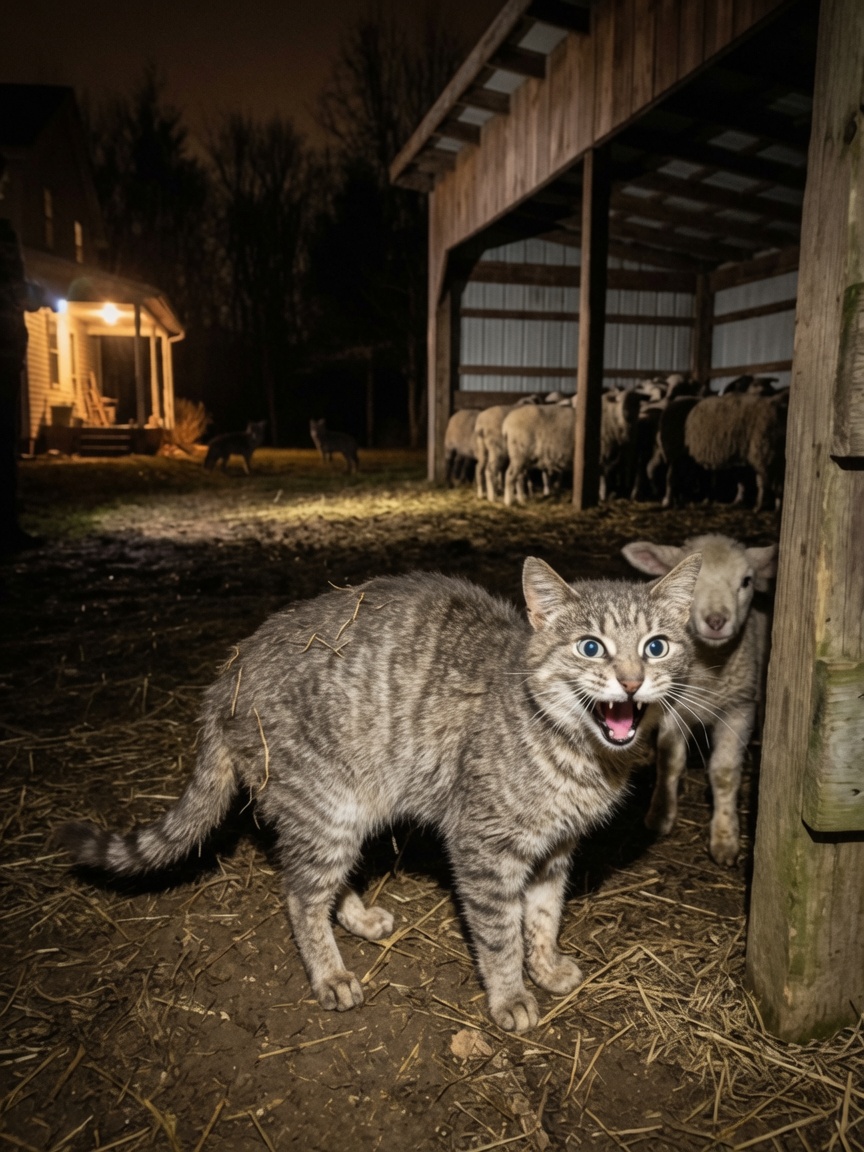
Moka didn’t slow down.
She didn’t hesitate.
She hit the open ground between the barn and the tree line like she had been waiting her whole life for that exact moment.
For a second, my mind refused to understand what I was seeing.
A cat—small, injured, half-ruined by the world—running straight toward a pack of coyotes like she had forgotten she was supposed to be afraid.
“MOka!” I shouted, my voice cracking in the cold air.
But she didn’t even flick an ear.
The coyotes did.
That was the moment everything changed.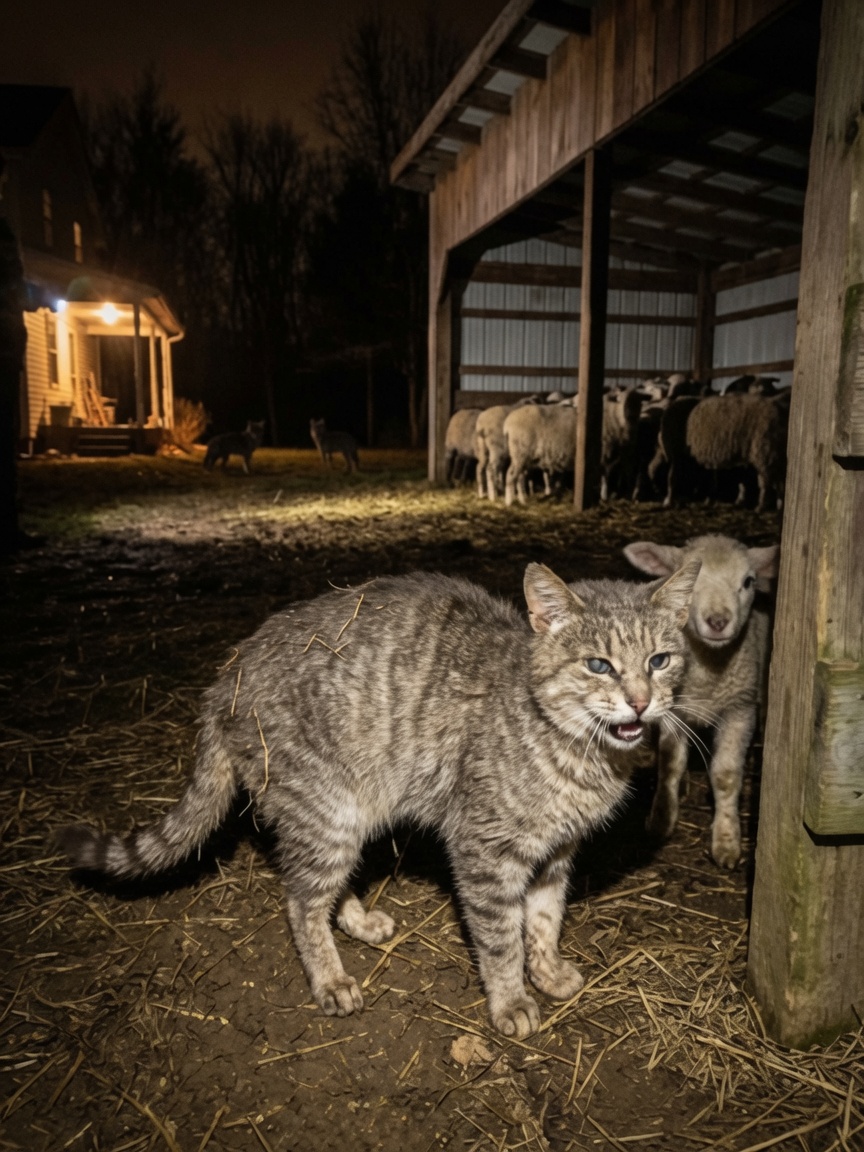
They weren’t hunting yet. Not fully. They were circling, testing, waiting for the easiest break in the fence that didn’t exist. But Moka didn’t give them time to decide.
She exploded into their space like a mistake they couldn’t ignore.
The first coyote lunged.
Moka twisted midair—too fast for something that had once limped across my barn floor—and raked her claws across its nose.
It yelped.
Not a growl.
A yelp.
Like surprise more than pain.
The sheep behind her shifted into a tighter cluster, pressing against the shelter walls. Button, the little ewe, let out a thin, confused bleat.
And Moka—small, broken Moka—positioned herself between them and everything else.
That’s when I finally understood.
She wasn’t chasing the coyotes away from herself.
She was pulling them away from the sheep.
Away from the lambs.
Away from Button.
The second coyote rushed her from the side.
I grabbed a pitchfork without thinking and ran, my boots slipping in the frozen mud, my breath tearing at my throat. But I was too far. Too slow.
Moka hit the ground.
Rolled.
Got back up again anyway.
The sound she made wasn’t fear.
It was fury.
Raw. Primitive. Absolute.
The coyotes circled now, less confident. They weren’t facing prey that ran.
They were facing something that refused the idea of being prey at all.
I reached the fence line, shouting, swinging the pitchfork uselessly into the air.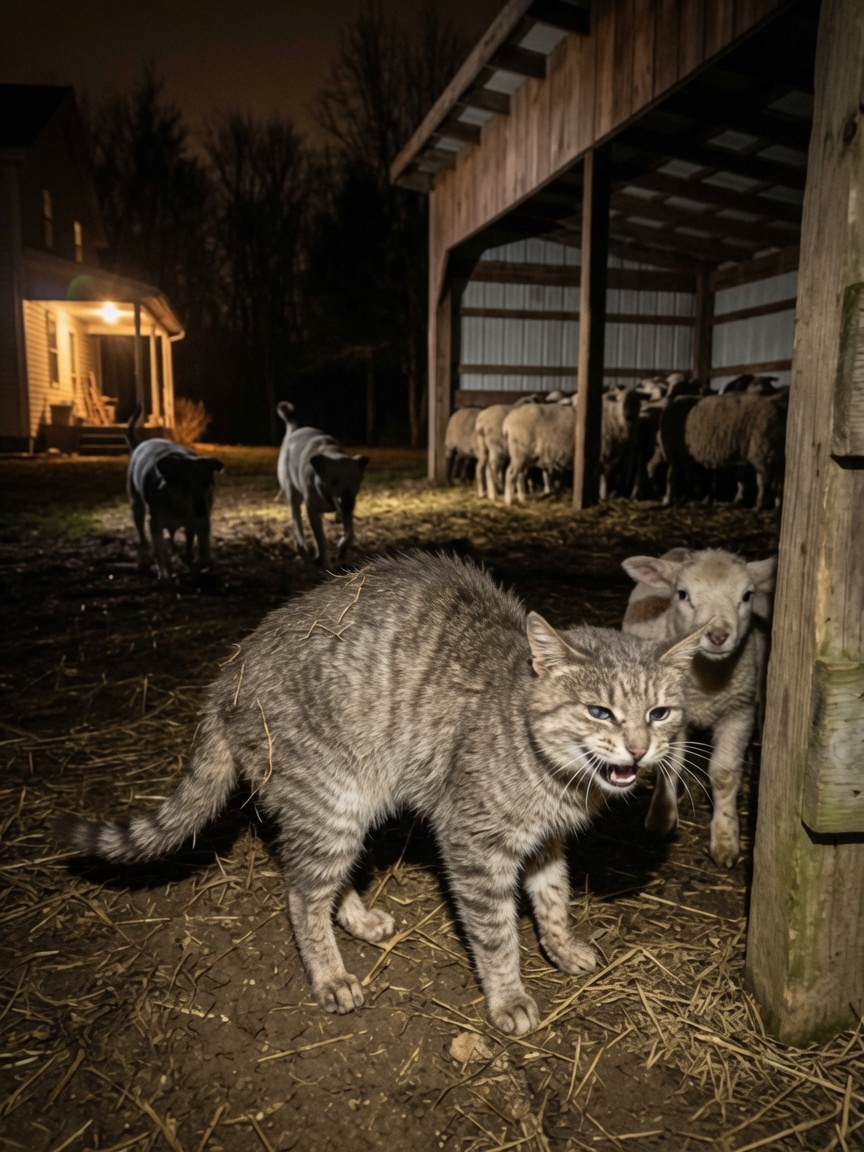
“GET OUT! GET OUT OF HERE!”
My voice broke halfway through.
And then something shifted.
One of the coyotes—larger than the others—stepped forward again.
Moka crouched lower.
Her crooked back leg trembled.
For the first time, I saw it clearly.
She was exhausted.
Not scared.
Just… running out of time.
And still she didn’t move.
The leader lunged again—
and that’s when the barn light snapped on.
Clara.
I didn’t even hear her truck pull in.
She must’ve seen the commotion from her house and come running with her shotgun already in her hands.
One loud blast into the air.
Not at them.
Above them.
The sound cracked through the pasture like thunder had dropped into our lives.
The coyotes scattered instantly.
Not slowly.
Not reluctantly.
They vanished into the tree line like they had never been there at all.
And then it was quiet.
Too quiet.
Except for my breathing.
And Moka’s.
I rushed forward, dropping to my knees in the dirt.
She was standing—but barely.
One side of her face was streaked with blood. Her chest rose and fell too fast, too shallow.
“Moka…” I whispered.
She didn’t look at me.
Not at first.
Her eyes were still fixed on the direction the coyotes had disappeared, like she didn’t trust them to be gone.
Behind us, the sheep slowly loosened their cluster.
Button took one hesitant step forward.
Then another.
Moka tried to stand straighter.
Failed.
And still she didn’t move away from them.
That’s when Button did something I will never forget.
She walked right up to Moka.
Pressed her small forehead gently against the cat’s side.
And stayed there.
Like she understood something no one had ever bothered to explain out loud.
Moka let out a soft, broken sound.
Not a hiss.
Not a cry.
Something smaller.
Something tired.
Clara came up behind me, lowering the shotgun slowly.
“Well,” she said quietly, “I’ll be damned.”
I reached out and finally touched Moka.
She flinched—barely—but didn’t pull away.
Her body was shaking now, not from fear, but from the effort of still being upright.
“She was trying to draw them off,” I said.
Clara nodded once. “Yeah.”
We stood there for a long moment, listening to the wind move through the fence rails.
The sheep didn’t scatter again.
They stayed close.
Like they had decided something important without speaking.
Moka finally looked at me.
Just once.
Her good eye met mine.
And in it I saw something I didn’t expect from a barn cat who had spent most of her life surviving things alone.
Not pride.
Not triumph.
Just certainty.
Like she had done exactly what she was meant to do.
Then her legs gave out.
I caught her before she hit the ground.
And as I held her there, warm against my coat, I realized something that made my chest ache in a way I couldn’t explain right away.
Moka hadn’t been running toward death.
She had been running toward a line she refused to let anything cross.
Even if it meant she didn’t make it back across herself.