The Architecture of Hope: How Cassidy Hooper Defied Medical Rarity to Build Her Future

The Architecture of Hope: How Cassidy Hooper Defied Medical Rarity to Build Her Future
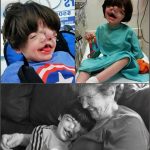
True resilience is not merely about surviving a challenge; it is about the quiet, persistent courage to create a path forward when no blueprint exists. This is the definition of Cassidy Hooper’s life. Born with an exceptionally rare congenital condition that left her without eyes or a nose, Cassidy entered a world that often struggles to comprehend differences of such magnitude. Yet, from her earliest years, her story was never defined by what she lacked, but rather by the extraordinary spirit with which she approached every obstacle in her path.

For the first decade of her life, Cassidy adapted to her unique reality with a vibrant energy that inspired everyone around her. However, as she grew, the physical limitations of her condition presented significant challenges, particularly regarding her respiratory health. At the age of eleven, a monumental chapter of her life began as a dedicated team of medical specialists embarked on a complex, multi-year reconstructive journey. The primary goal was both aesthetic and profoundly functional: to literally construct a nose from the ground up so that she could experience the basic, life-sustaining ease of breathing naturally.
This process was anything but simple. It required a series of highly intricate surgeries spread across several years, utilizing skin grafts, cartilage tissue taken from her ribs, and advanced facial reconstruction techniques to slowly shape a functional airway. Each operation demanded immense physical endurance and emotional fortitude from young Cassidy. Yet, through every painful recovery period and every long hospital stay, she maintained an unwavering optimism that shook the conventional expectations of her doctors and peers alike.

Cassidy Hooper’s journey stands as a powerful testament to human perseverance and the incredible strides of modern reconstructive medicine. She proved that the human face can be rebuilt, but more importantly, she demonstrated that an individual’s sense of hope and self-worth can remain entirely unblemished by structural adversity. Today, her legacy continues to serve as a beacon for anyone facing profound physical trials, reminding the world that identity is shaped by our internal strength, our capacity to endure, and our refusal to let circumstances dictate our joy.