The Shark Wouldn’t Work—So Steven Spielberg Turned Its Absence Into the Terror That Made Jaws a Masterpiece
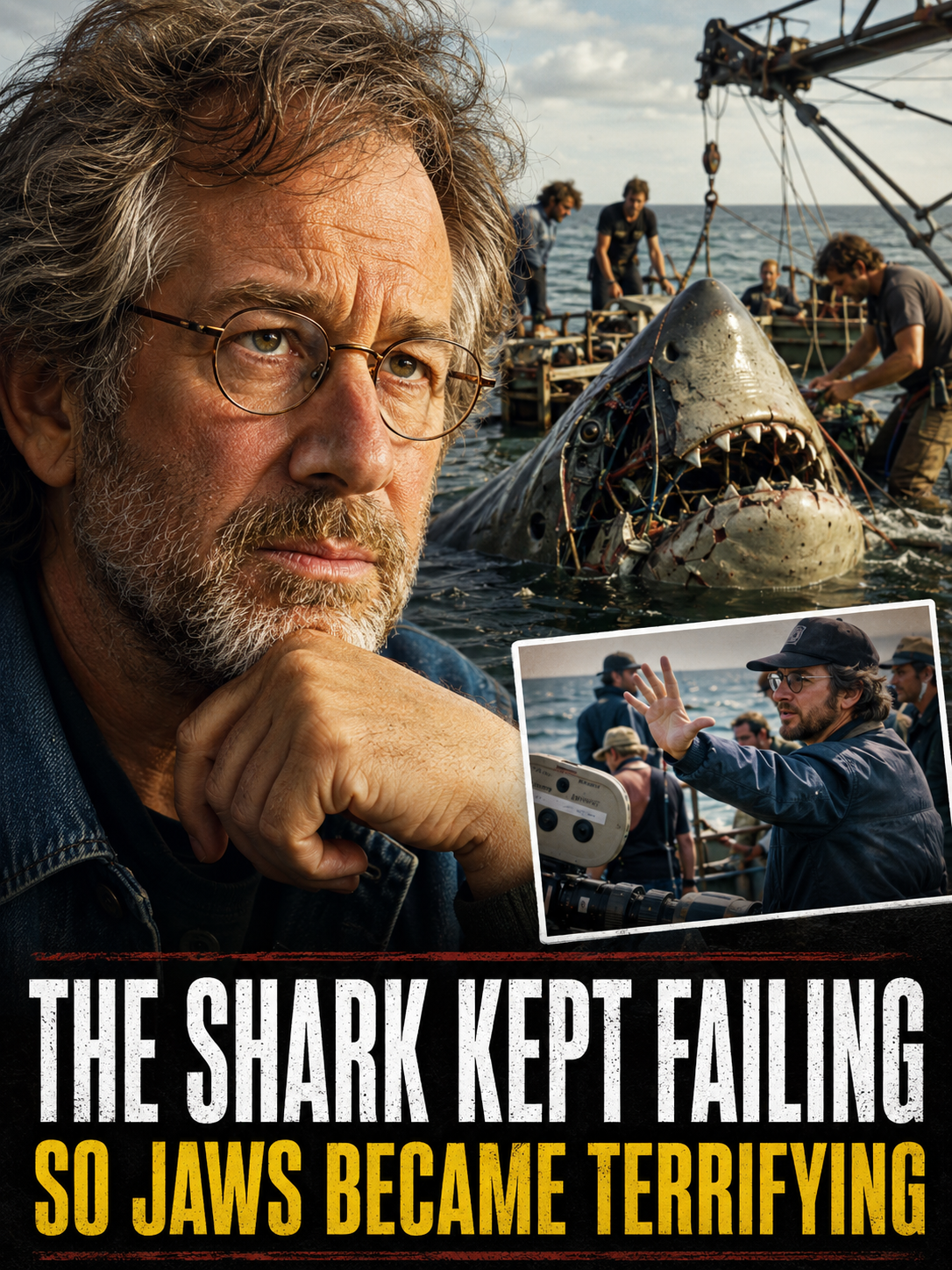
The monster at the center of Jaws was supposed to dominate the screen.
Instead, it repeatedly sank, absorbed water, became tangled in seaweed, and stopped working.
For Steven Spielberg, then a 27-year-old director entrusted with adapting Peter Benchley’s bestselling novel, the malfunctioning mechanical shark seemed capable of destroying more than a movie. Production was falling dangerously behind schedule, costs were rising, and the young filmmaker feared Hollywood might never allow him to direct again.
Yet the failure that caused so much panic ultimately gave Jaws its greatest creative advantage.
Unable to show the shark as often as planned, Spielberg was forced to suggest it. A moving barrel, an underwater point of view, a disappearing swimmer, or two low musical notes had to create the fear that the mechanical creature could not.
The result was more terrifying than a constantly visible monster might ever have been.
Taking Hollywood Into the Atlantic
Peter Benchley’s novel Jaws was published in 1974 and quickly became a commercial sensation. Producers Richard D. Zanuck and David Brown acquired the film rights before the book’s release, recognizing the cinematic potential of a giant great white shark terrorizing a seaside community.
Spielberg was still early in his career. He had directed television episodes and the acclaimed TV movie Duel, followed by his first theatrical feature, The Sugarland Express. He had talent and ambition, but he had never managed a production on the scale of Jaws.
The film’s story centered on Martin Brody, the police chief of the fictional resort town of Amity. After a swimmer is killed, Brody wants to close the beaches, but local leaders fear the economic consequences during the busy summer season.
When further attacks make the danger impossible to deny, Brody joins marine biologist Matt Hooper and veteran shark hunter Quint aboard the Orca. Their attempt to protect the community becomes a desperate battle against the animal—and against the open ocean itself.
Roy Scheider was cast as Brody, Richard Dreyfuss as Hooper, and Robert Shaw as Quint.
Spielberg wanted the movie to feel real. Rather than filming primarily in a controlled studio tank, he insisted on shooting at sea near Martha’s Vineyard, Massachusetts. The location offered relatively shallow water far from shore, allowing the production to appear surrounded by open ocean.
Visually, the choice was inspired.
Practically, it became a nightmare.
Building a Monster That Could Survive Water
The production needed a full-size mechanical shark convincing enough to frighten audiences.
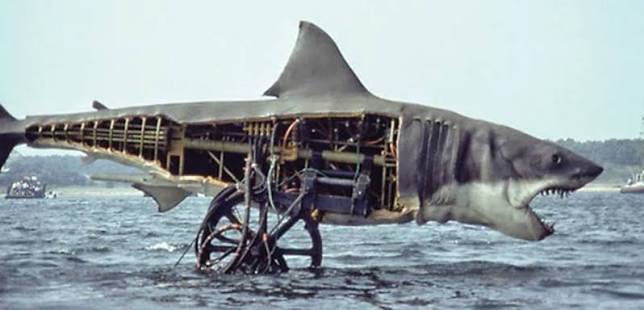
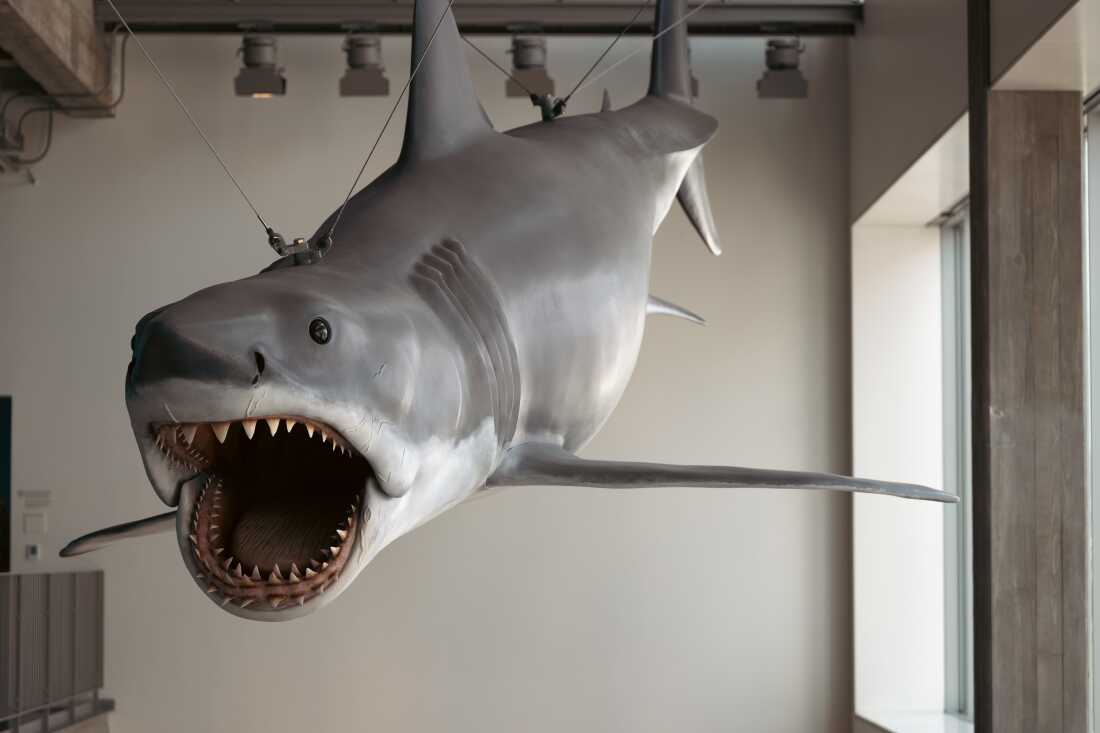
Veteran special-effects designer Bob Mattey, known for his work on the giant squid in 20,000 Leagues Under the Sea, helped construct the mechanical creatures. Three main versions were built: one filmed primarily from the left, another from the right, and a complete model that could be pulled through the water.
The crew nicknamed the shark “Bruce,” after Spielberg’s lawyer, Bruce Ramer.
Each shark contained a complex system of machinery designed to move its body, open its jaws, and create the illusion of a living predator. On land, the effect appeared promising.
The Atlantic Ocean exposed every weakness.
Saltwater damaged mechanical and electrical components. The shark’s materials absorbed water, adding weight and affecting its movement. Pneumatic hoses malfunctioned, metal parts corroded, and the creature sometimes became caught beneath the surface.
At one early test, the shark reportedly sank.
This was not a minor prop appearing in the background. Bruce was supposed to be the film’s central threat. When the creature failed, entire scenes became impossible to shoot as planned.
The ocean created additional problems. Boats unexpectedly appeared in the distance. Weather and shifting light disrupted continuity. Cameras were damaged by water, equipment drifted, and cast and crew members became seasick.
Even the Orca began sinking during one frightening incident, forcing people aboard to scramble as equipment and film were endangered.
The planned 55-day shoot stretched to approximately 159 days. A budget initially estimated at around $4 million more than doubled.
Crew members began referring to the production as Flaws.
Spielberg became convinced that his career was collapsing in public.
The Fear of Showing the Shark
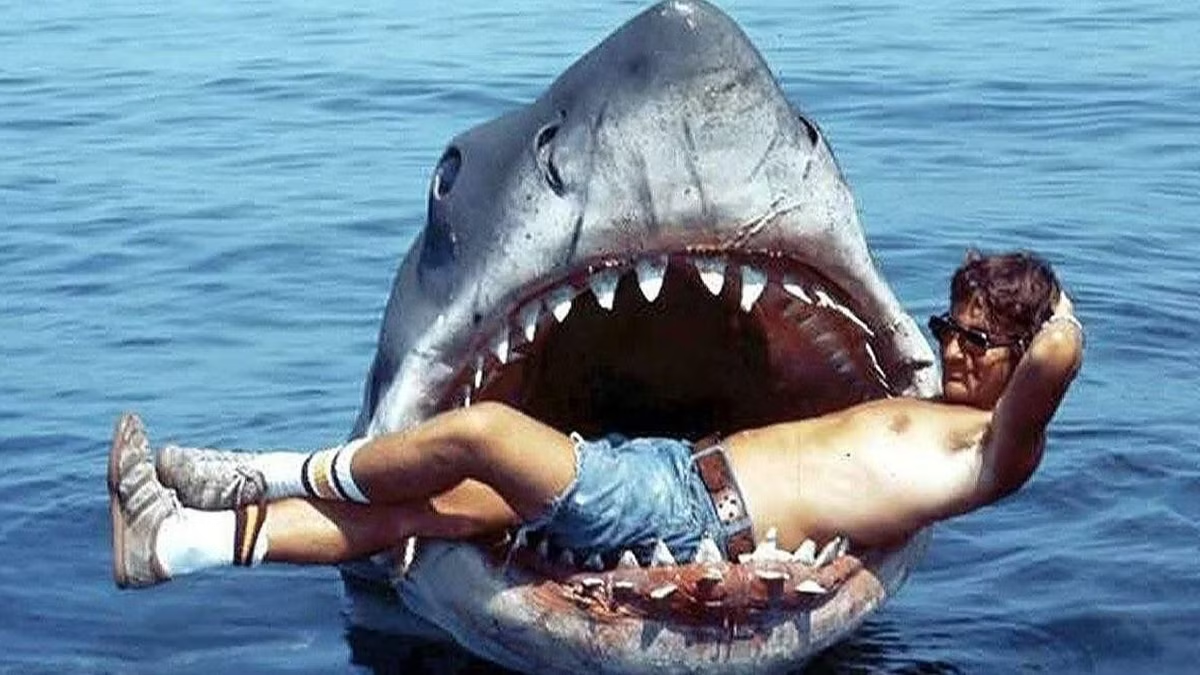
The mechanical failures forced Spielberg to confront an uncomfortable fact: the more clearly Bruce appeared, the less convincing the creature could look.
A poorly functioning shark would not frighten audiences. It might make them laugh.
Instead of filling the movie with unusable footage, Spielberg changed his approach. He began presenting the shark through its effect on everything around it.
The opening attack established that strategy.
A young woman named Chrissie, played by stunt performer Susan Backlinie, enters the water at night. The shark is never clearly shown. Backlinie was pulled through the water by cables as her character was suddenly jerked, dragged, and finally pulled below the surface.
The audience saw the victim’s terror without seeing what had seized her.
In other sequences, Spielberg placed the camera underwater and moved it toward swimmers, allowing viewers to experience the shark’s point of view. A fin cutting across the surface became enough to create panic.
During the final hunt, yellow flotation barrels attached to the shark indicate its location beneath the water. They move, disappear, and return, giving an invisible animal a physical presence.
Each substitute invited the audience to imagine what was hidden below.
The less Spielberg showed, the more viewers supplied from their own fears.
Two Notes Became the Shark
The mechanical shark’s absence created another challenge. Audiences needed to know when the predator was approaching, even when nothing appeared on screen.
Composer John Williams provided the solution.
When Williams first played the now-famous two-note theme for Spielberg, the director reportedly thought he was joking. The music appeared almost too simple.
But that simplicity was precisely what made it effective.
The repeating notes suggested movement that was slow, deliberate, and impossible to stop. As the tempo increased, the audience understood that the threat was coming closer.
The score became an invisible version of the shark.
Spielberg also used the theme with careful discipline. It did not accompany every possible scare. When two children create a false alarm with a cardboard fin, for example, Williams’ shark motif is absent. The music had already taught viewers that its presence meant the danger was real.
The audience learned to fear the sound before seeing anything at all.
Williams’ score eventually won an Academy Award and became one of the most recognizable pieces of film music ever written.
The Actors Had to Make Bruce Believable
Because the shark could not carry the film alone, Spielberg increasingly depended on the actors.
Brody’s fear of water gave the audience an emotional guide. Hooper’s scientific knowledge established the shark’s scale and behavior. Quint’s confidence suggested that the animal could be conquered—until even he began to understand that this hunt was different.
The delayed production also gave the filmmakers time to refine scenes and dialogue.
One of the movie’s most powerful moments contains no visible shark. Inside the cabin of the Orca, Quint recounts surviving the sinking of the USS Indianapolis during World War II. He describes sailors waiting in the water as sharks attacked men around them.
Robert Shaw’s delivery transforms the mood. The shark outside the boat stops feeling like a large animal created by technicians and becomes connected to something older and more horrifying.
By the time Bruce finally appears clearly, the audience has spent most of the movie imagining what it can do.
Spielberg later explained that the shark’s failure pushed the film away from a more obvious monster spectacle and toward the suspenseful tradition of Alfred Hitchcock. The technical problem forced him to create fear through anticipation rather than constant exposure.
What felt like a catastrophe during filming became the organizing principle of the finished movie.
When the Monster Finally Appeared
Spielberg did not hide the shark forever.
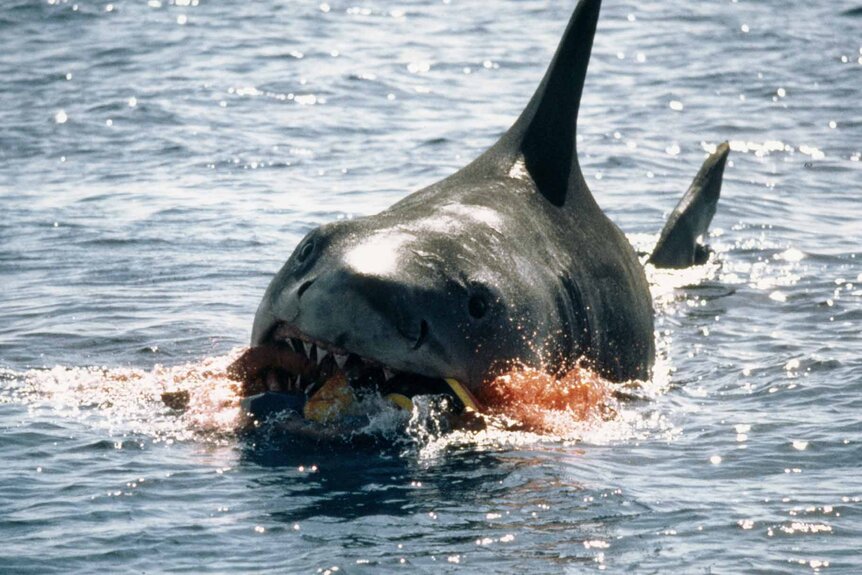
Once Brody, Hooper, and Quint are aboard the Orca, Bruce begins receiving more screen time. The filmmakers could show the creature in selected shots, supported by editing, performances, sound, and the tension already established.
Its first major appearance beside the boat produces one of the film’s most famous moments.
Brody is throwing bait into the ocean when the shark suddenly rises behind him. He recoils and slowly backs toward Quint before warning that they will need a larger boat.
The line works because the film has delayed that confrontation.
The audience finally sees the size of the threat at almost the same moment Brody does. After so much suggestion, the revelation feels enormous.
By the climax, the shark is attacking the boat directly. The mechanical effects did not need to withstand endless scrutiny because viewers already believed in the animal.
The illusion had been constructed long before Bruce filled the frame.
The Troubled Film That Changed Hollywood
Jaws opened in the United States on June 20, 1975.
Universal supported it with an unusually large television advertising campaign and released it widely rather than slowly expanding from a few major cities. The approach helped turn the movie into a national event.
Audiences lined up around theaters.
Jaws became the first film to earn more than $100 million at the North American box office and was, for a time, the highest-grossing movie ever released. Its success helped establish the modern summer-blockbuster model, in which studios launch heavily promoted films across large numbers of theaters.
At the Academy Awards, Jaws received four nominations and won three: Best Film Editing, Best Original Score, and Best Sound. Spielberg was not nominated for Best Director, a disappointment made famous when cameras captured his reaction before the ceremony.
The larger victory was already clear.
The film that Spielberg feared would end his career had turned him into one of Hollywood’s most important directors.
The Failure That Made the Film Work
The broken shark did not single-handedly create Jaws. The film succeeded because Spielberg, his cast, editors, writers, technicians, and composer found ways to transform a production crisis into a coherent form of suspense.
Bruce’s malfunction was not the masterpiece.
The response to it was.
Spielberg could have allowed the mechanical failure to expose the movie’s limitations. Instead, he built an entire language around what audiences could not see: moving water, frightened faces, floating barrels, underwater shots, sudden silence, and two notes that announced death.
The shark became terrifying before it became visible.
That is why Jaws still works decades after the machinery behind it became outdated. Its deepest fear does not depend on a rubber creature or hydraulic jaws.
It comes from the empty water surrounding the swimmer—and the knowledge that something may already be moving beneath it.