Paramount Wanted Al Pacino Gone—Then One Restaurant Scene Revealed the Michael Corleone Only Coppola Could See
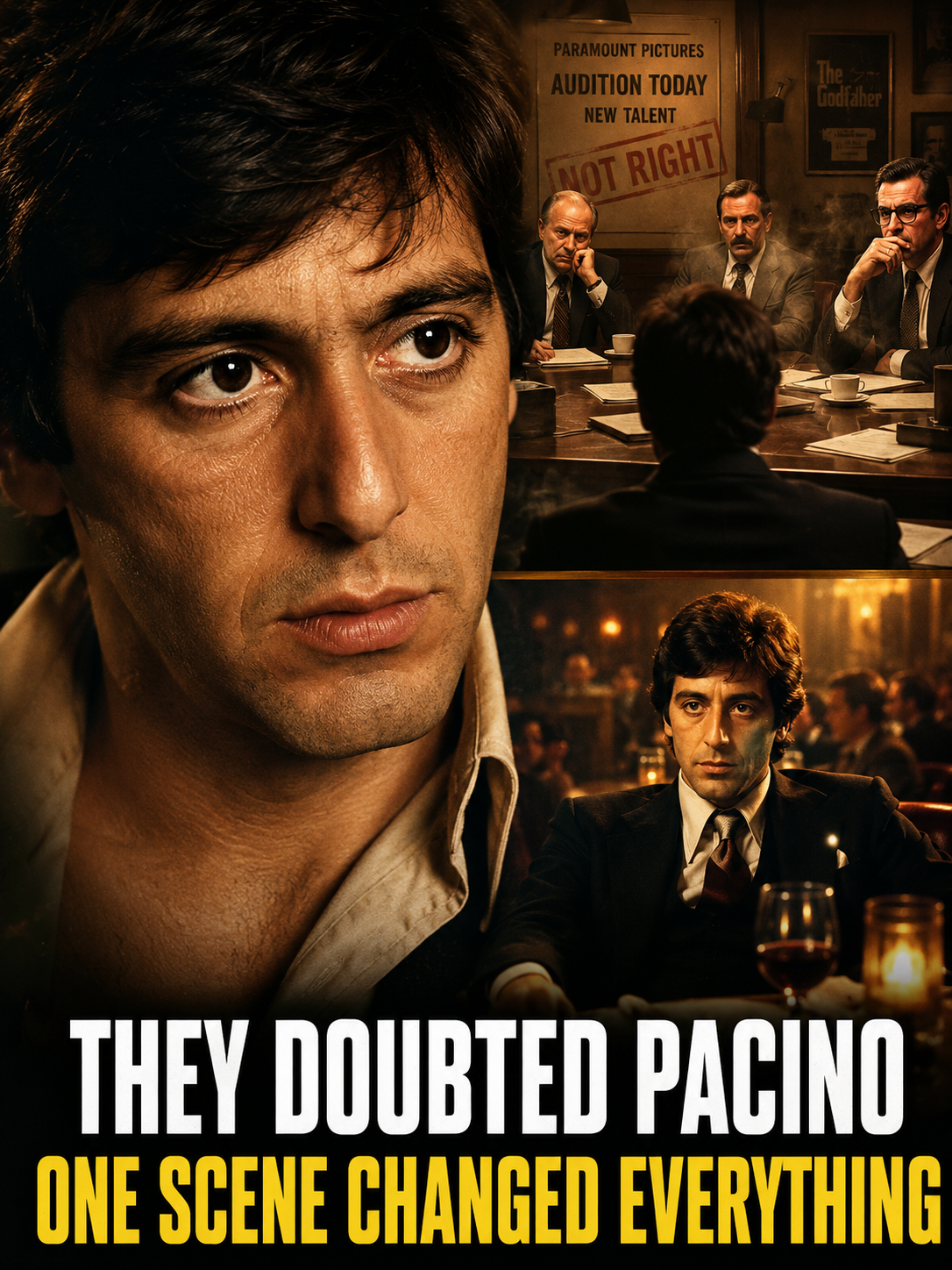
Al Pacino entered the Italian restaurant as an uncertain choice for a major Hollywood production.
He left it as Michael Corleone.
The scene, now considered one of the most important sequences in The Godfather, shows Michael sitting across from drug trafficker Virgil Sollozzo and corrupt police captain Mark McCluskey. A gun has been hidden for him inside the bathroom. If he retrieves it and pulls the trigger, he will cross a line that can never be uncrossed.
For Pacino, the scene carried another kind of danger.
Paramount executives were dissatisfied with his performance and seriously considering replacing him. They believed he was too quiet, too short, and insufficiently commanding to play the son who would inherit the Corleone empire.
Director Francis Ford Coppola saw something they did not. Pacino was not failing to express Michael’s power. He was holding it back until the exact moment the character chose to reveal it.
When the studio finally watched the restaurant sequence, the logic of the performance became clear.
The actor they nearly fired had just shown them the birth of a crime boss.
A Film Paramount Needed to Control
Mario Puzo’s novel The Godfather became a bestseller after its publication in 1969, giving Paramount Pictures a potentially valuable property centered on the Corleone family and the American Mafia.
The studio, however, had reasons to be cautious.
Its earlier organized-crime film The Brotherhood had performed poorly, and executives worried that another lengthy gangster drama might fail. Paramount wanted an affordable production with recognizable actors and enough commercial appeal to justify the risk.
Coppola was not the obvious choice to direct.
He was still in his early thirties, had not yet become a major commercial filmmaker, and initially hesitated to accept the project. Once involved, however, he developed a powerful vision for it.
He did not want to make a conventional crime thriller filled only with gunmen and sensational violence. He saw the story as a family tragedy—a dark account of power, loyalty, assimilation, and a son gradually becoming the very man he believed himself different from.
Casting Michael correctly was essential.
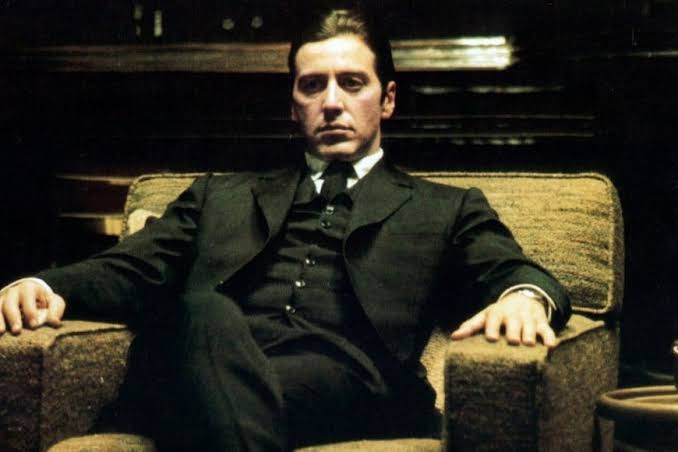
At the beginning of the story, Michael stands apart from the Corleone business. He is a decorated Marine veteran with an American girlfriend, Kay Adams, and no apparent desire to inherit his father’s criminal authority.
The actor needed to look like an outsider within his own family. Then, without announcing the transformation too early, he had to convince viewers that the coldest and most dangerous Corleone had been hiding beneath the surface.
Coppola believed Al Pacino could do it.
Paramount did not.
The Unknown Actor the Studio Could Not Understand
Pacino was respected in New York theater but had little film experience. His most significant screen role before The Godfather was in the 1971 drama The Panic in Needle Park, in which he played a heroin addict.
He did not resemble the studio’s idea of a leading man.
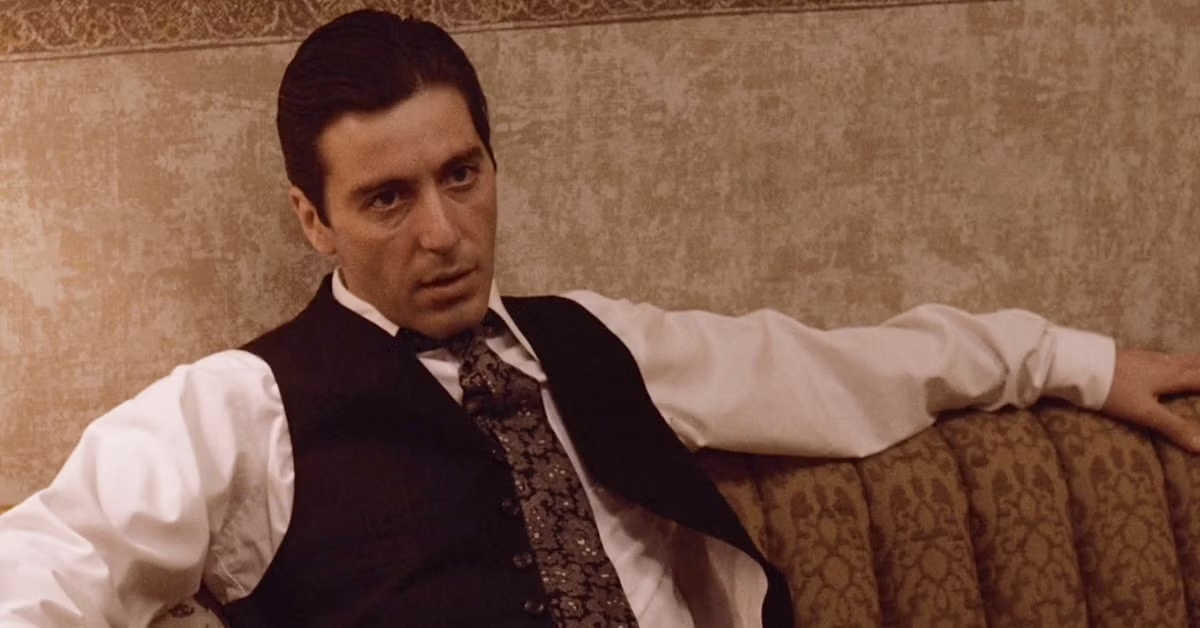
Pacino was relatively short, unfamiliar to mainstream audiences, and not conventionally glamorous. His acting style was intensely internal. Rather than demonstrating every emotion through obvious gestures, he often allowed thoughts to register in small changes of expression, posture, or silence.
Paramount considered more established performers for Michael. The names discussed or approached during the lengthy casting process included actors such as Robert Redford, Ryan O’Neal, Warren Beatty, Jack Nicholson, and Martin Sheen.
James Caan, who ultimately played the hot-tempered Sonny Corleone, also tested for Michael.
Coppola continued insisting on Pacino.
He believed Pacino looked Sicilian and possessed the contained intensity Michael required. Coppola later recalled imagining the actor walking alone through the Sicilian countryside before Pacino had even secured the role.
Pacino himself was surprised by the director’s confidence. He had read Puzo’s novel and thought of Michael as a more traditionally handsome, powerful figure. The idea that Paramount would allow an unknown theater actor to lead such an important production seemed unlikely.
His doubts were justified.
Getting the role did not end the battle. It merely moved the conflict onto the set.
“You’re Not Cutting It”
Filming began in New York in 1971 under intense studio scrutiny.
Paramount executives watched the early footage and disliked what they saw from Pacino. Michael appeared passive. He stood quietly while louder characters dominated the room. In scenes with Marlon Brando, James Caan, and Robert Duvall, Pacino seemed almost to disappear.
That was partly intentional.
Michael begins the film as an observer. At his sister Connie’s wedding, he explains his family to Kay while separating himself from its crimes. When his father, Don Vito Corleone, is shot, Michael initially responds as a son rather than a gangster.
Pacino was building the character through restraint, leaving room for the transformation ahead.
The studio wanted evidence immediately.
Coppola was also under pressure. Paramount executives questioned his pace, his dark visual approach, and several casting decisions. The director understood that if Pacino was removed, his own position could become even more vulnerable.
Pacino later remembered Coppola telling him early in production that the studio did not believe he was delivering what the role required. He was not “cutting it,” the director warned him.
Pacino felt isolated and confused. He could sense crew members and executives waiting for him to be replaced. Yet he did not respond by making Michael louder or more theatrical.
He trusted the character’s slow development.
Coppola then made a crucial production decision: he moved the restaurant assassination forward in the shooting schedule.
The studio needed to see where Pacino’s performance was going before it removed him from the film.
The Moment Michael Crosses the Line
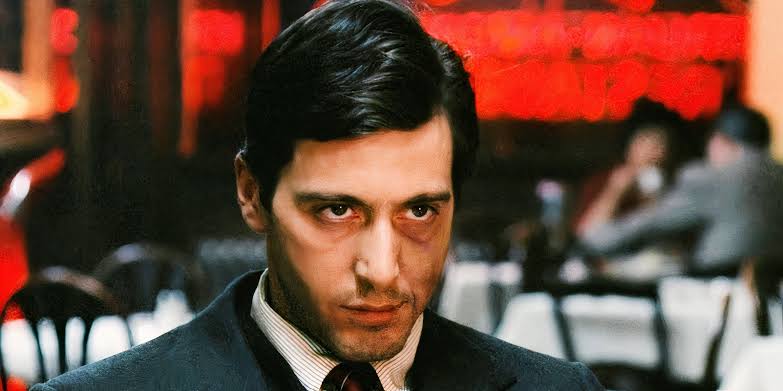
The restaurant sequence occurs after McCluskey breaks Michael’s jaw outside the hospital where Don Corleone is recovering.
Michael volunteers to kill both the police captain and Sollozzo, shocking his brothers. Until then, the family has treated him as the respectable son—the one person who might escape the criminal world.
At Louis’ Italian American Restaurant in the Bronx, Sollozzo speaks to Michael in Italian, attempting to justify the attack on his father and negotiate a settlement.
Michael listens.
Pacino does not fill the scene with visible rage. His expression remains controlled, but his eyes reveal the pressure building inside him. He knows that once he acts, the life he had planned with Kay will no longer be possible.
He excuses himself and enters the bathroom, where a revolver has been hidden behind a toilet tank.
When Michael returns to the table, he sits down rather than firing immediately.
The delay creates almost unbearable tension.
The sound of an elevated train grows outside the restaurant. Michael’s face tightens as the noise becomes louder, reflecting the storm inside his mind. Then he rises, draws the gun, and shoots Sollozzo and McCluskey.
He drops the weapon and walks away.
The killing is important not because it demonstrates that Michael can use a gun. It reveals that he can make an irreversible decision, execute it with terrifying focus, and suppress his emotions afterward.
This was the character Coppola had been waiting for.
When Paramount executives viewed the footage, they finally understood Pacino’s approach. The earlier stillness was not emptiness. It was preparation.
Pacino later credited the restaurant scene with saving his job.
The Performance Was Powerful Because It Waited
Had Pacino played Michael as visibly intimidating from the beginning, the character’s transformation would have lost its force.
His quietness created the contrast.
At the wedding, Michael appears almost gentle. At the hospital, he discovers that he can remain calm while protecting his father. In the restaurant, he proves himself capable of murder. In Sicily, he experiences love and devastating loss. When he returns to America, the softness has begun disappearing.
By the film’s final scenes, Michael speaks with the measured authority once associated with his father.
The transformation is complete when he orders the elimination of the Corleone family’s enemies while standing as godfather at his nephew’s baptism. The editing moves between sacred vows and calculated killings, revealing a man who can separate his words from his actions without visible conflict.
The final image seals the change.
Michael lies to Kay about the murder of his brother-in-law. As she watches from another room, his associates address him as Don Corleone. A door closes between husband and wife, separating Michael’s family life from the criminal power he has fully accepted.
Pacino never needed to announce that Michael had become dangerous.
He allowed the audience to discover it.
The Role That Changed His Life
The Godfather opened in March 1972 and became an enormous commercial and critical success.
The film received Academy Awards for Best Picture, Best Actor for Marlon Brando, and Best Adapted Screenplay for Mario Puzo and Coppola. Pacino was nominated for Best Supporting Actor, alongside co-stars James Caan and Robert Duvall.
The role immediately changed his career.
He followed it with acclaimed performances in Serpico and Dog Day Afternoon, then returned as Michael in The Godfather Part II. That sequel explored the character’s rule after he had gained everything his younger self claimed not to want.
Pacino eventually became one of the defining American actors of his generation. Yet the qualities audiences came to admire—his intensity, unpredictability, and ability to command a scene—were nearly dismissed before the world had a chance to see them.
Paramount had looked at the early footage and seen an actor doing too little.
Coppola saw a performer protecting the transformation at the center of the story.
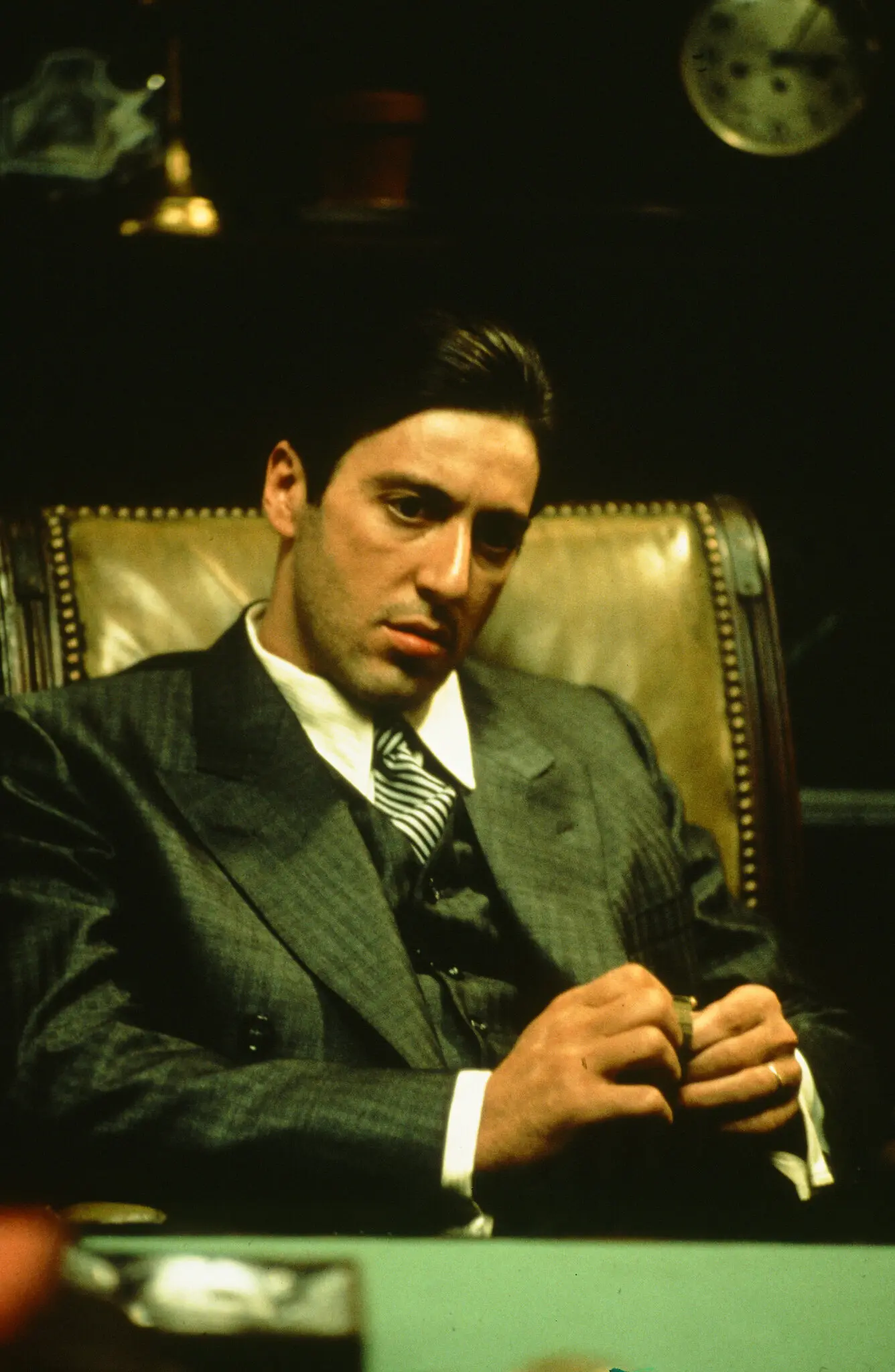
The Silence Before the Gunshots
The restaurant scene did more than prevent Pacino from being fired. It established the dramatic principle that makes his entire performance work.
Michael Corleone is frightening because his emotions do not always reach the surface. He thinks before he moves. He waits while everyone else assumes they understand him.
Then he acts.
Pacino’s restraint allowed the character’s violence to feel like a revelation rather than a predictable development. The studio wanted proof that he could dominate the screen, but domination was never supposed to appear immediately.
It had to be earned in front of the audience.
One scene finally showed Paramount what Coppola had recognized from the beginning: Pacino’s quietness was not weakness. It was Michael Corleone learning how much power could be hidden inside silence.
The gunshots saved his place in the film.
Everything before them made the moment unforgettable.