Almost Nobody Saw The Shawshank Redemption in Theaters—Then Viewers Refused to Let It Disappear
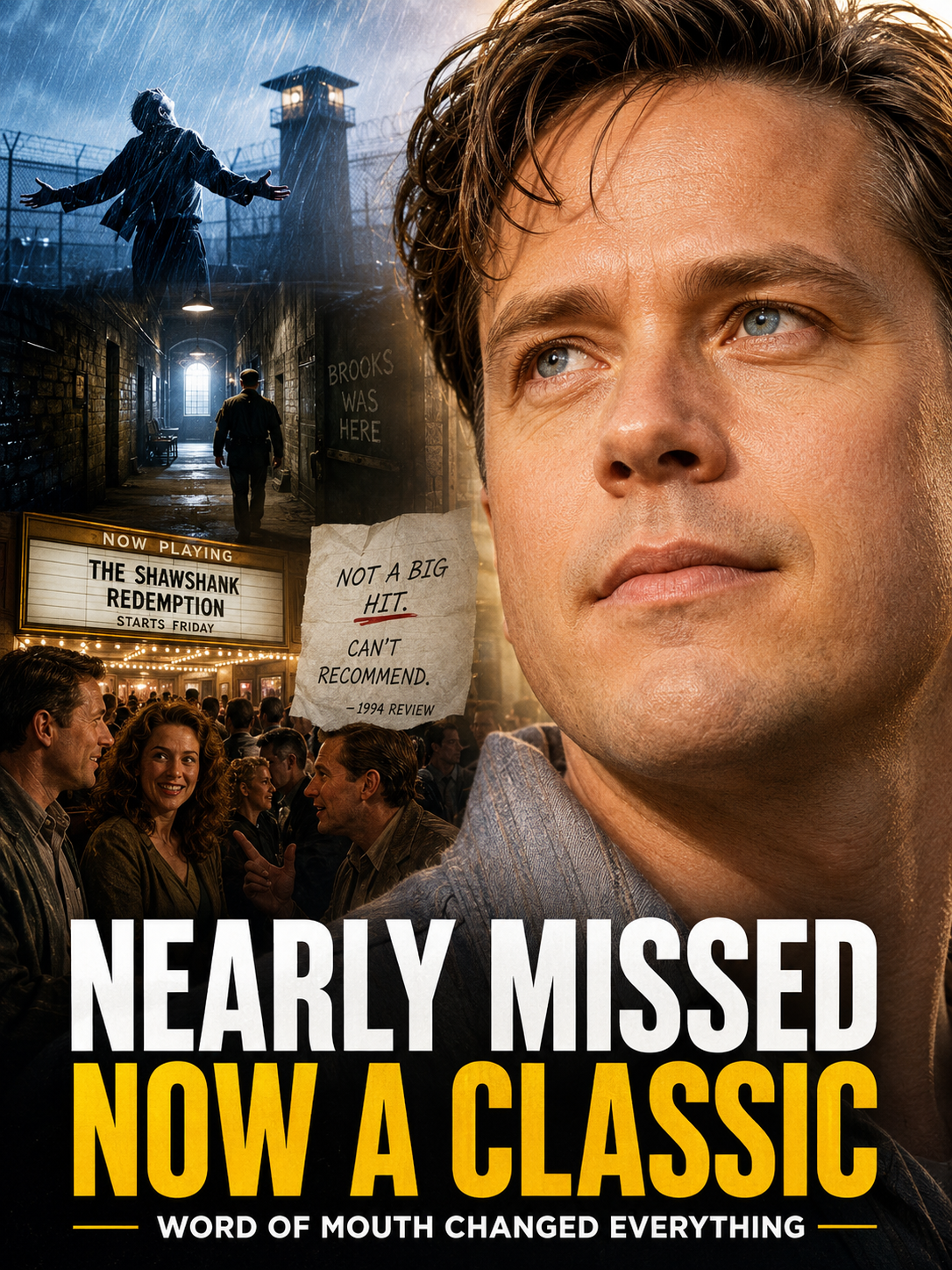
When The Shawshank Redemption arrived in theaters in 1994, audiences largely stayed away.
The prison drama had respected actors, strong reviews, and a story built around friendship, injustice, and hope. Yet it opened during one of the most competitive movie seasons of the decade, carried a title many people struggled to remember, and offered none of the obvious spectacle associated with a major box-office attraction.
Its initial theatrical run earned only about $16.5 million in the United States—not enough to recover a production budget commonly reported at roughly $25 million.
By ordinary Hollywood standards, the verdict seemed clear.
The movie had failed.
But The Shawshank Redemption did not disappear after leaving theaters. People began discovering it on videotape, recommending it to friends, and repeatedly watching it on cable television. A film that struggled to fill seats gradually became one of the most beloved dramas in modern cinema.
Its rise did not happen through a massive opening weekend or a carefully manufactured cultural event.
It happened one viewer at a time.
A Stephen King Story Without a Monster
The film began with a novella by Stephen King titled Rita Hayworth and Shawshank Redemption, published in his 1982 collection Different Seasons.
Unlike the supernatural horror for which King was famous, the story contained no demonic hotel, killer clown, or possessed automobile. It followed Andy Dufresne, a banker convicted of murdering his wife and her lover, though he insists he is innocent.
Sentenced to two consecutive life terms, Andy enters Shawshank State Penitentiary and slowly forms a friendship with Ellis “Red” Redding, an inmate known for acquiring things from outside the prison.
Writer and director Frank Darabont had previously adapted one of King’s short stories after obtaining the rights through the author’s program allowing young filmmakers to license selected works for a nominal fee.
Darabont later pursued Shawshank and wrote the screenplay, recognizing that the story’s emotional strength came not from the mechanics of prison escape but from the relationship between Andy and Red.
The film would cover nearly two decades.
It would show what institutionalization does to men who spend most of their lives behind walls. It would explore corruption, brutality, patience, and the dangerous possibility of hope.
Darabont was offered substantial money to sell the screenplay and allow another director to make it. He chose to direct it himself, even though it would become his first theatrical feature.
Casting Two Men Who Carried the Story
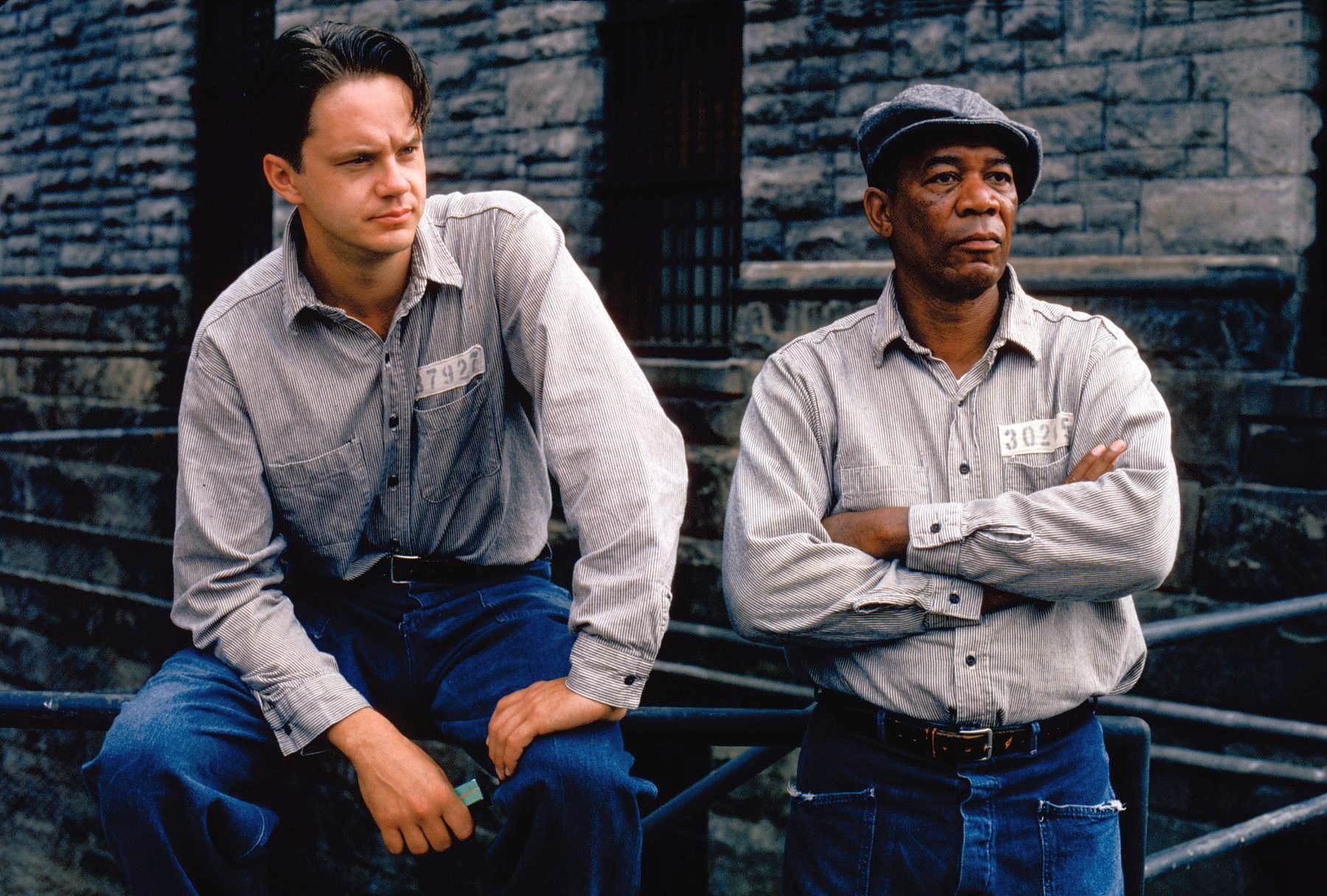
Tim Robbins was selected to play Andy Dufresne.
Robbins gave the character an unusual stillness. Andy rarely explains his emotions, even when facing violence or despair. His restraint makes him difficult for the other prisoners—and the audience—to fully understand.
Morgan Freeman played Red, who narrates the story and becomes its emotional center.
In King’s novella, Red is a white Irish-American. Darabont expanded the casting possibilities, and Freeman’s calm authority made the original description irrelevant. The film even acknowledged the change with a brief joke when Red says his nickname may come from being Irish.
Freeman’s narration transformed the screenplay. His voice carried regret, wisdom, humor, and the exhaustion of a man who had spent decades learning not to expect freedom.
The supporting cast included Bob Gunton as the outwardly religious but corrupt Warden Norton, Clancy Brown as brutal guard captain Byron Hadley, William Sadler as Heywood, and James Whitmore as Brooks Hatlen.
Production took place largely in Mansfield, Ohio, where the former Ohio State Reformatory became Shawshank prison.
The building’s towering stone walls, narrow cellblocks, and Gothic architecture gave the film an imposing physical presence. Shawshank did not look like a temporary location. It felt like a world designed to outlive everyone trapped inside it.
A Difficult Film to Sell
The completed movie received positive critical attention, but Columbia Pictures faced a marketing problem.
The title was long and unfamiliar. Some viewers could not pronounce or remember “Shawshank,” while others assumed the film might involve a person named Shawshank.
Morgan Freeman later joked that the title itself hurt the movie because people struggled to tell friends what they had seen.
The story was also difficult to summarize as entertainment.
It was a period drama set almost entirely inside a prison. It ran for more than two hours. It contained violence and abuse but was not structured like an action thriller. There was no romance driving the plot and no conventional star vehicle at its center.
The release date created another challenge.
The fall of 1994 was crowded with movies that quickly became cultural events. Forrest Gump had already become a box-office phenomenon. Pulp Fiction generated excitement with its style, violence, and nonlinear storytelling. Other prominent releases competed for attention as awards season approached.
The Shawshank Redemption initially opened in a limited number of theaters in September before expanding in October.
The wider release did not produce the audience the studio expected.
Despite strong reviews, many theaters contained empty seats. The original run ended with a domestic total of approximately $16.5 million.
For Darabont, who had spent years trying to reach the director’s chair, the disappointment was painful. The movie had connected with critics and those who saw it, but too few people had purchased tickets.
Then the Academy Awards gave it another opportunity.
Seven Nominations, No Victories
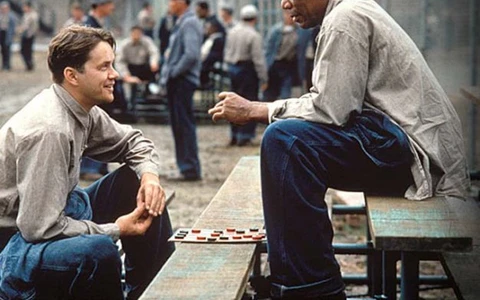
The Shawshank Redemption received seven Oscar nominations, including Best Picture, Best Actor for Freeman, Best Adapted Screenplay for Darabont, Best Cinematography, Best Film Editing, Best Original Score, and Best Sound.
It entered a year dominated by Forrest Gump, which won Best Picture and five additional awards.
Shawshank won none of its categories.
Still, the nominations raised the film’s profile. It returned to theaters in early 1995, adding millions to its domestic total and eventually reaching more than $28 million through its theatrical releases.
That was a major improvement but not yet the transformation that would define its legacy.
The real breakthrough happened after audiences could bring the movie home.
VHS Gave the Film a Second Life
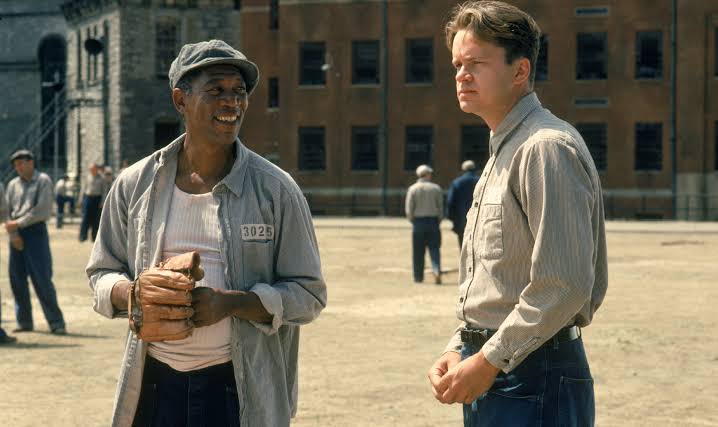
Warner Home Video released The Shawshank Redemption on VHS in 1995.
The video market operated differently from theaters. A movie no longer needed to persuade people to leave home on a particular weekend. Viewers could encounter it on a rental-store shelf, watch it privately, and recommend it afterward.
The film became one of the year’s most successful video rentals.
Word spread because the story created a strong desire to share it. People who had never heard of the film during its theatrical run began telling relatives, coworkers, and friends that they needed to see it.
The same title that had been difficult to market became less important once personal recommendations took over.
Viewers were not buying a ticket because a studio advertisement promised excitement. They were watching because someone they trusted said the film meant something to them.
That distinction mattered.
The Shawshank Redemption was built for emotional discovery. Its most powerful elements—the growing friendship between Andy and Red, Brooks’ inability to adjust to freedom, the revelation of Andy’s escape, and Red’s final journey—became more meaningful when experienced without excessive marketing or spoilers.
The movie felt like something viewers had found for themselves.
Television Turned Discovery Into Ritual
Cable television expanded that audience even further.
Turner Broadcasting acquired the Castle Rock Entertainment library and began showing The Shawshank Redemption frequently on TNT.
The film proved unusually suited to television. Viewers could enter the story midway through and remain engaged. Others encountered a familiar scene while changing channels and continued watching despite already knowing the ending.
Repeated broadcasts turned the movie into a constant presence in American homes.
Each showing created new viewers while inviting longtime fans back. The film’s pacing, narration, and episodic structure allowed it to survive commercial interruptions better than many tightly constructed thrillers.
Over time, people stopped thinking of Shawshank as a box-office disappointment.
It became the movie they watched with their fathers, recommended during difficult periods, or returned to when they needed reassurance that patience and dignity could survive even the most punishing circumstances.
Its central idea—that hope can remain alive in a place designed to destroy it—proved universal.
Why the Story Endured
The film’s popularity is sometimes attributed entirely to its satisfying ending.
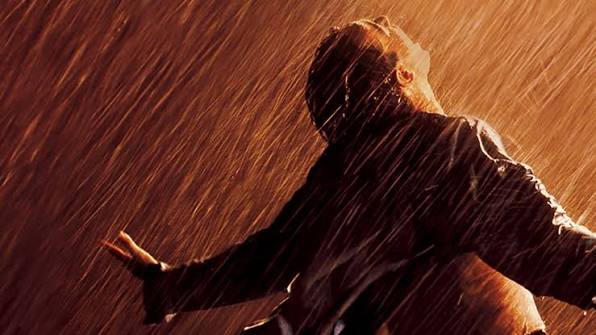
Andy spends nearly 20 years secretly digging through his cell wall with a small rock hammer. After escaping through a sewage pipe, he exposes the warden’s corruption and begins a new life in Mexico.
Red is eventually paroled and follows instructions Andy left behind, leading him toward the possibility of reunion.
But the escape works because the film has first shown how difficult hope can be.
Brooks leaves prison after decades only to discover that freedom has become unbearable. Red repeatedly tells the parole board what he believes it wants to hear until he finally stops performing remorse for strangers.
Andy’s victory is not simply that he escapes. It is that Shawshank never fully convinces him to abandon his inner life.
He plays Mozart over the prison loudspeakers. He builds a library. He helps other inmates earn diplomas. He holds onto the image of the Pacific Ocean while living behind stone walls.
Red initially considers hope dangerous.
By the end, he chooses it.
From Financial Disappointment to Cultural Landmark
As home video, cable broadcasts, DVDs, and streaming introduced the movie to successive generations, its reputation continued growing.
It appeared on the American Film Institute’s list of the greatest American movies and spent years near or at the top of IMDb’s user-ranked Top 250.
In 2015, the Library of Congress selected The Shawshank Redemption for preservation in the National Film Registry, recognizing it as culturally, historically, or aesthetically significant.
The Ohio State Reformatory also became a major tourist destination, drawing fans who wanted to walk through the spaces where Andy and Red’s story had been filmed.
The movie that once struggled to attract theatergoers had become an enduring part of popular culture.
Its journey now seems perfectly matched to its subject.
The Shawshank Redemption did not achieve success quickly. It endured disappointment, waited patiently, and found freedom from the judgment of its first theatrical run.
Hollywood initially measured the film through ticket sales.
Audiences measured it by how often they returned—and how urgently they wanted someone else to see it.
The movie nearly vanished in 1994.
Word of mouth gave it the future that opening weekend could not.