The DeLorean Failed on the Road—Then Back to the Future Drove It Into Movie History
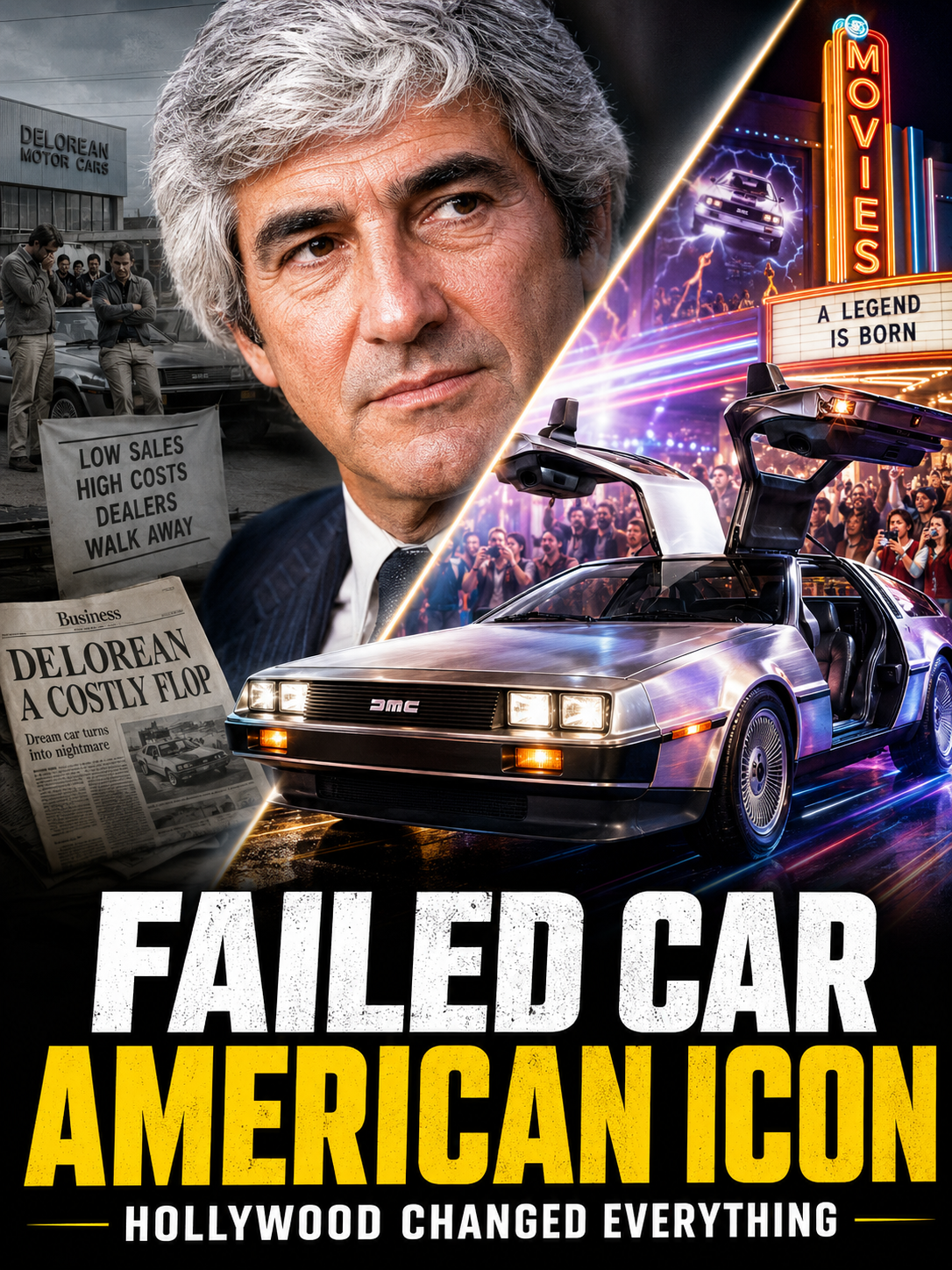
By the time a DeLorean rolled out of a smoke-filled truck in Back to the Future, the company that built it was already gone.
Its factory had closed. Thousands of workers had lost their jobs. The car had been criticized for disappointing performance, inconsistent build quality, and a price that exceeded what many buyers believed it delivered.
Only about 9,000 had been produced.
Then the gull-wing doors opened, Christopher Lloyd stepped out as the eccentric Doc Brown, and a commercial failure became one of the most recognizable vehicles in cinema.
The DeLorean could not save its own manufacturer. But on July 3, 1985, Back to the Future gave the car something the marketplace never had: a future.
John DeLorean’s Revolutionary Dream
The story began with John Z. DeLorean, a gifted and unconventional automotive executive who had risen through General Motors.
At Pontiac, he became associated with performance cars and helped develop vehicles including the GTO and Firebird. He gained a reputation for challenging corporate traditions, cultivating a glamorous public image, and understanding how to sell automobiles as expressions of identity.
In 1973, he left General Motors.
Two years later, he founded the DeLorean Motor Company with the ambition of creating a distinctive sports car that would be safe, durable, efficient, and unlike anything produced by Detroit’s largest manufacturers.
The proposed vehicle certainly looked different.
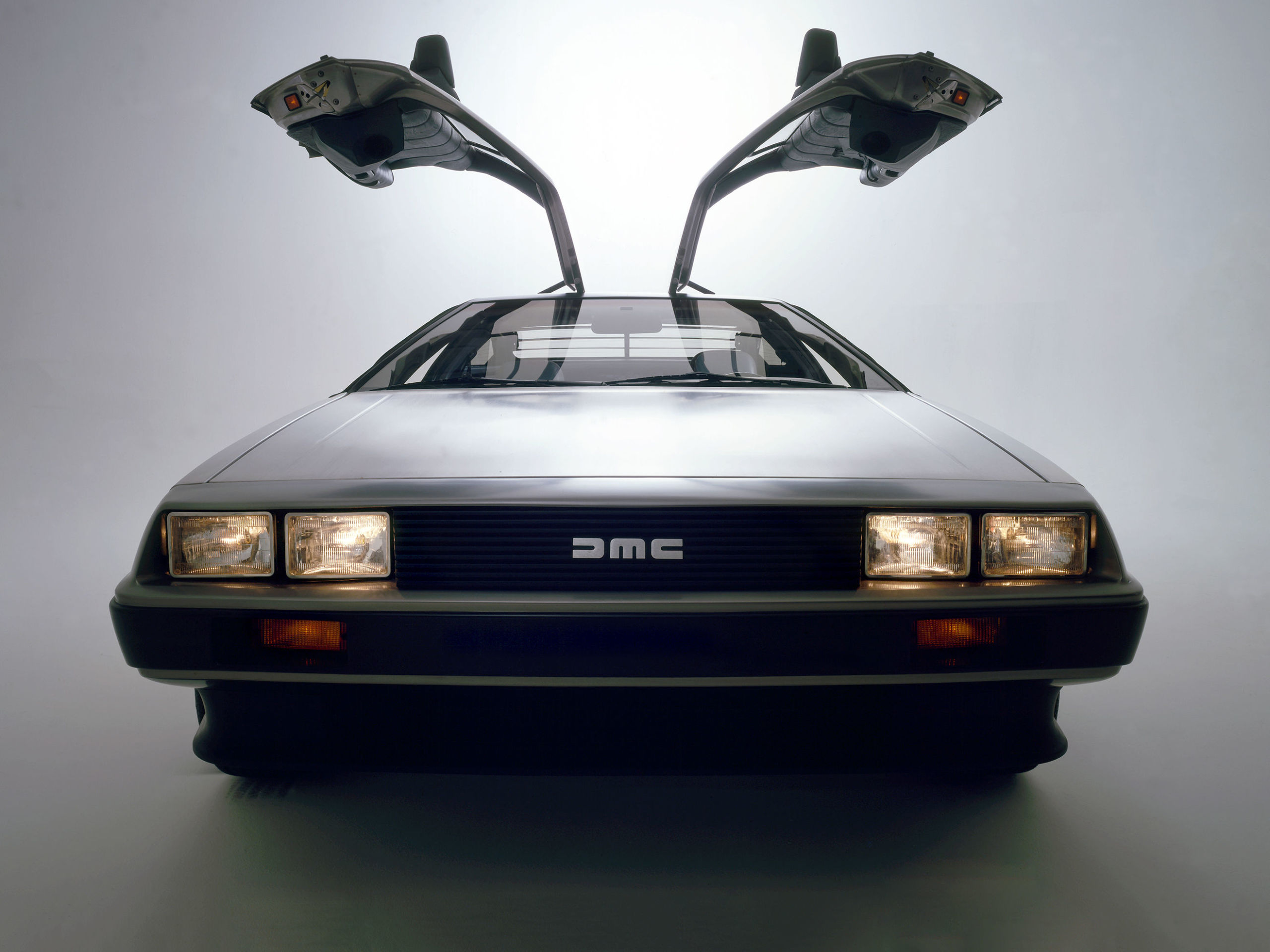
Italian designer Giorgetto Giugiaro created a low, angular body with doors that opened upward. Its exterior panels were made from brushed stainless steel and left unpainted, giving the car a metallic appearance that seemed futuristic even before Hollywood added glowing instruments and a flux capacitor.
Engineering development involved Lotus, the respected British sports-car manufacturer. The production facility was constructed in Dunmurry, near Belfast, Northern Ireland, with substantial financial assistance from the British government.
The factory was intended to provide thousands of jobs in a region suffering from unemployment and political violence during the Troubles.
Expectations were enormous.
The car, commonly known as the DMC-12 during its development, appeared capable of turning John DeLorean into the founder of a new American automobile empire.
But the dream entered production under intense pressure.
A Futuristic Car With Earthbound Problems
Manufacturing began in early 1981, following delays and rising costs.
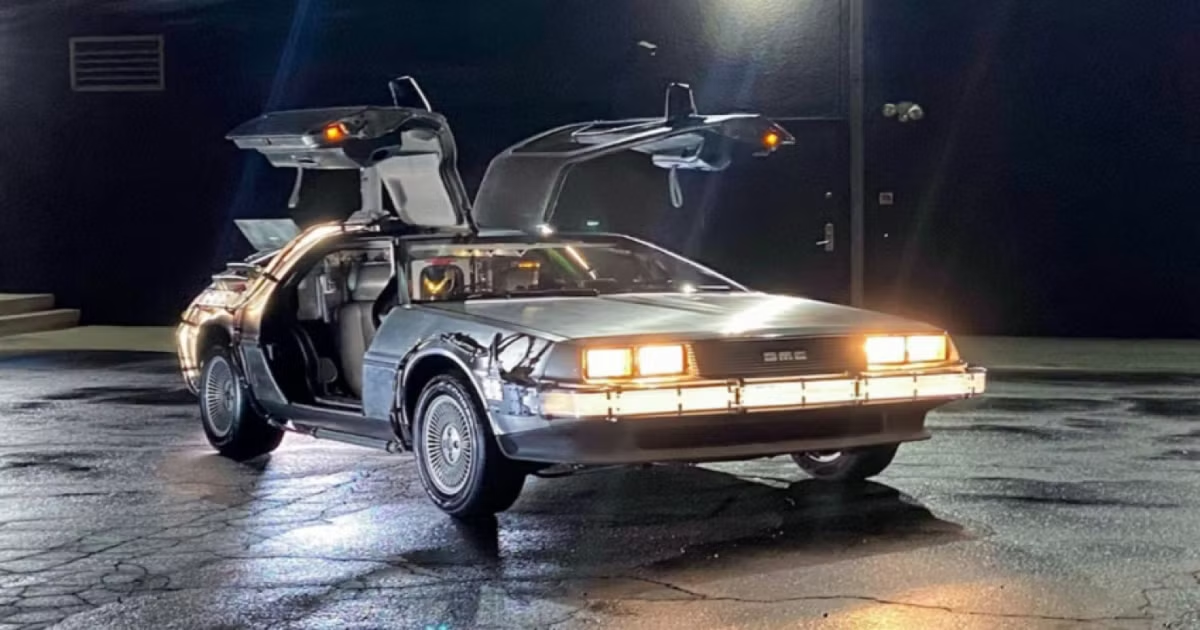
The DeLorean looked exotic, but its performance disappointed many reviewers. Its rear-mounted 2.85-liter V6 engine produced roughly 130 horsepower in its American configuration—modest power for a vehicle promoted as a sports car.
It was not painfully slow by ordinary standards, but its dramatic appearance promised more speed than the engine could deliver.
The price created another problem.
The car’s original name reflected an early proposed price of approximately $12,000. By the time it reached American dealerships, however, its sticker price was about $25,000, placing it near more established luxury and performance vehicles.
Early cars also suffered from quality-control issues. Workers at the new factory had limited experience building automobiles, and production began before every manufacturing problem had been resolved. Dealers sometimes had to correct faults before delivering vehicles to customers.
Meanwhile, the American economy was weakening. High interest rates made expensive cars more difficult to finance, while a recession reduced demand.
DeLorean Motor Company continued producing vehicles faster than dealerships could sell them. Unsold cars accumulated as the company’s cash shortage became increasingly severe.
In February 1982, the business entered receivership.
John DeLorean pursued new funding, but the company could not secure enough money to survive. In October 1982, he was arrested during an FBI undercover operation involving a proposed cocaine deal that he believed could provide funds for his struggling company.
He was later acquitted after successfully arguing that he had been entrapped, but the damage to his reputation was enormous. More importantly, the factory had already lost its chance of recovery.
Production ended in late 1982. Approximately 9,000 DeLoreans had been built, though estimates vary slightly.
A vehicle designed as the beginning of an automotive revolution had become the only model the company would ever produce.
The Time Machine Was Originally Something Else
While the DeLorean story was collapsing, screenwriters Robert Zemeckis and Bob Gale were developing a movie about a teenager accidentally traveling from 1985 to 1955.
Their early idea did not involve a car.
In an initial version of Back to the Future, the time machine was a device placed inside a refrigerator. The climax would have required transporting it to a nuclear test site, where an atomic explosion supplied the energy needed to send teenager Marty McFly home.
The idea was expensive and potentially dangerous to imitate. Executive producer Steven Spielberg was reportedly concerned that children might climb into refrigerators after seeing the film.
The filmmakers began searching for a mobile alternative.
The DeLorean offered everything the refrigerator lacked.
A car allowed Marty to travel through both space and time. Its stainless-steel exterior looked technological without requiring the designers to build an entirely new vehicle. Most importantly, its gull-wing doors made it appear almost extraterrestrial.
That feature inspired one of the film’s most memorable jokes.
When Marty crashes into a barn after arriving in 1955, the frightened family inside mistakes the DeLorean for a spacecraft. A child holds up a science-fiction comic showing an alien vehicle with doors that rise in a similar way.
The car’s commercial failure was not a disadvantage. By 1985, it was unusual enough to feel mysterious, but familiar enough for audiences to recognize it as something that had once existed.
Doc Brown also gave the choice a perfect explanation: anyone building a time machine might as well do it with style.
Turning a Failed Sports Car Into a Machine From the Future
Production designer Lawrence Paull, illustrator Andrew Probert, and special-effects consultant Michael Scheffe helped transform the DeLorean into Doc Brown’s invention.
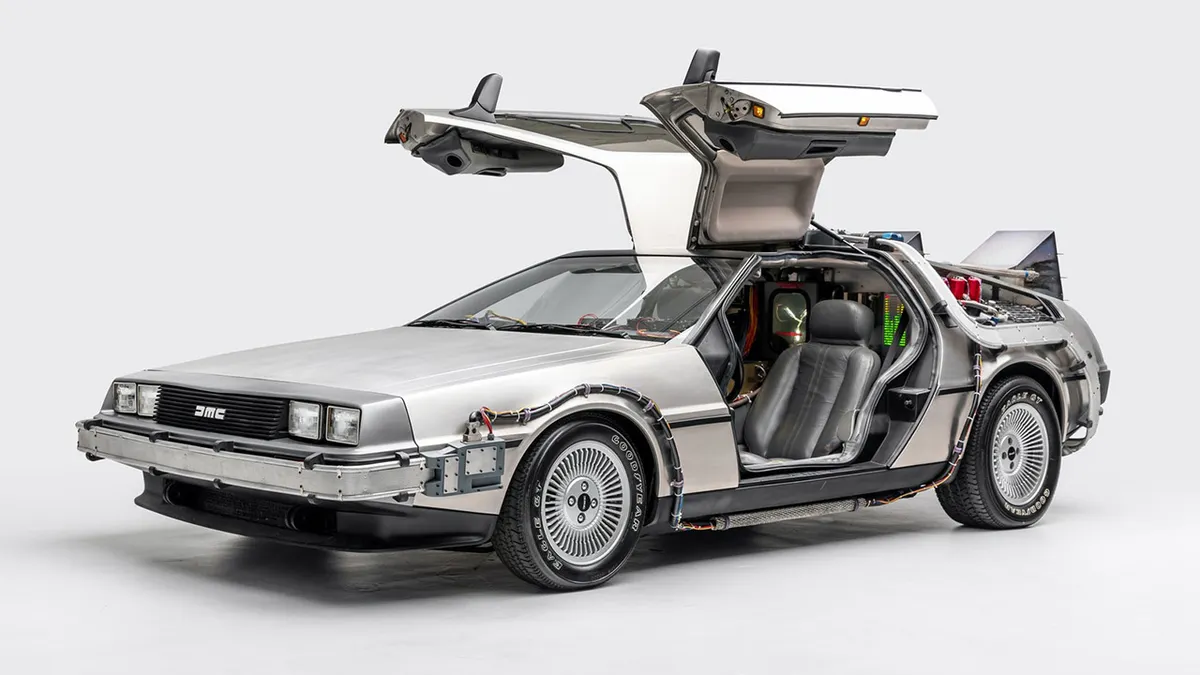
The filmmakers covered its rear section with cables, vents, coils, tubing, and mismatched industrial components. Inside, illuminated displays allowed Doc to enter destination dates, while a Y-shaped device called the flux capacitor became the fictional mechanism that made time travel possible.
The design looked advanced but handmade.
That balance suited Doc Brown. The machine appeared brilliant enough to bend time, yet chaotic enough to have been assembled by one obsessed inventor inside his garage.
Several DeLoreans were used during production, each modified for different purposes. One served as the principal or “hero” car for close-ups. Other versions were adapted for stunt driving, special effects, or interior filming.
For the vehicle to travel through time, it had to reach 88 miles per hour and receive 1.21 gigawatts of power.
The real DeLorean could reach 88 mph, although it took considerably longer than the movie’s editing suggested. On screen, that number became inseparable from the car’s identity.
Once the speedometer reached 88, the DeLorean vanished in an explosion of light, leaving two burning tire tracks behind.
Automotive performance no longer mattered.
The car was not competing against a Porsche or Corvette. It was outrunning history itself.
The Movie Succeeded Where the Company Had Failed
Back to the Future became the highest-grossing movie at the domestic box office in 1985.
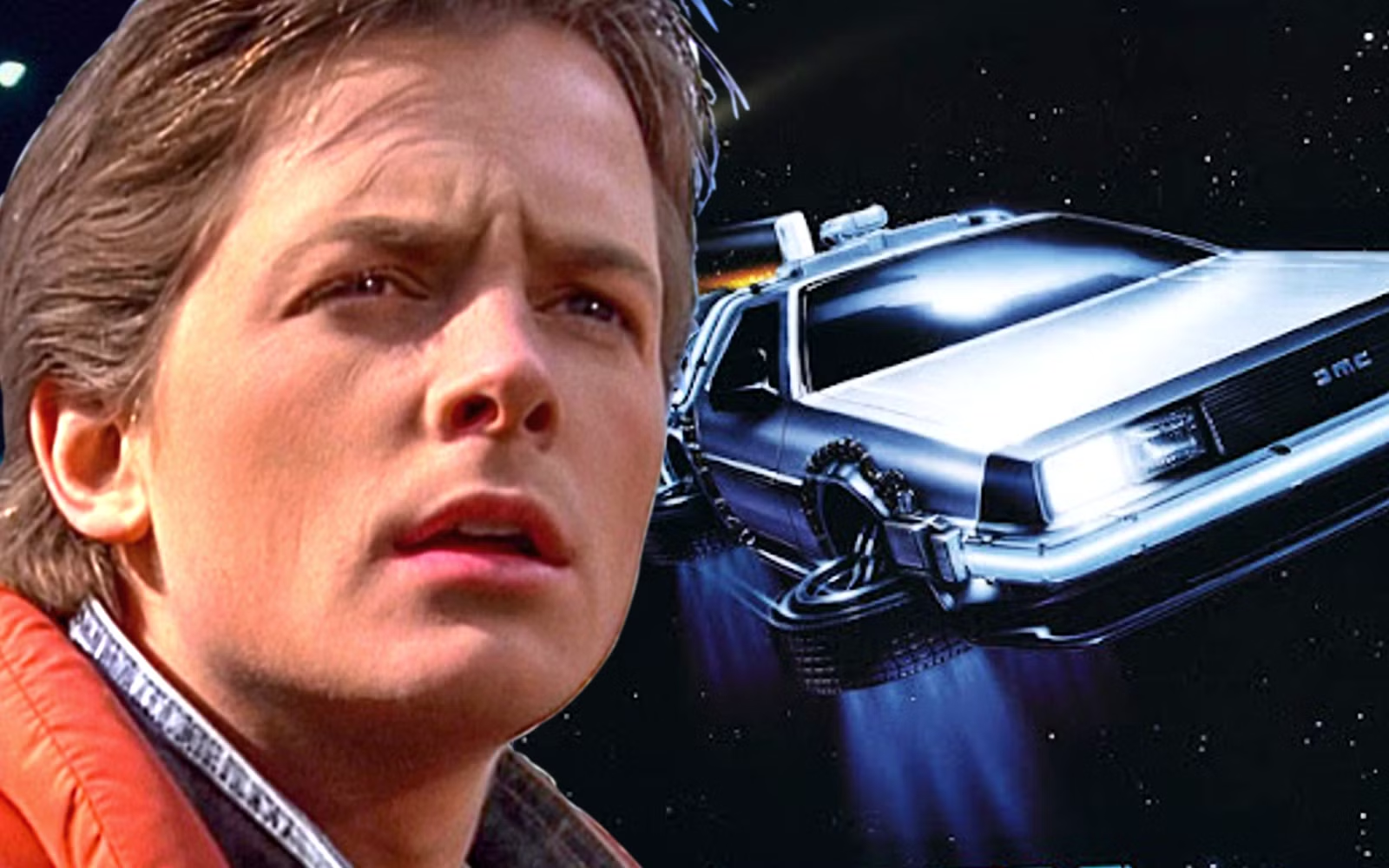
Michael J. Fox’s performance as Marty McFly, Christopher Lloyd’s manic energy as Doc Brown, and the film’s combination of comedy, science fiction, romance, and family drama turned it into an international phenomenon.
The DeLorean became one of its central characters.
It returned in Back to the Future Part II in 1989, now equipped with a fictional flying conversion and a Mr. Fusion energy reactor. In Back to the Future Part III, Doc and Marty adapted it for the Old West, eventually using a steam locomotive to push it toward the speed required for time travel.
At the trilogy’s conclusion, the DeLorean is destroyed by a freight train.
Its destruction did nothing to weaken its cultural life.
Children who had never heard of John DeLorean’s company recognized the car immediately. Toy manufacturers produced miniature versions. Fans built detailed replicas. Video games, television programs, advertisements, and music videos repeatedly borrowed its image.
Owners of surviving DeLoreans discovered that parking one in public could attract crowds. The car’s weaknesses became secondary to the feelings it created.
People were no longer looking at a troubled 1980s sports car.
They were looking at a time machine.
Preserving the Car That Carried Marty McFly
The principal DeLorean used in the movies survived years of display and deterioration before undergoing an extensive restoration completed in the early 2010s.
It became part of the collection at the Petersen Automotive Museum in Los Angeles, where visitors could examine the fictional equipment that had helped create the illusion of time travel.
In 2021, the movie car was added to the National Historic Vehicle Register, which documents automobiles considered important to American history and culture.
The recognition was extraordinary considering where the DeLorean had started.
In the early 1980s, it represented financial collapse, government losses, broken industrial promises, and the humiliation of a celebrated executive.
Four decades later, one of the surviving cars was being preserved as a national cultural artifact.
That transformation belonged almost entirely to cinema.
The Failure That Found a Second Identity
The DeLorean did not secretly become a successful automobile after the movie’s release.
Its engine did not gain power. Its original manufacturing problems did not disappear. The film could not reopen the Dunmurry factory or restore the jobs lost when the company collapsed.
What Back to the Future changed was the meaning of the car.
Its stainless-steel body stopped looking like an expensive gamble and began looking like a surface built to travel through time. Its impractical doors became visual magic. Its rarity, once evidence of weak sales and limited production, made every surviving example more desirable.
John DeLorean wanted to build a vehicle that would alter the automotive industry.
He did not achieve that goal in the way he imagined.
Instead, filmmakers searching for something strange, mobile, and unmistakably futuristic found his failed creation and gave it a new purpose.
The DeLorean could not carry its own company into the future.
But once it reached 88 miles per hour, it carried generations of moviegoers there instead.