Fifty Years of Rocky: How a Million-Dollar Underdog Defeated Hollywood’s Heavyweights to Win Best Picture
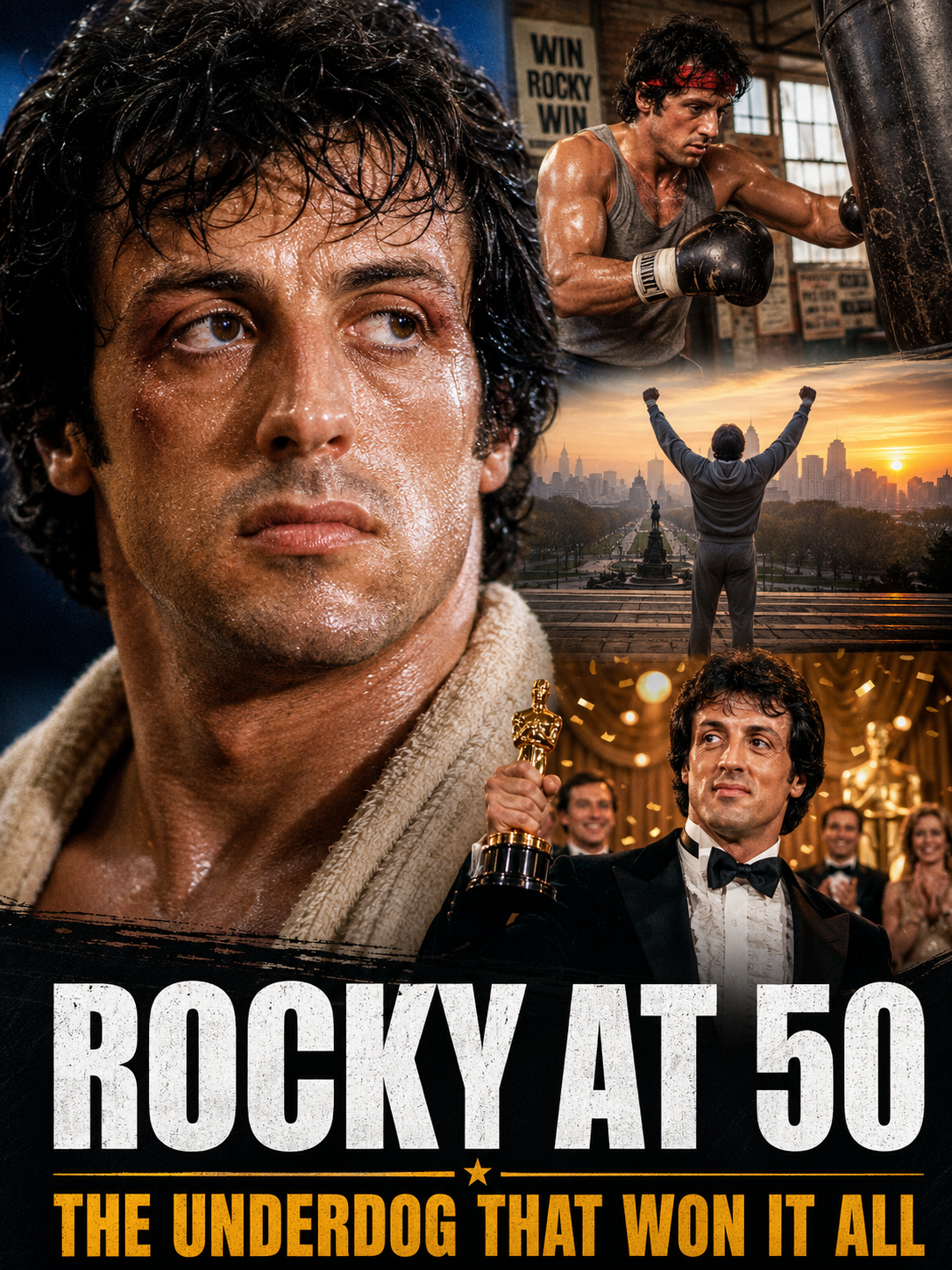
On March 28, 1977, Sylvester Stallone stood inside the Dorothy Chandler Pavilion as Rocky was named Best Picture.
The victory completed a transformation almost as improbable as the one shown on screen.
Only a few years earlier, Stallone was a little-known actor struggling to secure substantial roles. Hollywood executives had doubted his voice, appearance, and potential as a leading man. When they finally became interested in the screenplay he had written, they wanted a more established star to play Rocky Balboa.
Stallone refused.
That decision could have cost him the largest opportunity of his career. Instead, it produced a modestly budgeted film that became a box-office sensation, earned 10 Academy Award nominations, and defeated a field of celebrated competitors to win Hollywood’s highest honor.
As Rocky marks its 50th anniversary in 2026, its story still feels inseparable from the character at its center: overlooked, underestimated, and given one unlikely chance to prove he belonged.
A Fighter Born From Frustration
In the mid-1970s, Stallone had appeared in films including The Lords of Flatbush, but he remained far from stardom.
Acting jobs were scarce, and financial security was even scarcer. He continued writing because creating his own material offered one way around the casting directors who repeatedly rejected him.
An important spark arrived on March 24, 1975, when heavyweight champion Muhammad Ali fought Chuck Wepner in Ohio.
Wepner was a major underdog. Few expected him to survive long against Ali, yet he remained in the fight until the 15th round before losing by technical knockout.
Stallone later emphasized that Rocky Balboa was not a direct portrait of Wepner. Still, the sight of an underestimated challenger enduring against a dominant champion helped inspire the dramatic possibility behind the screenplay.
What if an ordinary fighter received a chance no one believed he deserved?
Stallone wrote the initial screenplay with remarkable speed, completing an early draft in roughly three and a half days.
The story followed Rocky Balboa, a working-class Philadelphia boxer whose professional ambitions had nearly disappeared. Rocky fights in small clubs and earns money collecting debts for a loan shark. He possesses physical strength, but little evidence that his life is moving toward anything meaningful.
Then heavyweight champion Apollo Creed loses his scheduled opponent for a New Year’s Day title fight.
Creed chooses Rocky as a replacement, believing audiences will embrace the spectacle of an unknown local fighter challenging for the championship. To Apollo, the match is promotion.
To Rocky, it is the first opportunity to discover whether his life has amounted to more than the world assumes.
The Script Hollywood Wanted—Without Its Writer
Producers recognized the screenplay’s potential.
United Artists and others expressed interest, and Stallone was reportedly offered substantial sums for the rights. But the companies imagined the film with an established actor in the lead.
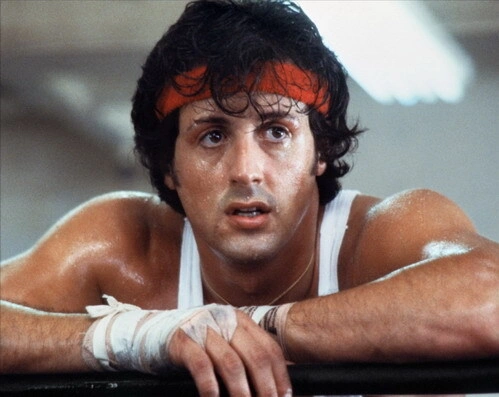
Stallone insisted that he play Rocky.
From a business perspective, the demand appeared unreasonable. He did not have the name recognition required to carry a major release. Selling the screenplay without an acting condition could have immediately relieved his financial difficulties.
But Stallone believed the role was the reason he had written the story.
If another actor played Rocky and the film succeeded, he feared he would spend the rest of his life knowing that he had surrendered his defining opportunity. He was willing to accept far less money and a smaller production if it meant remaining in the ring.
Producers Irwin Winkler and Robert Chartoff ultimately supported him.
The film moved forward with a production budget of slightly more than $1 million—modest even by 1970s standards. That financial limitation reduced the studio’s exposure while giving Stallone the chance he had demanded.
John G. Avildsen, whose earlier work included the gritty drama Save the Tiger, signed on to direct.
The filmmakers had limited resources, a short schedule, and little margin for error. What they possessed was a script that understood something larger productions often missed: audiences did not need Rocky to become champion.
They needed him to become visible.
Philadelphia Became Part of the Story
The film used Philadelphia not as a polished tourist destination, but as an extension of Rocky’s life.
He walks through cold streets, lives in a cramped apartment, trains in a modest gym, and visits the neighborhood pet shop where Adrian works. The city appears worn, practical, and indifferent to dreams.
That realism helped distinguish Rocky from a conventional sports fantasy.
The romance between Rocky and Adrian, played by Talia Shire, gave the movie its emotional center. Adrian is shy and uncomfortable with attention, while Rocky hides his loneliness behind jokes and awkward confidence.
Neither is presented as someone waiting to be rescued by a glamorous partner.
They are two isolated people who gradually make each other feel less invisible.
Burgess Meredith played Mickey, the aging trainer who once dismissed Rocky’s wasted potential but returns when the title opportunity appears. Burt Young portrayed Adrian’s troubled brother Paulie, while Carl Weathers brought charisma, intelligence, and theatrical confidence to Apollo Creed.
Apollo was not written as a simple villain. He is a champion who understands publicity and initially fails to take Rocky seriously. His mistake is not cruelty.
It is certainty.
A Film Shaped by Its Limitations
The small budget forced the production to work creatively.
A planned scene featuring Rocky and Adrian at a crowded skating rink was reduced when the filmmakers could not afford the necessary extras. Instead, the couple enters an almost empty rink after hours.
The financial compromise created a more intimate moment. With no crowd around them, their awkward conversation becomes the entire focus.
The production also made early use of the Steadicam, then a relatively new camera stabilization system. Operator Garrett Brown filmed Rocky running through Philadelphia and climbing the steps of the Philadelphia Museum of Art.
Combined with Bill Conti’s music, the sequence transformed training into an emotional ascent.
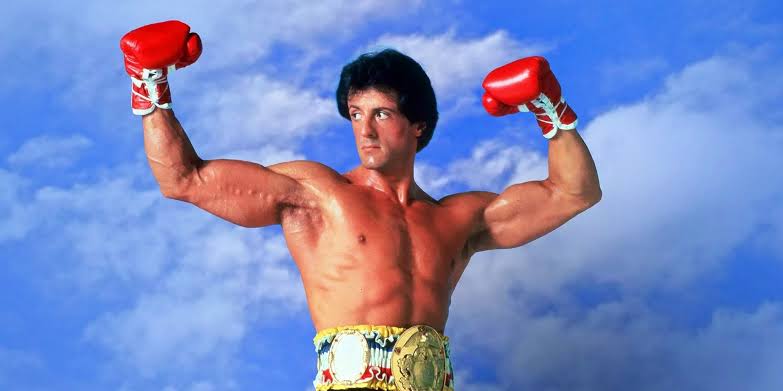
Rocky begins before sunrise, struggling to climb the steps. Later, after weeks of preparation, he reaches the top and raises his arms over the city.
The gesture became one of cinema’s most recognizable images.
Yet the training montage never promised that effort guaranteed victory. It showed something more realistic: preparation could give Rocky a chance to face the challenge without surrendering to it.
Winning Without Winning
The championship fight occupies the film’s climax, but Rocky establishes his real objective before entering the ring.
He understands that defeating Apollo is unlikely. What matters is lasting all 15 rounds—something no previous challenger has done.
If he is still standing when the final bell rings, he will know he is not merely another forgotten fighter.
That goal changes the meaning of the ending.
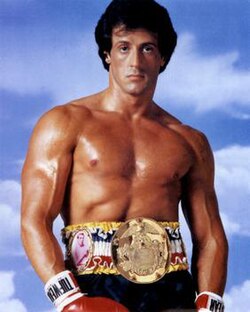
Apollo wins by split decision. Rocky does not receive the championship belt, and the judges do not declare him the better boxer.
But he goes the distance.
As officials announce the result and reporters surround the fighters, Rocky barely listens. He searches for Adrian, calling her name until she reaches him in the ring.
The movie ends not with a trophy but with two people finding each other amid the noise.
Rocky loses the official contest and wins the struggle that mattered.
The Underdog Enters the Oscar Race
When Rocky opened in late 1976, audiences responded immediately.
The film became a major commercial success, eventually earning well over $100 million worldwide during its original release period. Stallone, who had been considered a liability during development, became one of Hollywood’s most recognizable new stars.
Awards recognition followed.
Rocky received 10 Academy Award nominations, including Best Picture, Best Director, Best Actor for Stallone, Best Actress for Shire, supporting nominations for Meredith and Young, and Best Original Screenplay for Stallone.
Stallone became only the third person at that time—after Charlie Chaplin and Orson Welles—to receive acting and screenwriting nominations for the same film.
The Best Picture competition was formidable.
All the President’s Men dramatized the Washington Post investigation that helped expose the Watergate scandal. Network offered a furious satire of television and corporate power. Taxi Driver presented a dark portrait of loneliness and violence in New York. Bound for Glory chronicled the life of folk singer Woody Guthrie.
Compared with those films, Rocky appeared almost traditional.
It was sincere in an era of political suspicion and cinematic disillusionment. It believed in love, personal dignity, and the possibility that an ordinary person could change without conquering the world.
That emotional directness became its advantage.
At the 49th Academy Awards, Rocky won Best Film Editing, Best Director for Avildsen, and Best Picture.
The low-budget film about a losing fighter had defeated some of the most acclaimed productions of its generation.
The Character Who Refused to Retire
The success launched a franchise spanning decades.
Stallone returned in Rocky II, where Rocky receives another opportunity against Apollo. Later films followed his rise, wealth, losses, retirement, and changing relationship with boxing.
The quality varied, but the character endured.
In 2006, Rocky Balboa returned the series to its emotional origins, portraying an aging man seeking one final fight not for money or fame, but to confront the grief he still carried.
The story then found a new generation through the Creed films. Michael B. Jordan played Adonis Creed, Apollo’s son, while Stallone’s Rocky became his reluctant trainer.
The relationship allowed the franchise to examine legacy from a different perspective. Rocky was no longer the young challenger trying to prove his worth.
He was the older survivor helping someone else discover his own.
Stallone earned another Oscar nomination for playing Rocky in Creed, nearly four decades after his first nomination for the original film.
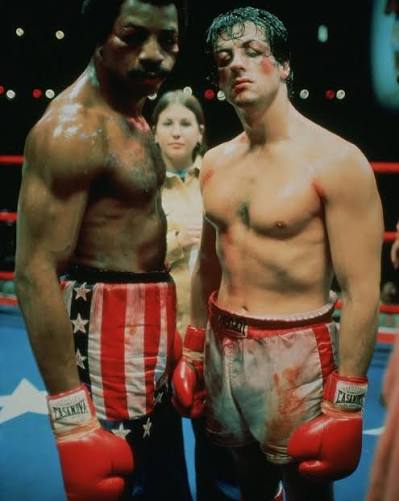
Fifty Years at the Top of the Steps
In 2006, the Library of Congress selected Rocky for preservation in the National Film Registry, recognizing its cultural, historical, or aesthetic significance.
Philadelphia embraced the character as part of its identity. Visitors continue running up the museum steps, raising their arms, and posing near the Rocky statue.
The image survives because it represents something broader than boxing.
Most people will never compete for a heavyweight championship. They understand, however, what it means to feel overlooked, to fear that time is passing, or to want one opportunity to discover what they are capable of doing.
In 2026, anniversary screenings, concerts, and celebrations are bringing the film back to audiences half a century after its release.
But Rocky does not need nostalgia to remain relevant.
Its deepest lesson was never that every underdog eventually wins. Rocky does not win the fight, and determination does not magically erase the limitations of his life.
The film argues instead that victory can mean refusing to be defined by other people’s expectations.
That idea described Rocky Balboa.
It also described Sylvester Stallone, the unknown actor who rejected Hollywood’s money because he would not give away the role he had created.
And on Oscar night in 1977, it described the film itself.
Rocky entered the race as the smallest contender.
Then, just like its hero, it remained standing long enough for the world to see what had been there all along.