Barry Keoghan Lost His Mother at 12 and Moved Through Foster Homes—Then a Notice in a Dublin Window Changed His Life
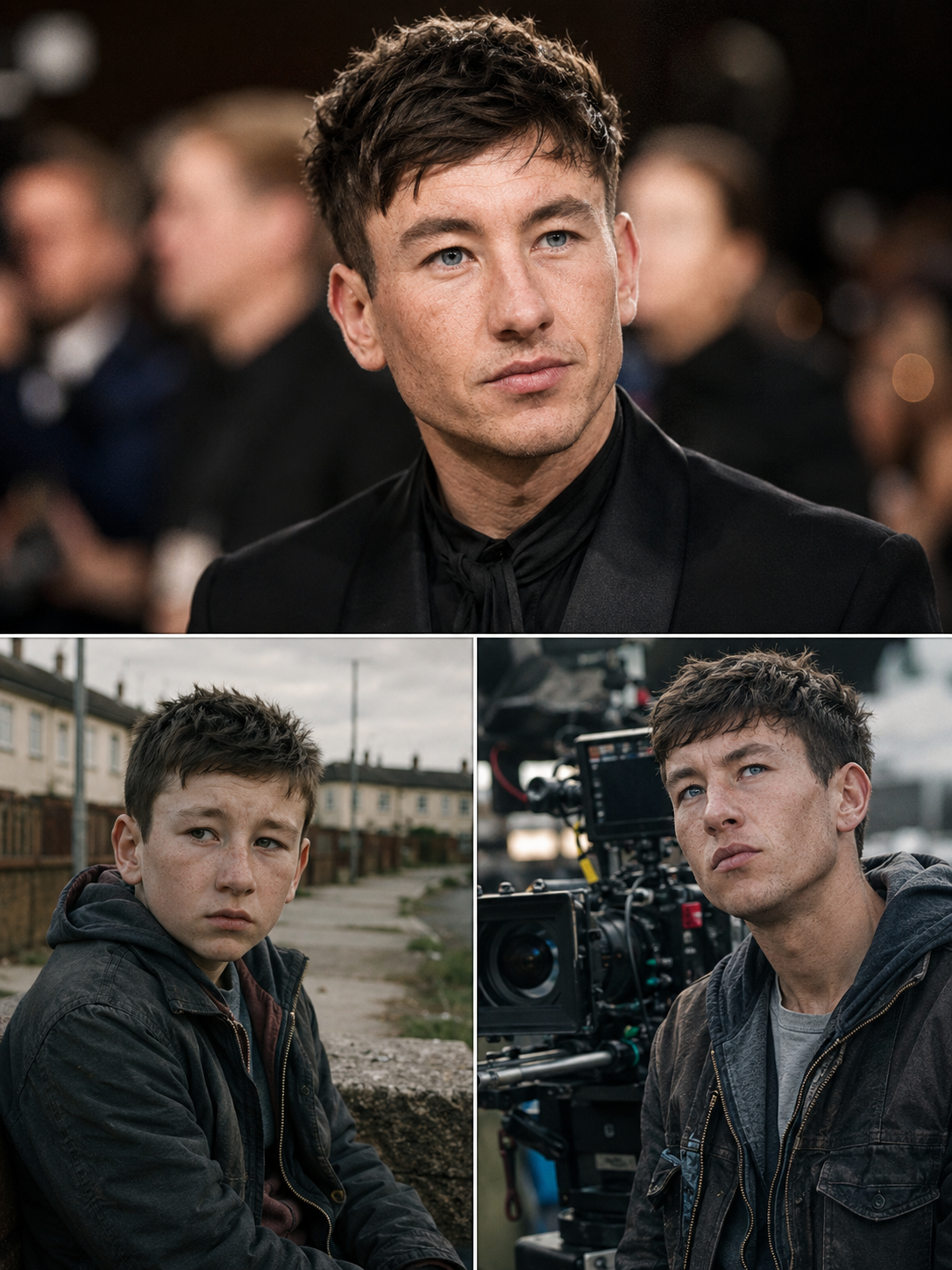
Long before Barry Keoghan stood inside elegant mansions in Saltburn or received an Academy Award nomination for The Banshees of Inisherin, home was not a place he could take for granted.
As a child in Dublin, Keoghan and his brother Eric moved through the foster-care system while their mother struggled with drug addiction. The brothers lived with numerous foster families, repeatedly adjusting to unfamiliar rooms, routines and adults.
Then, when Keoghan was 12, his mother died.
The loss became one of the defining experiences of his life, but it did not produce a simple story of tragedy followed by triumph. Years of instability remained part of him even after his grandmother and other relatives gave the brothers a more permanent home.
Acting eventually offered Keoghan something his childhood rarely had: a place where uncertainty could be transformed into purpose.
His way into the profession was not through a famous family, an expensive drama school or an industry connection. It began with a casting notice displayed in a Dublin shop window.
Growing Up Amid Addiction and Instability
Keoghan was born in Dublin in October 1992 and spent his early years in the city’s Summerhill area.
His mother, Debbie, struggled with heroin addiction during a period when the drug had caused enormous damage in working-class communities across Dublin. Keoghan has spoken with both honesty and compassion about her illness, resisting attempts to reduce her entire life to addiction.
He has said he remembers good moments with her and remains proud of her. At the same time, he has described childhood memories shaped by the desperation that addiction brought into the family.
Keoghan and his brother entered foster care when they were young. Accounts commonly state that they spent approximately seven years in the system and passed through 13 foster homes, although Keoghan has sometimes described the number slightly differently in interviews.
Whatever the exact count, the central reality was constant movement.
Each placement meant entering another household and learning another set of expectations. The brothers remained together, giving each other a vital connection while almost everything around them changed.
Keoghan has said he does not want his foster-care history treated only as something that damaged him. He has also spoken appreciatively about the people who looked after him and about the importance of a functioning social-care system.
Still, the instability left an emotional mark.
His mother’s death when he was 12 made the possibility of returning to a conventional family life impossible. Eventually, Keoghan and Eric were raised by their grandmother, aunt and other relatives, including their older sister.
The arrangement gave them greater stability, but Keoghan entered adolescence carrying grief that had never been simple or easy to explain.
A Boy Looking for Somewhere to Put His Energy
Keoghan was not an obvious future movie star.
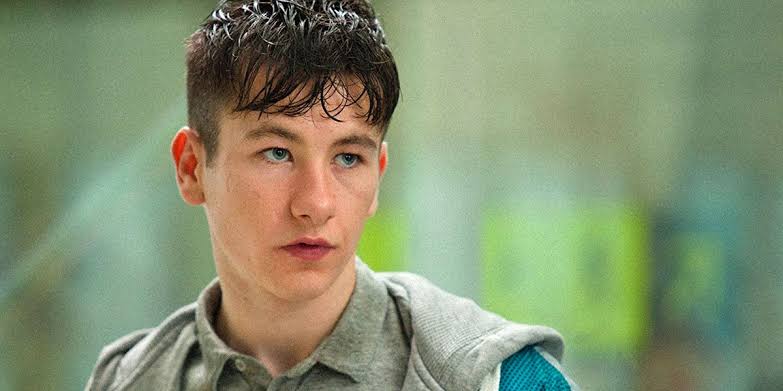
He has recalled struggling at school and channeling much of his energy into boxing and street life. He was restless, observant and interested in performance, but he had no clear route into acting.
Movies became an informal education.
Keoghan watched older films and studied actors including Paul Newman, absorbing how performers moved, paused and communicated without necessarily knowing that he was teaching himself a craft.
Then, as a teenager, he saw a notice in a shop window seeking actors for an independent Irish film.
The project was Between the Canals, director Mark O’Connor’s crime drama about life in Dublin’s inner city. Keoghan had no conventional training and little idea of how the film business operated, but he responded to the advertisement and secured a small part.
The experience revealed something important: he felt comfortable in front of a camera.
Keoghan began taking acting more seriously and attended classes at The Factory, a Dublin training center later known as Bow Street Academy. He could not always afford the fees and has recalled asking for opportunities to participate while promising that he would eventually repay the support.
His early performances did not arrive fully polished. What filmmakers noticed was a natural quality that could not easily be taught. Keoghan watched closely, took direction and seemed able to project vulnerability and danger at the same time.
The Role That Made Ireland Notice
Small film and television jobs followed, including an appearance in the Irish soap Fair City.
His first major public breakthrough came with the television crime drama Love/Hate. Keoghan played Wayne, a young gang member whose shocking act of violence made the character unforgettable despite limited screen time.
The role demonstrated a quality that would define much of his later work. Keoghan could appear physically unthreatening while making audiences deeply uneasy. His characters often seemed wounded, unpredictable or desperate for acceptance.
He continued building experience in productions such as ’71, Mammal and Trespass Against Us. These were not glamorous star vehicles, but they placed him alongside established performers and filmmakers.
By 2017, his career reached a new level.
Christopher Nolan cast him in Dunkirk as George, a civilian teenager who joins the dangerous effort to rescue Allied soldiers from the French coast. In a movie built around enormous scale, Keoghan gave the story one of its most intimate human tragedies.
That same year, he delivered a radically different performance in Yorgos Lanthimos’ The Killing of a Sacred Deer.
As Martin, a seemingly polite teenager who imposes a horrifying moral reckoning on a surgeon played by Colin Farrell, Keoghan was controlled, strange and frightening. His calm delivery made the character more disturbing than theatrical rage could have.
The two films established him internationally.
The child who had once moved from one temporary home to another was now working with some of the most respected directors in cinema.
Turning Pain Into Unpredictable Characters
Keoghan did not become successful by hiding the qualities that made him unusual.
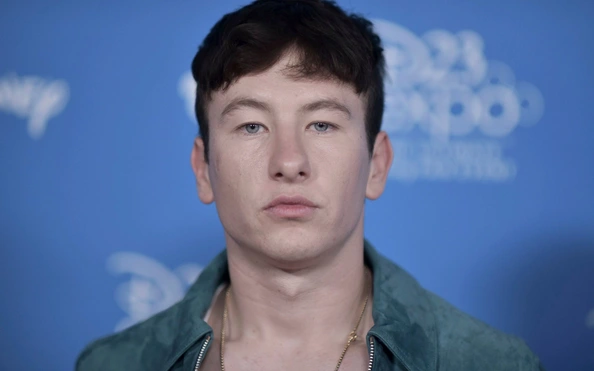
His face did not fit a conventional leading-man template, and his acting style was difficult to categorize. He could play innocence without seeming harmless and menace without losing vulnerability.
In American Animals, he portrayed one of four young men attempting a reckless rare-book theft. In Calm with Horses, he played a manipulative member of an Irish criminal family. He later entered the Marvel Cinematic Universe as Druig in Eternals and appeared briefly as an imprisoned figure later revealed to be the Joker in The Batman.
Each role expanded his visibility, but The Banshees of Inisherin brought the recognition that transformed his career.
Martin McDonagh’s 2022 tragicomedy reunited Keoghan with Colin Farrell and cast him as Dominic, a lonely young man living under the control of an abusive father on a remote Irish island.
Dominic could have been presented only as comic relief. Keoghan instead revealed the humiliation, hope and aching need for affection beneath his awkward behavior.
The performance earned him the BAFTA Award for Best Supporting Actor and his first Academy Award nomination.
During his BAFTA acceptance speech, Keoghan dedicated the honor to his mother and to the children from the area where he grew up. The moment connected the international recognition of his work to the Dublin childhood that had once offered him so little certainty.
From Foster Care to the Center of the Screen
Keoghan’s next major role removed any doubt that he could carry a film.
In Emerald Fennell’s Saltburn, he played Oliver Quick, an Oxford student who becomes consumed by a wealthy classmate and his aristocratic family. The performance demanded radical shifts between insecurity, desire, calculation and control.
The film became a cultural sensation, and Keoghan received Golden Globe and BAFTA nominations for his leading performance.
He continued choosing ambitious projects, including Andrea Arnold’s Bird, the wartime series Masters of the Air and further high-profile film roles. His career developed not as a straight line away from hardship, but as an ongoing attempt to use difficult experiences without allowing them to become his entire identity.
Keoghan has also become a father. He has said that parenthood changed how he viewed his mother, helping him understand more clearly how difficult her struggle must have been.
That understanding does not erase what happened to him as a child. It adds compassion to a history already filled with pain.
He has used his public platform to speak about foster care and the need to support children who are separated from their families. Rather than presenting himself as proof that hardship automatically builds strength, he has emphasized the people and systems that helped keep him and his brother together.
Barry Keoghan’s rise can look almost cinematic when compressed into a few dramatic facts: a mother lost to addiction, years in foster homes, a casting notice in a window and an eventual journey to the Oscars.
The reality was slower.
Between those moments were relatives who gave him stability, foster families who opened their homes, teachers who allowed him to learn, filmmakers who recognized his instincts and years of small roles that gradually became larger ones.
Hollywood did not rescue Barry Keoghan from his childhood.
But acting gave him a language for everything that childhood left behind—the loneliness, hunger, danger and determination that now appear whenever he steps in front of a camera.