The Cat in The Godfather Was Never in the Script—Coppola Found It Moments Before the Cameras Rolled
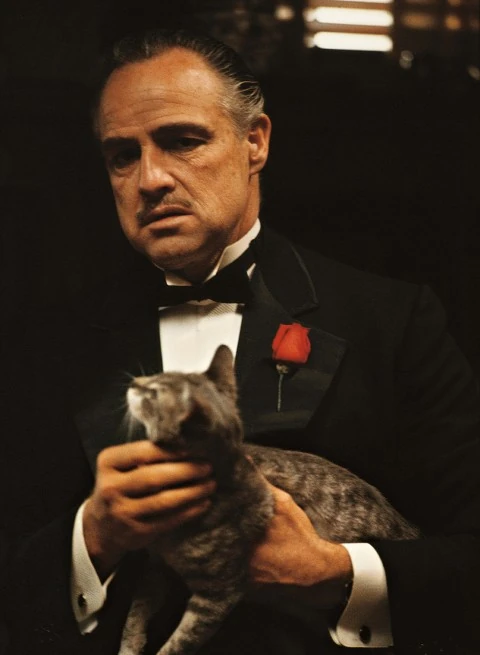
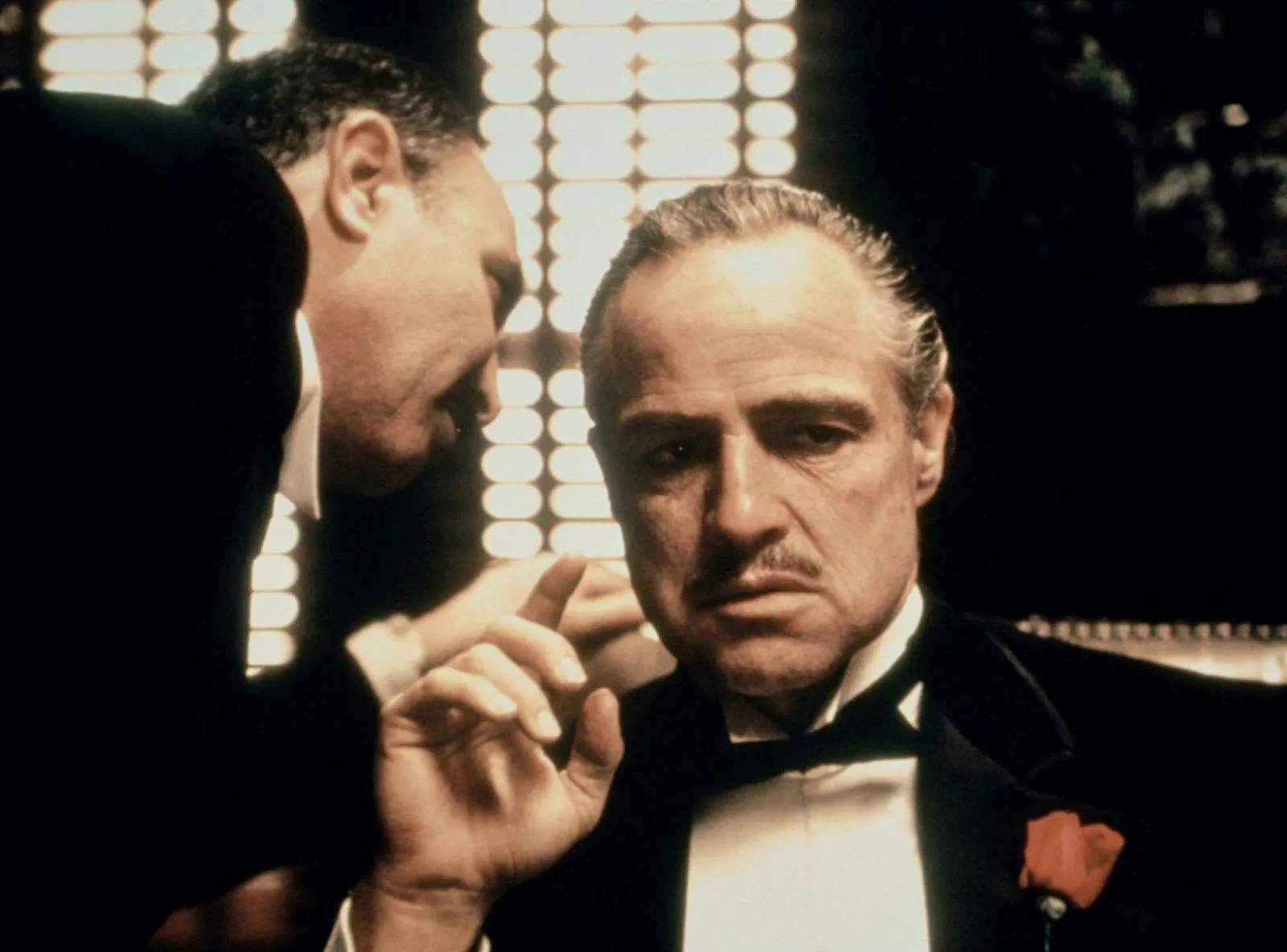
The first time audiences clearly see Don Vito Corleone, he is not holding a gun, issuing a threat or surrounded by armed men.
He is calmly stroking a gray-and-white cat.
Across the desk, undertaker Amerigo Bonasera is asking the crime boss to punish the men who attacked his daughter. The request carries the possibility of brutal violence, yet Don Corleone listens from the shadows while gently moving his fingers through the animal’s fur.
The contrast became one of the most recognizable images in The Godfather. It seemed so perfectly designed that generations of viewers interpreted the cat as a carefully chosen symbol of Vito Corleone’s character.
But the animal was not written into the scene.
Director Francis Ford Coppola later explained that he saw the cat wandering around the Paramount studio lot, picked it up and placed it in Marlon Brando’s hands without offering instructions.
Brando did the rest.
A spontaneous decision made shortly before filming gave the opening of The Godfather an image that would define the most powerful character in the movie before he had even risen from his chair.
Introducing a Man Through Contradiction
Released in 1972, The Godfather begins not with violence but with a plea.
Bonasera, played by Salvatore Corsitto, speaks directly from the darkness. His first words—“I believe in America”—introduce a story about justice, loyalty and the power hidden beneath respectable institutions.
After the American legal system fails his daughter, Bonasera comes to Don Corleone for the justice the courts did not provide.
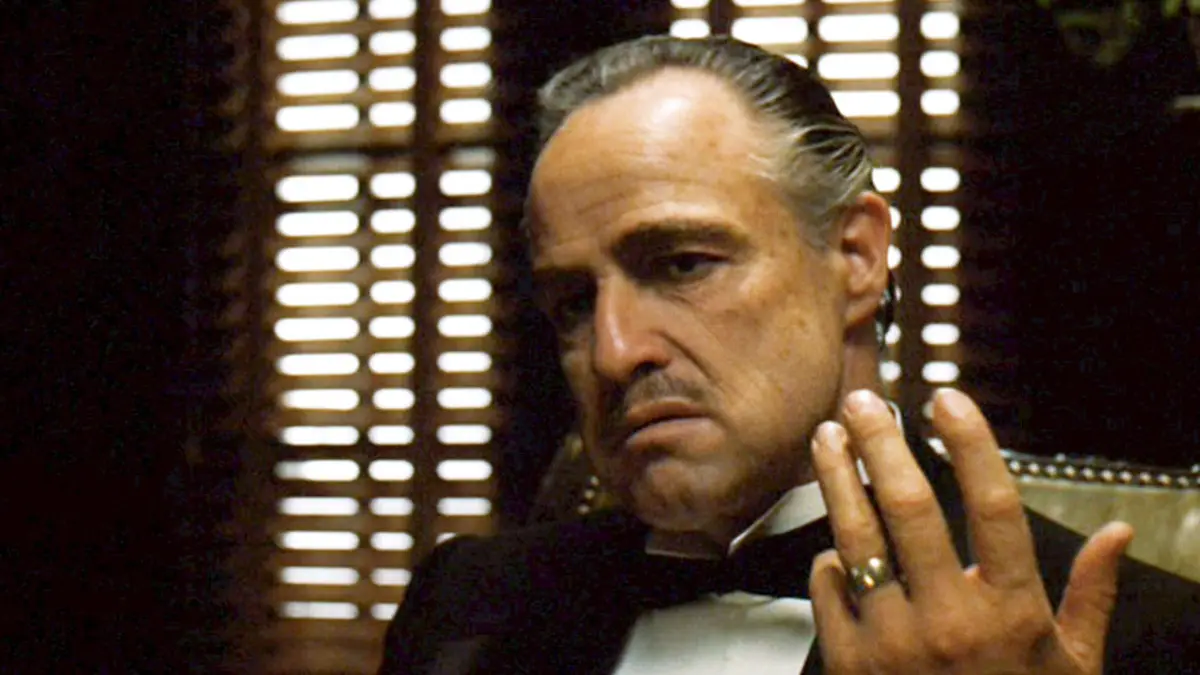
Coppola and cinematographer Gordon Willis gradually reveal the room. Bonasera’s face dominates the opening shot before the camera pulls back to show the back of Vito’s head and the men standing nearby.
Then the audience sees Brando’s hands resting on the cat.
The animal immediately changes the atmosphere.
Without it, Vito might appear as a motionless authority figure receiving a request from a frightened man. With it, he becomes more mysterious. His voice is quiet, his movements are controlled and his attention appears divided between an act of tenderness and a conversation about revenge.
He does not need to raise his voice to dominate the room.
The cat seems completely safe in his lap, even as Bonasera negotiates with a man capable of ordering someone’s death.
Coppola’s Last-Minute Discovery
The cat was not part of Mario Puzo and Coppola’s screenplay.
According to Coppola, he noticed the animal running around the studio and brought it into the scene. He placed it in Brando’s hands without explaining what he expected the actor to do.
Accounts often describe it as a stray from the Paramount lot. Whatever its exact history, it was not a trained animal selected through a formal casting process or prepared as a planned prop.
Brando responded naturally.
Rather than looking surprised or stopping to ask for direction, he held the cat, stroked it and allowed its movements to become part of the performance. The animal shifted across his lap, played with his hands and appeared remarkably comfortable.
That response suited Brando’s working style.
He was known for searching for physical actions that could make dialogue feel less staged. Instead of sitting rigidly and delivering lines, he often used objects, gestures and unexpected behavior to create the impression that a character existed beyond the written scene.
The cat gave him something to do without distracting from Vito’s authority.
In Brando’s hands, it did not look like an improvisation forced onto the scene. It looked as though Don Corleone had entered the office carrying the animal and had held it this way many times before.
A Small Animal Creates a Sound Problem
The unplanned performer did not make the filming effortless.
The cat reportedly began purring loudly while sitting with Brando. Its contentment added to the authenticity of the moment, but it also complicated the recording of his unusually quiet dialogue.
Brando’s Vito speaks in a low, rough voice, requiring the audience to listen closely. A loud purr near the actor’s microphone risked interfering with lines that were essential to establishing the Corleone family’s rules.
Yet removing the animal would have meant losing the visual Coppola had just discovered.
The production kept the cat and worked around the challenge.
The choice reveals how quickly filmmakers sometimes recognize that an inconvenience is worth preserving. The sound could be managed. The strange chemistry between Brando and the animal could not easily be recreated.
There was no guarantee that another cat would remain calm, interact so naturally or create the same impression.
The imperfection became part of the scene’s life.
Why the Cat Fits Don Corleone So Perfectly
Coppola’s decision was spontaneous, but the meaning audiences found in it was not arbitrary.
The cat visually expresses the contradiction at the center of Vito Corleone.
He is a devoted father and grandfather who values family rituals, friendship and respect. He can be patient, affectionate and even playful with those inside his circle.
He is also the head of a criminal organization.
His calmness depends on the knowledge that violence stands behind his words. When Bonasera finally addresses him properly and asks for friendship, Vito agrees to help. The punishment will not be performed in the office, but everyone understands that it will happen because he has permitted it.
The same hand that strokes a small animal can authorize suffering.
That contrast makes the image unsettling. The cat does not soften Don Corleone enough to make him harmless. It shows that gentleness and brutality can exist within the same person.
The animal is relaxed because it has nothing to fear from him. Bonasera is frightened because he knows exactly what Vito can do.
Viewers have also connected the cat to the hidden nature of Corleone power. A cat can appear quiet and harmless while still possessing claws. It does not display its weapons until they are needed.
There is no evidence that Coppola entered the scene with one official symbolic explanation. In fact, the lack of advance planning is what makes the later interpretations so fascinating.
The image feels intentional because it reveals something true about the character, even though it was discovered by chance.
Brando’s Performance Made the Accident Meaningful
Simply placing an animal in an actor’s lap would not automatically produce an iconic scene.
Brando made the moment work by refusing to draw attention to it.
He does not look at the cat as though it has unexpectedly appeared. He does not turn its movements into a joke or use it to make Vito appear obviously compassionate.
Instead, the interaction remains casual.
Vito touches the animal while questioning Bonasera about why he did not come to him immediately. He continues petting it while explaining the obligations of friendship. The cat becomes part of his rhythm, reinforcing how little physical effort he needs to control the conversation.
Brando’s stillness was crucial to the character.
Paramount had initially resisted casting him, partly because of concerns about his recent career and reputation for difficult behavior. Coppola fought for him, believing Brando possessed the gravity necessary to play the aging family patriarch.
The opening office scene justified that faith.
Brando transformed himself through makeup, posture, movement and a distinctive voice. The cat gave him one more element with which to build the illusion.
Rather than making Vito look like Marlon Brando holding a prop, he made the animal seem as though it belonged to Don Corleone.
Tenderness Surrounded by Violence
The office scene takes place during Connie Corleone’s wedding.
Outside, music plays, children run through the yard and relatives celebrate. Inside, men request favors from the Don because Sicilian tradition holds that he cannot refuse a reasonable request on his daughter’s wedding day.
That structure allows the film to present Vito as both family patriarch and criminal authority.
The cat strengthens the contrast already built into the sequence.
While a wedding unfolds in sunlight, Don Corleone listens to stories of violence in a darkened room. While he treats the animal gently, he negotiates punishment. While Bonasera speaks of American justice, the real decision is being made privately by a man with no official title.
The moment teaches the audience how power works in the Corleone world.
Vito does not behave like a reckless gangster. He speaks about loyalty, obligation and respect. Violence is not presented as an emotional explosion but as a service that can be granted, delayed or collected as a future debt.
The cat’s calm behavior makes that power appear even more controlled.
A man shouting beside a frightened animal might look unstable. Vito remains so composed that the creature settles comfortably against him.
A Chance Decision Becomes Film History
The Godfather became one of the most influential films ever made, winning the Academy Award for Best Picture and earning Brando the award for Best Actor.
Its imagery has been copied, parodied and studied for decades. Don Corleone’s dark office, formal suit, rasping voice and cat became visual shorthand for a particular kind of authority: quiet, intimate and dangerous.
That cultural afterlife can make every detail seem as though it must have been carefully calculated.
The story of the cat reveals something different about filmmaking.
Scripts, storyboards and rehearsals provide structure, but a movie is also shaped by accidents—an object found nearby, an actor’s instinct or an unexpected behavior that suddenly makes a character clearer.
Coppola did not need to explain the cat to Brando. Brando did not need to force meaning onto it. The animal entered the frame, and the performance absorbed it.
What began as a director picking up a wandering cat became the first complete image audiences received of Don Vito Corleone.
He was powerful enough to decide another man’s fate, gentle enough to calm a small animal and controlled enough to do both at the same time.
The cat was never in the script.
Once the cameras rolled, however, it was impossible to imagine The Godfather beginning without it.