When Elvis Sat at the Piano, America Saw More Than a King
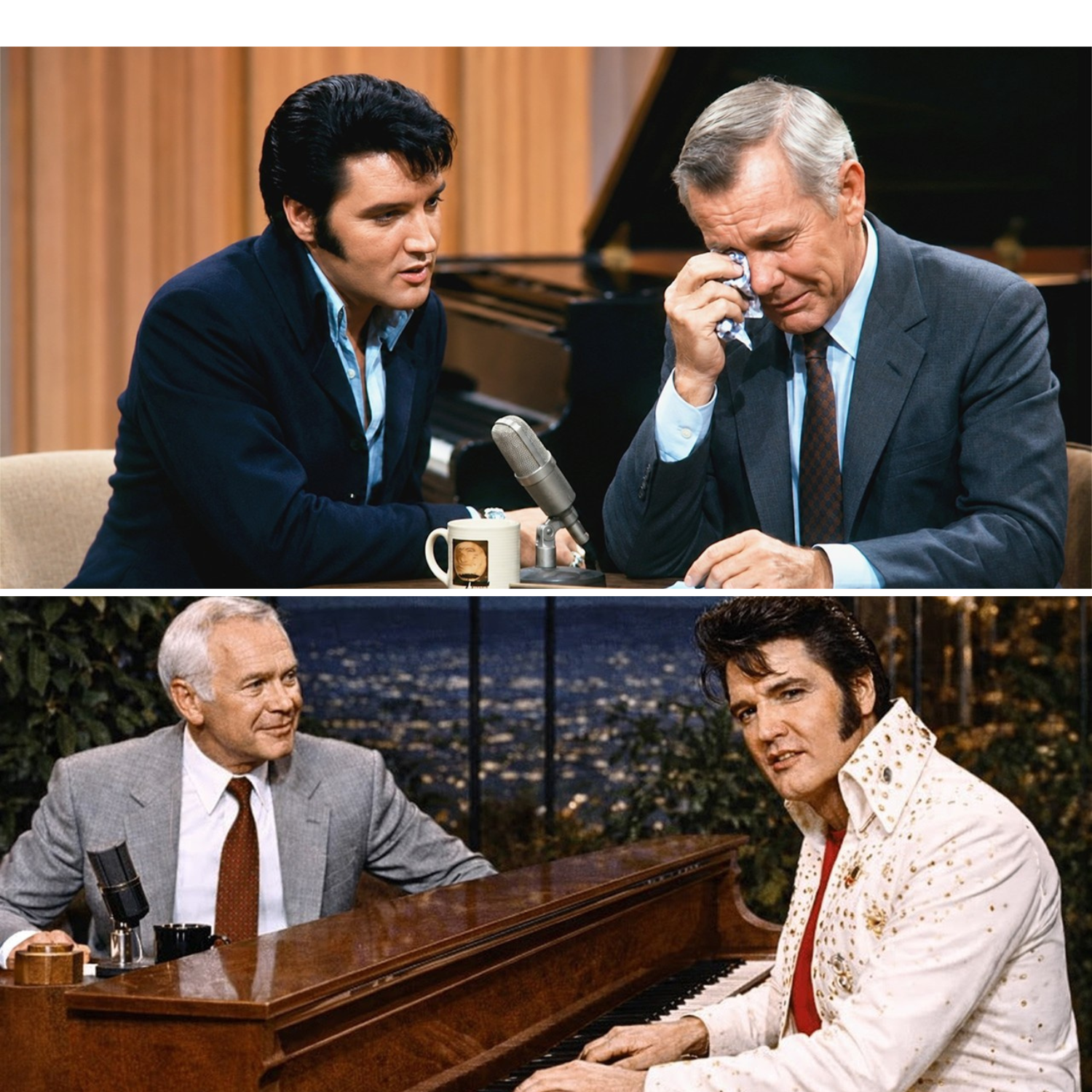
Elvis Presley did not need a glittering jumpsuit, a roaring crowd, or a wall of amplifiers to command attention that night.
Sitting across from Johnny Carson on The Tonight Show, he was already one of the most famous entertainers alive. Audiences knew the voice, the unmistakable movements, and the larger-than-life presence that had transformed American popular music.
Then a piano entered the moment, and the atmosphere changed.
What had begun as a meeting between two entertainment giants became something quieter and more intimate. For a few memorable minutes, viewers were invited to look past the carefully maintained image of the King of Rock and Roll and see the musician, son, and deeply emotional man underneath it.
Two American Icons in One Studio
By the early 1970s, Johnny Carson had established himself as one of television’s most trusted hosts. Millions of Americans made The Tonight Show part of their evening routine, watching Carson interview presidents, actors, comedians, musicians, and other major public figures.
Carson possessed a rare ability to make famous guests seem comfortable. His humor could keep a conversation moving, but he also understood when to step back and allow an unexpected moment to develop.
Elvis arrived carrying a different kind of cultural power.
He was no longer simply the young Southern singer who had caused a sensation with his voice and physical style. He had become an international symbol whose concerts, movies, fashion, and public appearances were followed by enormous audiences.
The meeting therefore represented more than a routine celebrity interview. Carson embodied the enormous influence of American television, while Elvis represented a musical revolution that had changed popular culture.
Yet the fame surrounding both men also created a challenge. How could an audience see anything new in someone as recognizable as Elvis Presley?
The answer came not through spectacle, but through vulnerability.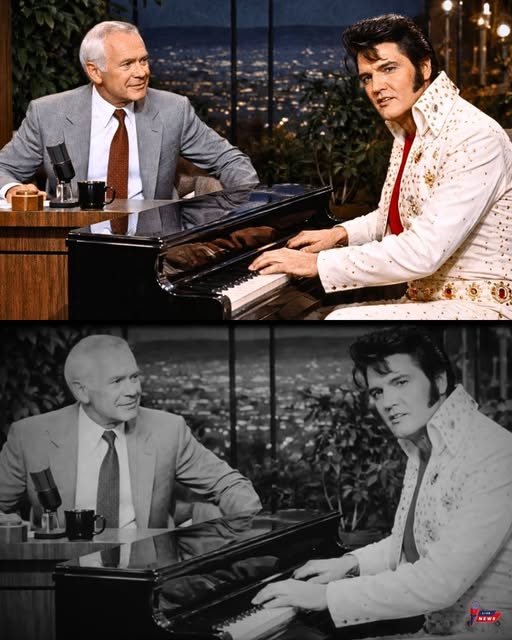
The Distance Created by Fame
For much of the public, Elvis existed as a collection of unforgettable images.
He was the young performer whose appearances generated excitement and controversy. He was the movie star, the Las Vegas headliner, and the man standing beneath bright lights while thousands screamed his name.
That public identity became so powerful that it sometimes hid the person who had to carry it.
Behind the title of “the King” was a man shaped by poverty, family devotion, Southern church traditions, extraordinary success, and devastating loss. His rise from a modest childhood in Mississippi to global superstardom was remarkable, but it brought pressures that few people could fully understand.
Every appearance came with expectations. Every concert had to match the legend audiences had built around him. Every decision attracted scrutiny.
During the Carson appearance, however, those expectations seemed to loosen. Elvis did not have to prove that he could dominate an arena. His reputation had already done that.
Instead, the setting gave him room to reveal why music mattered to him in the first place.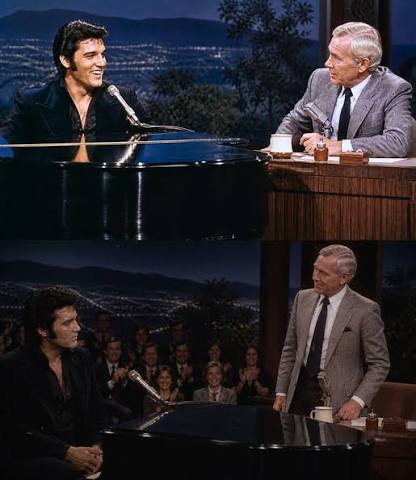
The Sounds That Shaped Elvis
Long before fame changed his life, music had been connected to Elvis’s family, community, and spiritual upbringing.
Growing up in the American South, he absorbed the gospel songs and church traditions surrounding him. Those early sounds became part of his musical identity and remained with him even after he had moved into a world of recording studios, movie sets, and international attention.
Music was not simply a profession. It was tied to memory.
That connection was especially powerful when it came to his mother, Gladys Presley. Elvis shared an exceptionally close bond with her, and her death in 1958 became one of the most painful losses of his life.
Those who knew him understood how deeply the loss affected him. Even as his success continued, the absence remained part of the emotional life he carried away from the stage.
Songs offered a way to reach feelings that ordinary conversation could not always contain. A melody could bring back childhood, family, faith, and people who were gone. Through music, memories could briefly feel present again.
That emotional history gave the piano on Carson’s set a significance far beyond its role as another instrument.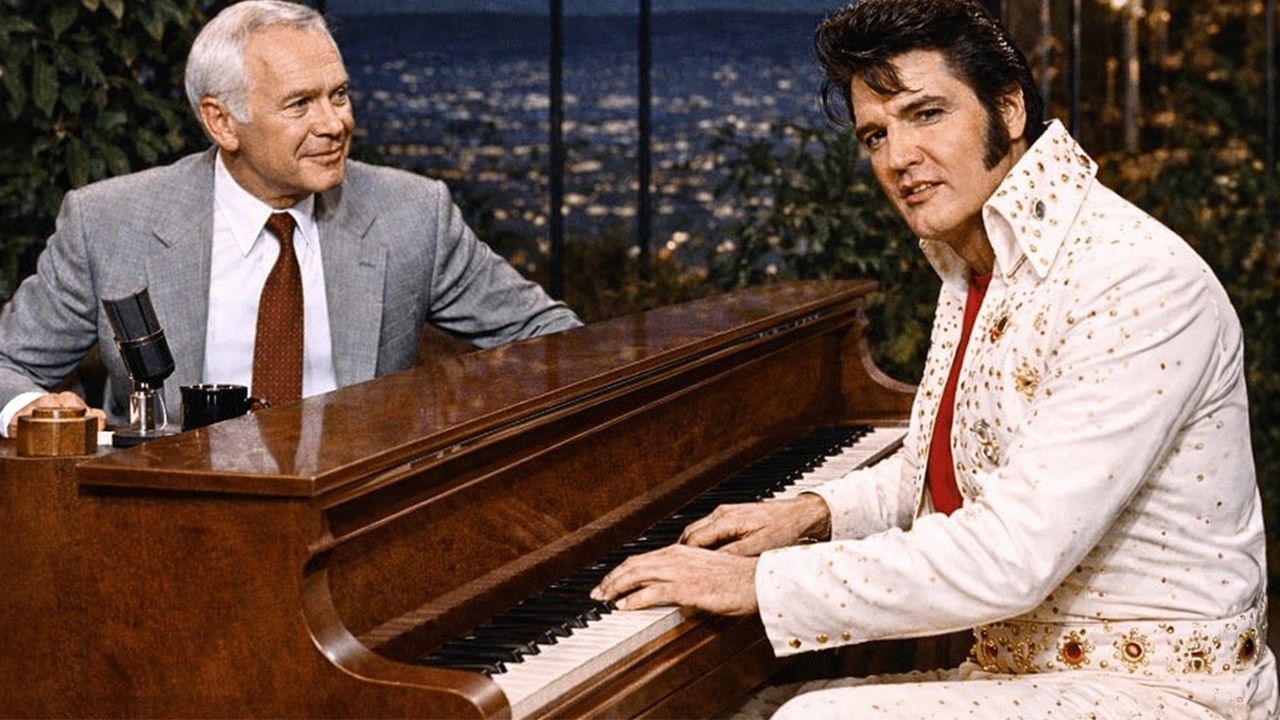
When the Interview Became Personal
Most viewers knew Elvis primarily as a singer, but his relationship with music reached beyond his famous voice. He understood how melody, rhythm, and harmony could communicate emotion, and he could use an instrument to create a much more private kind of performance.
The piano changed the scale of the encounter.
A large concert asks a performer to project toward thousands of people. A piano can pull attention inward. It leaves fewer places to hide and requires none of the visual machinery associated with a major stage production.
As Elvis settled into that setting, the audience was no longer watching a star trying to create another headline-making performance.
They were watching a man remember.
The power of the scene came from its restraint. There was no need for dramatic staging. The contrast itself was enough: one of the most famous performers in the world, known for electrifying crowds, revealing himself through a quieter connection to music.
Carson recognized what was happening and allowed the moment to breathe. Rather than forcing the conversation forward or turning it into a joke, he gave his guest the space to be something other than the public character everyone expected.
The superstar image did not vanish completely. It simply became transparent enough for viewers to glimpse the person carrying it.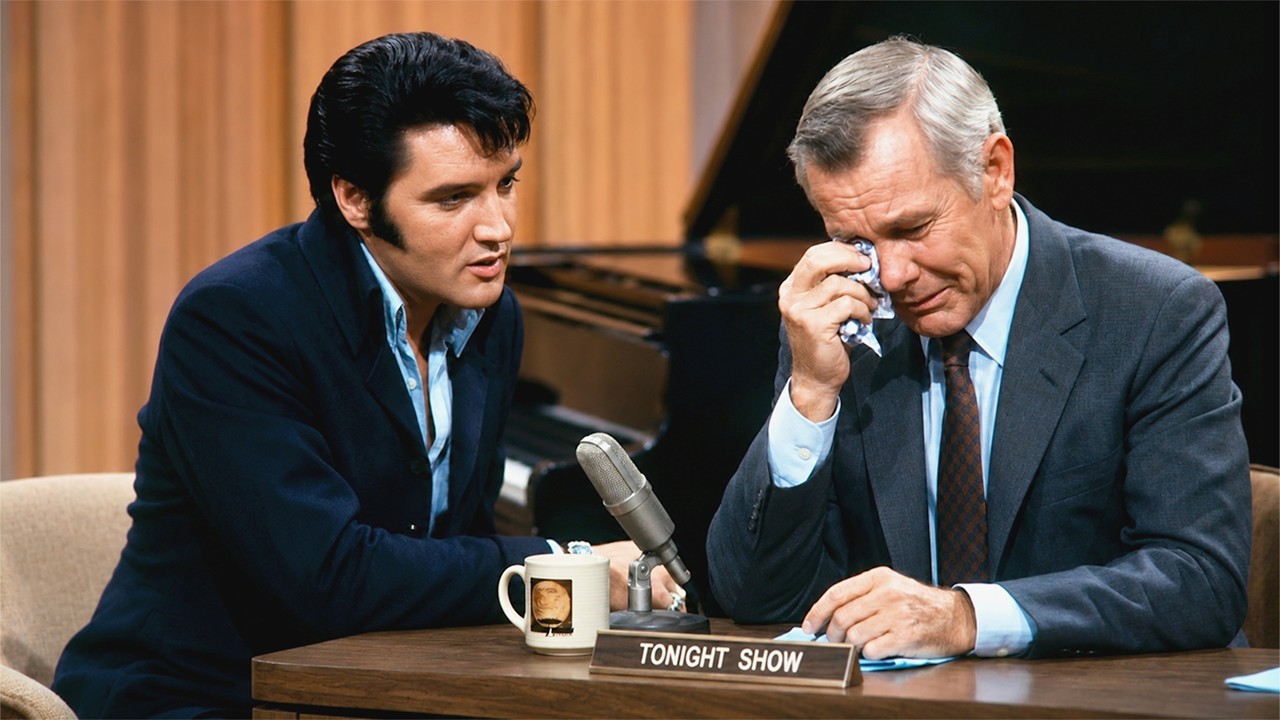
The Burden Behind the Crown
Being called the King of Rock and Roll sounded like the highest possible tribute, but the title also created a permanent demand.
Elvis was expected to be exceptional wherever he appeared. Fans wanted the legendary voice, the charisma, and the movements they had seen on television and concert stages. The public rarely asked whether the man inside that image felt tired, lonely, reflective, or overwhelmed.
Yet fame could not erase the emotions he shared with everyone else.
He still missed people he loved. He still carried memories from childhood. He still understood heartbreak and grief. Beneath the applause was someone whose greatest musical moments often drew strength from intensely personal experiences.
That was what made the Carson appearance resonate. It did not introduce a different Elvis so much as reveal a side that had always been there.
His ability to move listeners was not based only on vocal talent or showmanship. It came from the emotion he placed inside the music.
Audiences could hear when he was reaching for something real.
Why the Quiet Moments Endure
Elvis performed before enormous crowds and created concerts that became part of entertainment history. Those achievements remain central to his legacy.
But the scale of a performance does not always determine its emotional impact.
Sometimes a quiet song can reveal more than an arena production. A pause, a memory, or a few minutes at a piano can remain with viewers because the experience feels unguarded.
People admire greatness, but they connect with honesty.
When a celebrity who seems distant suddenly appears familiar, the audience is reminded that fame does not remove the ordinary human experiences of love, grief, longing, and remembrance.
Decades after his death, Elvis remains one of the most influential figures in popular culture. His effect can still be seen in music, fashion, performance, and the very idea of modern celebrity.
His legacy, however, is not preserved only through record sales, famous costumes, or packed venues.
It also survives in smaller moments when the myth briefly made room for the man.
On The Tonight Show, Elvis did not need thousands of cheering fans to demonstrate why his music mattered. Sitting near a piano and reflecting on the sounds and memories that had shaped him, he offered something more lasting than another display of stardom.
For a moment, America was not simply watching the King of Rock and Roll.
It was watching Elvis Presley.