The Maharaja Who Gave 740 Polish Children a Home When War Had Taken Everything From Them
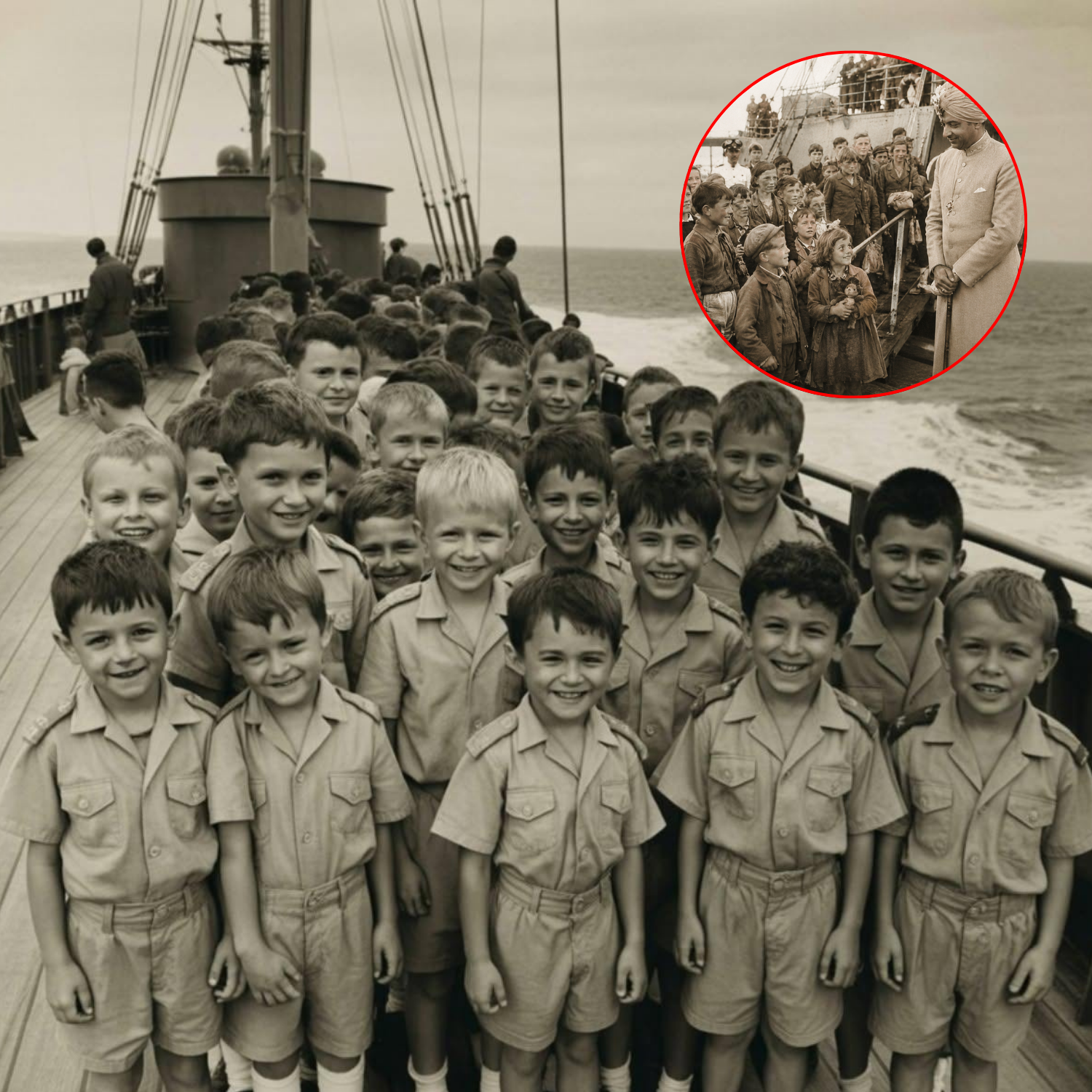
By the time hundreds of Polish children reached the Indian Ocean in 1942, war had already stripped away nearly everything that once made their lives feel secure.
Many had lost parents. They had been driven from their homes, endured Soviet captivity and survived hunger, illness and bitter cold. Even after escaping those horrors, there was no guarantee that anyone would give them a place to live.
Then, far from the European battlefields that had shattered their childhoods, an Indian ruler made a decision that would transform their lives.
His name was Jam Sahib Digvijay Singhji, the Maharaja of Nawanagar.
And when 740 displaced Polish children desperately needed somewhere to belong, he chose to welcome them.
Children Caught in a War They Never Chose
Their ordeal had begun years earlier.
Following the Soviet invasion of Poland in 1939, thousands of Polish families were arrested and deported to labor camps in Siberia and other remote territories.
Conditions were brutal.
Food was limited, disease was widespread, and families struggled to survive the extreme cold. Parents who had once worried about ordinary things suddenly faced a much more terrifying question: how could they keep their children alive?
For some families, survival proved impossible.
Children lost mothers and fathers. Homes disappeared into memory. Childhood itself became secondary to finding food, staying warm and making it through another day.
Eventually, some Polish civilians were released from Soviet captivity and evacuated through Central Asia toward Iran.
Reaching Iran should have marked the end of their nightmare.
Instead, it opened another uncertain chapter.
Among the displaced refugees were 740 Polish children who still needed a permanent refuge. With World War II consuming countries and resources, governments were reluctant to take responsibility for another large group of people in need.
The children were sent aboard a ship across the Indian Ocean, hoping to find a port that would receive them.
Again and again, however, they encountered rejection.
Officials had regulations, restrictions and political concerns. Whatever the explanation, the result for the children remained painfully simple: they still had nowhere to go.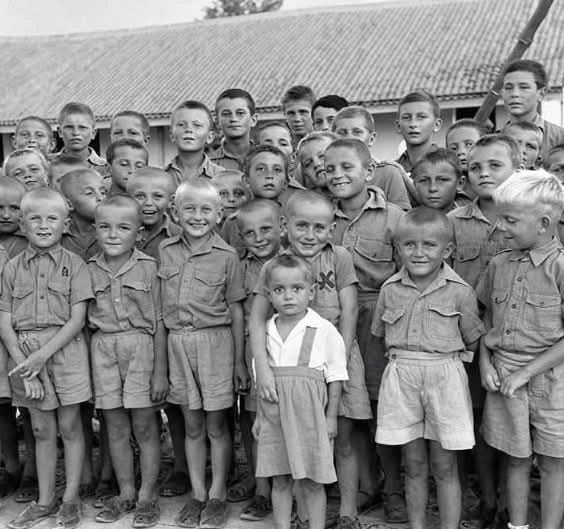
A Promise Between a Sister and Brother
Among the children was a 12-year-old girl named Maria.
She was traveling with her six-year-old brother, whose hand she held as they faced an uncertain future together.
Before their mother died, Maria had promised her that she would protect him. It was an enormous responsibility for someone who was still a child herself, but the promise gave Maria a reason to continue.
Around her were hundreds of young people carrying similar grief.
Some remembered the final words of parents they would never see again. Others protected tiny possessions that connected them to their former lives. The youngest could not fully understand the politics behind their suffering, but they understood loss.
As their journey continued and supplies became limited, another danger grew alongside hunger and exhaustion: the possibility that the children would simply lose hope.
Then news of their situation reached Nawanagar, a princely state in India.
The Maharaja Hears About the Children
Jam Sahib Digvijay Singhji was not an all-powerful ruler.
India remained under British rule, meaning major political decisions and control over ports were influenced by British authorities. The Maharaja could not simply dictate international policy.
But when he learned that hundreds of Polish children needed sanctuary, his attention was not centered on bureaucracy.
He wanted to know how many children were involved.
The answer was 740.
For the Maharaja, they were not merely another wartime refugee problem. They were hundreds of individual children who had already endured more suffering than any young person should have to experience.
British authorities had reportedly refused permission for them to land.
The Maharaja chose another path.
His conscience, he made clear, was not something British authority could command.
The children would be welcomed.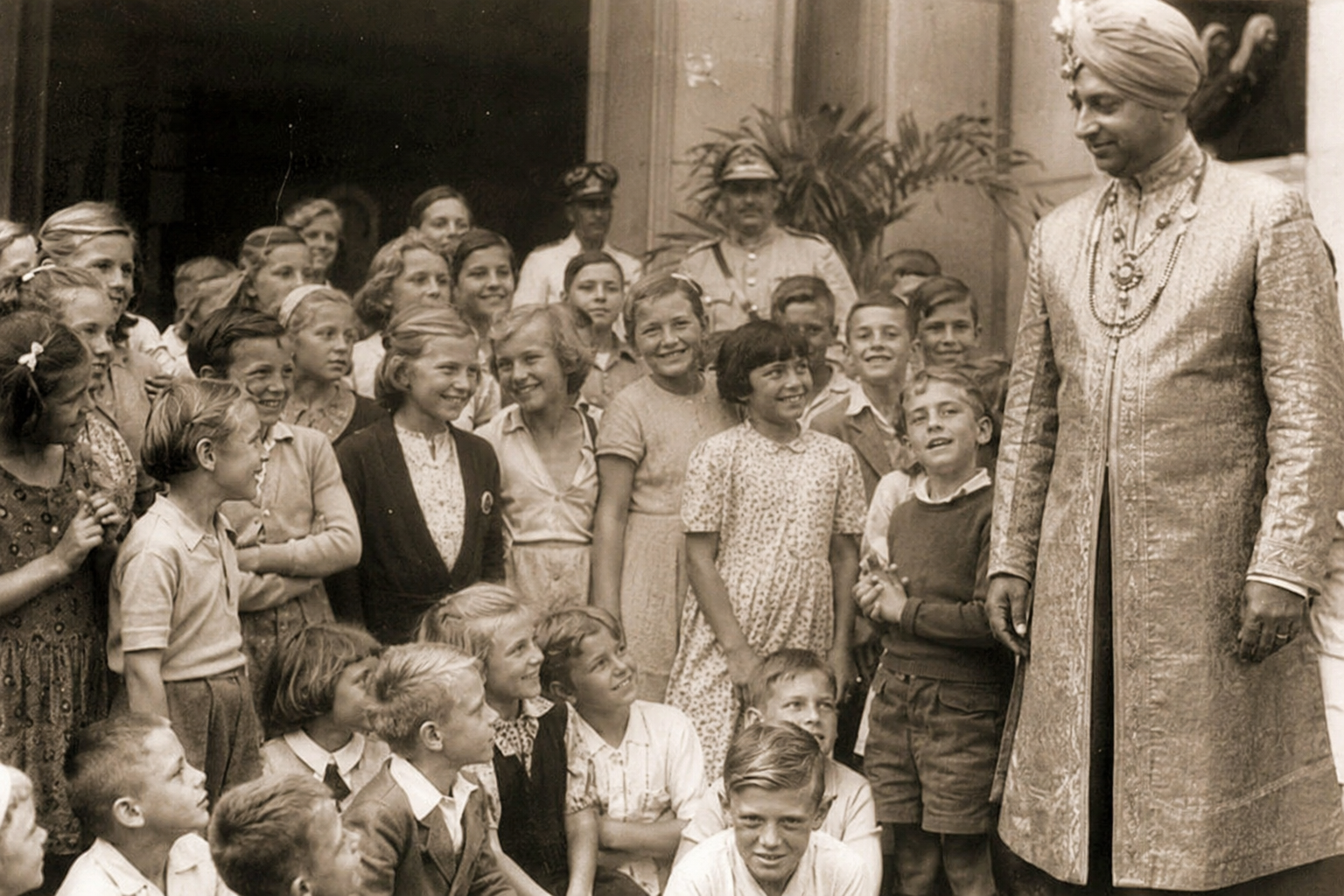
A Shoreline That Finally Meant Safety
In August 1942, the ship approached Nawanagar.
For children who had grown accustomed to rejection, trusting that this destination would be different was not easy.
They came ashore exhausted, wearing simple, worn clothing. Some carried small reminders of the families and homes they had lost—a photograph, a toy or another treasured possession.
Waiting for them was the Maharaja.
Rather than treating them as unwanted foreigners, he offered something many had feared they would never experience again: belonging.
He told the children that they were no longer orphans. They were now children of Nawanagar.
For young refugees who had spent years being displaced from one place to another, the meaning went far beyond being allowed onto land.
Someone wanted them there.
And the Maharaja’s help did not end at the shoreline.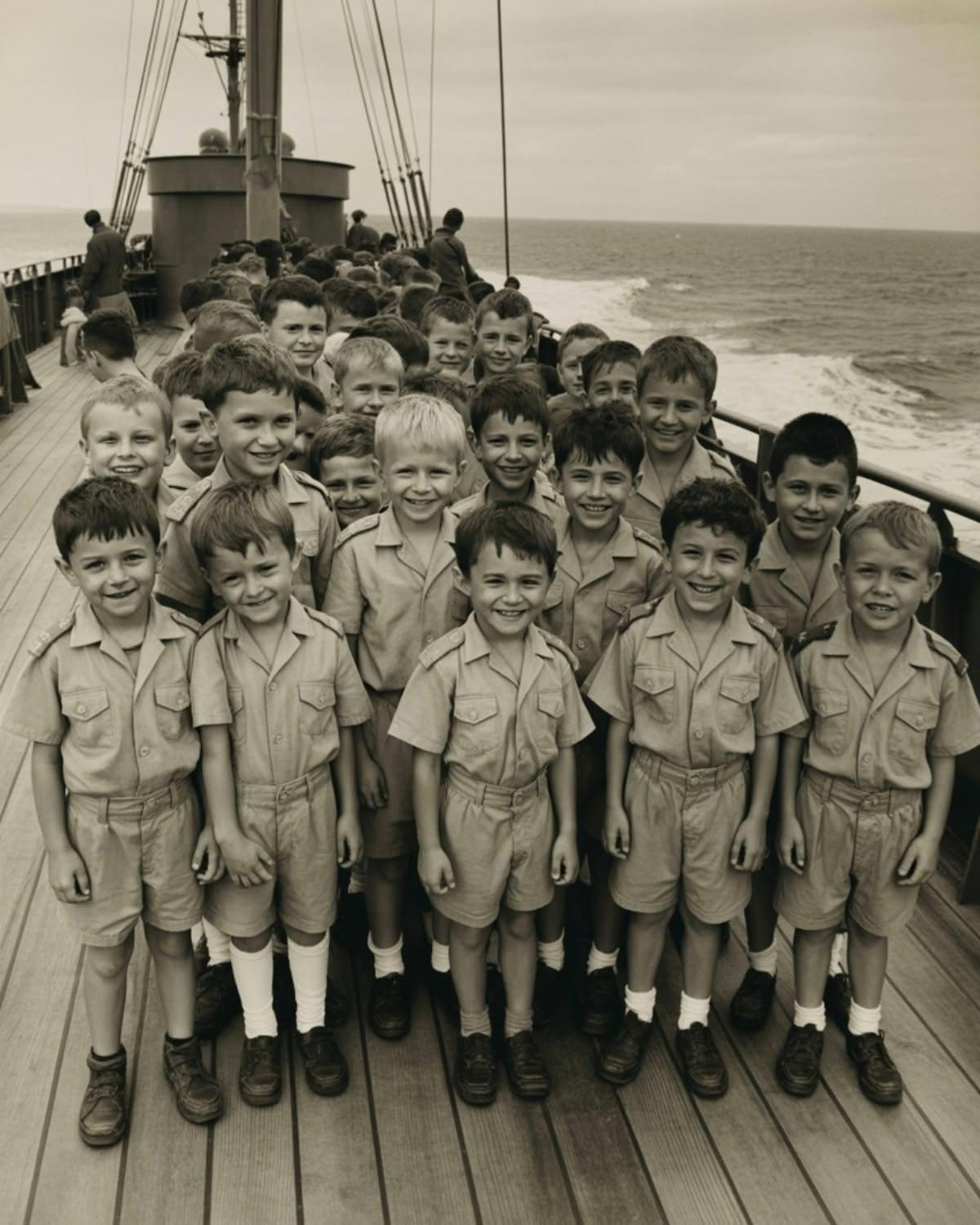
More Than Food and Shelter
A settlement was created for the Polish children near the Maharaja’s palace.
There, they received food, medical treatment and education. A school allowed them to resume studies that war had interrupted.
Yet Digvijay Singhji appeared to understand that keeping children alive was only part of the task.
They also needed the chance to become children again.
The settlement allowed them to play games, attend classes, celebrate holidays and form friendships. After years dominated by survival, ordinary experiences became extraordinary luxuries.
Importantly, the children were not expected to abandon their Polish identity in exchange for safety.
They were encouraged to preserve their language, traditions, songs and culture. The home they had lost was not something they were required to erase from memory.
Instead, Nawanagar became a place where they could carry Poland with them while rebuilding their lives in India.
Slowly, fear began making room for laughter.
Children who had once wondered whether there would be enough food could sit down to full meals. Those who had lived with constant uncertainty could go to sleep knowing adults were there to protect them.
And their relationship with the Maharaja became deeply personal.
The children came to call him “Bapu”—father.
It was a remarkable transformation. A man who had begun as a distant ruler in a foreign land had become a father figure to children whose own families had been torn apart by war.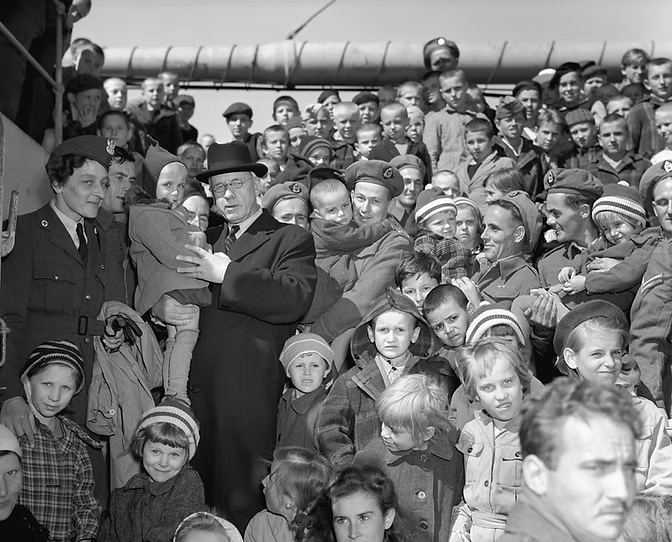
A Different Kind of Wartime Legacy
World War II is remembered through enormous events: battles, invasions, military leaders, political decisions and staggering numbers of casualties and refugees.
Stories like the one in Nawanagar reveal another side of that history.
The Maharaja did not end the war. He could not restore the children’s lost parents or return the years that had been taken from them.
What he could do was use the authority and resources available to him to give them safety.
And he did.
For the children who found refuge there, Nawanagar became far more than a temporary destination on a map. It was where rejection finally ended. It was where education resumed, meals returned to the table and childhood began to emerge from beneath years of trauma.
Years later, many remembered not only the Maharaja but also the people who had welcomed them and the sense of security they experienced after so much uncertainty.
Their story endured because it illustrated something larger than one rescue during one war.
At a time when nationality and politics divided millions of people, Digvijay Singhji looked at the refugees before him and saw children.
He could have decided that their suffering belonged to another government or another country. Few would have expected a ruler thousands of miles from Poland to accept responsibility for them.
Instead, he opened his territory to 740 young strangers.
The children had crossed countries and an ocean after losing homes, parents and any certainty about what would happen next.
In Nawanagar, they finally encountered a different answer.
They were welcome.
And for hundreds of children who had spent years searching for somewhere safe enough to call home, that answer changed everything.