Sammy Davis Jr. Kept Waiting for Dean Martin — Then the Hospital Door Finally Opened
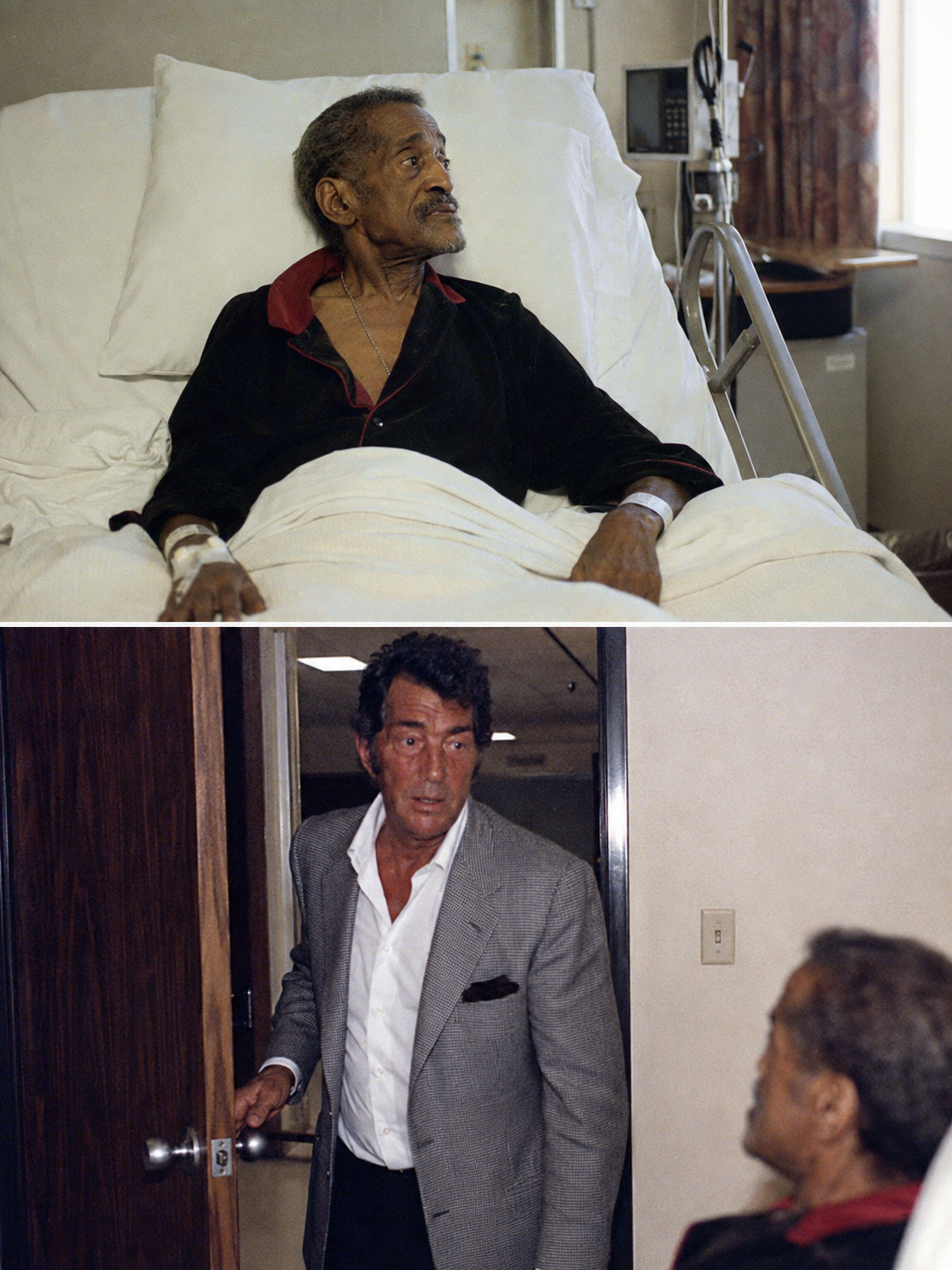
By May 1990, the stages, spotlights and roaring casino crowds belonged to another lifetime.
Sammy Davis Jr., one of the most dynamic entertainers of his generation, was gravely ill with throat cancer in a Los Angeles hospital. The singer, dancer and comedian who had once seemed capable of commanding any room had been physically diminished by the disease. His famous voice was weakened, and the seemingly endless energy that had defined his performances was gone.
Friends came to see him during those final weeks. Frank Sinatra visited. Elizabeth Taylor arrived. Liza Minnelli spent time at his bedside. They were people connected to decades of show-business memories, triumphs and friendships.
Yet Davis was still hoping to see someone else.
Dean Martin.
For Davis, Martin was more than another celebrity from Hollywood’s golden age. He was “Dino,” an old friend who had stood beside him during the years when the Rat Pack ruled Las Vegas and their chemistry turned ordinary nightclub performances into cultural events.
And as Davis grew weaker, there was uncertainty over whether Martin would ever walk through the hospital door.
Three Men Who Defined an Era
For millions of fans, Sammy Davis Jr., Dean Martin and Frank Sinatra represented a particular kind of American glamour.
They were sharply dressed, effortlessly funny and unpredictable onstage. Their performances carried the feeling that the audience was watching friends entertain one another as much as professional performers putting on a show.
Las Vegas during the 1960s became one of the great settings for that chemistry.
At the Sands Hotel and other venues, the appeal went beyond individual songs. Sinatra might provoke one of his friends with a joke. Davis could answer with explosive energy. Martin, often appearing relaxed and almost detached from everything happening around him, could deliver a perfectly timed line without seeming to make any effort at all.
The personalities were different.
Sinatra was portrayed as intense, passionate and fiercely protective. Davis was ambitious and determined, carrying himself with the drive of someone who had spent much of his life fighting to be judged by his talent.
Martin was harder to read.
He seemed easygoing and private, someone who preferred humor to emotional displays. Behind that casual exterior, however, was a man who could care deeply without necessarily expressing those feelings openly.
That difference would become especially important decades later, when Davis was lying in a hospital bed hoping his old friend would come.
A Friendship That Meant More Than Show Business
Davis had built an extraordinary career while confronting racial prejudice that followed him even at the height of his fame.
He could perform for enthusiastic audiences and headline prestigious venues while still facing discrimination away from the stage. In some places, the contradiction was particularly cruel: he could entertain hotel guests without being treated as an equal within the same establishments.
Sinatra became known within their circle as an outspoken defender of Davis, challenging discrimination and segregation at venues where they worked.
Martin’s support was less dramatic.
He did not need to turn Davis into a symbol or publicly announce his loyalty. He simply treated him as his friend.
For Davis, that ordinary acceptance carried enormous meaning.
Their relationship grew through years of shared performances, jokes, setbacks and victories. Behind the tuxedos and nightclub mythology, they had built bonds that could not be easily explained by publicity photographs or show-business labels.
The Rat Pack was famous.
Their friendship was personal.
Then Life Pulled Them Apart
No entertainment dynasty lasts forever.
As the decades passed, the world around the Rat Pack changed and the three men increasingly followed separate paths.
Sinatra remained an enormous entertainment figure. Davis continued performing and breaking boundaries. Martin gradually withdrew further from the spotlight.
Personal losses affected him, and he became increasingly private.
Eventually, distance grew between men who had once spent so much of their lives together. It was not presented as the result of a dramatic feud or a disappearance of affection. Instead, it was the quieter kind of separation that can happen when years accumulate and once-inseparable friends begin living increasingly different lives.
That history made Davis’ final wish particularly emotional.
He did not simply want another famous visitor.
He wanted Dino.
Waiting for One Familiar Face
By early 1990, Davis understood how serious his condition had become.
Cancer had taken a devastating toll. Medical treatment had reached its limits, and the people around him understood that his remaining time was short.
Visitors came. Memories were shared. Old stories returned.
Still, Davis kept hoping Martin might appear.
As his condition worsened, the possibility became increasingly uncertain.
There were several reasons Martin might stay away. He had his own health difficulties. He was famously uncomfortable around hospitals and emotionally charged farewells. Seeing Davis in such a weakened condition may have been particularly painful for someone who had spent years avoiding overt displays of grief.
The longer Davis waited, the more it seemed possible that the reunion would never happen.
For two men whose public images had been built around laughter, coolness and apparently effortless confidence, the reality confronting them could not have been more different.
There was no audience to impress.
No orchestra waiting for a cue.
No microphone.
No Las Vegas crowd expecting another joke.
There was simply a seriously ill man hoping to see an old friend one more time.
Then Dean Martin Arrived
On May 14, 1990, the waiting ended.
The hospital room door opened.
Dean Martin walked in.
The moment carried the weight of everything that had come before it: the glamorous nights in Las Vegas, the laughter at the Sands, the racial barriers Davis had fought throughout his career, the loyalty that had helped bind the Rat Pack together, and the years of distance that followed.
By then, their legendary public image mattered far less than their private connection.
Davis was no longer waiting for Dean Martin the movie star or Dean Martin the nightclub entertainer.
He had been waiting for Dino.
An old friend.
The arrival became a final reminder that beneath one of Hollywood’s most enduring legends were relationships between real people—complicated by time, silence, loss and different ways of expressing affection.
The Rat Pack had once seemed indestructible under the lights of Las Vegas.
Decades later, inside a quiet hospital room, its meaning had been reduced to something far simpler and more human:
One friend had been waiting.
And the other finally came through the door.