DENISE FERGUS DEMANDS GREATER TRANSPARENCY AS JON VENABLES’ NEXT PAROLE HEARING APPROACHES
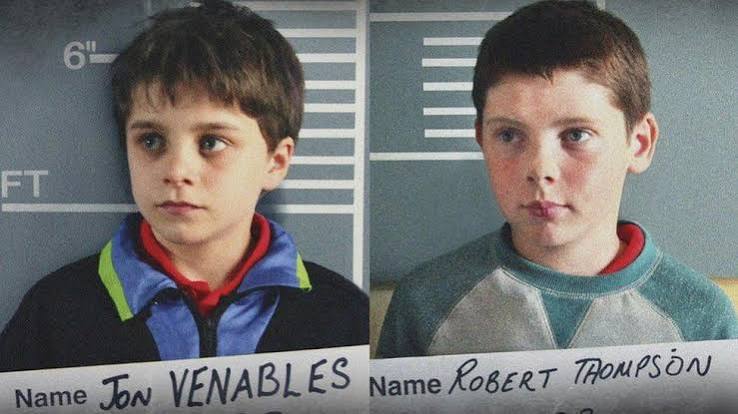
DENISE FERGUS DEMANDS GREATER TRANSPARENCY AS JON VENABLES’ NEXT PAROLE HEARING APPROACHES
More than three decades after the murder of two-year-old James Bulger, his mother Denise Fergus is once again challenging the secrecy surrounding Jon Venables’ parole process. The family has formally asked the Parole Board to allow the forthcoming hearing to take place in public, arguing that the extraordinary history of the case and Venables’ later offending justify greater transparency.
 A PAROLE HEARING UNDER INTENSE SCRUTINY
For Denise Fergus, the parole process is not simply another legal procedure.
It is a painful reminder of the son she lost in one of Britain’s most notorious child murder cases.
Venables and Robert Thompson were both 10 when they were convicted of James Bulger’s murder in 1993. Both were later released on licence as young adults.
More than 30 years later, Venables remains subject to strict anonymity protections.
Now, Denise and her husband Stuart are asking the Parole Board to reconsider how much of the next hearing should be visible to the public.
THE FAMILY’S PUSH FOR A PUBLIC HEARING
The Parole Board has confirmed receiving the Fergus family’s application for the forthcoming hearing to be held in public.
The request centers on transparency and public confidence.
The family argues that the exceptional circumstances surrounding the case, together with Venables’ subsequent offending, make the proceedings worthy of greater public scrutiny.
The application does not itself mean that the hearing will become public.
The Parole Board must consider the representations before deciding whether the legal threshold for a public hearing has been met.
 VENABLES’ LATER OFFENDING
The renewed attention is also linked to Venables’ conduct after his original release.
He was recalled to prison in 2010 after indecent images of children were discovered.
After being released again, he was recalled for a second time in 2017 following another offence involving indecent images of children.
Those later offences have become central to the debate surrounding his suitability for release and the level of risk that must be considered.
WHAT HAPPENED AT HIS PREVIOUS PAROLE HEARING?
Venables’ previous parole bid was rejected in 2023.
The Parole Board said it could not be satisfied that his release would be safe for the protection of the public.
The panel considered issues including his risk, his engagement with professionals and whether further rehabilitation work was necessary.
But that decision should not be confused with the outcome of the current parole process.
There has been no confirmed final decision publicly announced on the latest application.
THE “IRONIC TWIST” BEHIND THE FAMILY’S REQUEST
There is a striking aspect to the family’s latest move.
Denise Fergus is asking for greater public scrutiny of a process that has historically operated largely behind closed doors—while Venables’ identity remains protected.
Even if the hearing is eventually opened, that does not necessarily mean his identity, location or other protected information would automatically become public.
Measures could be put in place to preserve anonymity while allowing greater transparency around the decision-making process.
WHAT WILL THE PAROLE BOARD ACTUALLY CONSIDER?
A parole panel does not decide whether an offender deserves punishment for the original crime.
Its central question is whether the offender can safely be managed in the community.
That means the panel can consider factors such as:
Current risk of harm
Behaviour in custody
Engagement with rehabilitation
Previous offending and licence history
Proposed arrangements if released
The ability to manage identified risks in the community
For Venables, his later recalls are inevitably part of the history surrounding the current assessment.
A DECISION IS STILL TO COME
Online claims have suggested that Venables has already been permanently denied parole or that a dramatic new piece of evidence has already ended his latest freedom bid.
Those claims should be treated cautiously.
The confirmed development is the family’s request for a public hearing.
The final decision on that request—and the eventual parole decision—remain separate matters.
The next hearing is not expected to take place before September 2026.
FOR DENISE FERGUS, THE STORY NEVER ENDED
James Bulger was two years old when his life was taken.
For most families, a criminal conviction would mark the end of an unbearable chapter.
For Denise Fergus, however, the parole system has repeatedly brought that trauma back.
Every possible release decision raises the same question:
Could the man convicted of killing her son ever be safely returned to society?
Now she is asking another question:
Should the public be allowed to see how that decision is made?
THE NEXT CHAPTER
The parole process will ultimately depend on evidence assessed by an independent panel.
The Fergus family’s application does not guarantee a public hearing.
And a public hearing, if approved, would not automatically mean Venables’ identity or location would be revealed.
But the family’s demand has placed transparency at the center of one of Britain’s most closely watched parole cases.
James Bulger was only two years old.
Venables has subsequently been recalled to prison twice as an adult.
His latest parole process is now under renewed scrutiny.
And James’ mother wants the public to have a greater opportunity to see how the decision is reached.
For now, the final outcome remains ahead.
But one thing is clear: the debate over Jon Venables’ future—and the level of secrecy surrounding it—is far from over.
The latest Parole Board developments, the family’s application and the confirmed timeline are in the comments.
Independent commentary on publicly reported court and parole proceedings. Not affiliated with law enforcement, government agencies or the Parole Board.