HUMAN REMAINS FOUND IN DEMOLISHED NIAGARA FALLS HOME IDENTIFIED AFTER DECADES — POLICE NOW INVESTIGATING HOMICIDE
HUMAN REMAINS FOUND IN DEMOLISHED NIAGARA FALLS HOME IDENTIFIED AFTER DECADES — POLICE NOW INVESTIGATING HOMICIDE
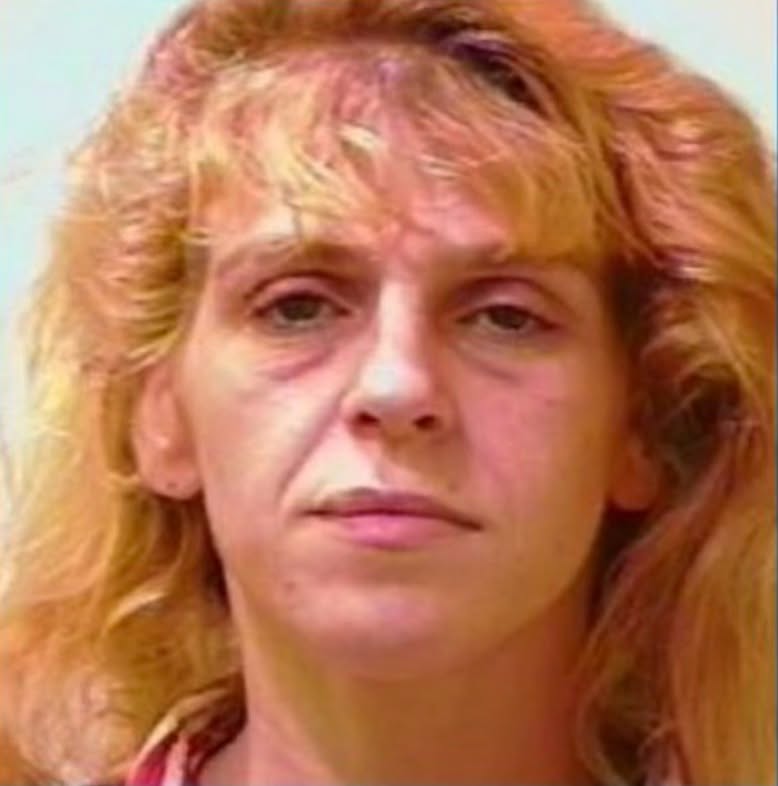
Human remains discovered during the demolition of a vacant Niagara Falls property have been identified as Brenda Marie LeBlanc, a woman who may have died more than 30 years ago. Investigators now believe her death was a homicide and are appealing to the public for information that could help explain how she ended up inside the home.
 REMAINS DISCOVERED DURING DEMOLITION
The case began in November 2023, when construction crews demolishing a vacant property at 7081 Stanley Avenue in Niagara Falls, Ontario, made an unexpected discovery.
Human remains were found inside the former multi-unit rental property, which had reportedly been vacant for several years.
According to police, the building had frequently been entered by unhoused individuals during the period it stood vacant, adding another layer of uncertainty to the investigation.
At first, investigators faced a fundamental problem: they did not know who the woman was.
FORENSIC EXAMINATION POINTED TO A DECADES-OLD DEATH
Forensic and anthropological examinations determined that the remains belonged to an adult woman.
Investigators also concluded that she had likely been at the property for many years.
The available evidence suggested that her death may have occurred as far back as the mid-1990s.
That meant detectives were potentially dealing with a disappearance and death dating back more than three decades.
With so much time having passed, identifying the woman presented a major challenge.
There were no immediate answers about her identity, how she died or why her remains were inside the Stanley Avenue property.
A DNA BREAKTHROUGH
The investigation eventually took a major step forward in 2025.
Detectives turned to investigative genetic genealogy, a technique that combines DNA analysis with genealogical research to help identify unknown individuals.
The work involved cooperation between the Niagara Regional Police Service, Toronto Police Service, Ontario Forensic Pathology Service and Othram Laboratories in Texas.
That effort ultimately produced the breakthrough investigators had been seeking.
The remains were identified as Brenda Marie LeBlanc, who was born in 1963.
 WHO WAS BRENDA MARIE LEBLANC?
Police say LeBlanc had connections to the Niagara region during the 1990s.
She lived in Niagara Falls and St. Catharines during that period and was originally from New Brunswick.
But identifying her has also raised new questions.
Investigators still do not know exactly how she came to be at the Stanley Avenue property.
They have not established what relationship, if any, LeBlanc had with the residence or the people associated with it.
And perhaps most importantly, detectives are still trying to determine what happened to her.
POLICE NOW TREAT HER DEATH AS A HOMICIDE
Investigators say the evidence gathered so far has led them to investigate LeBlanc’s death as a homicide.
That changes the focus of the case.
What began as the discovery of unidentified remains has now become an effort to reconstruct the final period of LeBlanc’s life and determine who may have been responsible for her death.
Yet the passage of time creates enormous challenges.
Potential witnesses may have moved away.
People who knew LeBlanc may no longer be in contact with one another.
Memories from the 1990s may be incomplete.
And people who knew something at the time may never have realized that their information could eventually become important to a homicide investigation.
THE QUESTIONS DETECTIVES STILL NEED ANSWERED
Investigators are now working to reconstruct LeBlanc’s life and movements during the 1990s.
Among the unanswered questions are:
When exactly did Brenda LeBlanc die?
How did her remains end up inside the Stanley Avenue property?
Did she have any connection to the home or its occupants?
Who were her friends, associates and acquaintances at the time?
Did anyone notice that she had suddenly disappeared?
These questions could potentially be answered by someone who remembers an otherwise ordinary interaction from decades ago.
POLICE MAKE AN APPEAL TO THE PUBLIC
The Niagara Regional Police Service is now asking anyone who knew LeBlanc during the 1990s—or who may have information about her life—to come forward.
Investigators are particularly interested in information about her associates, whereabouts and activities during that period.
Even seemingly minor details could potentially help detectives establish a timeline.
Someone may remember where LeBlanc lived, who she spent time with, where she worked, who she socialized with or when they last saw her.
After more than three decades, investigators are hoping those memories can help fill the gaps.
A COLD CASE WITH A NEW CHAPTER
The discovery at 7081 Stanley Avenue initially provided investigators with more questions than answers.
For years, the woman’s identity remained unknown.
Now detectives know her name.
Brenda Marie LeBlanc.
But identification is only one part of the investigation.
Police still need to understand how she died, how she came to be inside the property and who may have been responsible.
More than 30 years after LeBlanc may have lost her life, investigators are hoping someone who remembers her can finally provide the missing piece.
A woman who remained unidentified for decades now has a name.
Police are still searching for the story behind her death.
And investigators are asking the public to help bring answers to a case that has remained hidden for generations.
Anyone with information about Brenda Marie LeBlanc, her associates, whereabouts or activities during the 1990s is asked to contact the Niagara Regional Police Service Homicide Unit Hotline at (289) 248-1058.
Independent commentary based on information provided by law enforcement and publicly reported case details. The homicide investigation remains ongoing, and no suspect or individual should be considered responsible unless established through the legal process.