He Walked Away From a S$10,000 Tech Salary. Now He Cooks Hokkien Mee for a Living
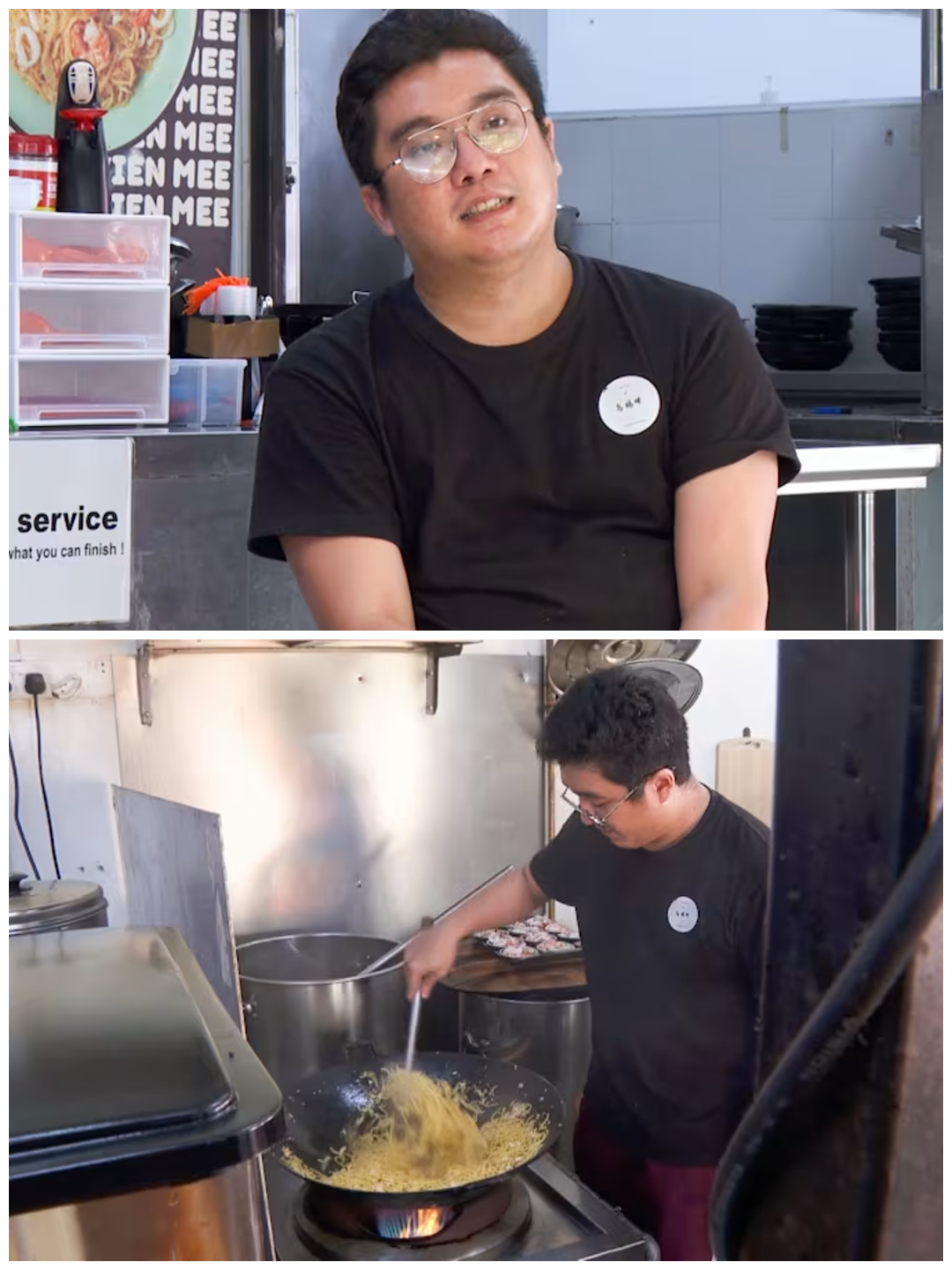
At 30, Alvin Tan had the kind of job many people spend years chasing.
He was working in technology, earning about S$10,000 a month and building a career in an industry long associated with generous salaries and rapid growth.
Then he chose a very different future.
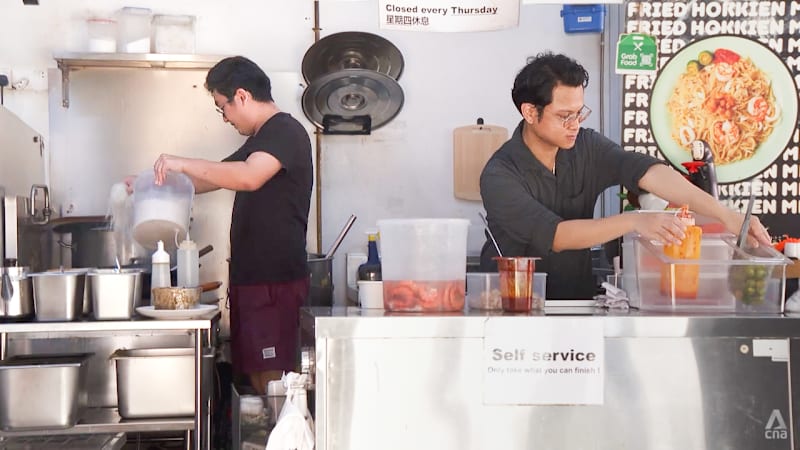
Today, instead of writing software, Tan spends his days over a hot wok at Umami, the Hokkien mee stall he opened in Geylang. His monthly income can reach about S$4,000 — far below what he once earned — and the work demands longer hours, less sleep and far more financial uncertainty.
Yet for Tan, the change has given him something his former career increasingly could not: a stronger sense that his future is in his own hands.
Leaving Before the Decision Was Made for Him
Tan’s move away from technology came as artificial intelligence was reshaping conversations about job security.
When his former employer, Meta, later began cutting about 10 percent of its workforce in May, Tan said the development did not surprise him. He had already been thinking about how automation and AI could affect software engineers and wondered whether he might eventually find himself among those losing their jobs.
So when his contract with Meta ended, Tan did not wait to see what the industry would do next.
He left.
The decision was not simply about avoiding layoffs. Tan wanted responsibility for what happened next, even if that meant accepting greater personal risk. Being self-employed meant that if the business failed, the outcome would be connected to decisions he had made himself rather than a corporate restructuring beyond his control.
And he already had another idea cooking.
Literally.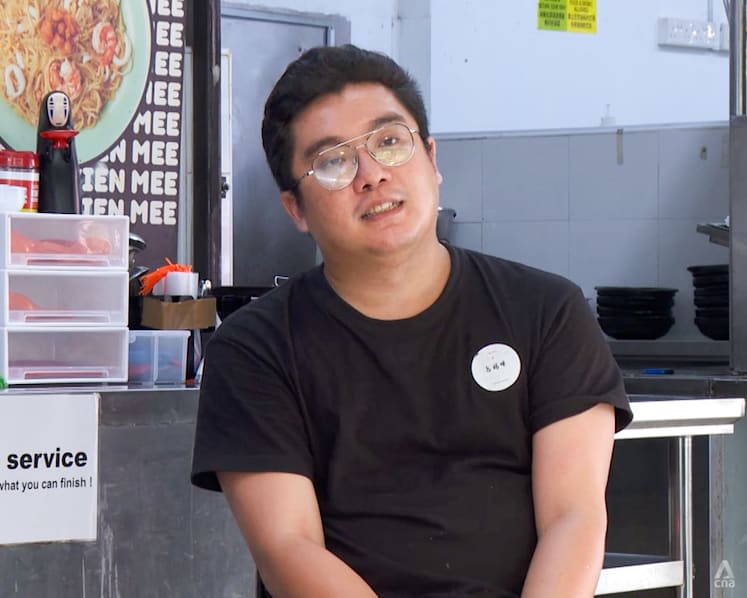
He Treated Hokkien Mee Like a Software Product
Tan did not immediately pour his savings into a restaurant.
Instead, he borrowed a principle from software engineering: build something small, see whether people want it and improve it before expanding.
He started by making Hokkien mee at home and giving plates away. After that, he tested the dish at food events. Only after gaining experience did he open Umami in Geylang in July 2025.
The gradual approach helped him test his food without taking the full financial risk of launching a large operation from day one.
But creating a dish people enjoyed turned out to be only one part of becoming a hawker.
Tan soon discovered that making delicious food and running a profitable food business were two very different problems.
His early focus had been almost entirely on improving the Hokkien mee. He had paid far less attention to how much each plate actually cost to produce.
That became a serious issue in a market where customers could typically expect Hokkien mee for roughly S$5 to S$6.
At Umami, Tan now charges S$6 or S$8 a plate. The stall can generate as much as S$19,000 in monthly revenue, but that headline number tells only part of the story. Ingredients consume about 45 percent of sales, while rent, utilities and labor take another share. Tan ultimately keeps around 20 percent.
Before Making Money, He Has to Sell 45 Plates
The economics of the stall quickly taught Tan how narrow the margin can be.
On a typical day, he needs to sell about 45 plates before he begins earning money for himself.
For months, he was selling fewer than half that number. Unsold ingredients sometimes had to be thrown away, an experience he found particularly painful because every discarded item represented both wasted food and lost money.
Gradually, however, more customers found the stall.
Some returned.
The business eventually became profitable.
That experience reinforced a lesson Tan now applies to entrepreneurship: protect yourself in the beginning. Rather than risking everything at once, he believes it makes more sense to start small and look for evidence that customers genuinely want what you are selling before committing more money.
Even profitability, however, has not removed the pressure.
Gas and prawns have become more expensive, and Tan has so far absorbed those higher costs rather than immediately raising prices. Because many of the stall’s expenses cannot easily be reduced, increases often come directly out of what he takes home.
If his personal share falls to about 10 percent, he said he may have to increase prices.
The Next Problem Is Growth
Tan currently has a part-time assistant, but he knows he may eventually need more help.
Hiring a full-time employee remains slightly beyond what the business can comfortably support. He estimates that selling about 10 additional plates each day could put him in a better position to make that hire.
The irony is that growing the stall may initially mean keeping less money for himself.
More demand requires more labor. More labor creates another expense. But without help, Tan knows there is a limit to how much he can personally cook and manage.
He hopes eventually to find someone — an employee or perhaps a business partner — whom he can trust and who sees the stall’s potential.
For Tan, that is becoming another lesson in entrepreneurship: sometimes holding too tightly to current profits can prevent a business from becoming something larger.
A Smaller Paycheck Changed His Life Outside Work, Too
The financial difference between his old and new careers is substantial.
Tan no longer receives employer Central Provident Fund contributions and is not currently contributing his own money to CPF, though he intends to do so later as he prepares to pay for his Build-To-Order flat.
His personal circumstances have also made the switch more manageable.
He describes his needs as relatively modest: food, public transportation, his flat, which is expected next year, and perhaps one vacation annually. He also does not plan to have children, something he believes gives him additional financial flexibility.
Tan acknowledged that someone supporting children and a family might reach a very different conclusion about whether entering the food business makes sense.
Money is not the only cost.
Running Umami leaves him with less time for friends and family. He sleeps less and has less opportunity to rest or pursue other interests.
But he does not describe those losses as sacrifices.
To him, they are an “opportunity cost” — things he has accepted in exchange for pursuing another kind of life.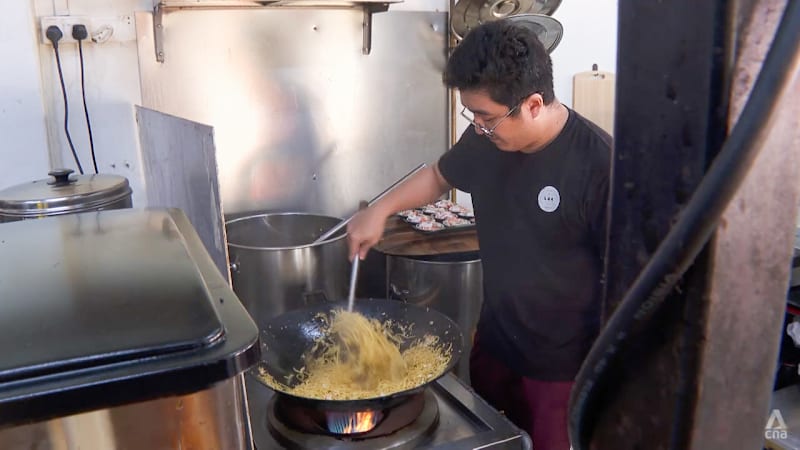
What He Gained Was Control
A year after leaving technology, Tan earns less, works longer and carries risks he never had as a salaried employee.
Still, when something goes wrong at his stall, he can change it.
There is no lengthy approval process. He can test an idea, learn from a mistake and adjust the business according to what he believes makes sense.
That control has become one of the biggest rewards of his career change.
Tan may no longer have the predictable paycheck of a S$10,000-a-month tech job. Instead, his income depends on prawns, gas prices, rent, customer traffic and how many plates leave his wok every day.
But when an idea finally succeeds after hours of work, he says the feeling can be “magical.”
For Tan, choosing Hokkien mee over software was never simply a story about abandoning a lucrative career.
It was a decision about which uncertainty he preferred: waiting for someone else to determine his future, or accepting the risks of building one himself.