NOLAN WELLS’ MOTHER REPORTEDLY FOUND A PRIVATE DIARY IN HIS BEDROOM — WHAT HE MAY HAVE WRITTEN BEFORE HORN ISLAND IS NOW RAISING NEW QUESTIONS

NOLAN WELLS’ MOTHER REPORTEDLY FOUND A PRIVATE DIARY IN HIS BEDROOM — WHAT HE MAY HAVE WRITTEN BEFORE HORN ISLAND IS NOW RAISING NEW QUESTIONS
A private diary. A grieving mother. And words allegedly written before an 18-year-old left for the trip from which he would never return.
The Nolan Wells case has taken another emotional turn after an online report claimed that Nolan’s mother discovered a personal diary inside his bedroom containing thoughts written before his final trip to Horn Island.
The allegation has quickly attracted attention because of one potentially significant detail: the report claims that some of the writing concerned the period shortly before Nolan left for the island.
But there is a major question that cannot be ignored.
Has the existence and contents of this diary actually been independently verified?
At this time, the claim should be treated as unconfirmed, not as established evidence in the investigation.
Still, if such a diary exists, investigators could potentially have another piece of information to examine as they attempt to reconstruct Nolan’s final hours.
And that possibility is what has sent the case in another direction.
THE MOST PERSONAL CLUE YET?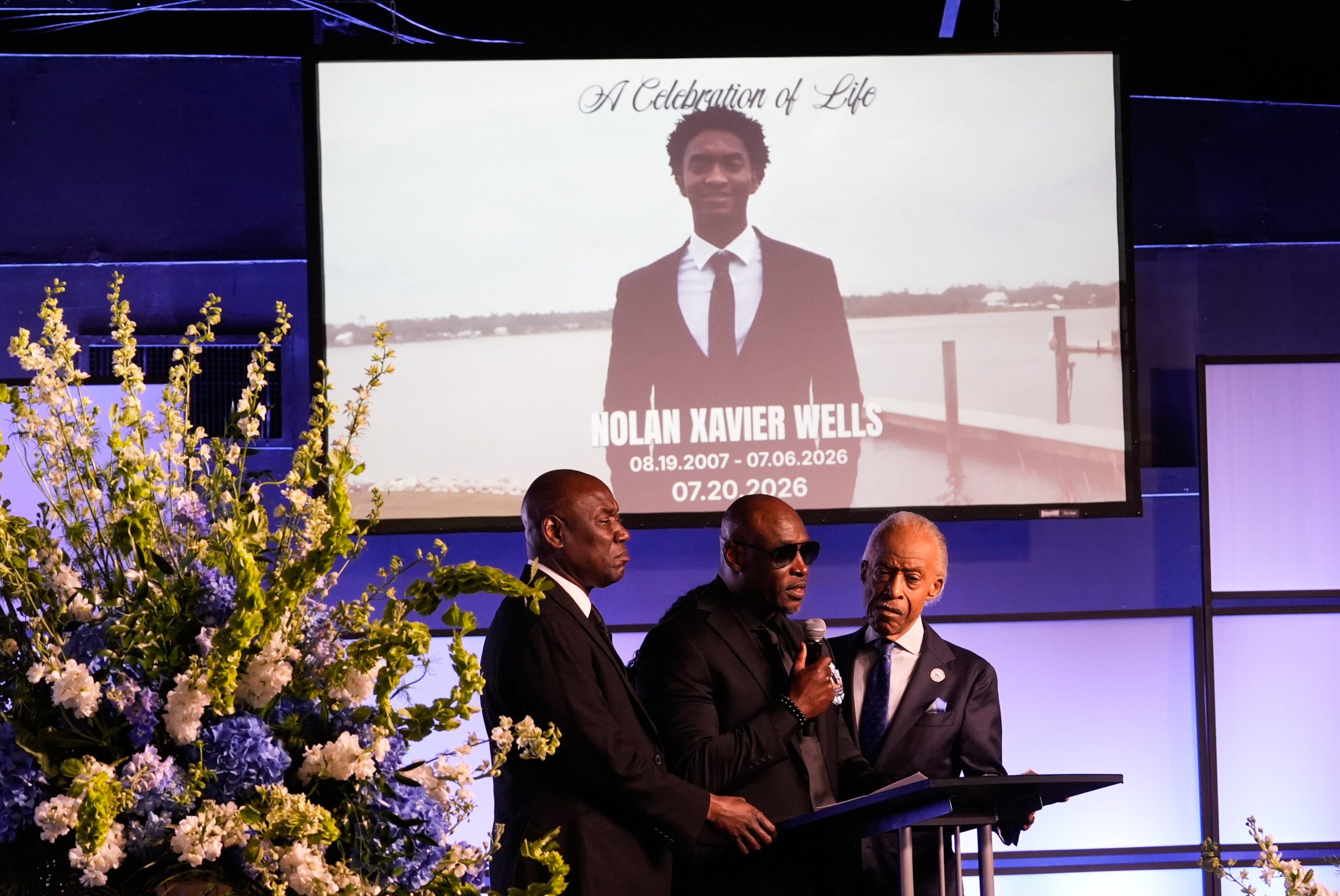
Nolan Xavier Wells was 18 when he disappeared on July 4 while on Horn Island in Mississippi with friends. His body was discovered two days later on the northwest end of the island. Authorities initially said the cause of death was unclear.
Since then, the public discussion surrounding his death has focused heavily on timelines, witnesses, boat movements, digital information, forensic questions and competing accounts of what happened that afternoon and evening.
But a diary would be something entirely different.
It would not be a witness describing Nolan.
It would not be a friend remembering a conversation.
It would not be a social-media post created after his death.
It would allegedly be Nolan’s own writing.
That distinction is what makes the claim so emotionally powerful.
A private diary can contain thoughts a person never tells anyone else — fears, frustrations, plans, arguments, relationships, worries or completely ordinary observations that only become meaningful after tragedy strikes.
And according to the online account, Nolan’s mother reportedly came across such writing while going through his bedroom.
WHAT DID NOLAN WRITE BEFORE HE LEFT?
This is where the story becomes much more complicated.
The report does not provide a publicly verifiable image of the alleged diary pages or publish a complete, authenticated passage from them.
Instead, it claims that material relating to the hours before Nolan left for Horn Island was particularly difficult for his mother to read.
That immediately raises a series of questions.
Was Nolan worried about something?
Did he mention a person?
Did he describe a conversation?
Did he write about plans for July 4?
Did he expect something unusual to happen?
Or could the words have been completely ordinary — words that only seem ominous now because everyone knows how the story ended?
Those possibilities are dramatically different.
And investigators would have to determine which one, if any, is supported by evidence.
A DIARY DOES NOT AUTOMATICALLY SOLVE A CASE
This distinction is critical.
Even if a diary is eventually proven to exist, and even if it contains troubling statements, that would not automatically prove that someone caused Nolan’s death.
A person can write about another individual without that person having any involvement in a later event.
A person can describe a fear that never materializes.
A private entry can also be misunderstood when removed from the context in which it was written.
That is why investigators would need to compare any alleged diary entry with independent evidence.
They could potentially examine:
- When the entry was written
- Whether the handwriting is consistent with Nolan’s
- Whether the diary belonged to Nolan
- Whether other entries establish a reliable timeline
- Phone records and communications
- Photographs and videos
- Witness statements
- Boat movements
- Location data, if available
- Other physical or forensic evidence
If several independent pieces of evidence point in the same direction, a diary entry could become much more meaningful.
If they contradict one another, investigators would have to determine why.
THE TIMELINE COULD BE EVERYTHING
The timing surrounding Nolan’s disappearance remains one of the central areas of public interest.
The United Cajun Navy recently released a 22-page working analytical report concerning events surrounding Nolan’s final known period on Horn Island. The organization said the report was intended to compile information, distinguish documented events from witness reports, and identify what remains unknown. It also emphasized that the material was not presented as a definitive “bombshell.”
That makes the alleged diary claim particularly intriguing — if it can be authenticated.
Imagine, for example, that Nolan wrote down a plan before leaving.
Investigators could compare that plan with photographs, phone activity and witness accounts.
If everything matches, the diary could help establish what Nolan intended to do.
If something does not match, that discrepancy could become another question investigators need to answer.
But that is very different from saying the diary proves foul play.
At this stage, it would simply be another potential source of information.
NOLAN’S OWN WORDS COULD CHANGE THE CONVERSATION
Since Nolan’s death, countless people have spoken about what they believe happened.
Friends have offered accounts.
Family members have demanded answers.
Online investigators have analyzed photographs and timelines.
Officials have addressed misinformation.
And social media has produced countless theories.
But Nolan cannot speak for himself.
That is why the alleged discovery of a personal diary carries such emotional weight.
If authentic, the pages could potentially offer a glimpse into Nolan’s thoughts before he left for the island.
Perhaps they contain nothing mysterious at all.
Perhaps they describe ordinary teenage concerns.
Perhaps they reveal a conflict that had already been resolved.
Or perhaps there is a detail that investigators have never publicly discussed.
Nobody should assume which possibility is true without seeing the evidence.
THE WARNING ABOUT MISINFORMATION
The Nolan Wells investigation has already been surrounded by an enormous amount of online speculation.
That makes verification more important than ever.
Mississippi Department of Public Safety Commissioner Sean Tindell recently warned that a purported toxicology report circulating online and presented as Nolan’s was fraudulent. Nolan’s family attorney also urged people to focus on verified information rather than social-media material presented as fact.
That warning provides important context for the diary story.
A dramatic claim can spread thousands of times before anyone checks whether the underlying evidence actually exists.
A headline saying “Nolan’s diary reveals what happened” would go far beyond what is currently established.
A more accurate question is:
“If Nolan Wells’ alleged diary exists, what does it actually contain — and can investigators authenticate it?”
That distinction matters.
WHY THE ORIGINAL DIARY WOULD MATTER
If investigators really do obtain a diary believed to belong to Nolan, the physical document could be far more important than screenshots circulating online.
They would want to know where it was found.
Who discovered it.
Who handled it.
Whether pages are missing.
Whether the writing can be authenticated.
Whether dates correspond with other known events.
And whether the contents can be independently corroborated.
The original document would provide a much stronger basis for examination than an anonymous photograph or social-media post claiming to show a page from Nolan’s diary.
Until that verification happens, the public should be careful about treating alleged excerpts as established evidence.
ONE QUESTION NOW HANGS OVER THE STORY
Perhaps the most haunting part of this development isn’t what the diary supposedly says.
It is what we don’t know.
What exactly did Nolan write?
When did he write it?
Was it really discovered inside his bedroom?
Was the writing authenticated?
Did investigators receive the original?
Does it contain information about July 4?
Does anything in it correspond with the known timeline?
And most importantly:
Does anything written by Nolan independently match evidence already in the hands of investigators?
Those answers would determine whether the diary is simply a heartbreaking private possession discovered after his death — or something investigators may need to examine much more closely.
A MOTHER READING WORDS HER SON NEVER EXPECTED HER TO READ
There is also a deeply human side to the story that can easily become lost beneath the speculation.
If the report is accurate, Nolan’s mother would not simply have been examining a potential piece of evidence.
She would have been reading the private thoughts of her son after losing him.
Words written before anyone knew that July 4 would become the final chapter of Nolan’s life.
A sentence that once seemed ordinary could suddenly feel devastating.
A name that once meant nothing could become significant.
A plan that seemed completely normal could take on an entirely different meaning after tragedy.
That is the cruelest part of hindsight.
People write expecting tomorrow.
Nolan never got that tomorrow.
THE CASE STILL NEEDS FACTS — NOT JUST THEORIES
The alleged diary discovery is undoubtedly the kind of claim that will fuel online discussion.
But the Nolan Wells case has already demonstrated how quickly unverified material can become accepted as fact.
The fake toxicology report is a clear reminder of that danger.
So the biggest question surrounding this alleged diary is not simply:
“What did Nolan write?”
It is:
“Can anyone prove that he wrote it — and can what he wrote be independently verified?”
Until those questions are answered, the diary remains an unconfirmed claim, not a proven breakthrough.
But if investigators eventually authenticate the document and discover that Nolan’s own words contain a specific detail about his plans, his state of mind or events leading up to his disappearance, those pages could become another important piece of the timeline.
And that is why this story is attracting so much attention.
After weeks of hearing other people describe Nolan’s final hours, the public is now asking whether something very different may exist inside his bedroom:
Nolan’s own voice, preserved on paper.
The question now is whether those words contain an answer — or simply another heartbreaking reminder of the young man whose final moments remain unexplained.