“SHE WASN’T THE SAME ANYMORE” — LINDSAY CLANCY’S HUSBAND DESCRIBES THE WOMAN HE SAYS HE LOST
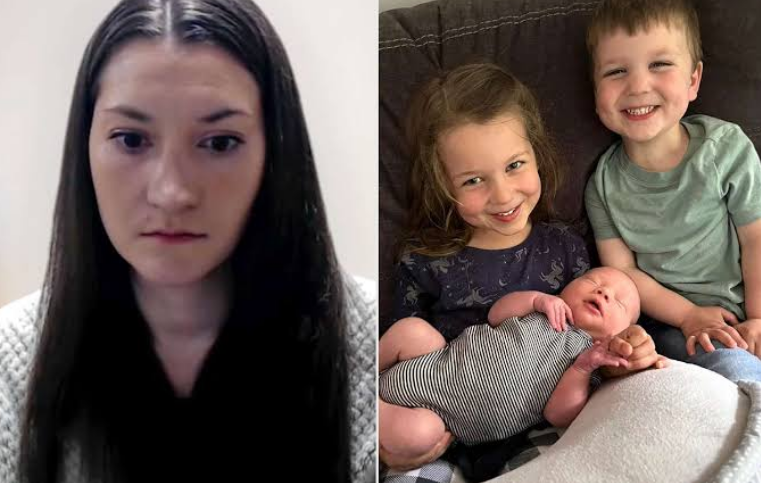
“SHE WASN’T THE SAME ANYMORE” — LINDSAY CLANCY’S HUSBAND DESCRIBES THE WOMAN HE SAYS HE LOST
As the Lindsay Clancy case continues to draw intense attention, the testimony and statements surrounding her mental state have raised one of the most difficult questions in the case: how could a mother suffering from severe psychiatric symptoms reach a point of unimaginable violence?
A HUSBAND REMEMBERING A DIFFERENT WOMAN
Before the tragedy, Lindsay Clancy was described by those close to her as a devoted mother and healthcare professional.
But her husband, Patrick Clancy, has spoken about a dramatic change in her behavior during the period leading up to January 24, 2023.
He has described a woman struggling with serious mental-health problems after the birth of their third child.
According to accounts presented in the case, the family was dealing with an increasingly complicated psychiatric situation.
 THE MEDICATION QUESTION
One of the most closely examined issues has been Lindsay’s psychiatric treatment.
Her defense has argued that she experienced postpartum psychosis, a rare but serious psychiatric condition that can involve hallucinations, delusions and severe disturbances in a person’s perception of reality.
The case has also drawn attention to the number of medications she was taking.
But there is an important distinction:
The existence of multiple medications does not, by itself, establish what caused Lindsay’s actions.
That question requires medical evidence, expert testimony and the court’s assessment of competing explanations.
THE 25-MINUTE WINDOW
On January 24, 2023, Patrick Clancy left the family home in Duxbury, Massachusetts, to pick up food.
He was gone for roughly 25 minutes.
When he returned, he discovered the horrifying aftermath.
Their three children—Cora, Dawson and Callan—had been attacked.
The tragedy immediately raised questions about what had happened during those few minutes and what Lindsay’s mental state had been at the time.
THE DEFENSE AND PROSECUTION SEE TWO DIFFERENT STORIES
The defense has argued that Lindsay’s severe psychiatric illness dramatically affected her ability to understand reality and control her actions.
Prosecutors, meanwhile, have presented evidence aimed at establishing criminal responsibility for the deaths.
That disagreement is at the heart of the case.
It is not simply about what happened inside the house.
It is about why it happened and whether Lindsay understood the nature and consequences of her actions.
 A CASE THAT GOES BEYOND ONE FAMILY
The Lindsay Clancy case has also sparked wider discussion about postpartum mental illness and whether warning signs can be recognized early enough.
Postpartum psychosis is considered a psychiatric emergency, but it is also uncommon.
That makes the case particularly difficult to understand for people who have never encountered the condition.
Mental illness can be part of the explanation investigators and doctors examine—but it should not automatically be treated as an explanation for every act of violence.
THE QUESTION THAT REMAINS
Patrick Clancy has spent years trying to understand what happened to his family.
The prosecution and defense have offered competing interpretations.
Experts have examined Lindsay’s medical history.
And the court has been left to weigh evidence that attempts to reconstruct a devastating period inside one family’s home.
Was Lindsay Clancy suffering from a severe psychiatric disorder that fundamentally altered her perception of reality?
Or did she retain sufficient understanding and control to be held fully criminally responsible?
Those are ultimately questions for the legal process and the evidence.
Behind the arguments over medication, diagnosis and criminal responsibility remains a family that lost three children in a matter of minutes.
Independent commentary based on publicly reported court proceedings and statements. Claims about Lindsay Clancy’s mental state, medication and the events of January 24, 2023 should be understood in the context of competing legal and medical arguments rather than as established conclusions.