WHERE IS LUCY LETBY NOW? INSIDE THE PRISON LIFE OF THE FORMER NURSE CONVICTED IN THE BABY-KILLING CASE
- ThanhThuy
- August 21, 2026
WHERE IS LUCY LETBY NOW? INSIDE THE PRISON LIFE OF THE FORMER NURSE CONVICTED IN THE BABY-KILLING CASE
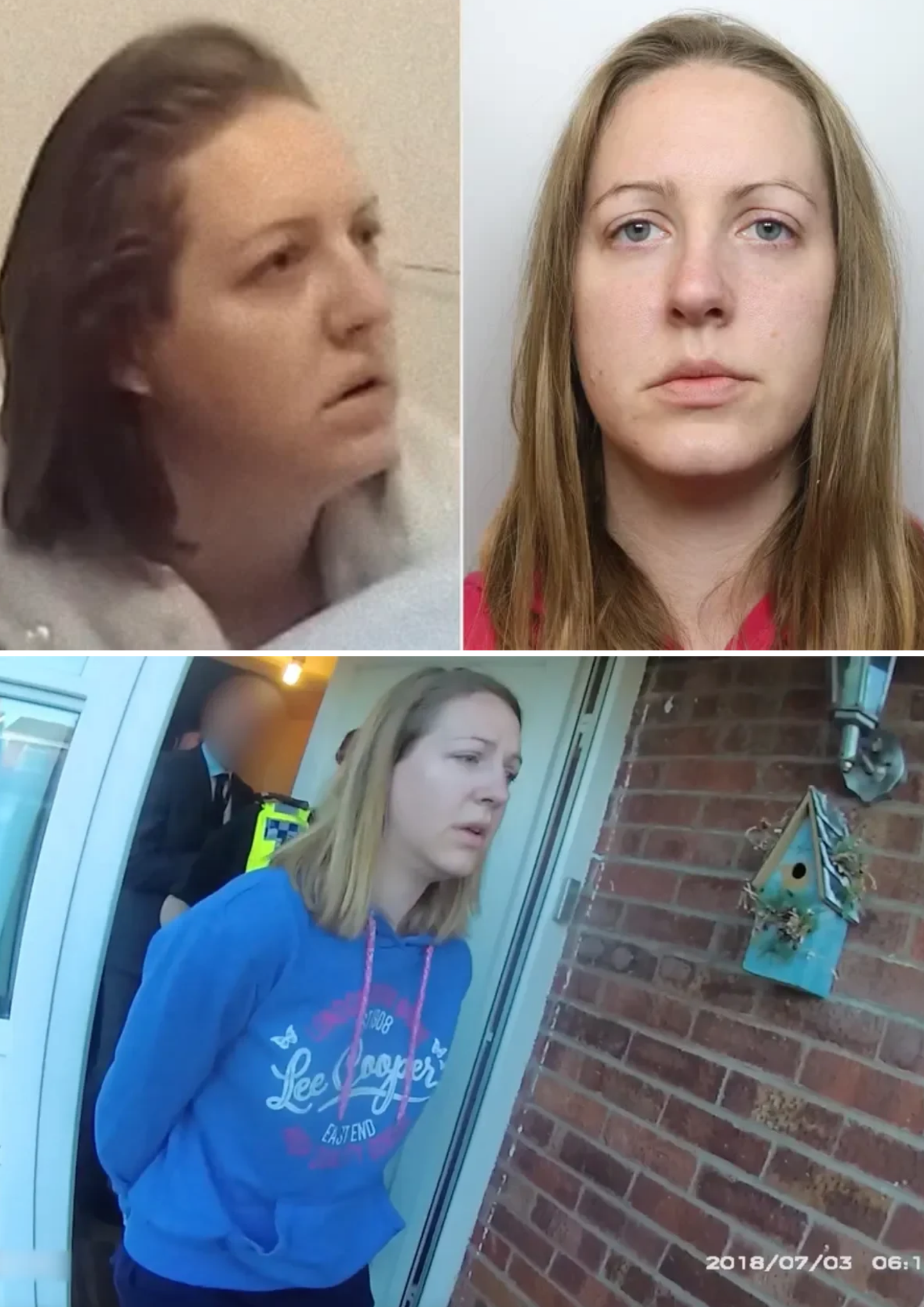
Three years after her first conviction, Lucy Letby remains behind bars — but her controversial case is far from over, with new legal challenges, a major hospital inquiry and renewed scrutiny of the evidence.
LONDON — Lucy Letby remains imprisoned for life, more than a decade after a series of unexplained collapses and infant deaths at the Countess of Chester Hospital first triggered questions about what was happening inside its neonatal unit.
The former neonatal nurse was convicted in 2023 of murdering seven babies and attempting to murder six others. Following a 2024 retrial involving one additional infant, she received a total of 15 life sentences.
But while Letby remains legally convicted, her case continues to generate fierce debate.
Her defense maintains that she is innocent and has submitted new expert material arguing that some of the babies may have died from natural causes or medical complications. At the same time, an independent public inquiry is examining how the hospital responded to the deaths and whether warning signs were missed.
 WHERE IS LUCY LETBY NOW?
Letby is currently serving her sentence at HMP Bronzefield, a high-security women’s prison in Surrey, according to recent reporting.
She has no ordinary prospect of parole under her whole-life sentence.
Her life behind bars has nevertheless attracted attention. Earlier this year, reports said Letby had obtained a prison-library position, distributing books and DVDs to other inmates — a role reportedly regarded as a desirable prison job.
Her incarceration is a stark contrast to the life she once had as a neonatal nurse.
 HOW DID THE CASE BEGIN?
Letby worked at the Countess of Chester Hospital, where she cared for premature and seriously ill newborns.
Between 2015 and 2016, a number of babies suffered unexpected collapses or died.
Senior clinicians became increasingly concerned about the pattern.
Police launched an investigation in 2017, and Letby was eventually arrested in 2020.
Prosecutors later alleged that she deliberately harmed infants by introducing substances or air into their bodies and by interfering with their feeding or treatment.
Letby denied the allegations.
THE EVIDENCE THAT CONVINCED THE JURY
During the trial, prosecutors presented medical records, evidence about Letby’s presence on the neonatal unit and handwritten notes recovered from her home.
The prosecution argued that the timing of the babies’ collapses was significant and that Letby was repeatedly present when the infants became critically ill.
Jurors ultimately convicted her on multiple counts.
Her first conviction included seven counts of murder and six counts of attempted murder. A later retrial resulted in another attempted-murder conviction, bringing the total number of life sentences to 15.
HER APPEAL FAILED — BUT THE LEGAL FIGHT DIDN’T END
Letby’s initial attempt to challenge her convictions was unsuccessful.
Her defense has nevertheless continued to pursue post-conviction avenues, including an application to the Criminal Cases Review Commission, or CCRC.
The defense has argued that newly examined medical evidence could fundamentally change the interpretation of the babies’ collapses and deaths.
Some doctors and medical experts have publicly questioned aspects of the prosecution’s medical theory, arguing that natural causes and problems in neonatal care may have been insufficiently considered.
That does not mean her convictions have been overturned.
They remain in force.
POLICE ALSO REVIEWED MORE BABY CASES
One of the most significant developments came in January 2026.
Cheshire Police said they had submitted evidence involving nine babies, including allegations concerning two additional deaths, to prosecutors for a charging decision.
The Crown Prosecution Service ultimately decided that there would be no additional charges against Letby arising from that review.
Police said they had believed the evidence met the charging standard but accepted the CPS decision. They also stressed that the decision did not affect or undermine Letby’s existing convictions.
That distinction is important.
The decision not to bring additional charges is not an acquittal and does not reopen the convictions for which Letby is already serving life sentences.
THE HOSPITAL ITSELF REMAINS UNDER SCRUTINY
The story has also expanded beyond Letby.
The Thirlwall Inquiry was established to examine what happened at the Countess of Chester Hospital, including how concerns about the neonatal unit were handled before and after Letby’s convictions.
The inquiry’s evidence phase has now concluded, with publication of its final report still pending. Its official website says the report will not be published until after Parliament’s summer recess.
Separately, police continue investigating potential corporate and gross-negligence manslaughter issues involving the hospital.
That investigation is separate from the question of whether Letby committed the offenses for which she was convicted.
A NEW DOCUMENTARY REIGNITED THE CASE
The case received another wave of international attention in 2026 following Netflix’s “The Investigation of Lucy Letby.”
The documentary revisited the investigation and trial and included previously unseen footage and interviews with people connected to the case.
It also reignited the debate over the evidence.
Letby’s parents have strongly defended their daughter and criticized the documentary, saying they were distressed by footage recorded inside their home.
AND THEN CAME ANOTHER CONTROVERSIAL DEVELOPMENT
Recent reporting has also focused on Letby’s relationship with a doctor connected to the hospital.
The doctor, identified during proceedings as “Doctor A,” had previously been close to Letby and later gave evidence during the case.
He died in July 2026, prompting renewed media attention because of his complicated history with Letby and the investigation. Reports about the circumstances have generated additional scrutiny, although they do not alter Letby’s convictions.
SO, COULD LUCY LETBY EVER LEAVE PRISON?
For now, there is no indication that Letby is close to release.
Her convictions remain valid, her whole-life sentence remains in place, and her first appeal was unsuccessful.
Her defense’s continuing legal efforts are therefore crucial because the only realistic route toward overturning the convictions would be through the courts or a successful CCRC referral leading to further appellate proceedings.
Until that happens, she remains a convicted prisoner serving life.
WHY THE CASE REMAINS SO DIVISIVE
The Letby case now exists in two very different worlds.
In the legal system, she has been convicted after two criminal trials and unsuccessful appeals.
Outside the courtroom, however, medical experts, journalists and legal commentators continue to debate whether aspects of the medical evidence were correctly interpreted.
The existence of that debate should not be confused with a change in Letby’s legal status.
She remains convicted.
At the same time, the ongoing CCRC process and the Thirlwall Inquiry mean that significant questions surrounding the wider hospital story have not yet reached their final chapter.
For the families involved, those questions are deeply personal.
For the British healthcare system, they could have consequences far beyond one criminal case.
And for Lucy Letby, the reality remains stark:
She is still behind bars, serving a whole-life sentence — while her legal team continues fighting to convince authorities that the story presented at trial was not the complete story.