From Diner to Wag the Dog: The Oscar-Winning Director Behind Six Movies That Seem Completely Unrelated
Put six movies side by side — Diner, The Natural, Good Morning, Vietnam, Rain Man, Bugsy and Wag the Dog — and they hardly appear to belong to the same filmmaker.
One is an intimate story about young men talking through their fears in a Baltimore diner. Another turns baseball into American mythology. One gave Robin Williams a stage for his rapid-fire comedy against the backdrop of the Vietnam War. Another became an Oscar-winning drama about two estranged brothers. Then there is a lavish gangster biography and, years later, a biting satire about politicians manufacturing a national distraction.
The man behind all six is director Barry Levinson.
That range is part of what makes Levinson’s career unusual. Rather than becoming synonymous with one genre or visual formula, he repeatedly moved into entirely different territory while holding onto something less obvious: an interest in human behavior, imperfect conversation and characters whose relationships matter as much as the plot around them.
Long before Rain Man made him an Academy Award winner, Levinson was learning those instincts in comedy.
Before the Movies, Levinson Learned How People Talk
Born in Baltimore in 1942, Levinson moved into television comedy and became part of the writing staff on The Carol Burnett Show, sharing Emmy wins for writing in the 1970s. He later worked with Mel Brooks on films including Silent Movie and High Anxiety. He and Valerie Curtin also earned an Academy Award nomination for writing the 1979 courtroom drama …And Justice for All.
But directing gave Levinson a chance to make something far more personal.
His 1982 directorial debut, Diner, returned him to the Baltimore world he remembered from his youth. Set around the end of the 1950s, the film follows a circle of young men lingering between adolescence and adult responsibility.
The movie’s power came partly from what appeared to be ordinary conversation. Characters interrupted one another, drifted off topic, argued over trivial things and often avoided saying what was really bothering them.
That was deliberate. Levinson has explained that he wanted dialogue to carry the messiness and rhythm of actual conversation rather than sounding perfectly constructed. Diner eventually earned him an Oscar nomination for its original screenplay and became the beginning of a series of Baltimore-inspired films that would also include Tin Men, Avalon and Liberty Heights.
Then Robert Redford Called
Levinson’s next major leap looked nothing like Diner.
After the success of his small, character-driven debut, Robert Redford approached him about directing The Natural, the 1984 adaptation of Bernard Malamud’s novel.
With Redford as gifted ballplayer Roy Hobbs, the film embraced grand images, nostalgia and a nearly mythic vision of baseball. Randy Newman’s score and Caleb Deschanel’s cinematography helped create moments that have become inseparable from the movie’s identity.
The film received four Academy Award nominations, including recognition for Glenn Close, Deschanel’s cinematography, Newman’s score and its art direction.
For Levinson, it was early proof that Diner had not defined the limits of what he could direct.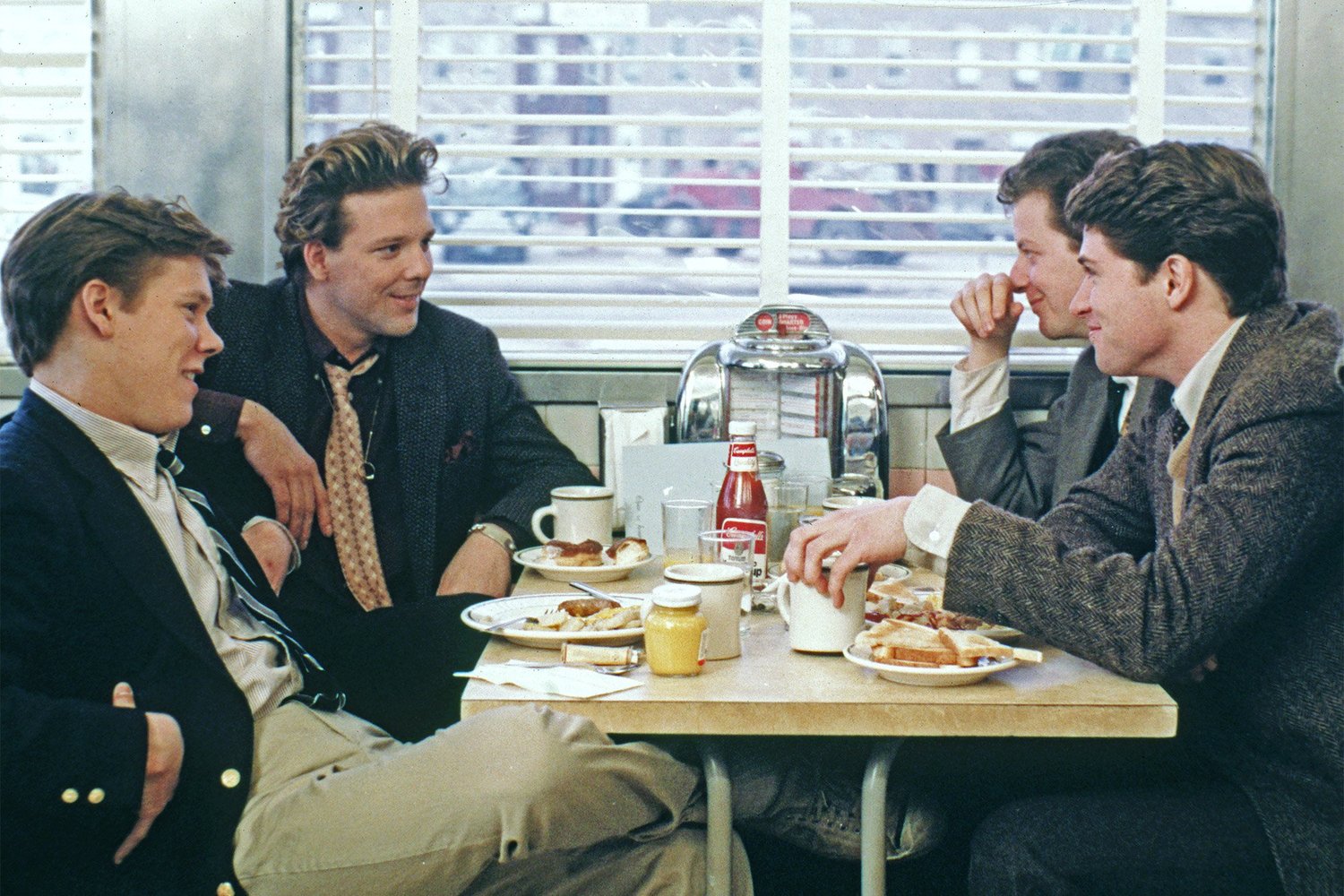
Robin Williams Changed the Energy Again
Three years later came another sharp turn.
Good Morning, Vietnam was inspired by Adrian Cronauer, an Armed Forces Radio Service DJ whose broadcasts in Vietnam helped provide the foundation for the film. Robin Williams played a fictionalized version of Cronauer, arriving in 1965 Saigon and disrupting the military radio station with his irreverent humor and musical choices.
Levinson understood that Williams needed room.
The radio sequences were largely unscripted, allowing Williams to unleash the voices, impressions and improvisational explosions that made his performance so memorable. Levinson’s job was not simply to contain that energy, but to shape a movie around it.
Williams won a Golden Globe and received an Academy Award nomination for Best Actor.
The movie also demonstrated something that would recur throughout Levinson’s work: he could guide a major star without making the direction itself the loudest element on screen.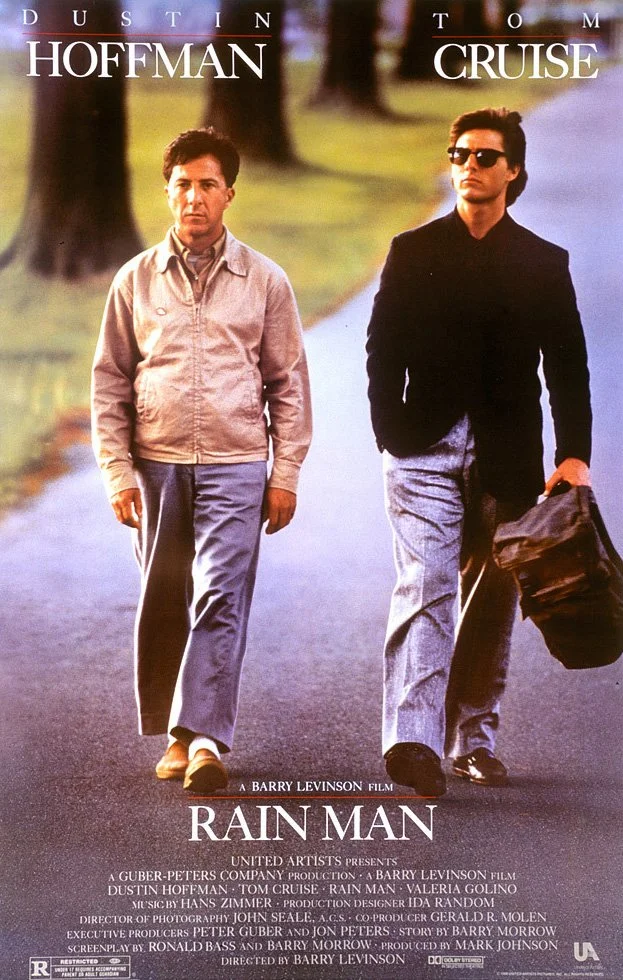
Rain Man Became the Career-Defining Success
One year later, Levinson directed the film that would bring him his biggest awards triumph.
Rain Man stars Tom Cruise as Charlie Babbitt, a self-centered businessman who discovers after his father’s death that he has an autistic older brother, Raymond, played by Dustin Hoffman. What begins partly as Charlie’s effort to gain access to an inheritance gradually becomes a road story about a relationship neither brother knows how to navigate.
The project had already passed through other filmmakers before Levinson became its director. He later recalled initially becoming involved by discussing problems with the screenplay before finding himself taking over the movie.
The result dominated the 1989 Academy Awards.
Rain Man received eight nominations and won four: Best Picture, Best Actor for Hoffman, Best Original Screenplay for Ronald Bass and Barry Morrow, and Best Director for Levinson.
Levinson had gone from the seemingly casual conversations of Diner to Hollywood’s biggest directing prize in only six years.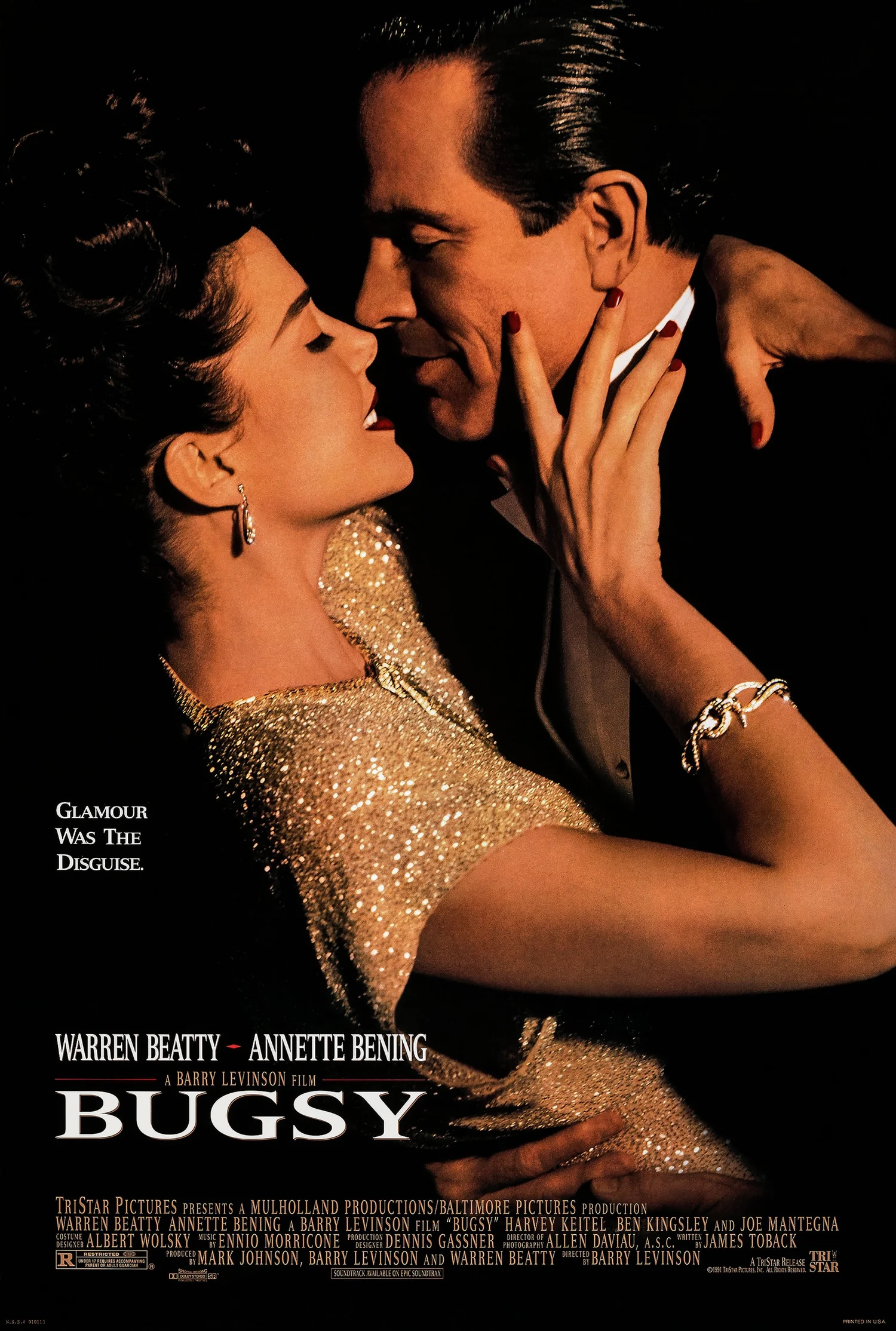
Bugsy Put Him Inside a Gangster’s Ambition
Levinson changed scale again with 1991’s Bugsy.
Warren Beatty played Benjamin “Bugsy” Siegel, with Annette Bening, Harvey Keitel and Ben Kingsley among the ensemble surrounding him. The film turned the gangster’s ambitions and relationship with Virginia Hill into a glossy, volatile Hollywood crime drama.
It became one of that year’s most recognized films.
Contemporary coverage reported 10 Academy Award nominations, including Best Picture, Best Director for Levinson and Best Actor for Beatty. It ultimately won Oscars for art direction and costume design.
Again, it was difficult to mistake Bugsy for Diner or Rain Man. Yet Levinson remained fascinated by the personalities underneath the machinery — the ego, desire, insecurity and obsession pushing people toward decisions they may not fully understand.

Then Came a Satire That Became Strangely Timely
By 1997, Levinson was directing Wag the Dog, starring Robert De Niro and Dustin Hoffman.
Its premise was darkly comic: with a presidential scandal threatening an election, a political operative recruits a Hollywood producer to manufacture the appearance of an overseas conflict and redirect public attention.
The movie received Academy Award nominations for Hoffman’s performance and for the screenplay by Hilary Henkin and David Mamet.
Because real American political events soon seemed to echo elements of its story, Wag the Dog acquired a cultural life larger than that of an ordinary political comedy. Its title itself became shorthand for suspicions that dramatic public events might be used to distract attention from another controversy.
The Connection Is More Than a Director Credit
Levinson’s six films do not share a universe, a genre or even an obvious visual style.
That may be precisely why his role connecting them is so easy to miss.
His signature is often found somewhere quieter: actors being allowed to behave like people instead of delivering perfectly polished dialogue; comedy appearing inside serious situations; relationships slowly revealing what a story is actually about.
Levinson has described his approach to actors as a kind of “controlled freedom” — giving performers enough space to move naturally while still shaping the pieces into the film he needs.
It helps explain how the same filmmaker could guide Robin Williams through explosive improvisation, Dustin Hoffman and Tom Cruise through the emotional restraint of Rain Man, and Robert De Niro and Hoffman through the cynical machinery of Wag the Dog.
The genres kept changing.
The fascination with people did not.
And once Barry Levinson’s name is placed between those six familiar movie titles, what initially looks like a collection of unrelated classics begins to resemble something else: the remarkably varied career of a filmmaker whose greatest signature may have been never needing every movie to look the same.