A66 TR@GEDY SPARKS FRESH QUESTIONS ABOUT DANGEROUS DRIVING VIDEOS AND THE FINAL SECONDS BEFORE THE CR@SH
A66 TRAGEDY SPARKS FRESH QUESTIONS ABOUT DANGEROUS DRIVING VIDEOS AND THE FINAL SECONDS BEFORE THE CRASH
MIDDLESBROUGH, England — The devastating A66 collision that claimed the lives of seven people, including two police officers, is now fueling a wider debate over dangerous-driving content on social media and whether online videos are helping normalize increasingly reckless behavior behind the wheel.
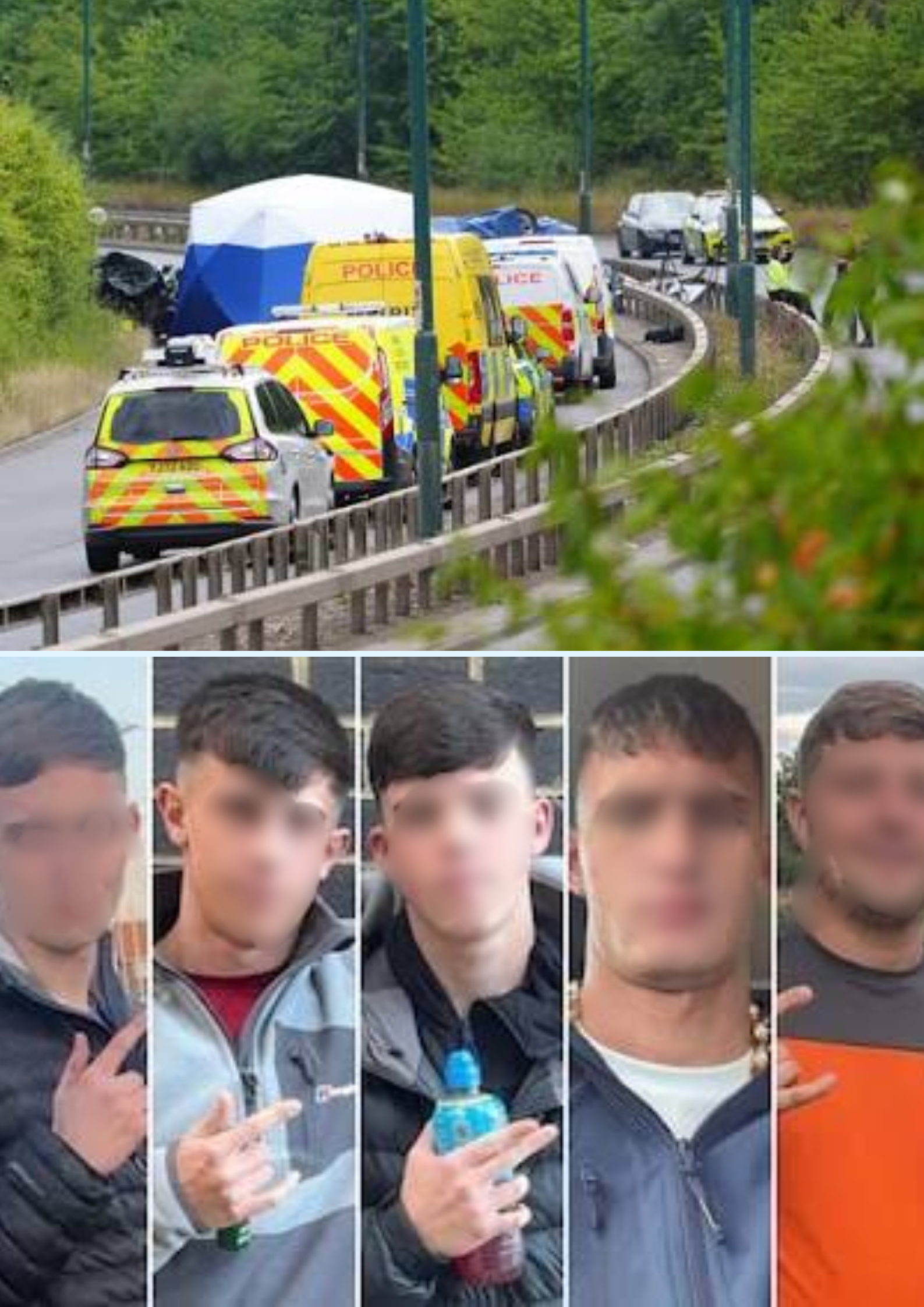
Among those who died was 18-year-old Makai Saddington, one of five occupants of a Volkswagen Passat that entered the A66 traveling in the wrong direction before colliding head-on with a marked Cleveland Police vehicle. The other occupants were Michael Cahill, Jakub Matusiak, Theo Rae and Cole Worthy.
The two officers killed in the police vehicle were PC Matthew Blades, 37, and PC Tom Clough, 38. Both were traveling in the correct direction and were not directly involved in the pursuit of the Passat.
 THE PURSUIT HAD ENDED JUST SECONDS EARLIER
One of the most important details now being examined is the timing of the police pursuit.
According to the Independent Office for Police Conduct, the pursuit lasted less than seven minutes and was called off approximately 10 seconds before the fatal collision. The police vehicle carrying Blades and Clough was not the vehicle involved in the original pursuit.
Investigators are examining in-car footage, officer accounts and other evidence to reconstruct exactly what happened during those final moments.
That distinction is crucial.
The officers who died were not chasing the Passat when the collision occurred. They were traveling nearby when the Volkswagen, allegedly traveling against the normal flow of traffic, struck their vehicle.
The IOPC has launched an investigation into the circumstances surrounding the crash.
 SADDINGTON AND THE SOCIAL-MEDIA QUESTION
The tragedy has also placed renewed attention on footage reportedly associated with Saddington showing reckless driving.
Reporting based on a review of social-media material has identified videos showing Saddington driving at speed and appearing in vehicles during incidents involving police.
However, investigators and journalists have stressed an important point: the existence of such footage does not establish that any particular video was connected to the A66 crash, nor does it prove that social media caused the behavior that led to the collision.
That distinction has not stopped the videos from becoming part of a much larger national conversation.
Across TikTok and other platforms, dangerous-driving clips can attract enormous attention, creating concerns that reckless behavior can become entertainment rather than a warning.
Experts have described an online subculture in which young drivers film high-speed or otherwise dangerous driving in pursuit of views, followers and social recognition.
THE GOVERNMENT IS NOW DEMANDING ACTION FROM SOCIAL-MEDIA COMPANIES
The A66 tragedy has prompted the British government to call on TikTok and other social-media platforms to remove material that glorifies dangerous driving.
Officials have warned that videos celebrating reckless behavior can encourage imitation, particularly among younger users.
The government has also backed stronger action by Ofcom, Britain’s communications regulator, if platforms fail to meet their obligations under the Online Safety Act.
Prime Minister Andy Burnham’s office described the glorification of dangerous driving online as deeply unacceptable, while ministers have urged platforms to take greater responsibility for content that could encourage dangerous conduct.
BUT DID SOCIAL MEDIA PLAY A ROLE IN THIS CRASH?
That remains unknown.
There is currently no evidence establishing that the A66 collision itself was carried out for social-media attention or that the people involved were attempting to record the incident for online publication.
Reuters reported that authorities were investigating the circumstances surrounding the crash and possible criminal connections, while separately addressing the broader problem of dangerous-driving content online.
That means two issues must be kept separate:
What caused the A66 crash?
And:
Why has dangerous driving become such a visible form of online content?
The first is a matter for investigators.
The second has now become a national policy debate.
A MUCH BIGGER INVESTIGATION IS UNDERWAY
The crash has also triggered a wider criminal investigation.
Police have arrested numerous people in connection with suspected criminal activity surrounding events leading up to the collision. Authorities are examining possible links to organized crime, vehicle offenses and other alleged wrongdoing.
Police have also confirmed that the Passat had been associated with previous incidents and reportedly carried cloned registration plates.
Those details have added another layer of complexity to an already devastating investigation.
SEVEN LIVES LOST
Whatever investigators ultimately conclude about the events leading up to the collision, the human cost is already permanent.
PC Matthew Blades was remembered as a devoted husband, father and community figure.
PC Tom Clough was honored as a dedicated officer and former serviceman whose colleagues described his commitment to public service.
Five young men also died in the same collision.
The tragedy therefore extends far beyond questions of policing or social media.
It has left seven families grieving and an entire community searching for answers.
THE QUESTIONS THAT REMAIN
Investigators still have to establish precisely what happened in the final seconds.
Why did the Passat enter the A66 in the wrong direction?
What happened immediately after the pursuit was called off?
Could anything have changed the outcome during those final moments?
And separately, how much influence does online content have on young people who repeatedly see dangerous driving portrayed as exciting or rewarding?
Those questions do not yet have definitive answers.
But the A66 tragedy has made them impossible to ignore.
Seven people are dead. Two were police officers simply traveling along the road. A pursuit had ended only seconds earlier. And now Britain is confronting a disturbing question beyond the crash itself: whether an online culture that turns dangerous driving into entertainment is helping make the roads even more dangerous.