Disney Didn’t Plan the Genie You Remember. Robin Williams Changed ‘Aladdin’ in the Recording Booth
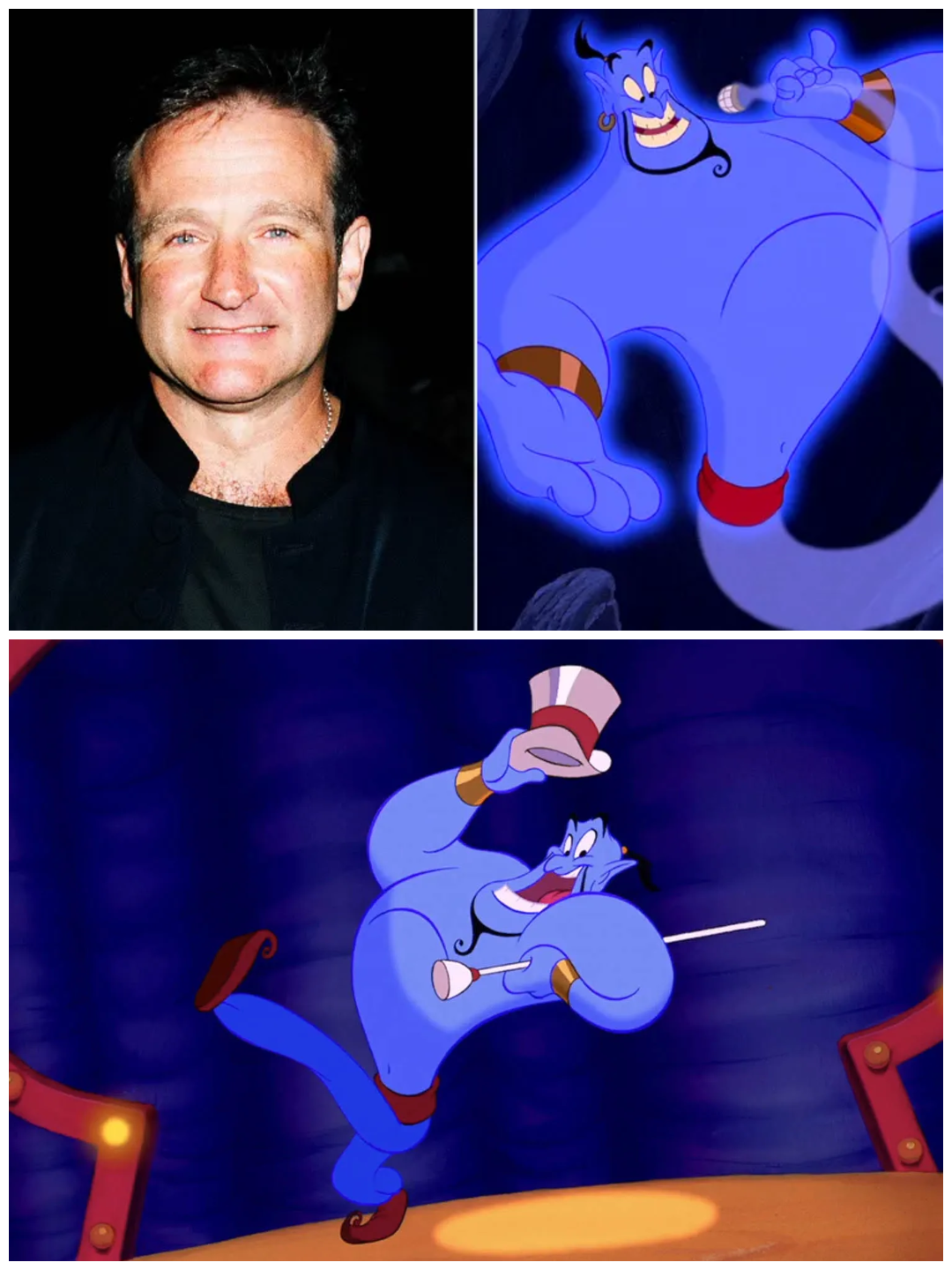
More than three decades after Aladdin arrived in theaters, Robin Williams’ Genie still feels almost impossible to separate from the actor who voiced him.
The impressions. The sudden changes of personality. The bizarre transformations. The ability to move from manic comedy to genuine tenderness within seconds.
It all feels as though Disney must have designed the character specifically around Williams from the beginning.
But that is not quite what happened.
Disney’s filmmakers already had an idea for how Genie would behave. Then Williams stepped in front of a microphone and began doing things the animation team had never planned.
Supervising animator Eric Goldberg says the material was simply too good to throw away.
So instead of asking Williams to fit the Genie they had designed, the animators began changing Genie to fit Robin Williams.
Disney Already Had a Plan for Genie
Goldberg joined Disney specifically to work on Aladdin, the 1992 animated film directed by John Musker and Ron Clements.
He became the supervising animator responsible for Genie and would ultimately help create one of the most recognizable characters of Disney’s 1990s animation renaissance. Disney has since credited Goldberg’s design work with influencing not only Genie but the visual personality of the movie itself.
The original concept already gave the animators plenty of freedom.
Goldberg described Genie as essentially a “puff of smoke,” capable of transforming into almost anything.
Musker and Clements had also written recognizable comic archetypes into the character. At different moments, Genie might behave like an evangelist, an army sergeant or a television game-show host.
That framework offered opportunities for rapid changes in personality without necessarily requiring Genie to become specific celebrities.
Then Robin Williams started recording.
And the possibilities suddenly became much bigger.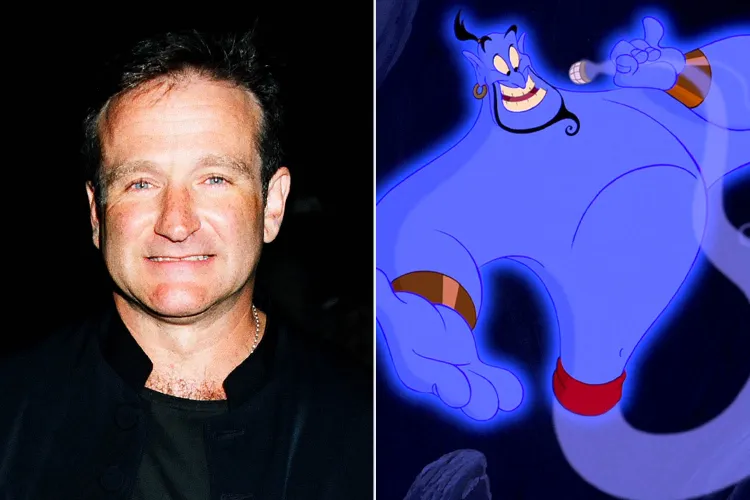
Williams Began Doing Impressions They Hadn’t Expected
Goldberg recently recalled the experience while discussing his work following his induction as a Disney Legend in August 2026.
Working with Williams, he told PEOPLE, meant receiving an extraordinary amount of material every time the actor got behind the microphone.
Williams did not simply perform what had been written.
Celebrity impressions began pouring out during the recording sessions — something Goldberg says the team had not expected when they started.
That created a decision for the filmmakers.
They could treat those impressions as amusing outtakes and return to the original plan.
Or they could rebuild pieces of the character around them.
The Disney team chose the second option.
As Goldberg remembered it, their reaction was essentially that the material was too strong not to appear in the movie.
That meant the animation itself had to respond.
Suddenly Genie Had to Become the Person Williams Was Imitating
Voice acting and animation are closely connected, but Williams’ performance pushed that relationship unusually far.
If Williams suddenly became Groucho Marx vocally, Goldberg’s team did not want Genie merely standing there while sounding like Groucho Marx.
They wanted him to move like Groucho Marx.
If Williams slipped into an Ed Sullivan impression, Genie needed physical gestures recognizable as Sullivan.
Goldberg explained that the animators began thinking about how each impersonation should change the character’s body language. Groucho required one kind of walk; Sullivan required his familiar posture and gestures.
The result is visible throughout the finished film.
Genie does not simply tell jokes.
He transforms into whatever the joke requires.
One second he is enormous, the next tiny. He can become another celebrity, an animal, a television personality or an entirely different visual gag before returning immediately to himself.
Goldberg’s animation made those transitions possible because Genie had deliberately been designed without ordinary physical restrictions.
D23 describes his animation as allowing Genie to assume rapid-fire forms ranging from a bee to Jack Nicholson to Pinocchio, with Goldberg drawing inspiration from caricaturist Al Hirschfeld’s flowing, curved style.
Williams had found the perfect animated character for the way his mind worked.
And Goldberg had found the perfect voice performance for a character who could literally become anything.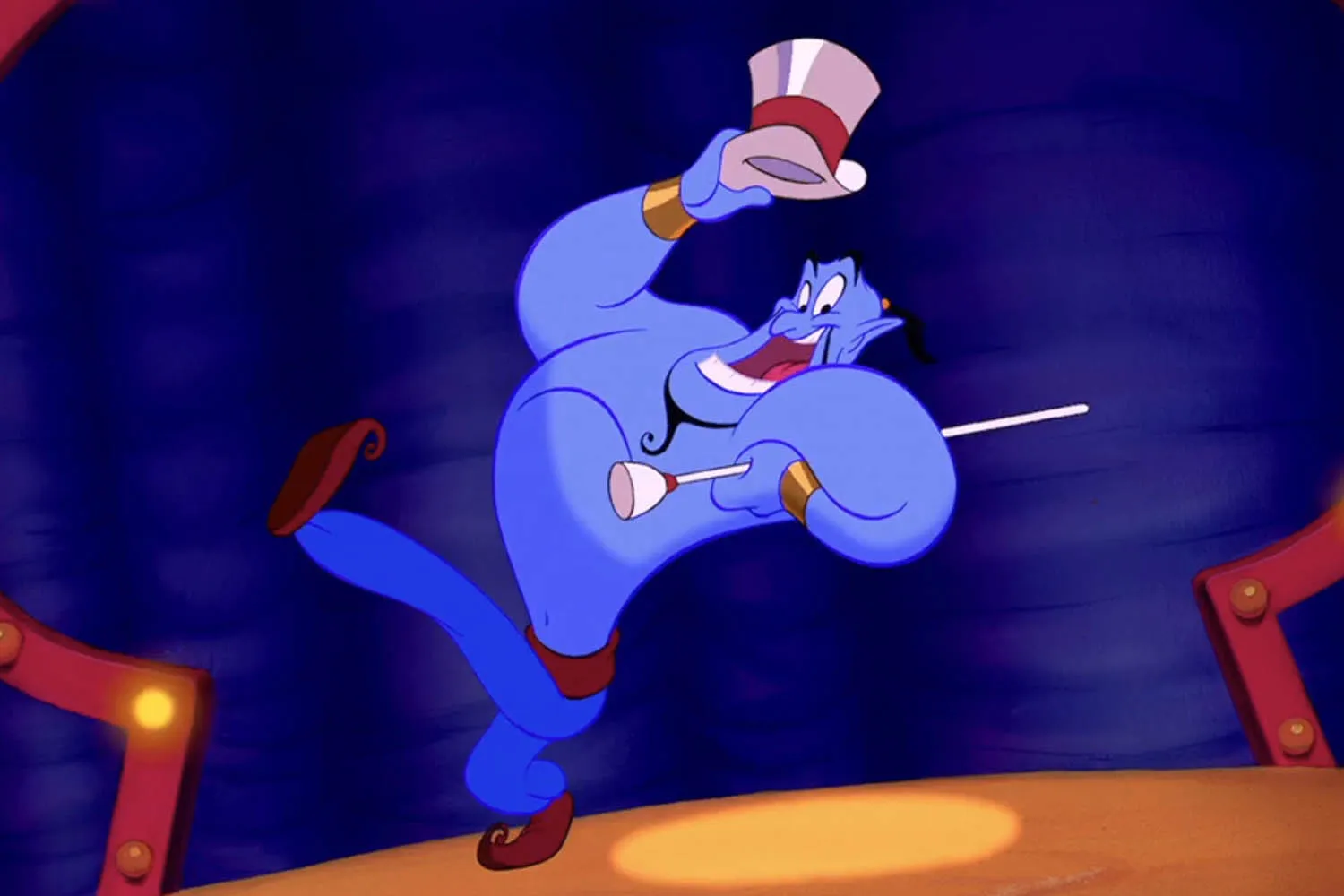
The Improvisation Became Part of the Movie’s Visual Language
This is what makes the behind-the-scenes story more interesting than simply saying Williams improvised his lines.
The improvisation did not remain confined to the soundtrack.
It changed what audiences saw.
Williams would create something vocally, and Goldberg’s team would then search for a visual equivalent.
Genie’s famous speed became a collaboration between an actor who could leap between characters almost instantly and animators who could make those mental leaps physically visible.
Goldberg later described Genie’s movement as featuring “lightning quick attitude changes” and the ability to physically mime the people Williams was imitating.
It is difficult to imagine the finished Genie without that quality now.
But those celebrity transformations were not simply sitting in Disney’s original blueprint waiting to be animated.
They expanded as the filmmakers discovered what Williams was giving them.
But Goldberg Says the Comedy Was Only Half of It
There was another problem the animators had to solve.
A character capable of turning every scene into a joke could easily become exhausting.
More importantly, Aladdin eventually asks the audience to care about Genie as a person.
Underneath the impersonations and transformations is someone who desperately wants freedom.
His friendship with Aladdin has to feel real enough that the separation between them near the end of the movie matters.
For Goldberg, that emotional credibility became one of the greatest challenges of animating the character.
Genie could not merely be funny.
The audience had to believe he had something meaningful to lose.
Williams provided that side of the character too.
Goldberg emphasized that the actor could perform the quieter, warmer material just as effectively as the outrageous comedy. D23 similarly describes Williams as bringing not only humor but warmth and sincerity to Genie.
That combination is why the character survives beyond his impressions.
The jokes make Genie spectacular.
The sincerity makes audiences love him.
Aladdin Became One of Disney’s Defining Hits
When Aladdin opened in 1992, the collaboration became a massive success.
The film earned more than $346 million worldwide, received five Academy Award nominations and won two Oscars — for Alan Menken’s score and “A Whole New World.”
Genie quickly became one of the movie’s defining characters, and Williams’ performance helped reshape expectations for celebrity voice casting in animated features.
Goldberg’s own Disney career continued for decades, including work on Pocahontas, Hercules, The Princess and the Frog, Moana and numerous other projects. In August 2026, Disney formally honored him as a Disney Legend, placing him in the same group of honorees that already includes Williams, who received the distinction in 2009.
During Goldberg’s ceremony, the Disneyland Band even performed “Friend Like Me.”
It was a fitting reminder of the character that launched his Disney career.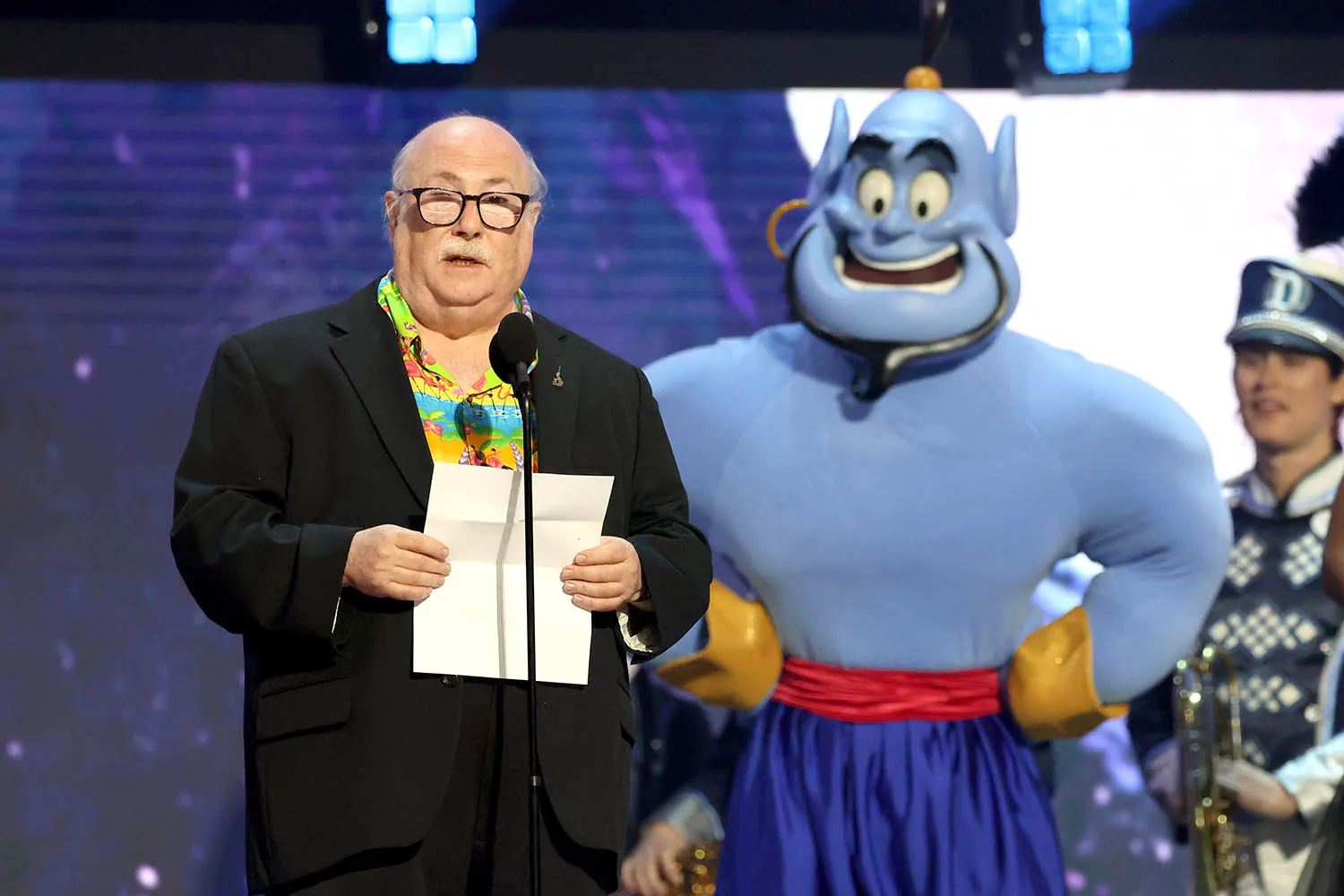
The Genie Audiences Remember Was Built in Real Time
Today, watching Aladdin, it is easy to assume everything Genie does was carefully scripted first and performed later.
The reality was more fluid.
Disney had created the foundation: a magical, shape-shifting character built around comic archetypes.
Then Robin Williams arrived.
He began producing impressions nobody had planned around, and the filmmakers faced a simple problem: the unexpected material was better than something they could comfortably discard.
So the character changed.
The animators made Genie walk like the people Williams impersonated. They changed his shape to support the jokes. They turned spontaneous vocal ideas into visual ones.
Yet beneath all that improvisational chaos, Williams also gave them the emotional performance they needed to make Genie’s friendship with Aladdin believable.
That may be the real secret behind why the character still works more than 30 years later.
Disney designed a Genie who could transform into almost anything.
Then Robin Williams showed them just how much that really meant.