LINDSAY CLANCY “SCARED” AS JURY WEIGHS FATE AFTER FIVE-WEEK TRIAL — NO VERDICT YET
LINDSAY CLANCY “SCARED” AS JURY WEIGHS FATE AFTER FIVE-WEEK TRIAL — NO VERDICT YET
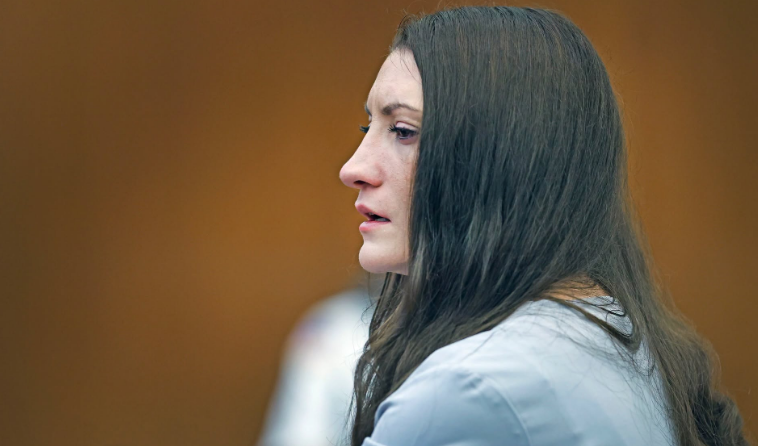
Lindsay Clancy is facing an agonizing wait as a Massachusetts jury begins its second day of deliberations over whether she should be held criminally responsible for the deaths of her three young children.
Clancy’s attorney, Kevin Reddington, told PEOPLE that his client is “scared” and “nervous” as the jury considers the evidence presented during a five-week trial.
After deliberating for nearly four hours Thursday, the 12-member jury was sent home without reaching a verdict. Jurors are scheduled to resume deliberations Friday morning.
:max_bytes(150000):strip_icc():focal(749x0:751x2):format(webp)/lindsay-marie-clancy-013023-1-176600bdc3614f6ca230e63734b87361.jpg) JURY FACES A DIFFICULT QUESTION
JURY FACES A DIFFICULT QUESTION
There is little dispute about what happened to Clancy’s three children.
The central issue before the jury is whether Clancy was legally responsible for her actions at the time.
Cora, 5, Dawson, 3, and Callan, 8 months, died at the family’s Duxbury, Massachusetts, home in January 2023.
Clancy has pleaded not guilty by reason of lack of criminal responsibility.
Her defense argues that she was experiencing severe postpartum psychosis and other psychiatric symptoms that left her unable to understand that her actions were wrong.
Prosecutors strongly disagree.
:max_bytes(150000):strip_icc():focal(749x0:751x2):format(webp)/lindsay-clancy-court-080426-1-0d554916be174019b004a84bdf0e8019.jpg) DEFENSE SAYS SHE WAS EXPERIENCING A PSYCHIATRIC CRISIS
DEFENSE SAYS SHE WAS EXPERIENCING A PSYCHIATRIC CRISIS
Defense attorney Kevin Reddington spent much of his closing argument portraying Clancy as a mother suffering from a devastating psychiatric breakdown.
The defense has argued that Clancy experienced hallucinations and delusions and believed her children would be better off with her rather than remaining in what she perceived as a dangerous world.
Her lawyers also criticized the psychiatric treatment she received before the tragedy, arguing that medication and inadequate care contributed to her deteriorating condition.
More than 80 witnesses testified during the trial, including medical experts who offered competing interpretations of Clancy’s mental state.
PROSECUTORS SAY SHE KNEW WHAT SHE WAS DOING
Prosecutors have presented a dramatically different picture.
They acknowledge that Clancy experienced serious mental-health problems but argue that she nevertheless understood reality and knew her actions were wrong.
Prosecutor Jennifer Sprague pointed to evidence that Clancy deliberately arranged circumstances that allowed her husband to leave the home before the killings.
The prosecution argues that her behavior showed planning and awareness rather than a complete break from reality.
That distinction could ultimately determine the verdict.
FIVE POSSIBLE OUTCOMES
Jurors have five options available.
They can find Clancy guilty of first-degree murder, second-degree murder or manslaughter.
They can also find her not guilty or determine that she was not criminally responsible because of mental illness.
A murder conviction could result in life imprisonment.
A finding that she was not criminally responsible would have a very different consequence and could result in commitment to a psychiatric facility rather than a traditional prison sentence.
JURORS HAVE ALREADY HEARD WEEKS OF TESTIMONY
The jury has spent more than a month hearing deeply emotional testimony.
Medical professionals discussed Clancy’s psychiatric history.
Friends and relatives described changes they observed in her behavior.
Her former husband, Patrick Clancy, also testified.
Patrick has since remarried and has publicly expressed forgiveness toward Lindsay, adding another emotional dimension to an already extraordinary case.
Clancy herself did not testify.
NO VERDICT DOES NOT SIGNAL WHICH WAY JURORS ARE LEANING
After the first day of deliberations ended without a verdict, there was no immediate indication of where the jury stands.
A lengthy deliberation can occur in complicated cases involving extensive testimony and competing expert opinions.
The jury consists of nine women and three men.
They will continue reviewing the evidence and legal instructions as they attempt to reach a unanimous decision.
A CASE THAT HAS CAPTURED NATIONAL ATTENTION
The trial has become much larger than a single criminal proceeding.
It has sparked a nationwide conversation about postpartum psychosis, psychiatric treatment, maternal mental health and the difficult question of when severe mental illness should affect criminal responsibility.
For Clancy’s family, however, the case remains deeply personal.
Three young children are gone.
And a mother is now waiting to learn whether a jury believes she understood the consequences of her actions or was experiencing a psychiatric crisis so severe that she could not be held legally responsible.
THE WAIT CONTINUES
For now, there is no verdict.
The jury will return Friday morning and resume its deliberations.
Clancy remains “scared” and “nervous,” according to her attorney, as the decision that could determine the rest of her life draws closer.
After five weeks of testimony, dozens of witnesses and sharply conflicting medical opinions, the final decision now belongs to 12 jurors.
And the question they must answer is as difficult as it is consequential:
Was Lindsay Clancy criminally responsible for what happened — or was she experiencing a psychiatric crisis that left her unable to understand the wrongfulness of her actions?