LINDSAY CLANCY JURY BEGINS DELIBERATIONS AS FATE OF MASSACHUSETTS MOTHER HANGS IN THE BALANCE
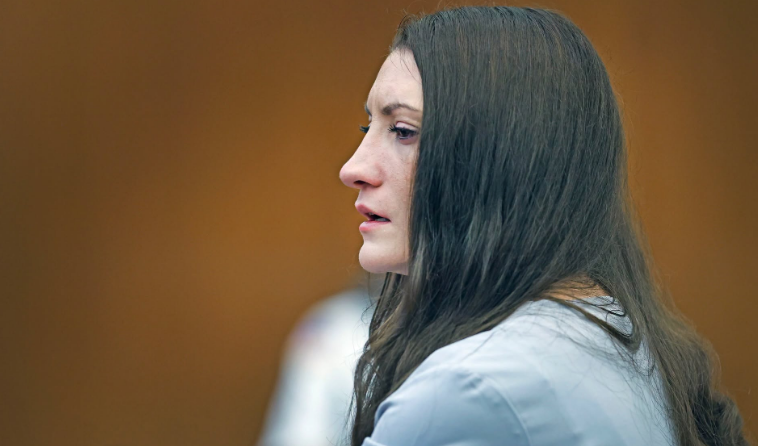
LINDSAY CLANCY JURY BEGINS DELIBERATIONS AS FATE OF MASSACHUSETTS MOTHER HANGS IN THE BALANCE
The fate of Lindsay Clancy is now in the hands of a Massachusetts jury.
Jurors began deliberating at 12:34 p.m. EDT, following emotionally charged closing arguments in the high-profile trial of the Massachusetts mother accused of killing her three young children before attempting to take her own life.
The case has centered on one critical question:
Was Clancy criminally responsible for her actions at the time of the killings?
Her defense says she was not.
Prosecutors say she was.
And now 12 jurors must decide.
 DEFENSE: CLANCY WAS IN THE GRIP OF PSYCHOSIS
Defense attorney Kevin Reddington told jurors that Clancy was suffering from severe mental illness and psychosis when the tragedy occurred.
Throughout his closing argument, Reddington pointed to Clancy’s history as a devoted mother and challenged the psychiatric and medical care she received before the killings.
Defense experts testified that Clancy was experiencing psychosis and that her mental condition prevented her from fully understanding the nature or wrongfulness of her actions.
Reddington also highlighted the severity of Clancy’s own suicide attempt.
After the children were found, Clancy attempted to take her own life by cutting herself and going through a second-story window, an act that left her paralyzed.
The defense argued that the severity of that attempt contradicted the prosecution’s suggestion that her actions were staged or carefully calculated.
PROSECUTORS: SHE KNEW WHAT SHE WAS DOING
The Commonwealth presented a dramatically different picture.
Prosecutors acknowledged that Clancy was struggling with depression and serious emotional difficulties.
But they argued that mental illness does not automatically mean someone is legally insane.
According to prosecutors, Clancy still understood the difference between right and wrong and retained the ability to control her behavior.
The Commonwealth pointed to Clancy’s communications, internet searches and actions leading up to the killings as evidence that she deliberately created an opportunity to be alone with her children.
Prosecutors argued that she sent her husband, Patrick, out on errands before carrying out the killings.
They portrayed those actions as evidence of planning rather than an uncontrolled psychotic episode.
 THE CHILDREN WERE AT THE CENTER OF THE PROSECUTION’S CLOSING
In the final moments of the Commonwealth’s argument, prosecutors turned the jury’s attention directly to the three children.
Cora.
Dawson.
Callan.
Prosecutors reminded jurors that Cora dreamed of becoming a doctor and Dawson wanted to become a firefighter.
Callan, they said, “never got a chance to dream.”
The Commonwealth argued that Clancy intentionally harmed each child and continued until she believed they could no longer survive.
The emotional closing was designed to remind jurors that the case was ultimately about three children whose lives ended before they had the opportunity to grow up.
THE LEGAL STANDARD IS CRITICAL
The judge instructed jurors that the Commonwealth must prove beyond a reasonable doubt not only that Clancy committed the acts, but also that she was criminally responsible when they occurred.
Under Massachusetts law, a defendant can be found not guilty by reason of insanity if a mental disease or defect left the person unable to appreciate the wrongfulness of their conduct or unable to conform their behavior to the law.
That distinction is now at the heart of deliberations.
The jury does not simply have to determine what happened.
Jurors must determine Clancy’s mental state at the time.
A BATTLE BETWEEN TWO VERSIONS OF THE SAME NIGHT
The defense says the evidence shows a mother experiencing an extreme psychiatric crisis.
The prosecution says the evidence shows a woman who was struggling but remained capable of understanding her actions and making deliberate choices.
Both sides have pointed to the same timeline but reached dramatically different conclusions.
For the defense, Clancy’s psychiatric history and suicide attempt demonstrate the depth of her mental illness.
For prosecutors, her searches, communications and efforts to create time alone with the children demonstrate awareness and planning.
Now the jury must decide which interpretation is supported by the evidence beyond a reasonable doubt.
THE WAIT BEGINS
With deliberations underway, Clancy’s family, the victims’ loved ones and the wider community are waiting for the jury’s decision.
There is no guaranteed timetable for a verdict.
Jurors may reach a decision quickly, or they may spend days reviewing testimony and evidence.
Whatever the outcome, the case has already become one of Massachusetts’ most closely watched criminal trials, raising difficult questions about mental illness, psychiatric treatment, parental responsibility and the limits of criminal accountability.
For now, everything comes down to the jury.
Twelve jurors. One decision. And a question that could determine Lindsay Clancy’s future:
Was she legally responsible for what happened — or was severe mental illness controlling her actions when the tragedy occurred?
The deliberations are now underway.