“OUR SON IS NOT TO BLAME”: A66 CRASH FAMILY MAKES SHOCKING CLAIM — THEN NEW EVIDENCE CHANGES THE CONVERSATION
“OUR SON IS NOT TO BLAME”: A66 CRASH FAMILY MAKES SHOCKING CLAIM — THEN NEW EVIDENCE CHANGES THE CONVERSATION
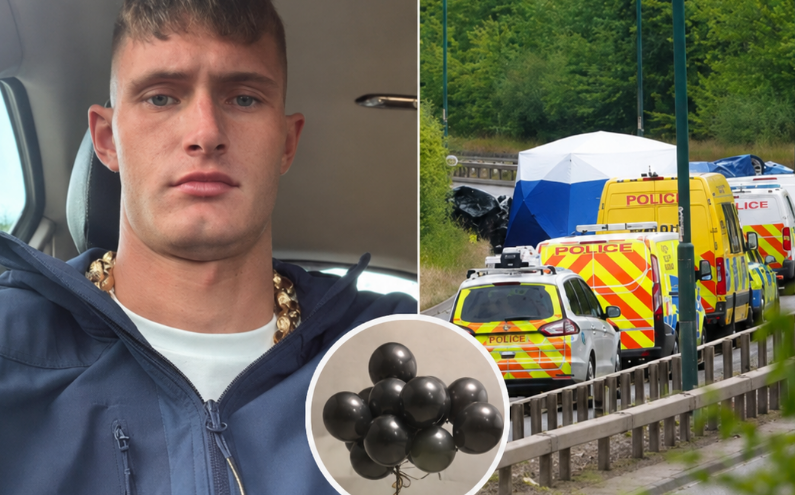
MIDDLESBROUGH, ENGLAND — The family of one of the five young men involved in the deadly A66 crash is pushing back against criticism of their son, arguing that police actions before the collision may have played a role in the tragedy.
Their claims have triggered a fierce public reaction — but the controversy took another dramatic turn when the family presented additional information they say deserves closer examination.
The developments have reopened questions about what happened during the chaotic moments before the crash and whether the tragedy could have been prevented.
 “OUR SON IS NOT TO BLAME”
The family has rejected suggestions that their son should be held responsible for what happened.
Instead, they have questioned the decision by police to pursue the vehicle after it was reportedly traveling in the wrong direction.
Their argument is that the police response may have increased the danger and that a different approach could potentially have prevented the collision.
That claim has not been established as fact.
The circumstances surrounding the police response are separately being investigated, and authorities have urged people not to draw conclusions before all the evidence has been examined.
PUBLIC ANGER ERUPTS
The family’s comments quickly became a flashpoint.
Many members of the public reacted angrily, particularly because two police officers were among the seven people who lost their lives in the crash.
The officers were responding to an incident involving a vehicle traveling the wrong way on the A66 when their marked police vehicle collided with the Volkswagen Passat.
Five young men inside the Passat also died.
The tragedy left families on both sides grieving and created an intensely emotional debate over who — if anyone — should bear responsibility for the sequence of events.
 THEN CAME THE NEW EVIDENCE
As criticism surrounding the family’s comments intensified, relatives reportedly put forward additional evidence intended to challenge the public narrative surrounding their son.
The material has fueled renewed discussion about what happened before the collision.
Rather than simply asking whether the young men were responsible, attention has increasingly shifted toward a much broader question:
What exactly happened during the minutes leading up to the crash?
That distinction matters.
Evidence relating to the police response, the vehicle’s movements, communications and the events preceding the collision could all form part of the investigation.
A CASE WITH TWO VERY DIFFERENT STORIES
There are now competing narratives surrounding the tragedy.
One focuses on the decision to drive the wrong way along the motorway and the danger created for everyone on the road.
The other asks whether the police response contributed to the chain of events and whether different decisions could have produced a different outcome.
Neither version should be treated as conclusively established while investigations remain ongoing.
The Independent Office for Police Conduct is examining the circumstances surrounding the collision, while police are also investigating wider events connected with the case.
SEVEN LIVES, COUNTLESS QUESTIONS
The human cost remains undeniable.
Two police officers lost their lives while responding to an emergency.
Five young men in the other vehicle also died.
Their families are now left to deal with grief, anger and questions that may not be answered for months.
For the families of the police officers, the focus is understandably on the men who were doing their jobs that night.
For the relatives of the five young men, the focus is on their loved ones and whether the full circumstances surrounding their final moments are being understood fairly.
THE INVESTIGATION WILL HAVE THE FINAL SAY
The release of additional evidence may change public discussion, but it does not automatically establish a new version of events.
Investigators will ultimately have to determine what happened, what decisions were made and whether any actions contributed to the devastating collision.
Until then, claims from either side remain claims.
And perhaps the most important question surrounding the A66 tragedy is not simply who is to blame.
It is whether investigators can reconstruct the final minutes accurately enough to explain why seven people never made it home that night — and whether anything could have been done differently.