“SHE WANTS HER FREEDOM” — MOTHER CONVICTED IN BABY DAHLIA-ROSE CASE LAUNCHES BID TO OVERTURN CONVICTION

“SHE WANTS HER FREEDOM” — MOTHER CONVICTED IN BABY DAHLIA-ROSE CASE LAUNCHES BID TO OVERTURN CONVICTION
A shocking legal twist has emerged in the heartbreaking case of baby Dahlia-Rose.
Just weeks after being sentenced to six years in prison, Courtney Gartshore is now fighting to overturn both her conviction and her sentence — opening a new chapter in a case that has already devastated a family and horrified the public.
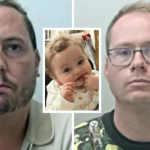
Gartshore, 28, was convicted unanimously by a jury of culpable homicide over the September 2023 death of her three-month-old daughter, Dahlia-Rose.
She was sentenced to six years behind bars at the High Court in Edinburgh on August 14. Court officials have now confirmed that an intimation of appeal against both conviction and sentence has been lodged on her behalf.
 THE MORNING EVERYTHING CHANGED
Dahlia-Rose died at the family home in Peterhead, Aberdeenshire, on September 30, 2023.
According to the evidence accepted by the jury, Gartshore had been drinking the night before while she was solely responsible for the infant.
At some point between approximately 4 a.m. and 9 a.m., Dahlia-Rose was subjected to significant and sustained heat from a hairdryer.
The baby suffered burns covering around 18% of her body, including her head, face, neck, upper body and right arm.
The judge said the expert evidence indicated that the burns themselves were survivable, while the Crown’s expert considered hyperthermia and heatstroke the likely cause of death.
The defense had argued that Dahlia-Rose may already have died from another sudden and unexplained cause before being exposed to the heat.
The jury rejected that explanation and unanimously concluded that the hairdryer heat caused the infant’s death.
 “WHY DID THIS HAPPEN?”
That question has remained at the center of the case.
Gartshore has never provided a clear explanation for exactly what happened.
Her defense lawyer previously told the court there was no reasonable or compelling explanation for why she used the hairdryer, although he suggested she may have been attempting to warm the baby.
Gartshore herself maintained that she had no recollection of using the appliance.
During sentencing, Judge Simon Collins KC described the case as “uniquely disturbing and distressing.”
But he also made an important distinction.
The prosecution had not alleged that Gartshore intended to harm or kill her daughter.
Instead, the conviction was for culpable homicide arising from a high degree of carelessness or gross recklessness.
WHY THE SIX-YEAR SENTENCE?
The judge said several factors increased the seriousness of the offense.
Dahlia-Rose was only three months old and completely dependent on her mother.
The judge also said Gartshore had been under the influence of alcohol, and that her actions must have continued for at least 20 minutes and potentially as long as an hour.
He concluded that the suffering being caused to the infant should have been apparent.
The court also considered Gartshore’s personal circumstances, including that she was a young single mother, had a history of poor mental health, had limited support and had previously attempted suicide.
Ultimately, the court imposed a six-year prison sentence, backdated to July 16, 2026.
NOW, SHE IS FIGHTING BACK
The appeal does not mean Gartshore has been cleared.
Her conviction remains in place unless an appeal court overturns it.
For now, the legal process has simply entered its next stage.
Court officials confirmed that the notice of intention to appeal has been lodged, beginning the formal appeal process.
The case therefore remains far from finished.
A mother convicted over the death of her three-month-old daughter is now asking Scotland’s appeal courts to reconsider the verdict and the punishment.
And once again, the central question will return to court:
Was the original conviction and six-year sentence legally correct — or is there a reason they should be overturned?
For Dahlia-Rose’s family, the appeal means that a case they hoped had reached its conclusion is now entering another painful chapter.