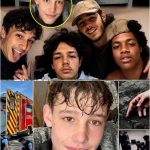
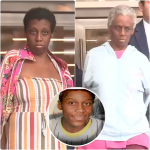
“OUR SON IS NOT TO BLAME” — A66 CR@SH FAMILY CHALLENGES POLICE PURSUIT AS NEW DETAILS EMERGE
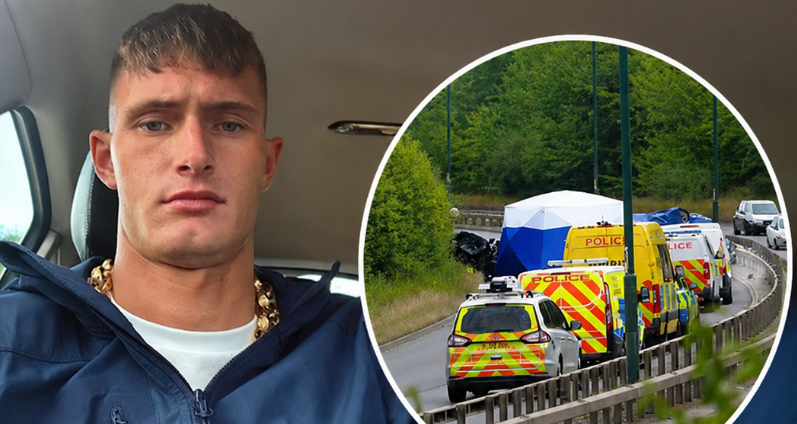
“OUR SON IS NOT TO BLAME” — A66 CRASH FAMILY CHALLENGES POLICE PURSUIT AS NEW DETAILS EMERGE
The family of one of the five young men involved in the horrific A66 crash has questioned whether the tragedy could have been prevented — and their claims have reignited a furious debate over the police pursuit that came before it.
Seven people lost their lives in the early hours of August 22.
Five young men were travelling in a Volkswagen Passat.
Two Cleveland Police officers, PC Matthew Blades, 37, and PC Tom Clough, 38, were inside a marked police vehicle.
Within minutes, both vehicles were involved in a devastating head-on collision near Middlesbrough.
But now, as families mourn, questions are increasingly being asked about everything that happened during the critical minutes before the crash.
And one grieving family has made its position clear:
They do not believe their son should be blamed for what happened.
 THE MOMENTS BEFORE THE CRASH
The official timeline has become one of the most important parts of the investigation.
According to the Independent Office for Police Conduct, the Volkswagen Passat had been pursued by police for just under seven minutes before it turned onto the A66 travelling against the flow of traffic.
At that point, the police pursuit was abandoned.
Then, approximately 10 seconds later, the Passat collided with another police vehicle.
That second police vehicle was not involved in the original pursuit.
It was in the area assisting officers searching for the Passat, which police believed was using cloned number plates.
The collision claimed all seven lives.
The five occupants of the Passat were identified as Cole Worthy, 17, Theo Rae, 17, Makai Saddington, 18, Michael Robert Cahill, 23, and Jakub Matusiak, 23.
The two officers were PC Blades and PC Clough.
 “COULD MORE LIVES HAVE BEEN SAVED?”
For relatives of the young men, the official timeline has raised painful questions.
One family has questioned whether officers should have attempted to pursue the Passat in the first place.
Their argument is that the decision to pursue the vehicle may have contributed to the chain of events that ultimately placed the Passat on the wrong side of the A66.
They have suggested that, without the pursuit, the fatal collision might never have happened.
The claim has triggered a strong reaction from members of the public, particularly because two serving police officers were among those who lost their lives.
But the circumstances surrounding the pursuit have not yet been finally determined.
That is precisely why the IOPC investigation is so important.
The watchdog is examining the circumstances leading up to the collision, including the police response and what happened during the pursuit.
Cleveland Police has said it will fully cooperate with the investigation and has urged people not to speculate while inquiries continue.
THEN THE BIGGER PICTURE EMERGED
As public attention focused on the police pursuit, investigators were also examining what had happened before officers ever encountered the Passat.
Cleveland Police launched a wide-ranging investigation into criminal activity in the hours leading up to the collision.
The force said the Passat was believed to be associated with a Volvo XC60, which had also been identified in connection with the events.
Police said they had received reports involving vehicles being driven dangerously before the crash.
Twelve people were initially arrested as part of the wider investigation, with the number later rising as detectives continued their inquiries.
Police have also said the five young men may have had links to serious and organised criminal activity.
That allegation, however, does not establish that every person inside the Passat was involved in criminal activity, nor does it determine who was responsible for the final collision.
Those questions remain subject to investigation.
THE WRONG-WAY TURN THAT CHANGED EVERYTHING
Perhaps the most crucial moment came when the Passat entered the A66 against the flow of traffic.
The pursuit was then abandoned.
The decision to end the pursuit is now one of the key facts being examined by investigators.
But just seconds later, the Passat collided with the police vehicle carrying Blades and Clough.
The officers had not been part of the original pursuit.
They were searching for the vehicle.
Neither officer made it home that morning.
Blades left behind a wife and two young sons.
Clough was remembered by his family as a man with a fantastic sense of humour who was always ready to help others.
Their deaths have prompted an enormous outpouring of public support.
A fundraising campaign for the officers’ families raised more than £1.2 million before donations were paused, with the money to be shared between the two families.
THE FIVE YOUNG MEN
The five young men in the Passat were also someone’s sons, brothers, friends and loved ones.
Cole Worthy and Theo Rae were both 17.
Makai Saddington was 18.
Michael Cahill and Jakub Matusiak were both 23.
Their families are now facing the same devastating reality as the families of the two officers:
They will never see their loved ones again.
The inquests later heard that all five young men died at the scene.
Their causes of death included severe head, chest, torso or neck injuries resulting from the collision.
SO WHO WAS RESPONSIBLE?
That is the question at the heart of the controversy.
Was the tragedy primarily the result of the Passat being driven onto the wrong side of the A66?
Did the earlier police pursuit contribute to the circumstances?
Could different decisions have prevented the collision?
Or was the final sequence of events impossible to predict?
At this stage, there is no final answer.
The IOPC has not concluded that police actions caused the collision.
Equally, the investigation has not yet cleared every aspect of the police response.
That is why claims from either side need to be treated carefully.
The public has already formed strong opinions.
Some believe the five young men must bear responsibility for the chain of events.
Others believe the police response deserves much greater scrutiny.
And the families involved are caught in the middle.
A COMMUNITY STILL SEARCHING FOR ANSWERS
The A66 crash has become much larger than a single collision.
It has raised questions about police pursuits, organised crime, dangerous driving and the difficult decisions officers must make in seconds.
It has also exposed the enormous human cost of those decisions.
Two police officers who went to work to protect their community never returned home.
Five young men also lost their lives.
Their families are now left with grief — and questions that may not be answered until investigators complete their work.
The IOPC investigation remains ongoing.
Until its findings are published, one thing remains certain:
Seven families are waiting for answers about what happened during those final minutes on the A66.
And for one grieving family, the message remains emphatic:
Their son was more than the circumstances of his final journey — and they want the full story to be heard before anyone decides who should carry the blame.