Hiroyuki Sanada Spent 20 Years Fixing Hollywood’s Japan — Shōgun Finally Gave Him the Power to Do It His Way
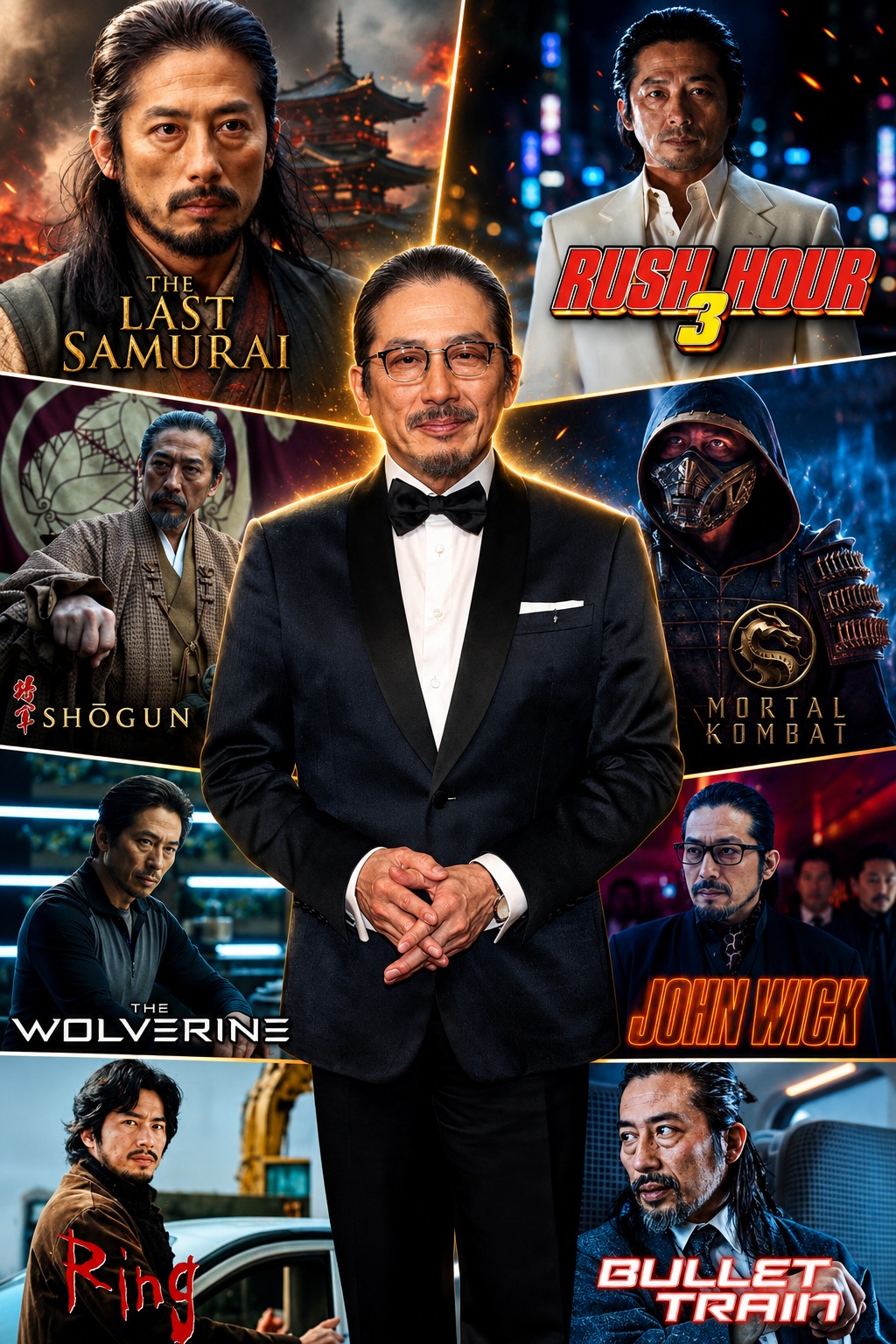
The Last Samurai.
Rush Hour 3.
The Wolverine.
47 Ronin.
Westworld.
Mortal Kombat.
Bullet Train.
John Wick: Chapter 4.
Looking at Hiroyuki Sanada’s Hollywood résumé, it would be easy to assume the industry simply knew whom to call whenever it needed a Japanese actor who could carry a sword with absolute conviction.
But Sanada was often doing another job at the same time.
He was quietly correcting Hollywood.
Long before he became a producer on Shōgun, Sanada was already watching costumes, props, dialogue and movement on American productions, looking for details that did not ring true to Japanese culture. What began on The Last Samurai eventually became something close to a personal mission: if Hollywood was going to show Japan to the world, he wanted to help it get Japan right.
The Last Samurai Changed His Role Behind the Camera
When Sanada joined Edward Zwick’s The Last Samurai, released in 2003, he played Ujio, one of Katsumoto’s fiercest warriors.
It was Sanada’s first major Hollywood film, but he did not limit himself to performing.
He began giving the production notes about Japanese culture and the physical details of samurai life. Sanada later recalled staying on set even when he was not filming, paying attention to props, costumes, extras and movement.
Then something unusual happened.
Instead of telling the actor to stop interfering, Zwick’s team asked him to keep helping.
Sanada was invited to remain involved during post-production, reviewing footage and offering notes on elements including sound and visual effects. He later described that experience as a kind of accidental training for the producing work he would eventually do decades later.
The lesson stayed with him.
As Sanada moved deeper into Hollywood, he repeatedly found himself working as an unofficial cultural adviser alongside his acting duties.
On Japan-related projects, he said he would examine everything from dialogue and wardrobe to the way background performers behaved. While working on Minamata, for example, he recalled monitoring dialogue, extras and movement through a headset.
The corrections could be extremely small.
But small details are exactly what can make a culture feel lived-in rather than manufactured.
Sanada also understood that every production required a different standard. He has pointed out that something deliberately artificial, such as the Japanese-themed park in Westworld, exists within a different reality than a historical drama. His goal was not simply to make everything look like a museum recreation.
It was to make sure filmmakers understood what they were choosing to show.
There Was One Problem: He Was Still “Just” an Actor
For years, Sanada volunteered his knowledge.
But eventually he recognized the limitation of doing cultural quality control from an actor’s position.
He could make suggestions.
He could explain why something looked wrong.
He could try to persuade a department to change a detail.
But ultimately, he did not run those departments.
Sanada has spoken openly about feeling a limit to how much he could say as a performer. He was also conscious that constantly correcting experienced crew members could become delicate; he did not want to undermine the people whose departments he was entering.
That is what made Shōgun different.
When FX approached Sanada not only to play Lord Yoshii Toranaga but also to become a producer, the title gave him something he had never possessed on his previous Hollywood productions:
authority.
After roughly two decades of trying to protect authenticity largely on his own, he could finally build an entire team around it.

Shōgun Did Not Just Hire Consultants — It Built Authenticity Into the Production
Sanada helped bring in Japanese specialists with deep experience in samurai period dramas.
There were experts for wigs.
Experts for costumes.
Experts for props.
And there were specialists devoted to something viewers might never consciously notice: how people moved.
A “master of gesture” and other movement advisers worked with performers on the physical grammar of life around 1600 — how someone of a particular status would sit, stand, walk, handle an object or serve another person.
Those lessons were not only for international actors unfamiliar with Japan.
Even younger Japanese performers needed instruction.
Modern Japanese body language was not automatically appropriate for people living four centuries earlier. Sanada said the cast sometimes had to be taught basic movement again from the beginning.
That detail reveals why Shōgun feels different from a production that simply puts actors into expensive period costumes.
Authenticity was being treated as behavior, not decoration.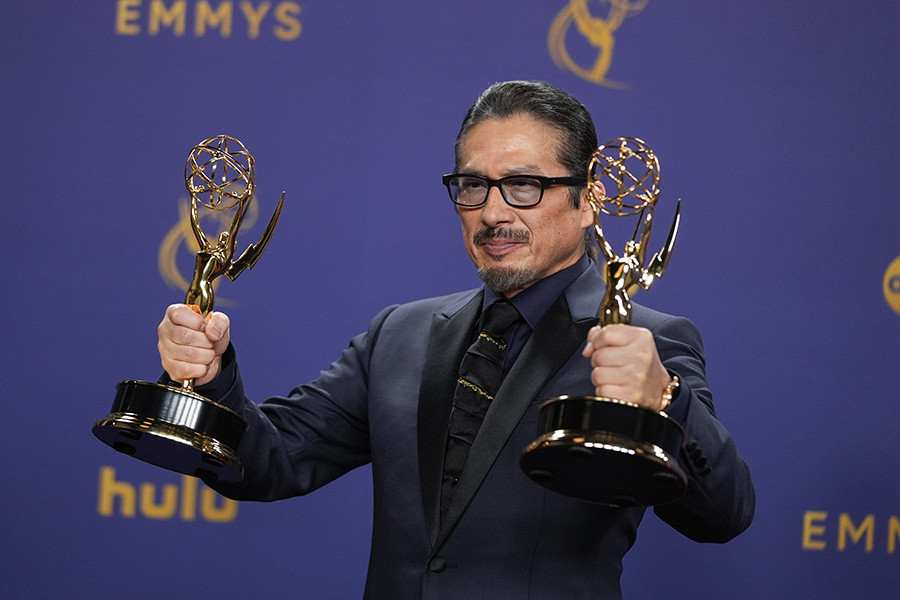
Then Came the Scripts — and an Extraordinary Translation Loop
The same obsession extended to language.
Shōgun was developed in English, but most of the finished series is spoken in Japanese. Making that work required much more than translating modern English sentences into modern Japanese.
Scripts were initially written in English, then translated into Japanese. From there, a Japanese period-drama specialist reshaped the dialogue so it sounded appropriate to the historical world rather than like contemporary conversation.
Sanada and Japanese producer Eriko Miyagawa reviewed the material, actors made further adjustments during performance, and the spoken Japanese eventually had to be translated back into English so the subtitles accurately reflected what viewers were actually hearing.
Sanada said he was involved even earlier.
When he received drafts, he examined them for cultural misunderstandings and stereotypical material, marking areas that needed to be removed or changed before translation proceeded.
Then came the back-and-forth.
English to Japanese.
Japanese into language suitable for a period drama.
Corrections.
Performance adjustments.
Back into English.
More revisions.
Sanada estimated that this kind of process could happen six or seven times for each episode.
Suddenly, Shōgun’s authenticity was not merely about beautiful armor or impressive castles.
It had been engineered into the production line.

Twenty Years of Corrections Led to a Historic Night
The result was not a niche historical exercise appreciated only by specialists.
Shōgun became one of television’s biggest critical successes.
At the 76th Emmy Awards cycle in 2024, the FX drama won 18 Emmys, setting a new record for the most victories by a drama series in a single competition cycle.
Sanada won Outstanding Lead Actor in a Drama Series for Toranaga and, as a producer, also shared in Shōgun’s Outstanding Drama Series victory.
Anna Sawai won Outstanding Lead Actress for her performance as Toda Mariko.
According to the Television Academy, Sanada and Sawai became the first Japanese actors to win Emmys.
For Sanada, the achievement carried meaning far beyond finally receiving a major American acting award.
For approximately 20 years, he had entered Western productions knowing that audiences around the world might form impressions of Japan from what they saw onscreen.
Sometimes he could fix a sword movement.
Sometimes a costume.
Sometimes a line.
Sometimes an extra standing incorrectly in the background.
But he was still working inside somebody else’s system.
On Shōgun, the system itself changed.
The Japanese perspective was no longer something added afterward by an actor trying to catch mistakes. It was embedded in the writers, producers, advisers, craftspeople, performers and translation process.
For years, Hiroyuki Sanada was the Japanese actor Hollywood called when it needed authenticity.
On Shōgun, he finally became one of the people who could define what authenticity meant.
And Hollywood rewarded him with the biggest victory of his career.