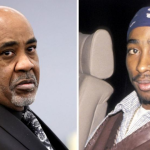
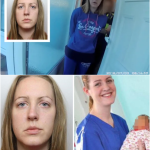
LUCY LETBY CALLED DR MARK DEAKIN HER “LOVE” AND “BEST FRIEND” — BUT THE MARRIED DOCTOR INSISTED THEIR BOND WAS SOMETHING VERY DIFFERENT
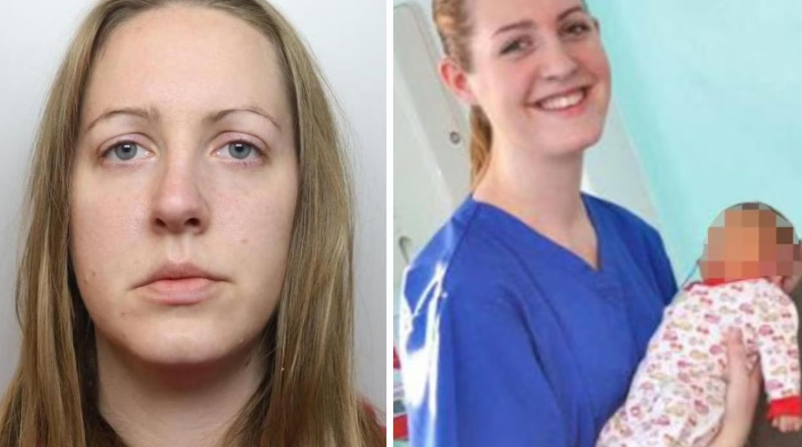
LUCY LETBY CALLED DR MARK DEAKIN HER “LOVE” AND “BEST FRIEND” — BUT THE MARRIED DOCTOR INSISTED THEIR BOND WAS SOMETHING VERY DIFFERENT
For years, one mysterious relationship sat in the background of the Lucy Letby case.
She called him her “love.”
She described him as her “best friend.”
They exchanged more than 1,300 Facebook messages, met outside work and even spent a day together in London.
But the married doctor at the center of it all insisted the relationship was not the romantic affair prosecutors portrayed.
His identity was protected during Letby’s trial.
Now, after his death, Dr Mark Deakin has finally been publicly identified — bringing renewed attention to one of the most emotionally charged relationships surrounding the case.
 “I LOVED HIM AS A FRIEND”
Letby and Deakin worked together at the Countess of Chester Hospital.
Their relationship became unusually close, with hundreds of private messages exchanged during a period when Letby was facing increasing scrutiny at the hospital.
Prosecutors later presented the relationship as evidence of a possible emotional fixation.
Letby rejected that interpretation.
When questioned about Deakin during her trial, she insisted that she loved him “as a friend” and denied being romantically involved with the married father of two.
The distinction became central to the prosecution’s theory.
They argued that Letby had become infatuated with the doctor and suggested that her actions involving babies were connected to her desire for his attention.
But no specific motive was established as part of her convictions, and Letby has consistently denied the prosecution’s interpretation of their relationship.
 MORE THAN 1,300 MESSAGES
The sheer volume of communication between the pair became one of the most striking details.
The Thirlwall Inquiry heard that Deakin and Letby exchanged approximately 1,355 Facebook messages between June and September 2016.
The messages were exchanged while Letby had been removed from the neonatal unit and was seeking support.
Deakin told the inquiry that he had been trying to help her because he believed she was struggling.
But when questioned about the extent of their contact and his support for her, he acknowledged that he had provided support while being “misled and maybe manipulated.”
That admission added another layer to a relationship that had already attracted enormous attention.
THEY MET OUTSIDE THE HOSPITAL
Their contact was not limited to hospital corridors.
Evidence heard during Letby’s trial included details of the pair meeting for coffee and spending time together away from work.
They also took a day trip to London.
Their messages reportedly included affectionate language and heart emojis.
At one point, Letby referred to Deakin as a “sweetie” after he brought her chocolate.
To prosecutors, those details helped paint a picture of an unusually intense relationship.
To Letby, they were simply signs of friendship.
And Deakin maintained that his intentions were very different from the picture prosecutors presented.
THE MOMENT LETBY BROKE DOWN
The emotional intensity surrounding Deakin became particularly visible during Letby’s trial.
When Deakin began giving evidence, Letby reacted strongly.
She became visibly distressed and attempted to leave the courtroom before returning to the proceedings.
The prosecution immediately focused on the reaction.
But Letby rejected the suggestion that she was upset because her “boyfriend” was testifying.
She maintained that Deakin had been a friend and that their relationship was never an affair.
The exchange became one of the most memorable moments of the trial.
THE DOCTOR’S OWN ACCOUNT WAS FAR MORE COMPLICATED
Deakin’s testimony presented another side of the relationship.
He acknowledged that he and Letby had become close.
But he said he believed he was supporting a colleague who was going through a difficult period.
The Thirlwall Inquiry later examined how that relationship developed and whether professional boundaries had been crossed.
The inquiry has been investigating the wider circumstances surrounding Letby’s employment at the Countess of Chester Hospital, including how staff relationships, management structures and responses to concerns affected patient safety.
That means the relationship was not merely a personal curiosity.
It became part of a much larger examination of what happened inside the hospital.
THEN THE DOCTOR’S IDENTITY WAS FINALLY REVEALED
During Letby’s trial, Deakin was known publicly only as “Doctor A.”
He had been granted anonymity because of concerns about the impact public identification could have on him and his family.
But following his death in June 2026, the Court of Appeal lifted the anonymity order.
He was subsequently identified as Dr Mark Deakin, a married father of two.
Reports say he had later worked at Alder Hey Children’s Hospital, where he became subject to an investigation involving his professional conduct and his connections to Letby.
His death has now brought renewed scrutiny to a relationship that had remained partly hidden for years.
A RELATIONSHIP THAT STILL RAISES QUESTIONS
What exactly did Letby feel for Deakin?
Was it an intense friendship?
Was it something more?
And how much did Deakin understand about what was happening around Letby at the time?
Those questions have been debated ever since the trial.
But there is an important distinction between what prosecutors argued and what has been established as fact.
Letby denied being romantically involved with Deakin.
Deakin described himself as someone trying to support a colleague and later said he may have been misled or manipulated.
The prosecution’s theory about Letby’s emotional attachment was part of its presentation of motive, but motive itself was not required for the convictions.
THE STORY IS NOT OVER
The relationship between Letby and Deakin has now become part of a much larger historical record surrounding the case.
The Thirlwall Inquiry has completed its evidence and submissions phase, with its final report scheduled for publication on September 15, 2026.
For years, the public knew the doctor only as “Doctor A.”
Now his name is known.
The messages are known.
The meetings are known.
And the conflicting accounts of what their relationship really meant remain one of the most intriguing and disputed chapters in the Lucy Letby story.