HER MARRIAGE COLLAPSED BEFORE HER LIFE DID — THE TURNING POINTS THAT PRECEDED PAMELA CISNEROS’ TIMES SQUARE TRAGEDY
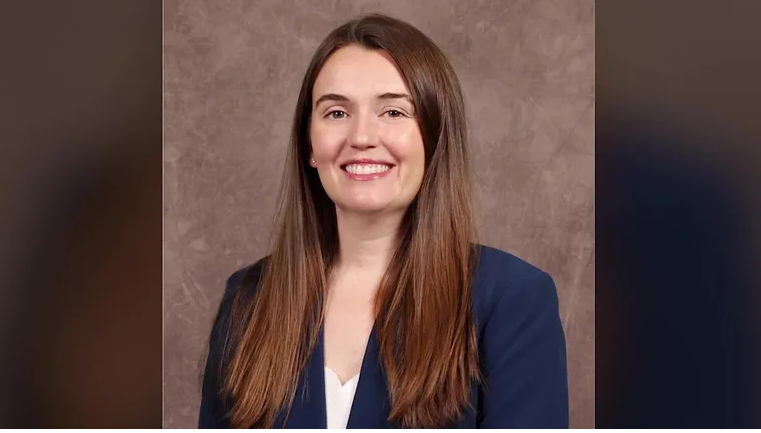
HER MARRIAGE COLLAPSED BEFORE HER LIFE DID — THE TURNING POINTS THAT PRECEDED PAMELA CISNEROS’ TIMES SQUARE TRAGEDY
Before Pamela Cisneros became the woman at the center of a shocking Times Square case, there was another story unfolding quietly behind closed doors.
She had earned a master’s degree in psychology.
She had built a professional life.
She had a family.
But over the years, that life began to unravel.
There were mental-health crises.
Then came the divorce.
Then custody problems.
Then the loss of a job and growing difficulty finding work that matched her professional background.
And while her family said she continued trying to rebuild her life and seek treatment, something had clearly changed.
Years later, Pamela would become the suspect in the fatal Times Square incident involving 32-year-old Erin Piacenti.
But the records and accounts surrounding Pamela’s life suggest that her story did not begin on that Manhattan street.
 THE CRISIS CAME YEARS EARLIER
Pamela’s mental-health struggles were reportedly documented years before the Times Square incident.
Family members have described a long history of difficulties and said she had received treatment.
Her brother Patrick Peralta told the New York Post that she had struggled for decades but appeared more stable in recent years while receiving care. He said the family was stunned by what happened in Times Square because they had not known her to be aggressive or violent.
Reports have also described serious incidents involving Pamela in 2018 and 2019, including a 2019 suicide attempt.
Those episodes are important pieces of her history — but they do not establish what ultimately led to the events of August 31, 2026.
 THEN HER PERSONAL LIFE BEGAN TO FALL APART
Pamela’s difficulties were not limited to her mental health.
Her marriage ended.
A custody dispute followed.
And her professional life also became increasingly difficult.
Court records cited in reporting indicate that Pamela had left her position at Aflac and struggled to find employment that matched her education and professional background.
For someone who had invested years in education and built a career, the loss of that stability represented another major disruption.
Her family, meanwhile, said she was still trying to get help and put her life back together.
From the outside, there were attempts at recovery.
But underneath, the problems had not simply disappeared.
SHE SEEMED TO BE DOING BETTER
This is perhaps one of the most haunting parts of the story.
According to her family, Pamela had appeared to become more stable in recent years.
She was receiving treatment.
She was trying to rebuild.
And people close to her did not describe her as someone they expected to suddenly become violent.
Her father and brother have spoken about the family’s efforts to support her.
But relatives also suggested that more recently, she had stopped following aspects of her treatment.
That detail remains part of the family’s account and has not been established as the definitive reason for what happened in Times Square.
THEN CAME AUGUST 31
On the afternoon of August 31, Pamela’s life collided with that of Erin Piacenti.
Piacenti, 32, was a Bank of America vice president and a Fordham Law graduate.
She had recently become a mother and was returning to work after maternity leave.
That Monday was reportedly her first day back.
She was in Times Square when the confrontation unfolded.
According to police, Pamela approached people with knives and injured two individuals.
One of them was Piacenti.
She later died from her injuries.
The second victim, 68-year-old Tak Kam, survived.
Pamela then confronted responding NYPD officers.
Police said officers ordered her to drop the knives, but she refused and advanced toward them.
Officers deployed a Taser before using their firearms.
Pamela was pronounced dead at Bellevue Hospital.
TWO COMPLETELY DIFFERENT LIVES COLLIDED
That is what makes the case so difficult to process.
Erin Piacenti was a young professional and new mother whose life was only beginning a new chapter.
Pamela Cisneros was a woman whose own life had been marked by years of personal and psychological struggles.
One woman had just returned from maternity leave.
The other had spent years trying to recover from a life that had increasingly become unstable.
And on one August afternoon, their paths crossed in one of the most recognizable places in New York City.
BUT WHAT ACTUALLY CAUSED PAMELA TO BREAK DOWN?
That question remains unanswered.
It would be tempting to point to the divorce.
Or the custody dispute.
Or the loss of employment.
Or her earlier mental-health crises.
But none of those events, individually, has been established as the single cause of what happened.
Instead, the available record points to something much more complicated: years of struggles, personal losses, attempts at treatment and periods when Pamela appeared to regain stability.
Her family has emphasized that they tried to help her.
And they have expressed shock that the woman they knew could become involved in such a devastating incident.
THE FINAL TURNING POINT MAY NEVER BE KNOWN
Pamela had a master’s degree in psychology.
She understood, at least academically, the complexities of human behavior.
Yet having knowledge about psychology does not make someone immune to serious mental-health problems.
And her education cannot explain what happened in Times Square.
What happened inside Pamela’s life during the final weeks and months before August 31 remains a crucial unanswered question.
Investigators are still examining the circumstances surrounding the incident, while the NYPD’s Force Investigation Division is reviewing the police use of force.
For now, the clearest picture is not of one sudden breaking point.
It is of a life that had been under pressure for years.
A marriage ended.
A custody battle followed.
A career was disrupted.
Mental-health struggles returned.
There were attempts to seek help.
There were periods of apparent stability.
And then, unexpectedly, everything changed again.
The woman who once studied psychology and tried to rebuild her life became the central figure in a tragedy that took the life of a young mother.
The question is no longer simply what happened in Times Square.
It is how Pamela Cisneros’ life reached that moment — and whether the warning signs were visible long before anyone realized how serious they had become.