Brad Paisley Fights Back Tears as a 20-Year-Old Dolly Parton Duet Suddenly Takes on a Heartbreaking New Meaning
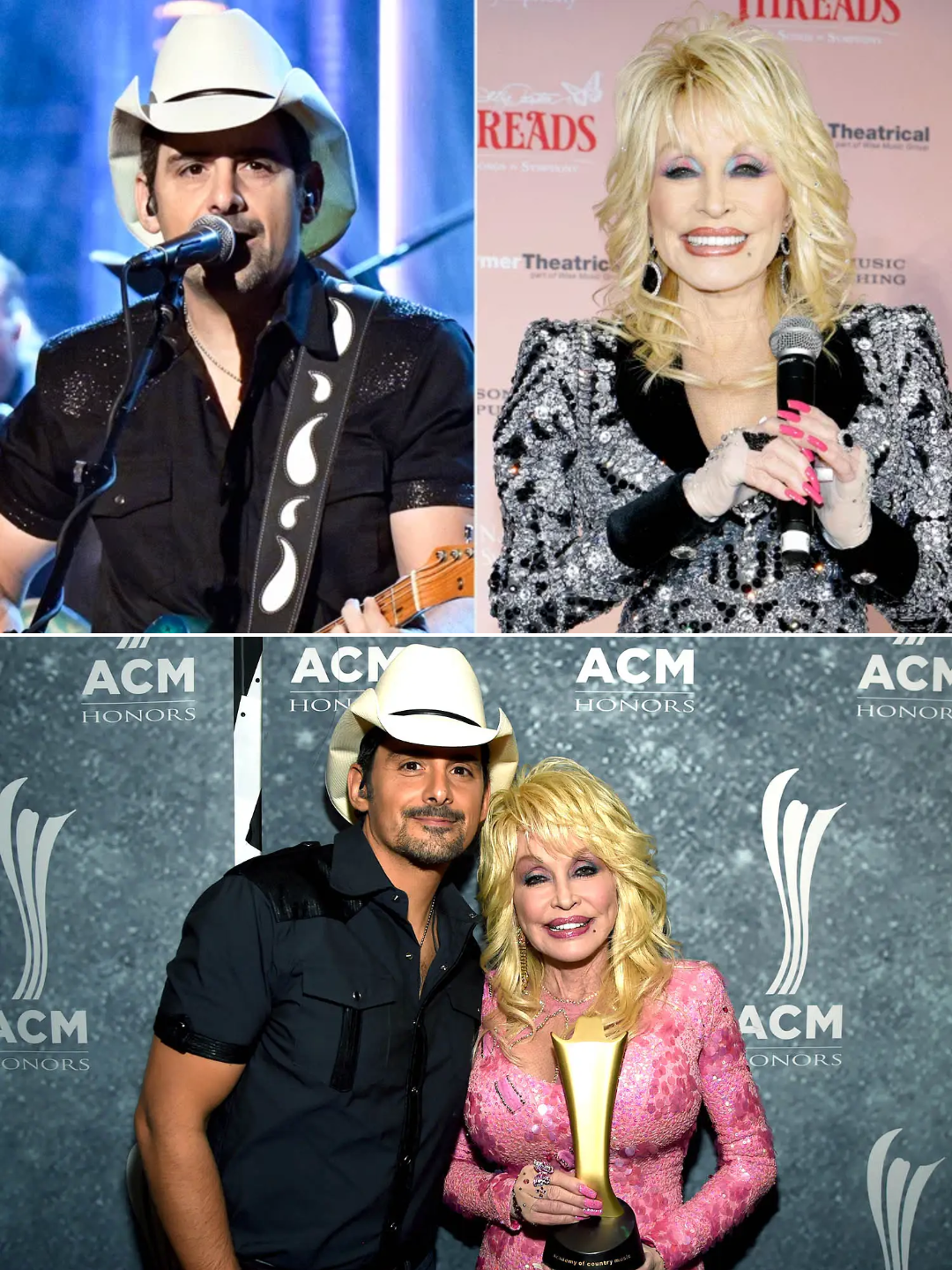
For more than two decades, Brad Paisley had sung “When I Get Where I’m Going” as a song about loss, faith and the hope of seeing loved ones again.
He never expected Dolly Parton to become one of the people the song would someday make him mourn.
That reality seemed to hit Paisley in real time during a concert in Connecticut on Thursday, Aug. 27, just two days after Parton died at age 80. Standing before the crowd at Hartford HealthCare Amphitheater in Bridgeport, the country singer revisited the 2005 duet he had recorded with Parton — and found himself struggling to hold back his emotions.
The performance was already carrying enormous emotional weight. Images of Parton appeared behind Paisley, including photographs of the country legend by herself and alongside him. At one point, a smiling image of Parton filled the screen with a simple message: “We Love You Dolly.”
But it was what Paisley said after the song that transformed the moment from a concert tribute into something deeply personal.
A Song Originally Written for Other Losses
Paisley, 53, told the audience about the circumstances that brought Parton onto “When I Get Where I’m Going” more than 20 years earlier.
When he originally recorded the song, Paisley had experienced losses in his own life. He sent the track to Parton and wondered whether its message would connect with her.
Parton did not hesitate.
According to Paisley’s recollection, she immediately wanted to participate and added her unmistakable voice to the recording. The pairing gave the song another emotional dimension: Paisley carrying much of the narrative while Parton’s harmonies helped lift its message toward hope and reunion.
On Aug. 27, however, Paisley was no longer remembering only how the collaboration began.
He was confronting what the song now meant.
“I never thought it would be about her, but it is,” Paisley told the crowd.
His voice caught as fans responded with loud cheers of support. Paisley then reflected that the song’s ideas about what comes after life closely matched Parton’s own beliefs.
He ended his remarks with a message of love for his longtime friend and collaborator.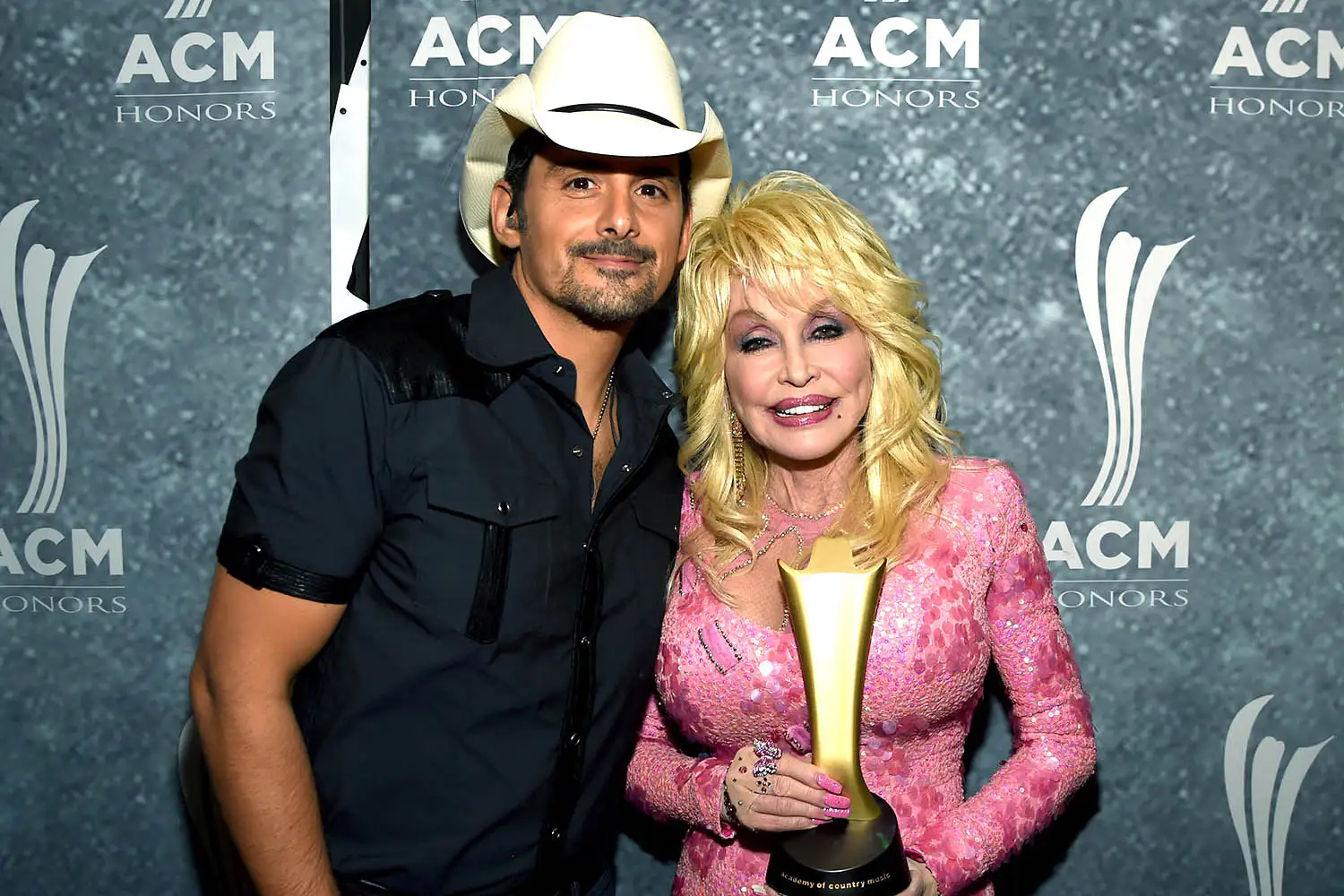
Two Days After Country Music Lost Dolly
Parton died Tuesday, Aug. 25, at age 80 following what her representative described as a brief battle with cancer. The specific type of cancer was not disclosed.
News of her death quickly brought an outpouring of tributes from entertainers who had worked with her, admired her or simply grown up with her music.
For Paisley, however, the connection was built into one of the most recognizable recordings of his career.
That made Thursday night different.
Instead of simply choosing one of Parton’s famous solo songs for a memorial performance, Paisley had something uniquely tied to their relationship: a recording in which their voices had been permanently joined.
And the subject of that recording made the timing especially poignant.
“When I Get Where I’m Going” deals directly with mortality and the idea that sorrow will eventually give way to peace. For years, Paisley and Parton had performed those sentiments from the safe distance of a song.
After Aug. 25, there was no distance left.
The lyrics had become connected to Parton herself.
Kimberly Williams-Paisley Remembers Meeting Dolly
The loss also touched Paisley’s family.
His wife, actress Kimberly Williams-Paisley, shared her own memories of Parton after her death. She recalled first meeting the singer during the period when Paisley and Parton were working on “When I Get Where I’m Going.”
Williams-Paisley remembered Parton as immediately warm, approachable, humorous and generous. She also recalled being struck by the power of Parton’s voice and what it added to her husband’s song.
Years later, Williams-Paisley had the chance to work with Parton herself on the Netflix anthology series Dolly Parton’s Heartstrings.
The actress appeared in the episode inspired by “Jolene,” and one particular day of filming stayed with her.
Williams-Paisley remembered trying to shoot a scene outdoors during brutal weather. Strong winds and driving rain sent her hair, clothing and script pages in every direction as the production attempted to stay on schedule.
Then Parton arrived.
Williams-Paisley jokingly recalled that it seemed as though the chaos somehow stopped around the country superstar. Parton appeared perfectly prepared, glamorous and composed despite everything happening around her.
She called it the “Dolly effect.”
Behind the humorous memory was the same affection Paisley displayed onstage: a sense that Parton’s impact on the people around her went far beyond hit records.
Williams-Paisley concluded that Parton would continue living through her music and in the hearts of those who loved her.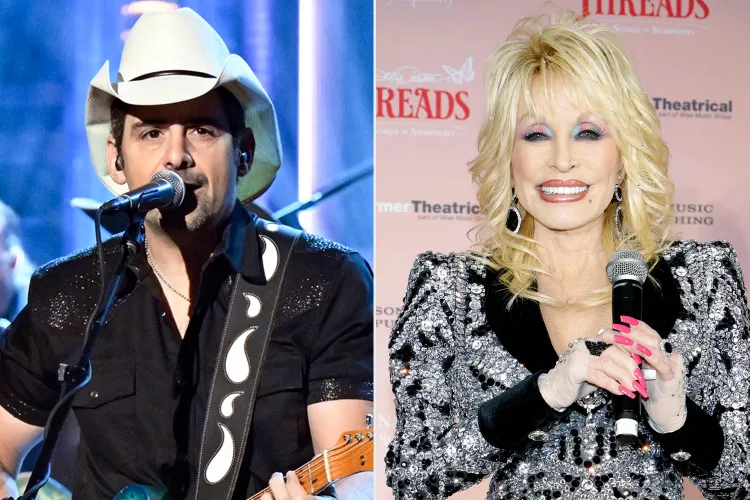
Other Artists Begin Saying Goodbye on Stage
Paisley was not alone in turning a concert into a place of remembrance.
The following night, Friday, Aug. 28, Kacey Musgraves paid tribute to Parton during her performance at TD Garden in Boston.
Musgraves, 38, performed her own song “Rainbow” in Parton’s honor before singing Parton’s “Here You Come Again.”
Those performances became part of a much larger wave of public mourning as musicians and entertainers shared memories of the woman whose career had stretched across generations.
Yet Paisley’s tribute carried an unusual symmetry.
Twenty years earlier, he had approached Parton with a song inspired by people he had already lost.
She heard it and agreed to sing.
Neither could have known that decades later, Paisley would stand alone on a Connecticut stage, hear her voice and realize the song had acquired one more meaning.
The collaboration had not changed.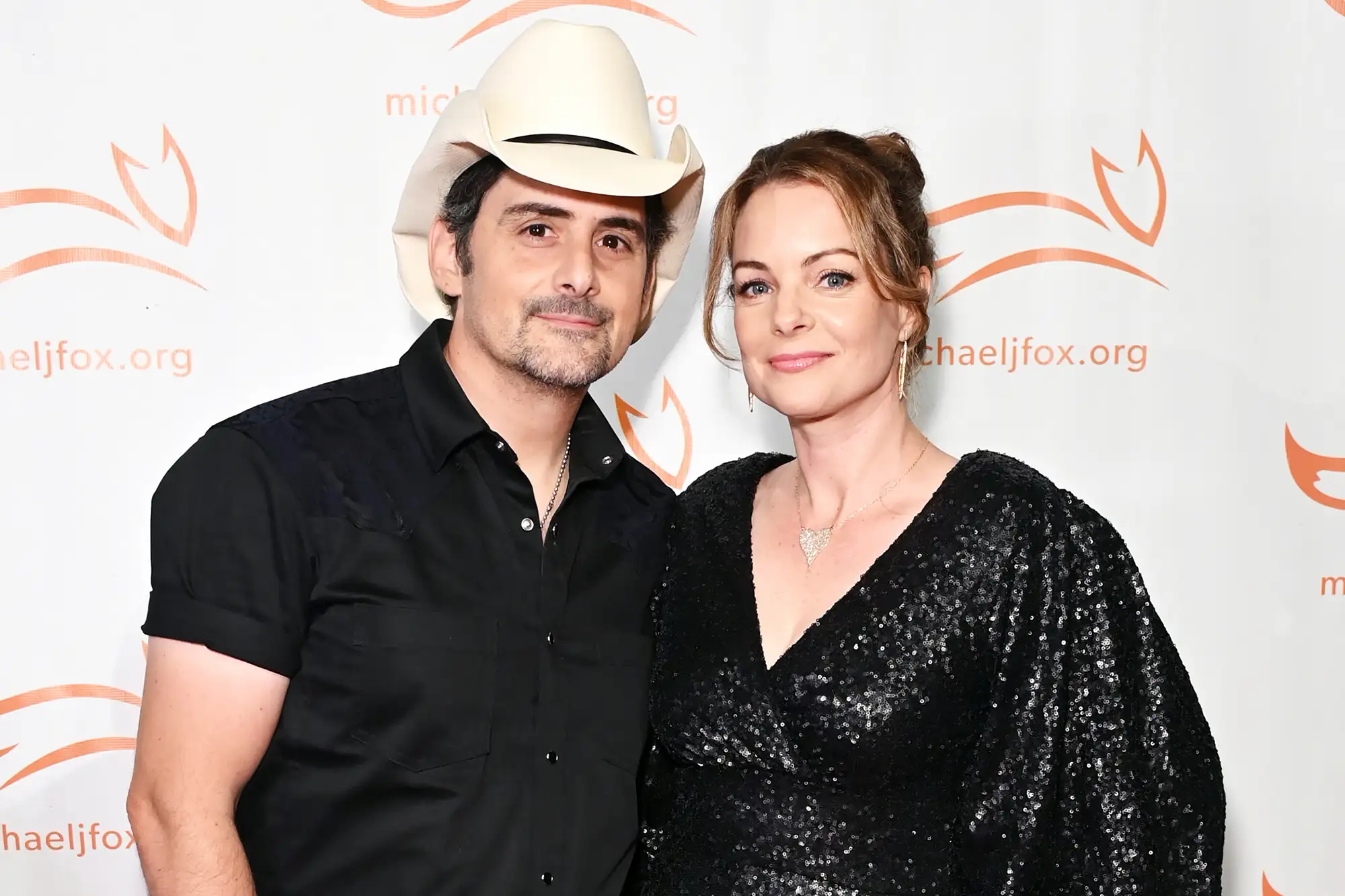
The circumstances had.
And as photographs of Dolly Parton appeared behind him and her recorded voice once again became part of the music, Paisley’s reaction showed why certain songs can become more powerful with time.
“When I Get Where I’m Going” once allowed Dolly Parton to help Brad Paisley sing about saying goodbye to others.
Twenty years later, it became one of the songs helping him say goodbye to her.