BABY DOLPHIN D/ES AFTER DISTURBING BEACH ENCOUNTER IN CEUTA — VIDEO SPARKS OUTRAGE AND INVESTIGATION
BABY DOLPHIN DIES AFTER DISTURBING BEACH ENCOUNTER IN CEUTA — VIDEO SPARKS OUTRAGE AND INVESTIGATION
CEUTA, Spain — A disturbing video showing a group of migrants handling a baby dolphin on a beach in Spain’s North African enclave of Ceuta has sparked outrage and prompted an investigation into how the young animal died.
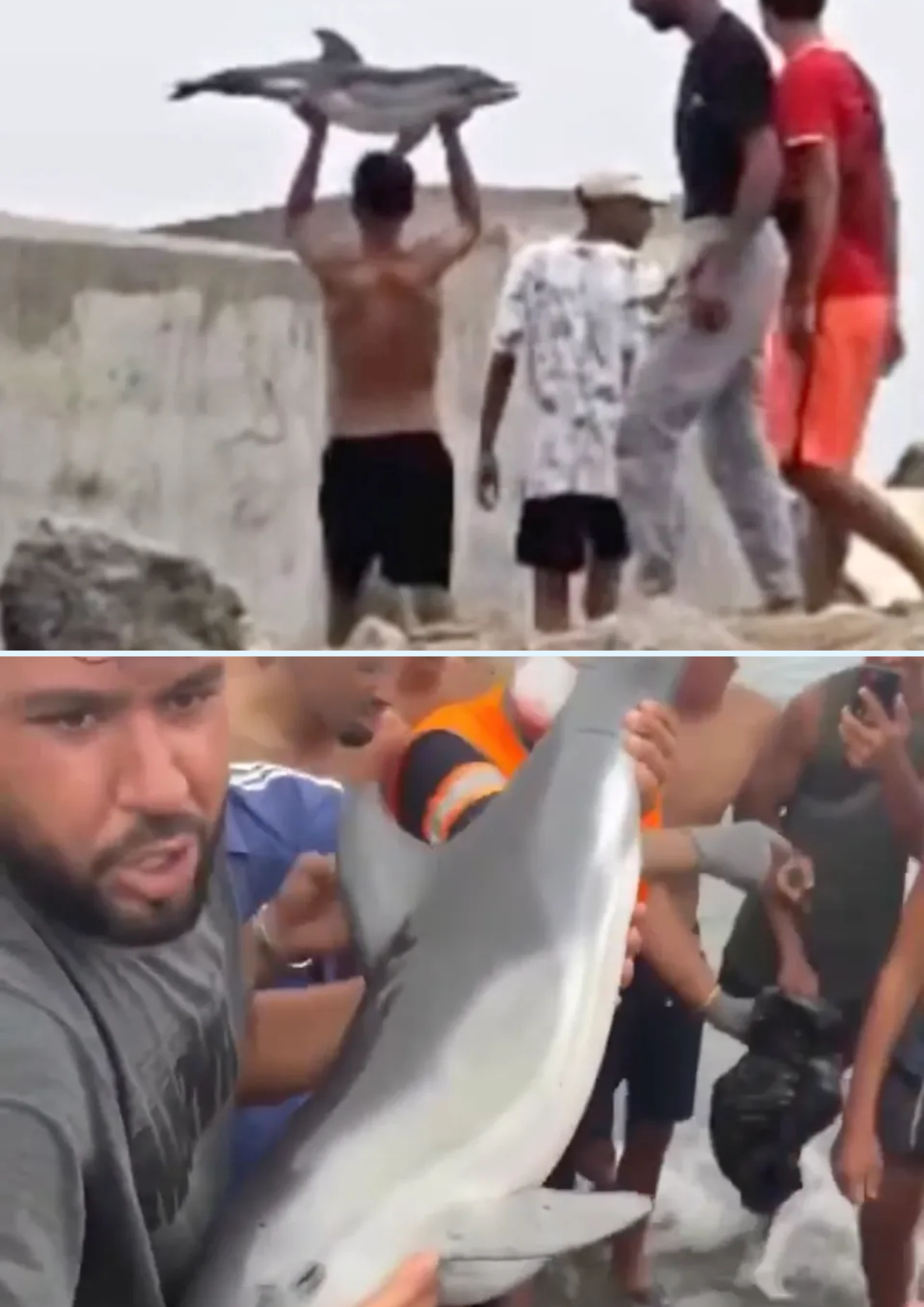
The footage, filmed at Trampolín Beach, shows several men surrounding a small dolphin that had come close to shore.
According to reports, members of the group pulled the animal from the water and carried it across the rocky beach while others gathered around.
At one point, the dolphin was reportedly lifted above the men’s heads as people attempted to touch it.
The disturbing scenes quickly spread across social media.
 LOCALS RUSHED TO INTERVENE
The situation reportedly escalated as people wearing high-visibility clothing attempted to intervene.
Locals also confronted the group and demanded that the animal be released.
In footage circulating online, people can be heard shouting for the dolphin to be put down.
Eventually, locals reportedly managed to take the animal away and return it toward the water.
But the dolphin later died.
Reports citing local sources alleged that the animal had been struck with a stick during the incident, causing fatal injuries.
However, there is an important unanswered question:
Was the dolphin already dying or dead when it was taken from the water, or did the handling cause its death?
Local reporting says the viral footage alone does not establish the cause of death.
 ENVIRONMENTAL GROUP FILES COMPLAINT
The controversy has now moved beyond social media.
An environmental organization, DAUBMA, reportedly filed a formal complaint with Spain’s Civil Guard, asking authorities to investigate the death of the dolphin and identify anyone responsible.
The organization alleges that the calf reached the shore alive and was subsequently removed from the water and struck.
But investigators will have to establish whether those allegations are supported by the available evidence.
Authorities are reportedly examining photographs, videos and other material circulating online.
The distinction is important because the viral footage shows people carrying and handling the dolphin, but does not independently establish everything that happened before the recording began or the precise cause of death.
OUTRAGE SPREADS ONLINE
The images have triggered a wave of anger, with calls for those involved to be identified and prosecuted if investigators determine that the animal was deliberately harmed.
A separate online petition has also called for criminal action, arguing that dolphins are protected under Spanish and European environmental laws.
The incident has become particularly controversial because it comes during an already tense period for Ceuta.
The Spanish territory has been dealing with the aftermath of a massive migration crisis, with thousands of migrants still in the enclave weeks after a major influx from Morocco.
The broader crisis has fueled political tensions, protests and intense debate over immigration policy in Spain.
THE INVESTIGATION NOW FOCUSES ON ONE QUESTION
The baby dolphin’s death has left authorities with a straightforward but critical task:
Determine exactly what happened before, during and after the animal was pulled from the water.
The footage has provided investigators with disturbing images of the encounter.
But images alone do not answer whether the dolphin was alive when it was removed from the sea, whether it was injured beforehand, or whether injuries inflicted during the incident caused its death.
Those questions will have to be established through the investigation.
For now, the video continues to circulate online, fueling public outrage while authorities work to determine whether criminal wrongdoing occurred.
And what began as a disturbing scene on a Ceuta beach could now become an animal-cruelty investigation with potentially serious legal consequences.