ONE DEVICE. ONE STATEMENT. AND A DETAIL THAT COULD CHANGE EVERYTHING IN THE SAYLOR HAYES CASE
ONE DEVICE. ONE STATEMENT. AND A DETAIL THAT COULD CHANGE EVERYTHING IN THE SAYLOR HAYES CASE
Saylor Hayes’ parents reportedly told searchers to rely on a tracking device — but investigators later discovered the transmitter was sitting inside a vehicle hundreds of miles away.
That revelation is now at the center of questions surrounding the disappearance of the 5-year-old Virginia girl, whose body was found in a South Carolina waterway after an extensive overnight search.
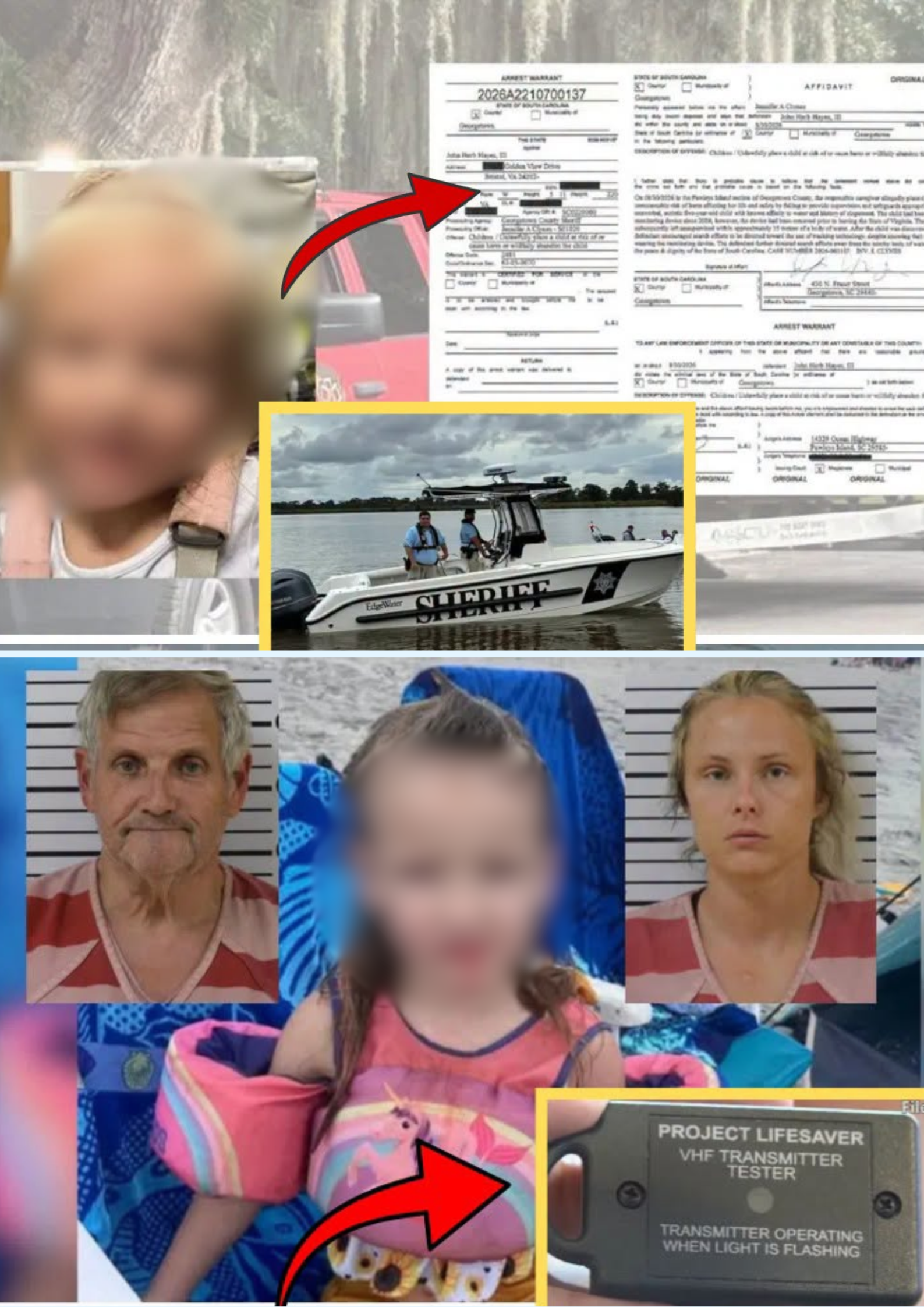
Saylor, who was nonverbal and had severe autism, had been enrolled in the Washington County Sheriff’s Office Project Lifesaver program since 2024 because of her history of wandering and her known attraction to water.
But when she disappeared from a rental property in Pawleys Island on Aug. 30, investigators say the tracking device was not actually on her.
 THE SEARCHERS WERE LOOKING FOR A SIGNAL
After Saylor was reported missing, South Carolina authorities requested information about her Project Lifesaver transmitter.
Virginia authorities provided the frequency associated with her device.
Search teams then deployed Project Lifesaver equipment, including ground equipment and a helicopter, in an effort to locate the signal.
Hundreds of residents also joined the search.
But no signal from Saylor could be detected.
Authorities eventually asked the Washington County Sheriff’s Office in Virginia to check the family’s home.
That is when investigators discovered the transmitter.
It was inside a vehicle in Virginia.
The Washington County Sheriff’s Office later confirmed that the transmitter was not with Saylor when she disappeared in South Carolina.
 WHY THAT DETAIL MATTERS
According to arrest documents, investigators allege Saylor’s parents knew she was not wearing the transmitter but nevertheless encouraged search efforts to use the tracking technology.
That meant searchers were attempting to find a signal from a device that, according to investigators, was never traveling with Saylor.
The distinction is crucial because Project Lifesaver depends on the transmitter being worn by the person being searched for. Virginia authorities have said caregivers are responsible for ensuring the device remains properly secured.
THEN THERE WAS THE WATER
Another allegation in the arrest records has drawn even more scrutiny.
Investigators allege Saylor was left unsupervised approximately 15 meters from a body of water despite authorities describing her as a child with a known attraction to water and a history of wandering.
Search records later indicated that authorities were initially directed toward the tracking technology while the nearby waterways were also being searched.
Saylor was ultimately found in the water near Hagley Landing on Aug. 31, roughly a day after she disappeared.
The circumstances have prompted investigators to examine the parents’ statements and decisions during the critical hours after Saylor vanished.
A MASSIVE SEARCH — WITH THE WRONG SIGNAL
The search involved deputies, K-9 teams, drones, boats, divers, helicopters and hundreds of local residents.
At one point, a helicopter equipped with Project Lifesaver technology was brought in specifically to search for Saylor’s transmitter.
But the transmitter that authorities were looking for was ultimately found back in Virginia.
Saylor was found the following morning by South Carolina Department of Natural Resources personnel in the water near where she had last been seen.
HER PARENTS NOW FACE CHARGES
Saylor’s parents, John Herb Hayes III and Geordyn Nichole Hayes, were arrested in Tennessee and charged with unlawfully placing a child at risk and willfully abandoning their daughter.
The charges are allegations and do not establish guilt.
Authorities have stressed that the investigation remains ongoing and that investigators followed the evidence as it developed.
A preliminary autopsy has since indicated pulmonary edema consistent with drowning, although the final determination remains pending.
But perhaps the most troubling question now is not simply where Saylor was found.
It is what happened during the hours when hundreds of people were searching for her.
One device was believed to be with Saylor.
It wasn’t.
And investigators now allege that the adults responsible for her knew that.
That single detail has become one of the most closely examined pieces of the case.