“SHE HAS ENDURED ENOUGH” — THE LINDSAY CLANCY CASE HAS NO VERDICT, AND ONE JUROR’S DOUBT IS NOW AT THE CENTER OF THE STORY
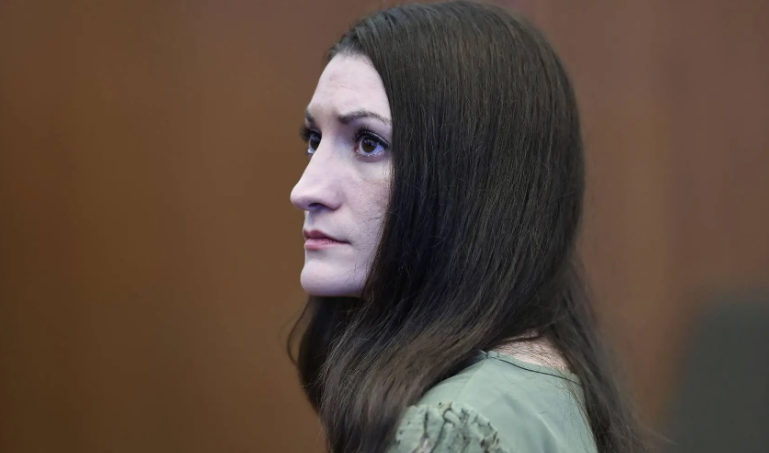
“SHE HAS ENDURED ENOUGH” — THE LINDSAY CLANCY CASE HAS NO VERDICT, AND ONE JUROR’S DOUBT IS NOW AT THE CENTER OF THE STORY
For more than three years, the Lindsay Clancy case has divided public opinion.
Now, after nearly six weeks of testimony, hours of emotional evidence and seven days of jury deliberations, the case has ended without a verdict.
A Massachusetts judge declared a mistrial on September 4, 2026, after the jury could not reach the unanimous decision required to resolve whether Clancy was criminally responsible for the deaths of her three children.
But the story did not end with the mistrial.
Instead, attention has shifted to what happened inside the jury room — particularly the account that one juror acknowledged having reasonable doubt but still refused to vote for a finding that Clancy was not criminally responsible because of mental illness.
That revelation has added another extraordinary layer to a case that has already become one of the most closely watched criminal proceedings in Massachusetts.
 THE CASE THAT DIVIDED THE PUBLIC
Lindsay Clancy, 36, was charged in connection with the January 2023 deaths of her three children: Cora, 5, Dawson, 3, and Callan, 8 months.
Clancy admitted that she strangled the children.
But her defense did not dispute that she was responsible for their deaths.
Instead, the central question at trial was whether she was criminally responsible for what she had done.
Her attorneys argued that Clancy was suffering from an extreme psychiatric crisis, including postpartum psychosis, and that her mental state left her unable to appreciate the wrongfulness of her actions or conform her conduct to the law.
Prosecutors presented a fundamentally different picture.
They argued that Clancy’s actions were deliberate and that the evidence did not establish that she was legally incapable of understanding what she was doing.
That conflict — mental illness versus criminal responsibility — became the heart of the trial.
 THEN THE JURY COULD NOT AGREE
The jury deliberated for roughly 40 hours over seven days.
Eventually, jurors repeatedly informed Judge William Sullivan that they remained deadlocked.
The dispute became particularly tense when the jury foreperson sent a note indicating that one juror had acknowledged doubt but was refusing to apply the legal standard of reasonable doubt to the case.
Clancy’s attorney, Kevin Reddington, argued that the juror was preventing the panel from reaching a verdict and asked the judge to intervene.
The judge declined to remove the juror.
Instead, Sullivan reminded the entire jury that they were required to follow the law and the court’s instructions.
Clancy’s defense then made an emergency appeal to the Massachusetts Supreme Judicial Court, asking for intervention.
That request was rejected.
The jury returned once more.
Still, there was no unanimous verdict.
The mistrial was then declared.
THE 11–1 SPLIT
After the mistrial, several jurors began speaking publicly about what had happened.
According to the jury foreperson and two other jurors, 11 jurors were prepared to find Clancy not criminally responsible, while one juror would not agree to that outcome.
The holdout juror reportedly acknowledged having reasonable doubt but nevertheless refused to vote for an insanity-based acquittal.
That distinction matters.
A mistrial is not an acquittal.
It does not establish that Clancy was innocent.
It also does not establish that prosecutors proved their case.
It simply means the jury could not reach the required unanimous verdict.
The ultimate legal question therefore remains unresolved.
WHY THE JUROR’S POSITION MATTERS
The disagreement has sparked renewed debate about what “reasonable doubt” means in a case involving severe mental illness.
The jurors who later spoke publicly described a deeply divided deliberation.
Roni Carlson, the jury foreperson, said the majority was persuaded by evidence concerning Clancy’s mental state and the deterioration she experienced before the January 2023 incident.
Another juror, Paula Devlin, described the holdout as dismissive of information presented by other jurors, including discussion involving jurors with nursing backgrounds.
But those accounts represent the jurors’ own descriptions of deliberations after the mistrial.
They do not constitute a new court finding against the holdout juror.
Judge Sullivan had already declined to conclude that the juror was refusing to follow the law.
That distinction is important as the public revisits the case.
THE EVIDENCE ABOUT CLANCY’S MENTAL STATE
Throughout the trial, the defense emphasized the deterioration in Clancy’s mental health before the deaths.
Psychiatric evidence and testimony focused heavily on postpartum psychosis and other symptoms that the defense said affected her perception of reality.
The defense also argued that Clancy had repeatedly sought medical and psychiatric help before the tragedy.
Her attorneys have separately pursued civil claims involving medical providers, alleging that the treatment she received failed to adequately address her deteriorating condition.
Those allegations are disputed and remain separate from the criminal case.
The prosecution, meanwhile, argued that Clancy’s conduct reflected planning and awareness rather than a complete inability to understand right from wrong.
The jury was ultimately unable to reconcile those competing interpretations.
WHAT HAPPENS NOW?
The mistrial does not automatically end the case.
Prosecutors have the option of seeking a new trial, although Plymouth County District Attorney Timothy Cruz said no decision would be made immediately.
Clancy remains in a psychiatric facility.
A court hearing is scheduled for September 29, when the next steps in the case are expected to become clearer.
Her attorney has also publicly called for presidential intervention, although Clancy’s case is being prosecuted under Massachusetts state law and presidential pardon power ordinarily applies to federal offenses.
For now, there is no final answer.
No conviction.
No acquittal.
And no unanimous jury finding resolving the question that has surrounded Lindsay Clancy since January 2023.
The case that divided the public for years has now entered another uncertain chapter — one in which the evidence, the law and the meaning of reasonable doubt remain at the center of the debate.