Robin Williams’ Quiet Act of Kindness for His Young Mrs. Doubtfire Co-Star Has a Remarkable Ending
For Lisa Jakub, being cast in Mrs. Doubtfire was supposed to be one of the great adventures of her childhood. Instead, the movie nearly cost her something much more ordinary: her place at school.
Jakub, who played Lydia Hillard, the eldest child of Robin Williams’ character in the 1993 comedy, was only 14 when she left her Canadian high school to spend months filming in California. While she was on set, she continued doing schoolwork and received several hours of tutoring each day. But eventually, the arrangement with her school broke down.
Then came a devastating message: she was no longer welcome back.
What happened next had nothing to do with the movie’s script. It was a small, personal moment between a famous actor and a teenager who was struggling. Williams noticed that Jakub was upset, asked what was wrong, and decided to intervene himself.
He wrote a letter to her school principal.
And although the letter failed to get Jakub back into the classroom, the principal apparently valued it enough to frame it.

A Teenager Trying to Live Two Lives
When production on Mrs. Doubtfire began in 1993, Jakub was a Canadian teenager balancing an unusual acting career with the ordinary demands of being a ninth-grade student.
The film was shot primarily in the San Francisco Bay Area between March and July 1993. Jakub has recalled that she initially attended school in Canada for several weeks before leaving for the production, which lasted roughly four months.
Because this was long before online classrooms and email made remote schooling routine, keeping up with her education required a much more complicated arrangement.
Jakub did schoolwork on set, worked with tutors for several hours a day and mailed assignments back and forth to Canada. For a while, the system worked.
Eventually, however, it became too difficult for her school to maintain.
During her 2024 appearance on Matthew Lawrence’s Brotherly Love podcast, Jakub explained that, a couple of months into filming, her school sent her a message telling her the arrangement was no longer working and that she should not return.
For a teenager, the decision was crushing.
Jakub later described school as the one normal part of her life. Acting had already made her childhood very different from that of most other teenagers, and suddenly even that familiar connection was gone.

Robin Williams Noticed
Jakub did not have to make a dramatic announcement on set for Williams to understand that something was wrong.
According to Jakub’s recollection, Williams noticed that she was upset and asked her what had happened.
She told him about the school situation.
Williams could have simply offered encouragement and moved on. Instead, he took action.
He wrote directly to her principal, asking the school to reconsider its decision and support Jakub as she attempted to continue both her education and her acting career.
The surviving descriptions of the letter show that Williams did not merely argue that Jakub was a successful young actress. He emphasized her qualities as a student and person, presenting her career as an unusual educational opportunity rather than a reason to abandon school.
In the letter, Williams described Jakub as bright, curious and eager to learn. He argued that a student with her abilities should be able to learn from the experiences she was having through her work and eventually bring those experiences back to the classroom.
It was an unusually thoughtful intervention from a major Hollywood star on behalf of a teenager who was not even his real daughter.
But the letter did not produce the result he wanted.

The Principal’s Unexpected Response
Jakub has told the story several times over the years, and the detail that makes it particularly memorable is what happened to Williams’ letter after it arrived at the school.
The principal did not simply throw it away.
The letter was framed and displayed in the principal’s office.
But Jakub was still not invited to return.
That strange outcome became part of the story’s lasting charm. Williams had made an extraordinary effort on her behalf, yet the official decision remained unchanged.
Jakub later explained that, to her, the important part was not whether the letter had succeeded.
It was that Williams had noticed her distress and cared enough to do something about it.
Years later, she continued to describe the gesture as an example of the way he treated the young actors around him.
More Than a Movie Memory
Mrs. Doubtfire was released on November 24, 1993, with Williams playing Daniel Hillard, a father who disguises himself as a British nanny in an attempt to remain close to his three children after his marriage breaks apart. The film became one of the defining family comedies of its era.
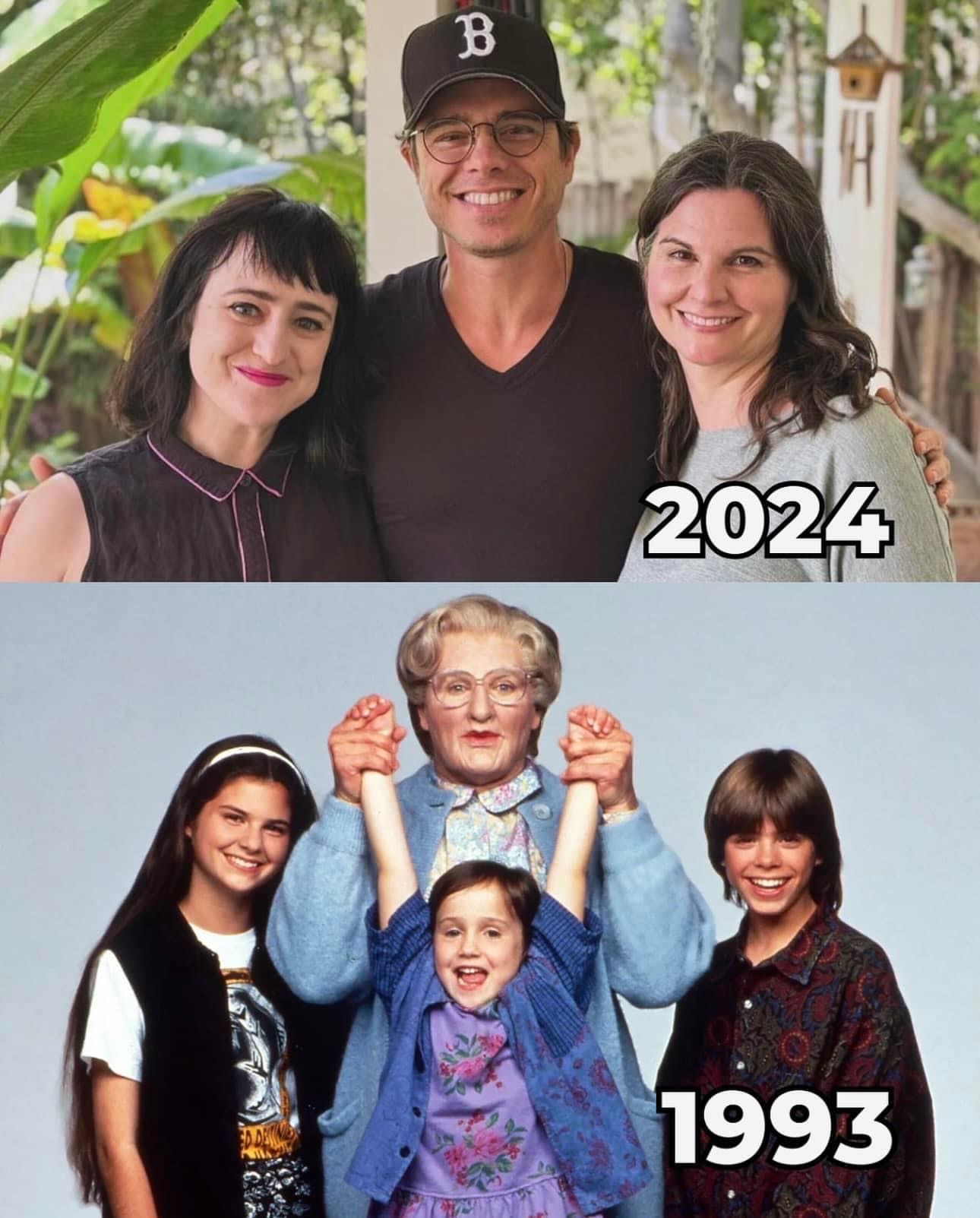
Jakub’s Lydia was the oldest of Daniel and Miranda Hillard’s children, alongside Matthew Lawrence as Chris and Mara Wilson as Natalie.
For audiences, those three children became inseparable from the movie’s emotional center. Behind the scenes, however, they were actual young performers dealing with the unusual pressures of working in Hollywood.
The 2024 Brotherly Love reunion offered Jakub an opportunity to look back on that experience with Lawrence and Wilson more than three decades after the film was made. The episode was released on May 3, 2024, and specifically revisited what Williams had done when Jakub was removed from school.
The story was also a reminder that Williams’ relationship with his young co-stars extended beyond the scenes audiences eventually saw on screen.
The Letter Outlived the Moment
There is another reason the story has endured.
Williams died in 2014, more than two decades after Mrs. Doubtfire was released. By then, the children from the film had grown into adults with lives and careers far removed from the set where they first met him.
Yet the letter remained meaningful to Jakub.
In an earlier remembrance of Williams, she described the experience as a lesson in standing up for something that mattered, even when the effort might fail. The fact that Williams had taken the time to intervene mattered more to her than the outcome.
That sentiment became especially powerful because the gesture was so simple.
He saw a teenager who was hurting.
He asked why.
Then he wrote a letter.
There was no publicity campaign, no movie promotion and no obvious professional benefit for Williams. It was simply an attempt to help someone he cared about.

What Happened to Lisa Jakub?
Jakub continued acting for several years after Mrs. Doubtfire, appearing in films including Independence Day and The Beautician and the Beast. She eventually left acting and pursued education later in life, graduating from the University of Virginia in 2010.
Her experience as a child performer also became part of the perspective she carried into adulthood.
When she reunited with Wilson and Lawrence in 2024, the conversation was not simply about remembering a famous movie. It was about remembering the people who had been there during an important period of their lives.
And Williams’ letter stood out because it captured something audiences could not see in Mrs. Doubtfire.
On screen, he played a father desperately trying to protect his relationship with his children.
Off screen, according to Jakub’s own recollection, he showed a similar instinct toward one of the young people working beside him.
The letter did not change the school’s decision.
But it changed what that difficult moment meant to Jakub.
More than 30 years later, she was still telling the story—not because Robin Williams had managed to win the argument, but because he had made sure a 14-year-old girl knew that someone had noticed she was hurting, believed she deserved support, and was willing to stand beside her.
That may be the most enduring part of the story: sometimes a gesture does not need to solve the problem to become unforgettable.