LUCY LETBY’S “CONFESSION” NOTES SHOULD NOT BE READ AS AN ADMISSION OF GUILT, EXPERT SAYS
LUCY LETBY’S “CONFESSION” NOTES SHOULD NOT BE READ AS AN ADMISSION OF GUILT, EXPERT SAYS
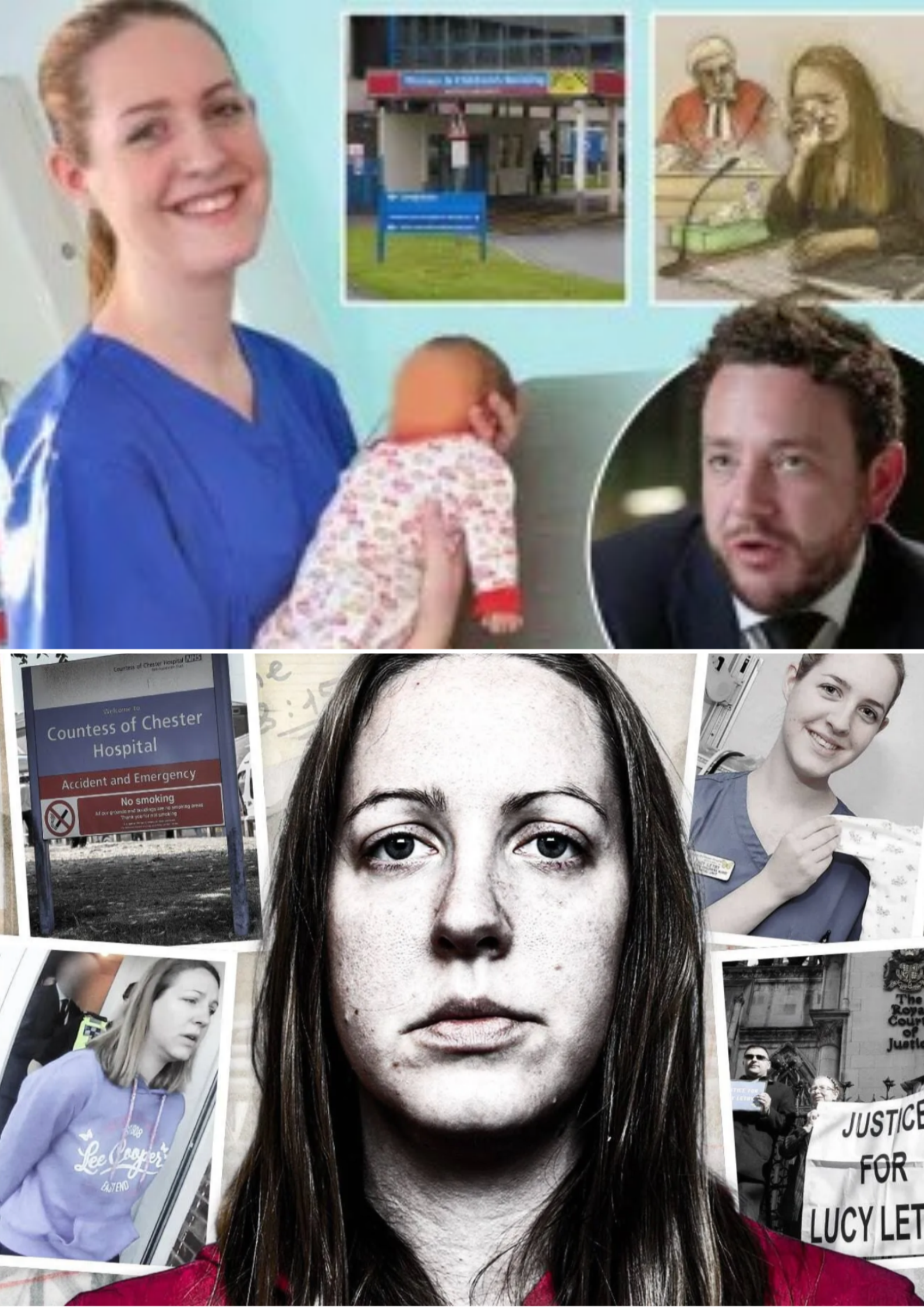
A leading expert on false confessions has challenged the way Lucy Letby’s handwritten notes were interpreted during her murder trial, arguing that the writings should not be treated as a literal admission that she killed babies.
Professor Gisli Gudjonsson, an internationally recognised forensic psychologist who has spent decades studying confessions, suggestibility and miscarriages of justice, has examined the notes and concluded that they should be considered as a whole rather than by focusing on individual phrases.
His assessment comes as Letby’s convictions face renewed scrutiny, with her legal team seeking to have the case referred back to the Court of Appeal.
Importantly, Gudjonsson’s assessment is an expert opinion about the interpretation and evidential value of the notes. It does not overturn Letby’s convictions or establish that she is innocent.
 THE NOTES THAT BECAME KEY EVIDENCE
Police discovered handwritten notes belonging to Letby during searches of her home.
Among the writings were highly incriminating phrases including:
“I am evil I did this”
and:
“I killed them on purpose…”
Prosecutors relied on the writings during Letby’s trial as evidence supporting their case that she deliberately harmed babies while working as a neonatal nurse at the Countess of Chester Hospital.
The phrases attracted enormous attention because they appeared, when read in isolation, to resemble an admission of responsibility.
But the documents also contained other statements that appeared contradictory.
They included phrases such as:
“I haven’t done anything wrong”
alongside references to fear, despair, discrimination and the police investigation.
 EXPERT: “LOOK AT THE NOTE AS A WHOLE”
Professor Gudjonsson argues that the context surrounding the writings is crucial.
He said the material should not simply be read literally as a confession to murder.
His assessment focuses on the psychology of written statements made under extreme emotional pressure and the danger of interpreting isolated sentences without considering the surrounding material.
Gudjonsson is particularly well known for his research into false confessions and suggestibility.
He developed the Gudjonsson Suggestibility Scales, which are internationally used in forensic psychology to assess an individual’s susceptibility to questioning and suggestion.
According to The Sun, he believes that if he had been instructed by the defence during the original proceedings, he would have advised lawyers to challenge the admissibility of the notes.
THE WRITINGS CONTAINED MUCH MORE THAN THE INCRIMINATING PHRASES
The notes were not a single, neatly written statement.
They consisted of fragmented thoughts written across Post-it notes and other pieces of paper.
Other passages referred to:
- fear and panic
- feeling alone
- despair
- discrimination
- the police investigation
- questions about whether she had done anything wrong
- thoughts about harming herself
This broader context has previously been highlighted by other commentators and reporting.
A 2024 Guardian investigation reported that sources close to the case said Letby had been encouraged during counselling to write down her thoughts and feelings while experiencing severe distress after being removed from the neonatal unit.
That account has been part of the wider debate over what the notes actually meant.
LETBY’S CONVICTIONS REMAIN IN PLACE
Despite the renewed debate surrounding the notes, Lucy Letby remains convicted of murdering seven babies and attempting to murder seven others.
She is serving whole-life prison terms.
Her first appeal against her convictions was unsuccessful, and the convictions have not been overturned.
The current legal process is being handled by the Criminal Cases Review Commission, or CCRC.
The commission confirmed in February 2026 that its review of Letby’s convictions was underway.
The CCRC has stressed that its role is not to decide whether someone is guilty or innocent.
Instead, it considers whether new evidence or new legal arguments create a real possibility that a conviction might not be upheld and whether a case should therefore be referred to an appellate court.
LETBY’S LAWYER SAYS NEW EVIDENCE COULD RETURN THE CASE TO COURT
Letby’s legal team has recently increased its efforts to have the case reconsidered.
Her barrister Mark McDonald told Reuters that the defence remains focused on persuading the CCRC to refer the case back to the Court of Appeal.
He has argued that new medical evidence raises fundamental questions about the original convictions.
However, these are arguments made by Letby’s defence, not findings by a court.
The CCRC has not announced that it will refer the case back to the Court of Appeal.
NEW MEDICAL QUESTIONS ARE ALSO BEING RAISED
The dispute over the handwritten notes is happening alongside a separate debate about the medical evidence presented at Letby’s trials.
A panel of medical experts led by Canadian neonatologist Dr Shoo Lee has challenged aspects of the medical evidence used to convict Letby.
The panel has argued that some of the babies’ deaths or injuries could have resulted from natural causes or medical complications rather than deliberate harm.
Those arguments are being considered as part of the wider application to the CCRC.
However, they remain contested interpretations of the evidence, rather than a court ruling overturning the convictions.
THE THIRLWALL INQUIRY DID NOT DECIDE WHETHER LETBY WAS GUILTY
The latest development comes shortly after the publication of the Thirlwall Inquiry report on September 15, 2026.
The inquiry examined what happened at the Countess of Chester Hospital between 2015 and 2018 and investigated failures in management, governance and safeguarding.
It was established following Letby’s convictions but was not a criminal appeal hearing.
The inquiry did not have the task of deciding whether Letby was guilty or innocent. Its purpose was to examine how the hospital operated and how concerns about babies and Letby were handled.
SOME DEFENCE EXPERTS HAVE ALSO LEFT THE TEAM
The legal campaign has faced complications of its own.
ITV reported that two scientists who had been involved with Letby’s defence team withdrew because of what they described as “unresolvable problems” concerning the scientific evidence.
That development has added another layer to the ongoing legal process.
WHAT HAPPENS NEXT?
For now, Lucy Letby remains in prison and her convictions remain legally valid.
The CCRC continues to review the material submitted by her legal team.
If the commission decides there is a real possibility that the convictions could be overturned, it could refer the case to the Court of Appeal.
If that happens, the Court of Appeal would then consider the legal issues raised.
There has been no announcement that Letby’s convictions have been quashed.
The debate over her handwritten notes is therefore one part of a much broader legal and medical dispute that is still unfolding.
For the families of the babies involved, the continuing legal developments come years after the deaths that led to Letby’s original convictions.
And while Professor Gudjonsson’s assessment challenges the interpretation of one important piece of evidence, it does not by itself change the legal status of the case.