70-YEAR-OLD HIKER CRAIG BERG SURVIVED 11 DAYS ALONE IN THE WILDERNESS — THEN TWO KAYAKERS HEARD HIS CRIES FOR HELP
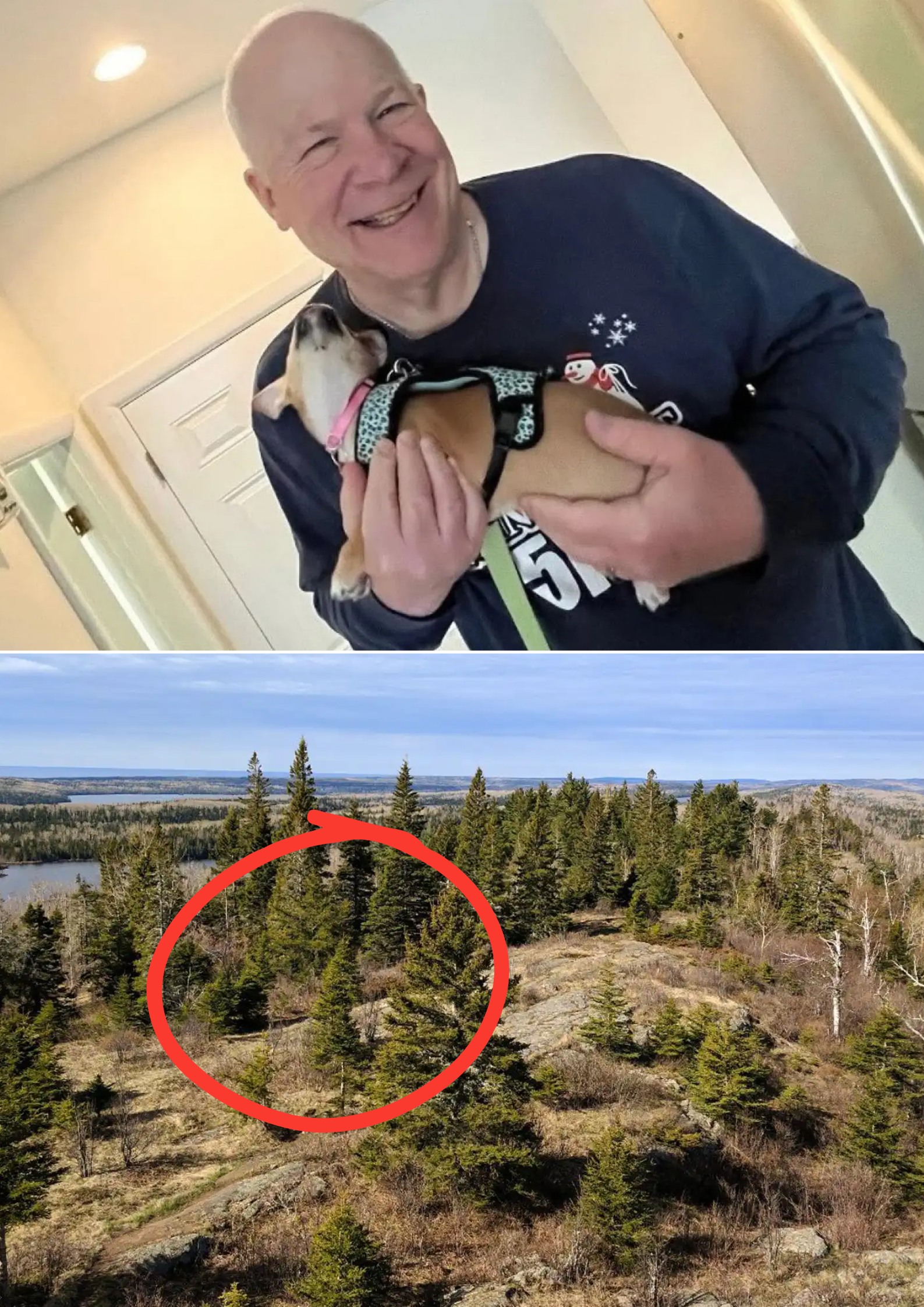
70-YEAR-OLD HIKER CRAIG BERG SURVIVED 11 DAYS ALONE IN THE WILDERNESS — THEN TWO KAYAKERS HEARD HIS CRIES FOR HELP
For 11 terrifying days, Craig Berg had no idea whether anyone would find him.
The 70-year-old experienced hiker had set out alone on Isle Royale National Park, a remote wilderness island in Lake Superior, expecting a challenging but manageable hiking trip.
Instead, a wrong turn sent him into a swamp, his phone disappeared into the mud, and he found himself stranded deep in the wilderness with no reliable way to call for help.
He would spend the next 11 days trying to survive.
Then, almost by chance, two kayakers appeared.
:max_bytes(150000):strip_icc():focal(749x0:751x2):format(webp)/craig-berg-1-092226-f9dbf292562446ccb9b4cba0ea3b0339.jpg) A SOLO ADVENTURE TURNS INTO A FIGHT FOR SURVIVAL
A SOLO ADVENTURE TURNS INTO A FIGHT FOR SURVIVAL
Berg, from Royal Oak, Michigan, arrived at Isle Royale in late August for a multi-day solo hiking trip.
He had spent months preparing for the adventure and had experience with long-distance hiking.
The first few days went according to plan.
But around the fourth day, near Chickenbone Lake, Berg took a route that he later described as poorly marked.
The terrain quickly became difficult.
He eventually found himself walking through a swamp.
Then he fell.
The mud was so deep that Berg compared it to quicksand.
As he struggled through the marsh, his phone disappeared.
Without it, he lost both his navigation system and one of his most important potential ways of communicating with rescuers.
“I was up to my knees in mud,” Berg later recalled.
‘ I’M GOING TO DIE’
As darkness approached, Berg realized he was in serious trouble.
He was wet, cold and exhausted.
He eventually found a small elevated patch of ground where he could spend the night.
His tent could not be properly set up there, so he crawled into his sleeping bag and tried to stay warm.
The next morning, he began moving again.
At one point, he even hiked barefoot while trying to dry out his boots.
Berg later said that he began to wonder whether he would survive.
But instead of giving up, he began thinking about how to make his location easier for rescuers to spot.
He cleared vegetation around his tent and kept trying to reach areas where he might be visible.
He also began shouting for help.
Again and again.
‘HELP! I’M LOST!’
For days, Berg repeated the same desperate words.
“Help! I’m lost!”
When he finally saw two kayakers on the water on his 11th day alone, he began shouting again.
Berg estimates that he may have yelled those words around 10,000 times during his ordeal.
That number is his personal estimate rather than an official count.
But after 11 days alone, the effort finally paid off.
The kayakers heard him.
They realized someone was stranded nearby and alerted authorities.
Within a short time, a rescue operation was underway.
SURVIVING ON FREEZE-DRIED FOOD AND RAINWATER
Berg had only a limited amount of food with him.
As the days passed, he began rationing his supplies.
He survived largely on freeze-dried meals, sometimes going as long as a day between meals as his supplies diminished.
His camp stove fuel eventually ran out.
Water became another major challenge.
Berg collected rainwater and also drank water from natural sources on the island.
He had brought chlorine tablets, allowing him to treat some of the water before drinking it.
He later described some of the water as being among the most unpleasant he had ever tasted.
Despite the conditions, those supplies helped keep him alive long enough to be found.
HIS FAMILY FEARED THE WORST
Back home, Berg’s family was becoming increasingly concerned.
He had been expected to return from the island, but he did not arrive as planned.
A major search operation was launched.
Search teams worked across the enormous wilderness area, using ground teams, search dogs, boats, aircraft and drones.
The remote landscape made the operation especially difficult.
Isle Royale has no roads or ordinary motor vehicles, meaning search teams often had to travel through dense forest, wetlands, rocky terrain and lakes on foot or by boat.
Berg’s wife, Debbie, later described the fear she experienced while waiting for news.
At one point, she wondered whether she was going to become a widow.
She also pushed for the search effort to continue and expand.
TWO KAYAKERS CHANGE EVERYTHING
On September 12, Berg’s ordeal finally came to an end.
Two paddlers spotted him near Intermediate Lake, more than a mile from established trails.
They contacted officials and provided his location.
Because of the remote terrain, the U.S. Coast Guard was called in.
A Coast Guard MH-60 Jayhawk helicopter arrived at the island.
A rescue crew lowered a basket and hoisted Berg aboard.
After 11 days alone, he was finally leaving the wilderness.
ALIVE, ALERT — BUT HYPOTHERMIC AND INJURED
When rescuers found Berg, he was alive and alert but had suffered from the ordeal.
Authorities reported that he was injured and hypothermic.
He was transported by helicopter to Marquette Regional Airport before being taken to a hospital for treatment.
Doctors later cleared him to leave after evaluation, according to subsequent reports.
His family described the moment they learned he had been found alive as overwhelming.
After more than a week of uncertainty, they finally knew Craig was coming home.
‘HE’S ALIVE!’
Berg’s son Evan was among those waiting for news.
When he learned that his father had been found alive, he said he shouted:
“He’s alive!”
The relief was enormous.
Craig later reunited with his family after being treated at the hospital.
But the emotional impact of the experience did not disappear simply because he was safely home.
He has said that he is still processing what happened.
Physically, he has recovered significantly.
Emotionally, however, he acknowledged that there is still a lot to work through.
HE KEPT A JOURNAL — JUST IN CASE
During the ordeal, Berg began keeping a written journal.
He said he wanted to leave a record of what had happened in case he did not make it out.
It was a way of documenting his experience while also maintaining a sense of purpose during an increasingly frightening situation.
Instead, the journal became a record of survival.
Eleven days after becoming lost, he was finally rescued.
HE STILL PLANS TO HIKE AGAIN
The experience has not completely turned Berg away from the outdoors.
In fact, he has said he still intends to hike again.
But there will be one major difference.
He plans to go with someone.
After spending 11 days alone in one of America’s most remote wilderness areas, Berg now knows exactly how quickly a planned adventure can become a life-threatening emergency.
He has also said he wishes he had carried a backup communication device.
Since returning home, he has been personally contacting agencies involved in his rescue to thank them.
He has also spoken about the importance of maintaining trails and infrastructure in national parks.
ONE UNEXPECTED LESSON FROM 11 DAYS LOST
Craig Berg left Isle Royale expecting an adventure.
Instead, he became the subject of a massive search operation and spent 11 days fighting exhaustion, cold, hunger and isolation.
His rescue ultimately depended on a chance encounter.
Two kayakers happened to pass close enough to hear his voice.
They heard a man who had been shouting for help for days.
And this time, someone answered.
For Berg, those two kayakers did far more than simply discover a missing hiker.
They gave a 70-year-old man the moment he had been waiting for:
Someone had finally found him.