SERIAL KI//ER OR POSSIBLE MISCARRIAGE OF JUSTICE? THE LUCY LETBY DEBATE CONTINUES
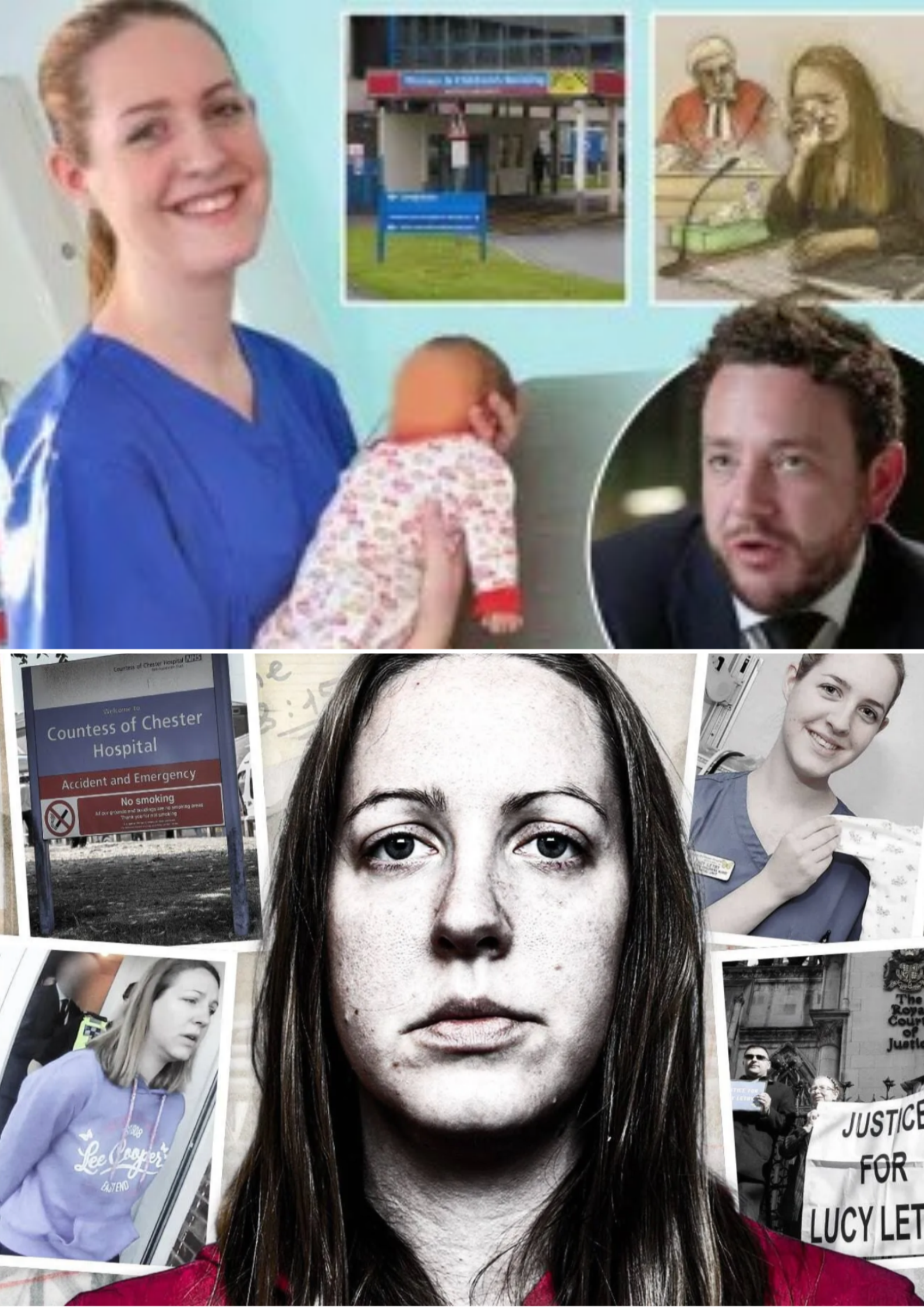
SERIAL KILLER OR POSSIBLE MISCARRIAGE OF JUSTICE? THE LUCY LETBY DEBATE CONTINUES
Lucy Letby remains one of the most controversial criminal cases in Britain, with fierce disagreement continuing over the evidence that led to her convictions and the failures inside the hospital where the babies became ill and died.
Letby was convicted in 2023 of murdering seven babies and attempting to murder six others at the Countess of Chester Hospital.
Following a retrial in 2024, she was convicted of attempting to murder another baby.
She is currently serving 15 whole-life orders and continues to maintain her innocence. Her previous attempts to obtain permission to appeal have been unsuccessful.
But the legal story is not completely over.
The Criminal Cases Review Commission is examining new material submitted on Letby’s behalf, while doctors, statisticians and other specialists have continued to debate aspects of the medical evidence presented during her trials.
At the same time, a major public inquiry has exposed serious failures in the management and safeguarding systems at the Countess of Chester Hospital.
 THE EVIDENCE AT THE CENTRE OF THE CONTROVERSY
The prosecution case involved a series of medical events in which premature and seriously ill babies suddenly deteriorated or died.
Prosecutors argued that Letby deliberately harmed babies through a number of methods, including injecting air and, in two cases, administering insulin.
Since her convictions, however, an international group of medical experts has challenged aspects of the prosecution’s interpretation of some of the clinical evidence.
Canadian neonatologist Dr Shoo Lee has argued that some medical evidence used at trial was incorrectly interpreted, while other experts have proposed natural causes or medical complications as alternative explanations for some of the babies’ collapses.
Those arguments are now part of material being considered by the CCRC.
But they remain challenges to the convictions rather than findings that the convictions were unsafe.
The courts have not overturned Letby’s convictions.
 THE CCRC REVIEW
The Criminal Cases Review Commission received a preliminary application on Letby’s behalf in February 2025.
Since then, further expert reports, legal submissions and defence material have been submitted.
The CCRC confirmed in February 2026 that its review was underway.
The commission has stressed that it does not decide whether someone is innocent or guilty.
Its role is to determine whether new evidence or legal arguments create a real possibility that a conviction would not be upheld if the case were referred back to an appeal court.
As of September 2026, there has been no CCRC decision referring Letby’s convictions back to the Court of Appeal.
That means her convictions and whole-life sentences remain in force.
TWO EXPERTS WITHDRAW FROM THE DEFENCE TEAM
The debate became more complicated in September when two experts who had previously supported aspects of Letby’s defence effort withdrew from the team.
Professor Geoff Chase and chemical engineer Helen Shannon had contributed to a report challenging the evidence surrounding the alleged insulin poisoning of two babies.
The pair said they continued to believe it was very unlikely that the two babies had been poisoned with insulin.
However, they also said they had concerns about other arguments being advanced on Letby’s behalf, describing some as inconsistent with available evidence, science and established physiology.
They therefore withdrew from the defence team.
Letby’s lawyer Mark McDonald rejected the suggestion that their departure undermined the wider case being presented to the CCRC.
He said other experts remained involved and continued to support the defence’s position.
The disagreement illustrates how divided the scientific debate surrounding the case has become.
THE THIRLWALL INQUIRY REVEALS HOSPITAL FAILURES
Separate from the question of Letby’s guilt, the Thirlwall Inquiry has examined what happened inside the Countess of Chester Hospital and how concerns about babies’ deaths and collapses were handled.
Its final report was published on September 15, 2026.
The inquiry found serious failures in management, governance and safeguarding.
Lady Justice Kathryn Thirlwall concluded that there had been a “complete failure to protect babies” and found that hospital leaders did not respond appropriately when concerns were raised that a member of staff might be deliberately harming babies.
The inquiry said some babies could have been saved and some attacks prevented if action had been taken earlier.
It also found a serious gap between hospital leadership and clinicians and criticised the delay in involving police.
These findings have intensified scrutiny of the hospital’s handling of the events.
BUT THE INQUIRY DID NOT RE-EXAMINE LETBY’S GUILT
One crucial point has sometimes been lost in the wider debate.
The Thirlwall Inquiry was not an appeal hearing.
Its terms of reference focused on the events at the hospital, how concerns were handled and what lessons should be learned.
It did not determine whether Letby was guilty or innocent.
In fact, Lady Justice Thirlwall explicitly stated that the inquiry approached its work on the basis that Letby was guilty of the crimes for which she had been convicted. The inquiry was not tasked with testing alternative theories about the babies’ deaths.
Therefore, the inquiry’s findings about hospital failures do not themselves overturn or invalidate Letby’s convictions.
A SECOND DEBATE OVER MEDICAL INTERPRETATION
The continuing controversy largely centres on whether the babies’ medical conditions were adequately considered alongside the prosecution’s theory of deliberate harm.
Supporters of Letby’s case argue that premature babies can deteriorate for complex medical reasons and that some evidence presented at trial may have been interpreted too narrowly.
They point to staffing pressures, infections, clinical complications and other problems within the neonatal unit.
Those challenging the defence position argue that the jury heard extensive medical evidence and that the convictions were based on the evidence presented during two criminal trials, not simply on statistics or the condition of the hospital.
The fact that experts disagree does not itself establish that either interpretation is legally correct.
THE STATISTICAL CONTROVERSY
Statistics have also played a prominent role in the public debate.
One of the most widely discussed arguments concerns the unusual concentration of deaths and collapses during particular periods and around Letby’s shifts.
Critics of the prosecution’s interpretation have questioned whether statistical patterns can establish causation or whether other factors, such as staffing and patient vulnerability, could have contributed.
The defence has argued that statistical evidence must be interpreted carefully and should not be treated as proof of criminal conduct by itself.
Again, however, the existence of statistical criticism does not mean that Letby’s convictions have been overturned.
The legal status remains unchanged while the CCRC considers the new material.
FURTHER CHARGES WERE ALSO RULED OUT
Another recent development came in August 2026.
The Crown Prosecution Service confirmed that it would not bring additional charges against Letby relating to six further infants.
The decision followed an earlier review of evidence supplied by Cheshire Constabulary and a subsequent independent Victims’ Right to Review process.
The CPS said the review had reconsidered six potential attempted-murder offences and upheld the original decision not to bring further charges.
This does not affect the convictions for which Letby is already serving whole-life orders.
SO, WHERE DOES THE CASE STAND?
The answer is complicated.
Legally: Lucy Letby remains convicted of seven murders and seven attempted murders and remains imprisoned under whole-life orders.
Appeals: Her previous applications for permission to appeal were unsuccessful.
CCRC: A review of new evidence and arguments remains underway.
Scientific debate: Some experts continue to challenge aspects of the medical evidence, while others have raised concerns about the scientific credibility of certain arguments being advanced for the defence.
Hospital failures: The Thirlwall Inquiry found serious management and safeguarding failures at the Countess of Chester Hospital.
None of these developments, individually or collectively, has yet resulted in a court overturning Letby’s convictions.
THE DEBATE IS NOT OVER
The Lucy Letby case now exists at the intersection of two separate questions.
The first is the criminal question: did the evidence presented at trial establish beyond reasonable doubt that Letby committed the offences for which she was convicted?
The second concerns the hospital: why were concerns about babies’ deaths and collapses not acted upon earlier?
The Thirlwall Inquiry has provided extensive answers to the second question, identifying serious institutional failures.
The first remains a matter for the courts and, potentially, the CCRC and Court of Appeal.
For now, Lucy Letby remains legally convicted.
But with new evidence still being examined and continuing disagreement among medical experts, the public debate surrounding Britain’s most closely watched neonatal murder case shows no sign of disappearing.