THE CASE WAS CLOSED. THEN THE DNA RESULT CAME BACK — AND WADE WILSON’S STORY TOOK A DARKER TURN
THE CASE WAS CLOSED. THEN THE DNA RESULT CAME BACK — AND WADE WILSON’S STORY TOOK A DARKER TURN
The file had already been closed when the DNA result came back. Months later, Wade Wilson would kill two women.
Long before Wade Wilson became known for the murders that would eventually put him on death row, his name had already appeared in a serious criminal investigation in Palm Beach County.
It began in February 2019.
His former girlfriend, Kelly Matthews, reported allegations of assault, kidnapping and rape to authorities.
She told investigators she had been violently attacked and described injuries including marks around her wrists and ankles, injuries to her neck, a bite mark, a bloody nose and a busted lip.
Matthews sought medical treatment and contacted law enforcement.
The investigation was assigned to Palm Beach County Sheriff’s Office Detective Louis Potter.
What happened next is now being examined again after Netflix’s Worst Ex Ever brought the case to a much wider audience.
And one detail sits at the center of the controversy:
The case was closed before the DNA results came back.
THE INVESTIGATION LASTED 34 DAYS
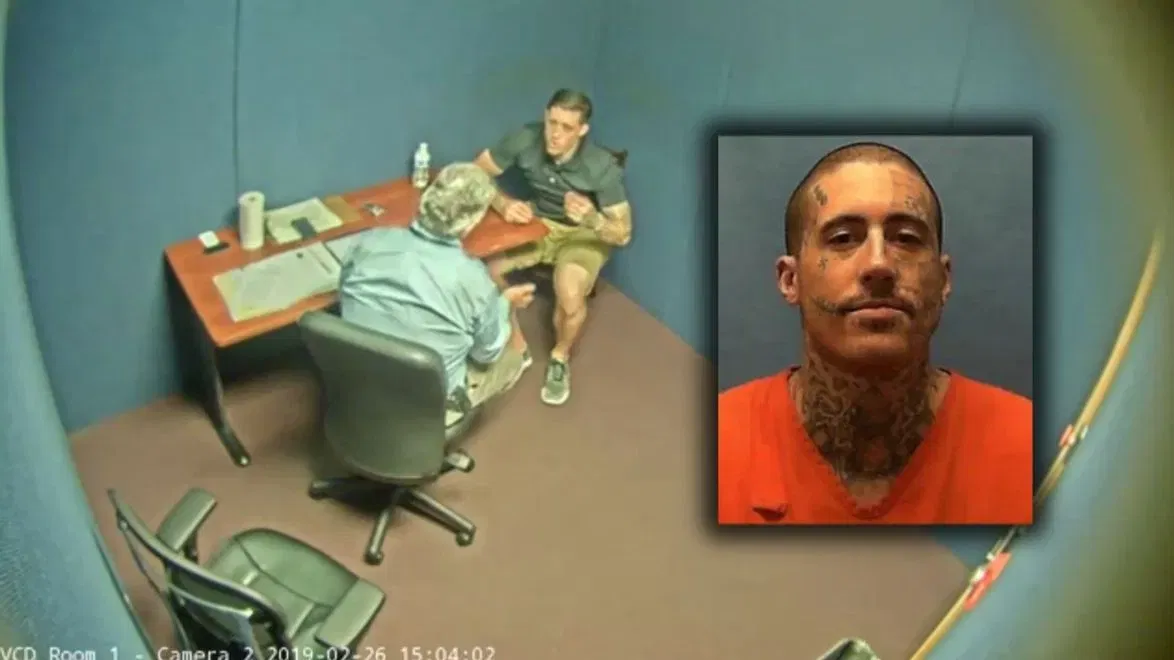
Potter interviewed Matthews.
He later interviewed Wilson, who denied the allegations.
Wilson’s DNA was collected during the investigation.
But according to records reviewed by WPTV, Potter closed the case 34 days after it was opened.
The laboratory results had not yet returned.
In his report, Potter said there were no witnesses and no evidence establishing probable cause for an arrest. Wilson continued to deny the allegations.
At that point, the investigation was considered inactive.
But the evidence did not stop moving simply because the file had been closed.
The DNA results eventually came back.
And according to the later internal investigation, they indicated that Wilson’s DNA was found at the scene.
THEN CAME THE PART THAT WOULD BE QUESTIONED YEARS LATER
The internal affairs investigation found that Potter did not follow up after the DNA results were returned.
Investigators also concluded that he failed to seek an arrest for dating violence.
The later review found that Matthews’ account had additional corroborating circumstances, including injuries and evidence collected from the vehicle.
The findings became the basis for disciplinary action against Potter.
He was suspended without pay for 120 hours and reassigned to administrative duties.
PBSO said Potter had used poor discretionary judgment and had not followed established agency procedures.
But there was another part of the story that could not be answered by an internal investigation:
What would have happened if the case had been handled differently?
There is no definitive answer.
EIGHT MONTHS LATER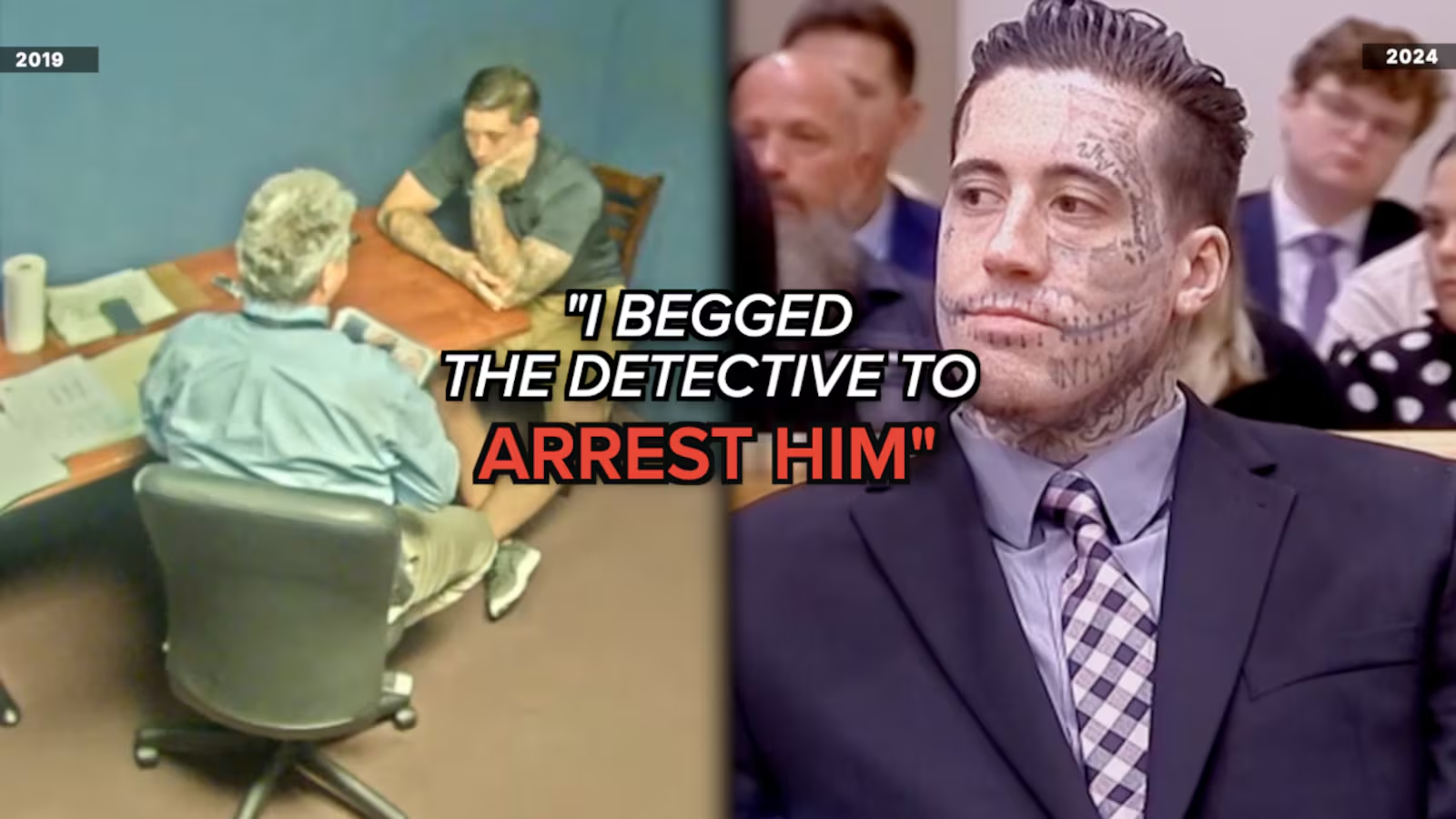
On October 7, 2019, Wilson killed two women in Lee County, according to authorities.
The victims were Kristine Melton and Diane Ruiz.
Wilson was arrested the following day.
Years later, he was convicted of both murders and sentenced to death.
That timeline transformed the old Palm Beach County investigation into something much more significant in the public discussion surrounding Wilson.
People began looking backward.
At the allegations.
At the interview.
At the evidence.
At the DNA.
And at the decision to close the investigation before the laboratory results had arrived.
But looking backward also creates an important limitation.
Nobody in February 2019 could know exactly what Wilson would do eight months later.
The fact that he later became a convicted double murderer does not, by itself, prove that an earlier arrest would have occurred or that the later murders would have been prevented.
Those are questions that cannot be answered with certainty.
THE INTERVIEW THAT NETFLIX PUT BACK IN FRONT OF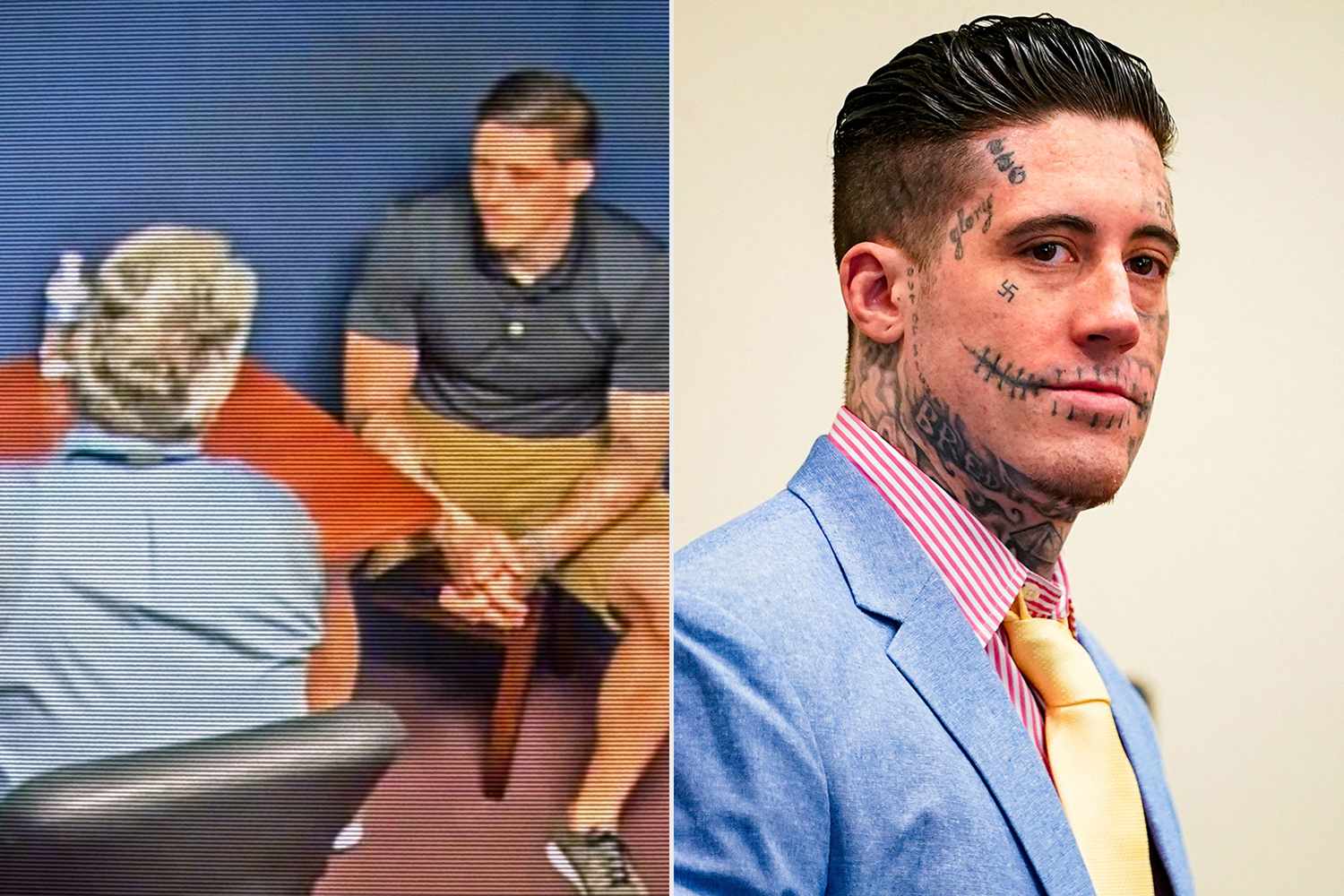 VIEWERS
The documentary also brought renewed attention to Potter’s interview with Wilson.
During the questioning, Potter explained that he had to give Wilson the opportunity to deny the allegations and said he had to believe Wilson’s account.
Wilson thanked him.
The exchange became one of the most discussed moments after the episode aired.
Matthews later told WPTV that she did not know Potter had made those comments during the interview until she watched the documentary herself.
For her, the footage reopened something that had never really disappeared.
She had reported what she said happened.
She had expected the police to investigate.
Instead, the case was closed.
And years later, she was watching the interview on television.
MATTHEWS EVENTUALLY FILED A COMPLAINT
The issue did not end with the original investigation.
After watching Wilson’s murder trial years later, Matthews filed a complaint against Potter.
In her complaint, she argued that if Wilson had been arrested earlier, he might not have gone on to kill two women.
That is Matthews’ view, not an established finding.
But her complaint led to the internal investigation that reviewed Potter’s handling of the original case.
The resulting findings gave the public something more concrete than speculation.
The department itself concluded that the investigation had not been conducted thoroughly enough.
THERE IS ALSO A HINDSIGHT PROBLEM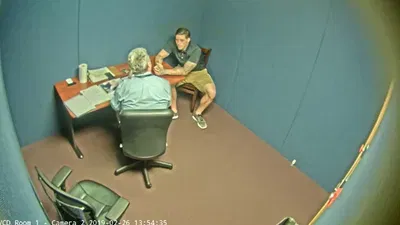
Former Palm Beach County State Attorney Dave Aronberg, who was in office in 2019, has urged caution when evaluating the decisions made at the time.
The case never reached his office.
Aronberg said it is difficult to judge decisions solely through the knowledge people have today.
In 2019, Wilson was not yet the convicted killer known from headlines.
He was a suspect accused by a former girlfriend who said she had been assaulted.
Wilson denied the allegations.
That context matters.
But so does the later internal review.
The review found that the detective closed the case before the DNA results came back and failed to follow up after those results were available.
Both facts can be true at the same time.
NOW POTTER IS RETIRING
The controversy has returned just as Potter’s law-enforcement career is ending.
PBSO says Potter is retiring effective July 31, 2026.
The department has said it will not fire him because of the renewed attention surrounding the case.
Potter has not responded to WPTV’s requests for comment, according to the station.
Meanwhile, the Netflix series has brought the old investigation to millions of viewers who may have never heard of Matthews before.
The case that once sat inside a police file is now being discussed around the world.
THE DETAIL THAT REFUSES TO DISAPPEAR
There are many disturbing moments in the story.
But perhaps none is as simple as the timeline:
DNA was collected.
The case was closed.
The laboratory results came later.
The results indicated Wilson’s DNA was present.
The internal review found that the results were not followed up.
And months afterward, Wilson murdered two women.
That sequence does not prove what might have happened if the investigation had continued.
But it explains why the case has returned to public attention.
Because sometimes the most haunting part of an old investigation is not what investigators knew.
It is what they learned after the file was already closed.
THE QUESTION LEFT BEHIND
Netflix can replay the interview.
A police report can document the timeline.
An internal investigation can identify procedural failures.
But none of them can rewrite October 2019.
Kristine Melton and Diane Ruiz are dead.
Wade Wilson was convicted of their murders and sentenced to death.
Kelly Matthews has spent years living with the consequences of the earlier case.
And Detective Louis Potter is now leaving the agency.
What remains is a question without a definitive answer:
If the DNA result had arrived before the case was closed — and if the investigation had continued — would anything have changed?
No one can honestly say for certain.
But the fact that the question is still being asked years later shows why this old police file has become one of the most scrutinized chapters in the Wade Wilson story.