SERIAL KI//ER OR POSSIBLE MISCARRIAGE OF JUSTICE? THE LUCY LETBY DEBATE CONTINUES
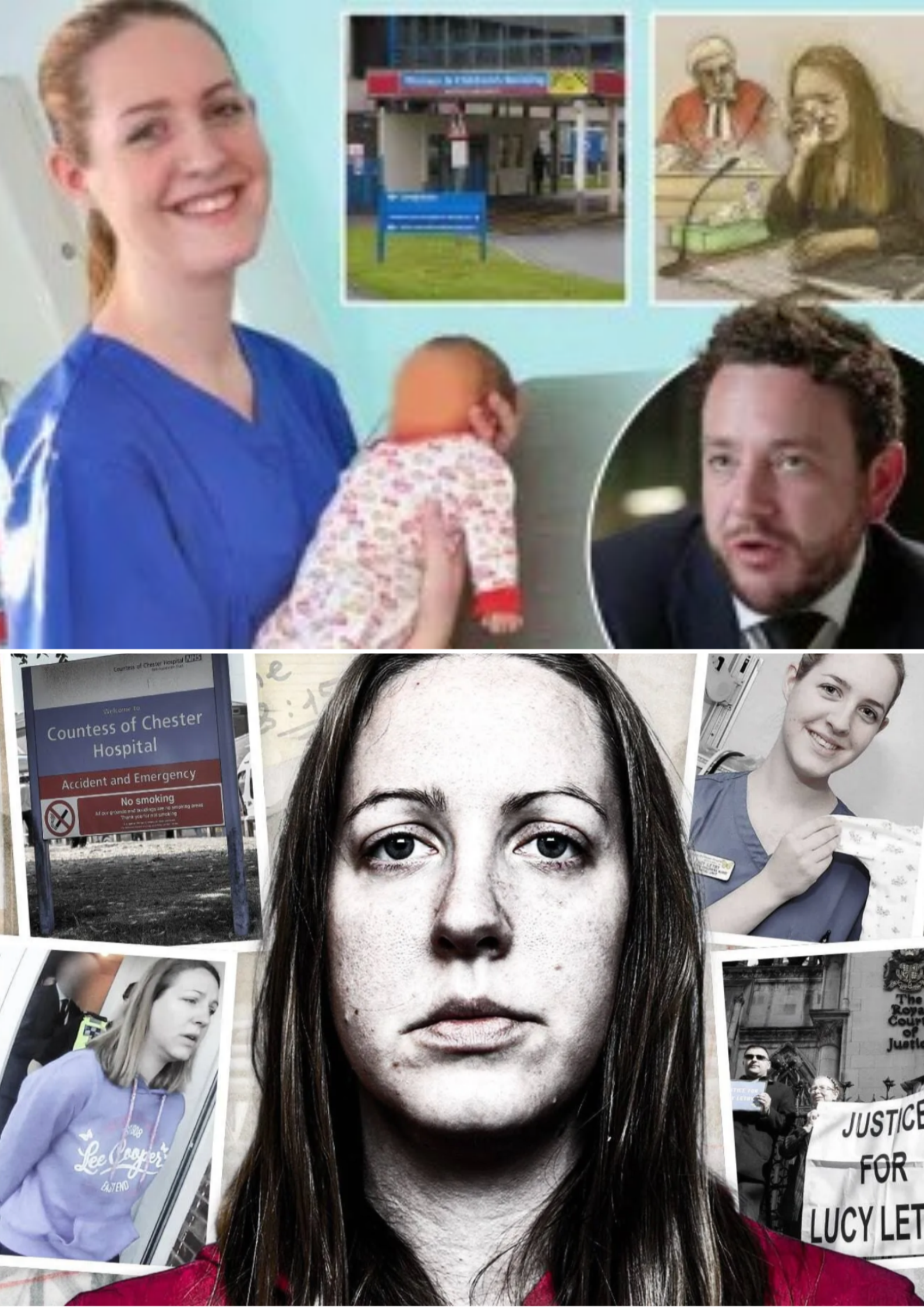
SERIAL KILLER OR POSSIBLE MISCARRIAGE OF JUSTICE? THE LUCY LETBY DEBATE CONTINUES
LONDON — Few criminal cases in modern Britain have generated as much debate over medical evidence, hospital failures and the possibility of a miscarriage of justice as the case of former neonatal nurse Lucy Letby.
Letby was convicted across two trials of murdering seven babies and attempting to murder seven others while working at the Countess of Chester Hospital in Cheshire between June 2015 and June 2016. She is serving 15 whole-life prison terms and continues to maintain her innocence.
But while her convictions remain in force, questions surrounding some of the evidence presented at trial continue to be examined by experts and lawyers.
 NEW QUESTIONS OVER THE SCIENTIFIC EVIDENCE
One of the most closely disputed parts of the case concerns two babies whom Letby was convicted of attempting to murder through insulin poisoning.
Engineering expert Helen Shannon and bioengineering professor Geoff Chase produced a report arguing that it was “very unlikely” the two babies had been deliberately poisoned with insulin. Their work formed part of material submitted in support of Letby’s challenge to her convictions.
However, in September 2026, Shannon and Chase withdrew from Letby’s defence team after raising concerns about other arguments being advanced on her behalf.
The two experts said they continued to stand by their assessment concerning the insulin cases, but could not support some of the additional arguments because they considered them inconsistent with available evidence, science and established physiology.
Letby’s barrister, Mark McDonald, rejected the suggestion that their withdrawal undermined the wider defence case. He said other experts continued to support arguments challenging the convictions and that the case did not depend on the work of any single expert.
The disagreement illustrates one of the central difficulties surrounding the case: different experts have reached different conclusions about how particular medical evidence should be interpreted.
 THE THIRLWALL INQUIRY
Another major development came on September 15, when the long-awaited report of the Thirlwall Inquiry was published.
The independent inquiry examined what happened at the Countess of Chester Hospital between 2015 and 2018, including how hospital management, doctors, nurses and regulators responded to concerns about babies becoming seriously ill or dying.
Lady Justice Kathryn Thirlwall described dysfunctional management and governance, a gulf between hospital leadership and clinicians, and what she called a complete failure to invoke safeguarding procedures when concerns about deliberate harm arose.
The inquiry also concluded that some babies might have survived or avoided harm if hospital leaders had acted earlier on concerns surrounding Letby.
However, the inquiry was not a retrial of Letby.
It was conducted on the basis that Letby had been convicted and was designed to examine the circumstances surrounding the hospital, identify failures and establish lessons for the future. It did not have the power to overturn her convictions or determine her guilt or innocence.
WHAT ABOUT THE INSULIN EVIDENCE?
The insulin cases remain particularly significant because the prosecution relied on medical evidence concerning unusually high insulin levels in two babies.
Some experts supporting Letby’s legal challenge have questioned how those results were interpreted. Other assessments have rejected the idea that the laboratory testing was fundamentally unreliable.
The Thirlwall Inquiry examined questions surrounding the blood testing and did not conclude that the relevant testing process was defective.
That means the scientific debate has not produced a simple consensus.
Instead, the dispute centres on competing interpretations of medical records, laboratory results, physiology and the circumstances surrounding the babies’ collapses.
HOSPITAL FAILURES AND THE CONVICTIONS ARE SEPARATE QUESTIONS
The inquiry’s findings have added another layer to the public debate.
There were significant failures inside the hospital, including problems with management, communication and safeguarding. Doctors had raised concerns about the number of unexpected collapses and deaths on the neonatal unit, while senior management failed to respond adequately to concerns about Letby, according to the inquiry.
But establishing that the hospital made serious mistakes does not, by itself, establish that Letby was wrongly convicted.
Likewise, the existence of a criminal conviction does not prevent individual pieces of evidence from being scrutinised by experts or courts.
Those are separate questions — and that distinction has become increasingly important as the case continues through the legal system.
THE CCRC REVIEW
Letby’s current route for challenging her convictions involves the Criminal Cases Review Commission, or CCRC.
The commission received a preliminary application on her behalf in February 2025. Additional expert reports, submissions and defence material were subsequently provided throughout 2025 and into January 2026.
In February 2026, the CCRC confirmed that its review of Letby’s convictions was underway. It also stressed that the commission does not decide whether someone is guilty or innocent.
Instead, its role is to investigate potential miscarriages of justice and, where the legal threshold is met, refer a case back to an appellate court.
As of September 2026, no decision by the CCRC to refer Letby’s convictions back to the Court of Appeal had been announced.
A CASE THAT REMAINS DEEPLY CONTESTED
For the families of the babies involved, the case is about the deaths and injuries of their children and the search for accountability.
For Letby’s defence, the focus is increasingly on whether aspects of the original prosecution evidence were scientifically sound and whether alternative explanations were adequately considered.
Meanwhile, the Thirlwall Inquiry has exposed serious institutional failures at the hospital but did not overturn the criminal verdicts.
Letby therefore remains convicted and imprisoned.
The continuing debate does not change that legal position. But the scientific arguments surrounding parts of the case, the findings about hospital management and the ongoing CCRC review mean that scrutiny of the evidence is likely to continue.
For now, the central questions remain unresolved in the public debate: were the convictions based on evidence that withstands further scientific examination, or could new evidence eventually establish a potential miscarriage of justice?
The answer, if one comes, will ultimately depend on the evidence considered through the appropriate legal process — not on public opinion alone.