BRITISH TOURIST LORNA MCSORLEY VANISHED IN SOUTH AFRICA — NOW HER FAMILY WANTS A MURDER INVESTIGATION
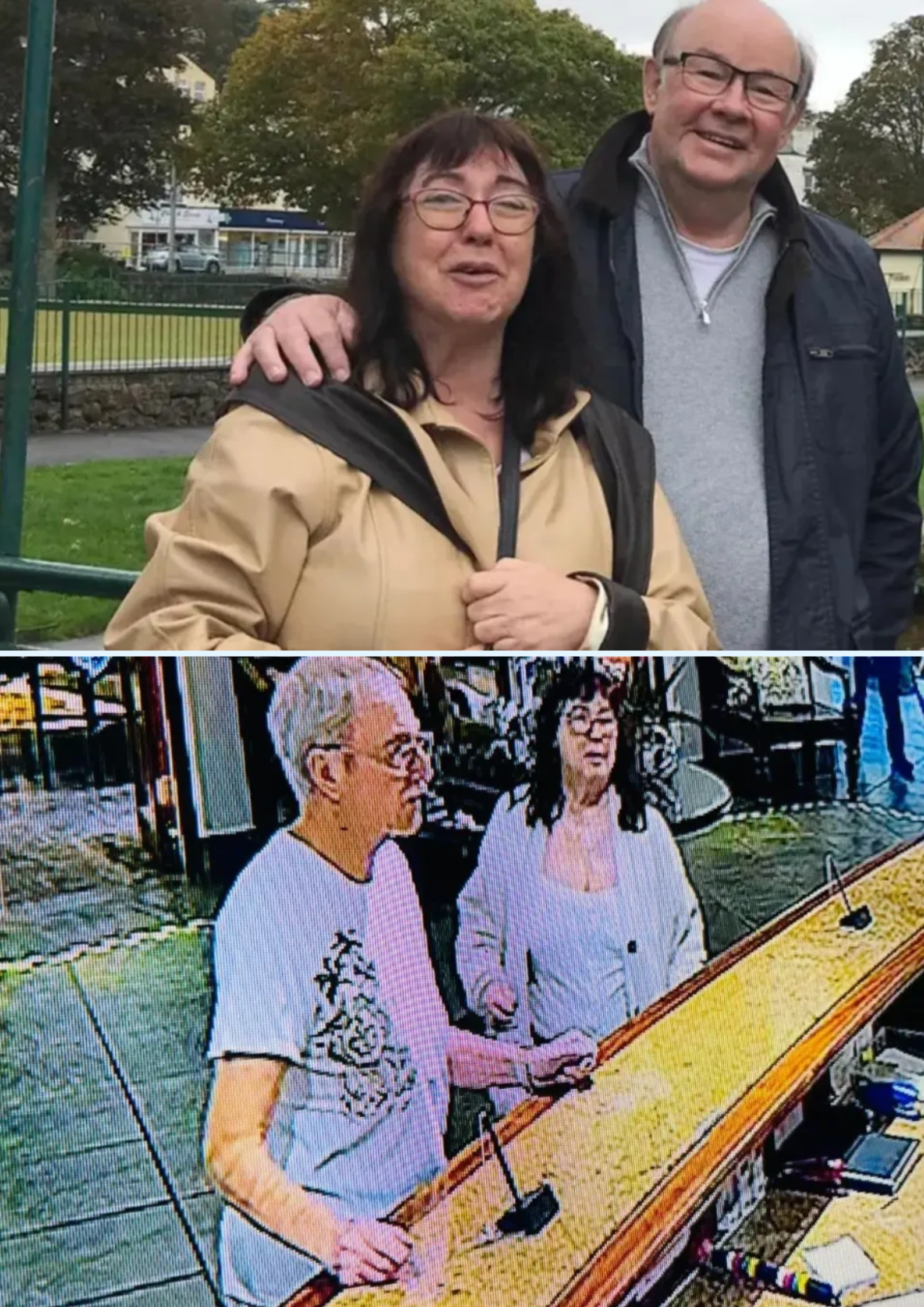
BRITISH TOURIST LORNA MCSORLEY VANISHED IN SOUTH AFRICA — NOW HER FAMILY WANTS A MURDER INVESTIGATION
A 71-YEAR-OLD GRANDMOTHER DISAPPEARED DURING A HOLIDAY WALK —  AND A YEAR LATER, HER FAMILY STILL HAS NO ANSWERS
One year ago, Lorna McSorley left a luxury lodge in South Africa for what was supposed to be a short afternoon walk.
The 71-year-old British woman was on holiday with her long-term partner, Leon Probert, when the couple set out from the Ghost Mountain Inn in Mkuze, KwaZulu-Natal, on September 27, 2025.
Lorna never returned.
A massive search followed involving police, rangers, private security teams, dogs, drones, boats, helicopters and aircraft.
But no body was found.
No clothing was recovered.
Her belongings were not discovered.
And the bank card she was carrying has never been used.
Now, one year after her disappearance, Lorna’s family wants South African authorities to treat the case as a possible murder, rather than simply a missing-person investigation.
Her brother, Geoff Sheward, says the family’s worst fear is that Lorna was abducted and killed.
But police say there is currently nothing tangible that allows them to change the case to a murder investigation.
 THE LAST AFTERNOON
Lorna and Leon had been partners for around 30 years.
The Devon couple were five days into a two-week package holiday when they arrived at the Ghost Mountain Inn on September 27.
Hotel CCTV showed them together at reception before they left at approximately 2:30 p.m.
They had an A4 map showing a roughly three-mile circular route toward a nearby lake.
The couple initially walked together.
But the heat soon became difficult.
Leon, who was 81, decided to turn back toward the hotel.
Lorna continued alone.
It was the last confirmed time he saw her.
THE LAST CONFIRMED SIGHTING
At around 3:15 p.m., Lorna reached a local farm and stopped near a fence.
Farmer Koos Prinsloo encountered her and later said she had become lost and was looking for directions.
Reports say Lorna was carrying a map and was wearing a black bum bag and trainers.
Prinsloo gave her directions.
She apparently declined an offer of a lift.
Then she continued on foot.
No confirmed sighting of Lorna has been reported after that encounter.
Around three hours after leaving his partner, Leon raised the alarm after Lorna failed to return to the hotel.
The search began.
SIX DAYS OF SEARCHING — BUT NO TRACE
The response was enormous.
Police officers, local farmers, rangers, private security personnel and volunteers searched the surrounding area.
Dogs were deployed.
Drones were used.
Boats searched waterways.
Helicopters and fixed-wing aircraft joined the operation.
The search continued for approximately six days.
Yet investigators found no body and no clear physical evidence showing what had happened to Lorna.
A crumpled paper map was found in the area where she was believed to have disappeared.
Her bank card, which she had been carrying, has reportedly never been used.
On October 4, authorities suspended the large-scale search while detectives pursued other lines of inquiry.
CROCODILE ATTACK OR FOUL PLAY?
In the early stages, investigators considered several possibilities.
One was that Lorna could have fallen victim to wildlife in the area.
Crocodiles are present in waterways around the region.
Another possibility was foul play.
But police stressed that there was no evidence publicly establishing either explanation.
Without remains, forensic evidence or a confirmed witness to what happened after the last sighting, investigators were left with an extraordinary mystery.
How could a woman disappear from an area that had been searched so extensively?
THEN CAME THE ‘MUTI’ THEORY
The disappearance became even more disturbing because of the region’s history and beliefs surrounding muti.
Muti is a traditional form of medicine found in parts of southern Africa and is commonly associated with plants, herbs and other natural materials.
The vast majority of traditional medicine does not involve human remains.
However, illegal practices involving human body parts have been reported and condemned by authorities and traditional leaders.
The theory surrounding Lorna is that she may have been abducted and killed for her body parts in what is sometimes described as a “muti killing.”
That theory has been raised by people in the region and by private investigators.
But it has not been established as the explanation for Lorna’s disappearance.
A REGION HAUNTED BY OTHER DISAPPEARANCES
Lorna’s disappearance has also drawn attention to other unexplained cases in the wider KwaZulu-Natal region.
The Times has reported claims from local residents about people who have disappeared and about suspected muti-related killings.
One local councillor told the newspaper that numerous people had been reported missing during his time in office.
Religious and political figures have also become involved in efforts to address fears surrounding alleged muti crimes.
But these cases do not prove that Lorna suffered the same fate.
Her disappearance must still be established through evidence specific to her case.
PHONE DATA ADDS ANOTHER LAYER TO THE MYSTERY
A separate investigation examined mobile-phone location data from the area around the time Lorna disappeared.
According to reporting by The Times, analysts identified unusual movements involving several mobile devices.
Three phones reportedly converged near the location where Lorna’s map was later discovered at approximately 4:45 p.m.
The devices allegedly remained in the area for around 15 minutes before moving away.
Further analysis by private investigators reportedly identified other movements they considered potentially significant.
The findings have fueled the theory that Lorna may have been abducted.
But phone-location data is not, by itself, proof that the people carrying those phones abducted or harmed her.
Investigators would need to establish who was using the devices and what those individuals were actually doing.
HER FAMILY WANTS THE CASE CHANGED
For Lorna’s family, the uncertainty has become unbearable.
Her brother Geoff Sheward, 73, told The Times that the family remains unable to properly grieve because they do not know what happened.
He said that even receiving terrible details would be preferable to having no answer at all.
The family believes the circumstances are serious enough to warrant a formal murder investigation.
They fear Lorna may have been targeted while she was alone in the countryside.
And the absence of remains has only deepened those fears.
LEON LIVES WITH THE REGRET
For Leon, the disappearance has also carried a painful personal burden.
He has spoken about his decision to turn back toward the hotel because of the heat.
Lorna continued the walk alone.
He later expressed guilt over the decision, saying he wondered whether remaining with her might have changed what happened.
But there is no evidence establishing that Leon’s decision caused Lorna’s disappearance.
He was simply the last person known to have been walking with her before she continued alone.
POLICE SAY IT IS STILL NOT A MURDER CASE
Despite the family’s demands and the theories surrounding the disappearance, South African police have not publicly confirmed that Lorna was murdered.
A KwaZulu-Natal police spokesperson told The Sun that the matter remains an inquiry and that there is currently “nothing tangible” suggesting it should be changed to murder.
That means the most frightening theories surrounding the case remain unproven.
The distinction is crucial.
Lorna is missing.
Her family fears she was murdered.
Private investigators have raised the possibility of an abduction.
The “muti killing” theory has attracted considerable attention.
But none of those theories has been established in court or officially confirmed by police.
ONE YEAR WITHOUT ANSWERS
A year after Lorna walked away from the Ghost Mountain Inn, her family is still waiting.
The final confirmed sighting remains the farmer’s encounter at around 3:15 p.m.
The search found no body.
No confirmed trace of Lorna has emerged.
Her bank card has remained untouched.
And investigators still have not publicly established what happened after she continued walking alone.
For her family, the uncertainty is its own form of suffering.
They cannot bury her.
They cannot know exactly how she died.
And they cannot know whether the terrifying theories surrounding her disappearance are true.
What they do know is that a 71-year-old British woman went for a walk during a holiday in South Africa and vanished without a trace.
Now her family wants one question answered:
Was Lorna McSorley simply lost — or did someone make sure she would never come home?
For now, police say the evidence is not enough to call it murder.
And until that changes, the mystery of what happened to Lorna remains unsolved.