DOCTOR WHO HELPED CONVICT LUCY LETBY NOW SAYS HE IS ‘NO LONGER CERTAIN’
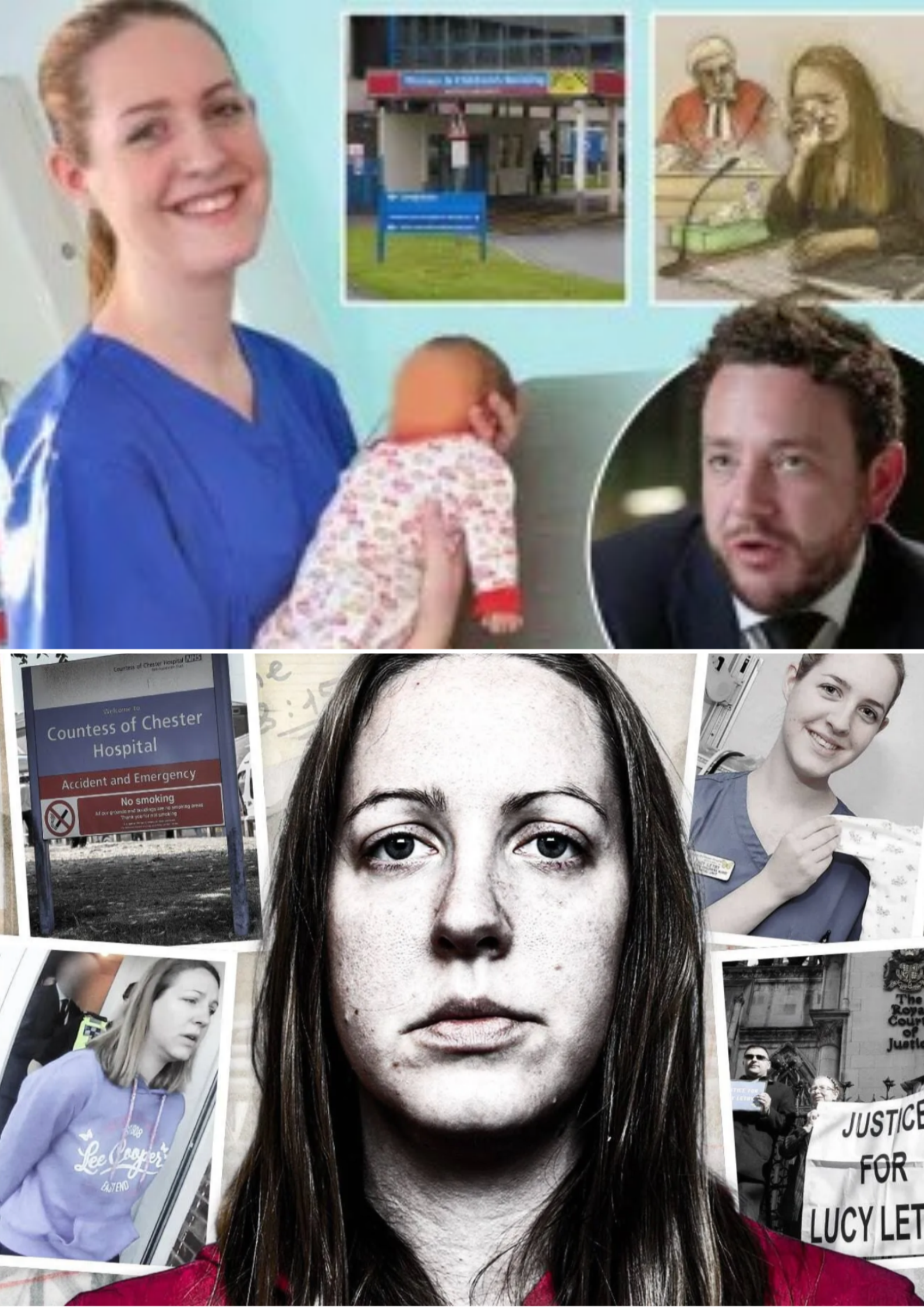
DOCTOR WHO HELPED CONVICT LUCY LETBY NOW SAYS HE IS ‘NO LONGER CERTAIN’
CHESTER, England — A retired pediatrician whose evidence contributed to the conviction of nurse Lucy Letby has publicly said he is “no longer certain” that she murdered babies at the Countess of Chester Hospital.
Dr. John Gibbs, one of the consultants whose evidence was heard during Letby’s trials, has also said that a retrial could be “the most appropriate thing for everyone” if new evidence raises sufficient questions about the convictions.
His comments have renewed scrutiny of one of Britain’s most closely watched criminal cases — but they do not overturn Letby’s convictions, which remain in force.
 “NO LONGER CERTAIN”
Asked whether he remained certain that Letby had killed the babies, Gibbs answered simply: “No.”
He said he now had a “very small concern” that there may not have been deliberate harm involved in the babies’ collapses and deaths.
Gibbs also stressed that if Letby was not responsible, he did not believe another person was necessarily deliberately harming the babies.
Instead, he said the central question should be understanding why so many babies collapsed unexpectedly on the neonatal unit during 2015 and 2016.
The retired doctor acknowledged that renewed questions about the convictions could be deeply distressing for the families involved.
However, he argued that concern for the families should not prevent the examination of new and potentially compelling evidence that could undermine the convictions.
 HIS COMMENTS COME AFTER THE THIRLWALL INQUIRY
Gibbs’ intervention came just days after the publication of the final report from the Thirlwall Inquiry, which examined what happened at the Countess of Chester Hospital surrounding the deaths and collapses of babies.
The inquiry found serious failures in hospital management, governance and safeguarding.
Lady Justice Kathryn Thirlwall said there had been a failure to understand fundamental safeguarding principles and that hospital leadership failed to take appropriate action when concerns about possible deliberate harm were raised.
The report also found that senior managers delayed involving police and that clinicians who raised concerns about Letby were themselves subjected to internal scrutiny.
However, Lady Justice Thirlwall made an important distinction: the inquiry was not an investigation into Letby’s criminal convictions or her guilt.
She explicitly said it was not for the inquiry to reconsider the convictions and noted that the Criminal Cases Review Commission was already considering Letby’s application.
LETBY REMAINS CONVICTED
Letby was convicted in 2023 of murdering seven babies and attempting to murder others while working at the hospital’s neonatal unit.
She was convicted again in a 2024 retrial involving another attempted murder charge.
She remains in prison under whole-life orders, and her convictions have not been quashed.
The Criminal Cases Review Commission is considering material relating to her case, but no decision has overturned the jury verdicts.
That means Gibbs’ change in personal assessment is not itself a legal finding that Letby was wrongly convicted.
WHY DID GIBBS CHANGE HIS VIEW?
That question is now at the center of renewed public debate.
Gibbs has pointed to the emergence of additional expert opinions and arguments challenging aspects of the prosecution case.
He said he could see merit in some of those arguments, while also making clear that he disagreed with parts of other opinions.
There is therefore no verified evidence that an undisclosed “behind-the-scenes pressure” forced Gibbs to change his position.
His publicly stated reason is more limited: he says that new arguments and evidence have caused him to reconsider whether deliberate harm occurred at all.
A CASE STILL FAR FROM OVER
The latest development does not provide a final answer to the question of what happened to the babies at the Countess of Chester Hospital.
Letby’s convictions remain legally valid, while the CCRC process provides a potential route for further review.
Meanwhile, the Thirlwall Inquiry has exposed major failures in how concerns were handled at the hospital and recommended reforms designed to improve safeguarding in neonatal care.
For the families of the babies involved, the continuing debate comes more than a decade after the events themselves.
And for the legal process, one fact remains unchanged: Dr. Gibbs’ doubts may add to the debate surrounding the case, but they do not by themselves change the verdicts delivered by the courts.