LUCY LETBY CASE ROCKED BY FRESH QUESTIONS OVER STATISTICS AND HOSPITAL RECORDS
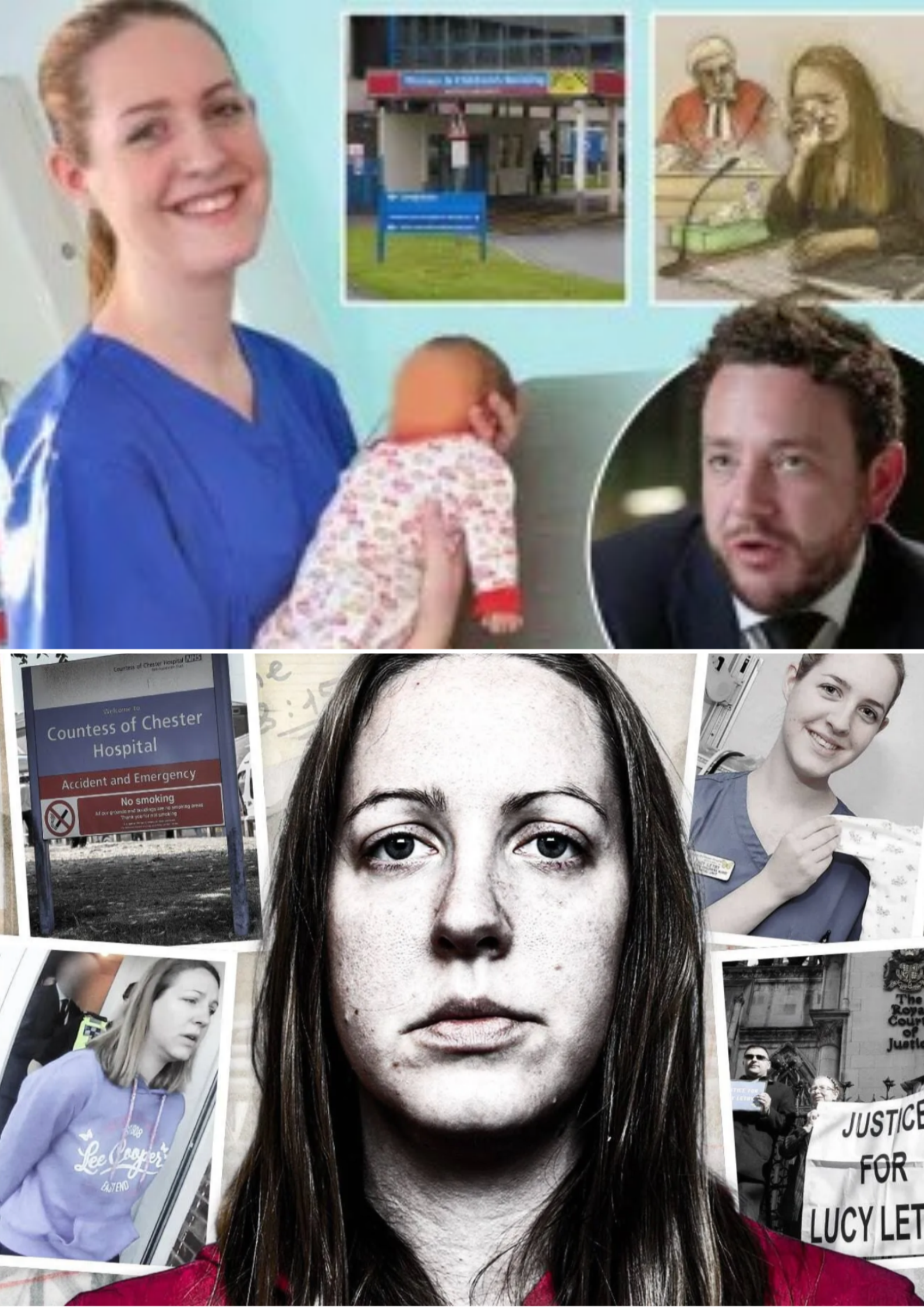
LUCY LETBY CASE ROCKED BY FRESH QUESTIONS OVER STATISTICS AND HOSPITAL RECORDS
Fresh questions are being raised over the evidence used to convict former neonatal nurse Lucy Letby, after previously undisclosed hospital records and revelations about an abandoned statistical investigation came under renewed scrutiny.
Letby remains convicted of murdering seven babies and attempting to murder seven others at the Countess of Chester Hospital between 2015 and 2016.
She is serving 15 whole-life orders and continues to challenge her convictions.
But her legal team is now relying on a growing body of expert material being examined by the Criminal Cases Review Commission, the independent body responsible for investigating potential miscarriages of justice.
The CCRC has confirmed that its review remains ongoing and that substantial expert reports and further submissions have been received. It stresses that it does not decide whether someone is guilty or innocent; its role is to determine whether there is a real possibility that a conviction may not be upheld or a sentence reduced.
 THE STATISTICAL QUESTION
One of the most controversial issues concerns the statistical evidence surrounding the pattern of baby deaths and collapses at the hospital.
Documents previously reported by The Guardian indicate that Cheshire Police approached statistician Professor Hutton during the investigation and asked about the likelihood of one member of staff being present during a series of deaths and collapses.
Hutton reportedly warned that a proper statistical analysis should not begin by focusing on one particular member of staff.
Instead, she said investigators needed to consider the medical conditions of the babies, prematurity and the performance of the neonatal unit, as well as other possible explanations.
The police later returned to Hutton after Letby had been charged.
According to emails seen by The Guardian, an officer told colleagues that prosecutors had been informed that investigators were again examining the validity of the statistical evidence.
The email said the prosecutor did not agree with the line of inquiry and had instructed police not to pursue it at that stage.
The Guardian reported that the initial approach to Hutton, the subsequent discussions and material she had requested were not disclosed to Letby’s defence.
The development has prompted criticism from statisticians and Letby’s current legal team.
However, it is important to distinguish between questions about the statistical methodology and proof of deliberate concealment.
There has been no court finding establishing that prosecutors deliberately buried a decisive statistical error from the jury.
 MATERNITY RECORDS ALSO COME UNDER SCRUTINY
Another major issue emerged this year after the BBC reported that maternity records belonging to babies involved in Letby’s cases had been seized by Cheshire Police.
The records contained information about the mothers’ pregnancies, labour and births.
But according to the BBC investigation, they were not reviewed by the prosecution’s chief medical expert and were not disclosed to Letby’s defence before trial.
The defence had requested the records.
The CPS’s position was that the documents were not relevant because prosecutors had not relied on them in building their case.
Dr Dewi Evans, the prosecution’s principal medical expert, told the BBC that he had not seen the full obstetric records.
He maintained that the records would not have changed his conclusions.
Other specialists have taken a different view.
Professor Phil Bennett, an obstetrics and gynaecology expert at Imperial College London, said it was surprising that maternity care appeared to have received little attention because pregnancy, labour and neonatal care would normally be considered together when investigating why a newborn became seriously ill.
NEW EXPERTS CHALLENGE PARTS OF THE MEDICAL CASE
The statistical questions come alongside a wider dispute over the medical evidence.
Two experts who had been supporting Letby’s defence recently withdrew from her legal team after raising concerns about other arguments being advanced on her behalf.
Helen Shannon and Professor Geoff Chase said they continued to stand by their own assessment that it was very unlikely two babies had been poisoned with insulin.
But they said other arguments being presented by the defence were inconsistent with available evidence, science and established physiology.
Letby’s barrister Mark McDonald has rejected the suggestion that the withdrawal undermines the wider challenge.
He said the defence now has evidence from experts in insulin, endocrinology and laboratory medicine that, in his view, raises fundamental problems with the scientific evidence used at trial.
The disagreement demonstrates how sharply divided the expert debate has become.
A DOCTOR INVOLVED IN THE ORIGINAL CASE HAS ALSO EXPRESSED DOUBTS
The case has also taken an unusual turn because Dr John Gibbs, a retired paediatrician whose evidence contributed to the investigation, has publicly expressed uncertainty about the conclusions reached against Letby.
Gibbs has said he is no longer certain that Letby was responsible for the deaths and collapses attributed to her and has suggested that a retrial could be appropriate if the new evidence warrants one.
His comments do not overturn the convictions, but they have added to the growing public debate surrounding the medical evidence.
THE THIRLWALL INQUIRY DID NOT OVERTURN THE CONVICTIONS
The publication of the Thirlwall Inquiry’s final report in September 2026 added another important piece to the picture.
The inquiry found serious failures in hospital management, governance and safeguarding at the Countess of Chester Hospital.
Lady Justice Kathryn Thirlwall described dysfunctional management and failures at several levels.
But she made clear that the inquiry was not an investigation into Letby’s criminal convictions or her guilt.
She also said it was not the role of the inquiry to second-guess the courts or interfere with the CCRC’s ongoing review.
That distinction is important.
Evidence of hospital failures does not, by itself, establish that Letby was wrongly convicted.
WHAT IS THE “HIDDEN” DOCUMENT?
Claims circulating online have referred to an explosive whistleblower document supposedly proving that a statistical error was deliberately concealed from the jury.
The publicly documented evidence is more nuanced.
There are records showing that police sought statistical advice, that a statistician warned against focusing on a single staff member without a broader analysis, and that an investigation into the validity of the statistical evidence was later not pursued.
There are also documented questions about maternity records that were seized but not disclosed to the defence.
But the available public record does not establish that one secret document proves a deliberate prosecution cover-up.
The CPS has continued to defend the legal process surrounding Letby’s convictions. In August 2026, it also confirmed that an independent review of six potential further offences had upheld an earlier decision not to bring additional charges.
THE NEXT LEGAL BATTLE
The CCRC’s ongoing review could become the most significant development in Letby’s case since her convictions.
If the commission concludes that the new evidence creates a real possibility that the convictions would not be upheld, it can refer the case back to the Court of Appeal.
Until that happens, Letby’s existing convictions remain in force.
The debate now extends far beyond a single piece of evidence.
It encompasses statistical methodology, medical interpretation, maternity records, disclosure obligations and the way investigators assessed a cluster of unexpected deaths and collapses.
For the families of the babies involved, the continuing debate is deeply painful.
For Letby’s defence, the question is whether evidence that was unavailable, overlooked or interpreted differently at trial is sufficient to justify another judicial examination.
And for the CCRC, the central issue remains much narrower:
Does the new evidence create a real possibility that Letby’s convictions will not ultimately be upheld?
That question remains unanswered.