CHRISTA PIKE REMAINS UNCONSCIOUS ON A VENTILATOR AFTER FAILED EXECUTION
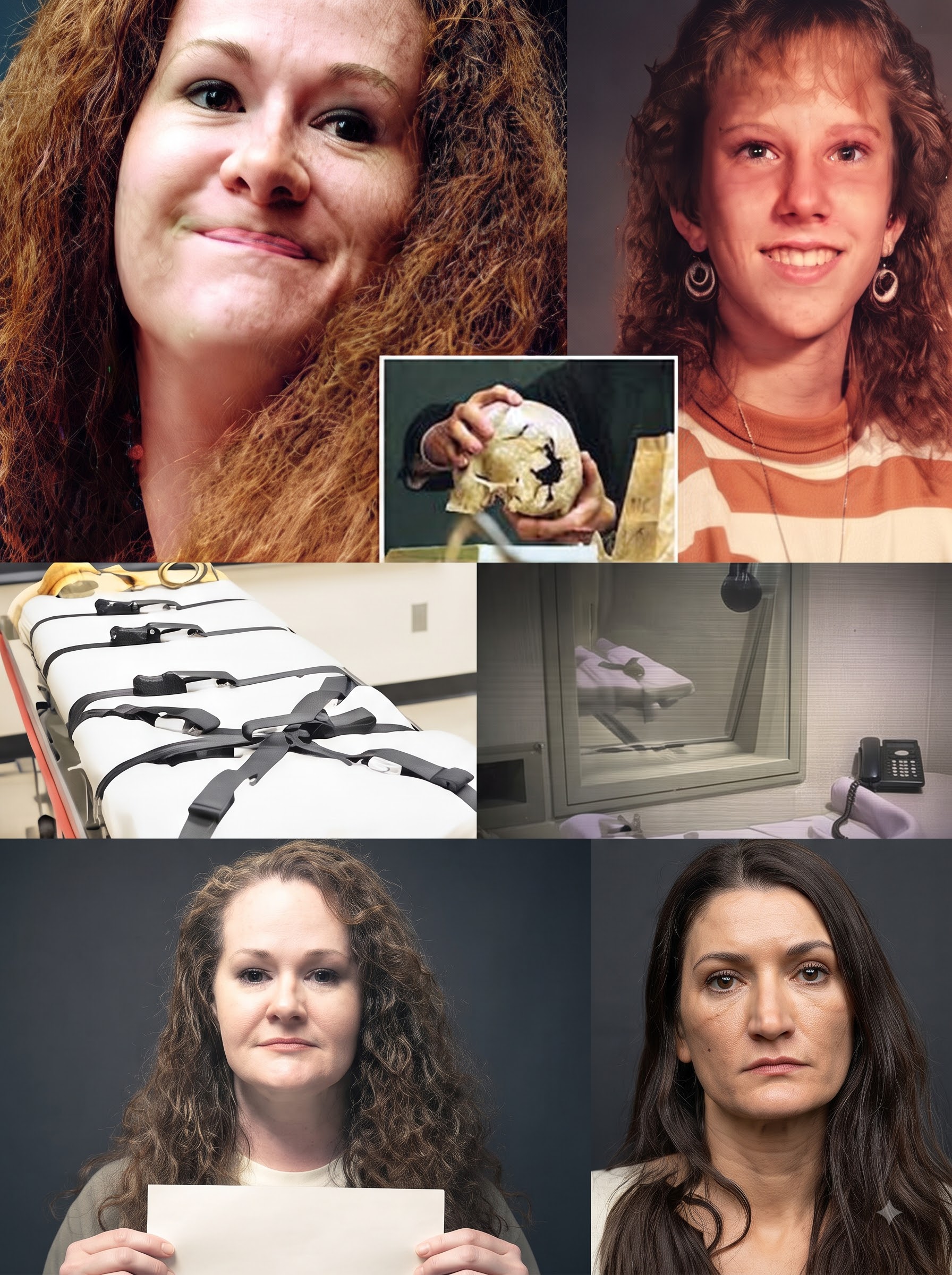
CHRISTA PIKE REMAINS UNCONSCIOUS ON A VENTILATOR AFTER FAILED EXECUTION
Christa Pike remains critically ill in a Tennessee hospital days after surviving a failed lethal-injection execution that was supposed to end her life.
The 50-year-old death-row inmate is now unconscious and intubated on a mechanical ventilator, according to her attorneys, who say doctors are working to save her life and clear the execution drug from her system.
The extraordinary situation has raised new questions about what happened inside Tennessee’s execution chamber — and why the procedure failed after two doses of pentobarbital were administered.
TWO DOSES WERE GIVEN — BUT PIKE SURVIVED
Pike’s execution took place at Riverbend Maximum Security Institution in Nashville on September 30.
According to her lawyers, the execution team struggled for an extended period to establish intravenous access.
A court filing says at least seven needles were used in Pike’s left arm alone. One needle was reportedly removed after becoming badly bent.
Despite the difficulties, two doses of pentobarbital were ultimately administered.
But Pike did not die.
Witnesses reported that she continued breathing and making sounds after the drugs were given. Some witnesses said they could still hear loud breathing or snoring even after the curtains of the execution chamber were closed.
 SHE WAS TAKEN TO HOSPITAL
After the execution attempt was halted, Pike was transported from the prison to a Nashville-area hospital.
Her attorneys now say she remains critically ill, unconscious and dependent on a ventilator.
They say hospital staff are treating the serious effects of pentobarbital and attempting to clear the drug from her body.
When she arrived at the hospital, both of her arms were reportedly swollen, burned and blistered.
LAWYERS SAY THE IV LINES MAY HAVE FAILED
Pike’s legal team alleges that the intravenous lines were not properly positioned or that her veins failed during the procedure.
Their court filing says the pentobarbital may have entered surrounding tissue rather than being delivered properly into the bloodstream.
Doctors treating Pike are now dealing with the consequences of the failed procedure, while her lawyers are seeking to preserve evidence that could help establish exactly what happened inside the execution chamber.
These allegations have not been independently established by a court. Tennessee officials have maintained that the Department of Correction followed its established execution protocol.
 PIKE HAD WARNED ABOUT HER VEINS
The failed execution has become particularly significant because Pike’s lawyers had previously warned that carrying out the lethal injection could present serious medical difficulties.
They had pointed to her small veins and a blood disorder known as thrombocytosis.
Her legal team argued before the execution that these conditions could make intravenous access difficult and potentially expose her to unnecessary pain and complications.
Those concerns are now at the centre of the lawyers’ demands for an investigation and preservation of evidence.
LAWYERS ASK COURT TO PRESERVE EVIDENCE
On Friday, Pike’s attorneys filed an emergency motion seeking an order requiring the Tennessee Department of Correction to preserve evidence connected to the failed execution.
They say preserving records, equipment and other evidence is essential to determining what went wrong and protecting Pike’s legal rights.
The filing represents the most detailed account yet of Pike’s condition and the problems encountered during the execution attempt.
TENNESSEE HALTS REMAINING EXECUTIONS
The incident has already triggered action at the state level.
Tennessee Gov. Bill Lee ordered an independent review after the failed execution and announced that the state would halt its remaining scheduled executions for the rest of 2026.
This was the second failed execution attempt in Tennessee in 2026, following the state’s unsuccessful attempt to establish an IV for death-row prisoner Tony Carruthers in May.
A CASE THAT HAS NOW ENTERED A NEW CHAPTER
Pike was convicted of the 1995 killing of 19-year-old Colleen Slemmer, a fellow student at the University of Tennessee.
She was sentenced to death more than three decades ago.
Her attempted execution was expected to make her the first woman executed by Tennessee in more than 200 years.
Instead, the procedure ended with Pike still alive and being rushed to a hospital.
Now, while doctors continue treating her and her lawyers seek answers, questions remain about the execution itself and the events that unfolded behind the prison walls.
For the moment, the most immediate concern is Pike’s condition.
She remains unconscious.
She remains on a ventilator.
And her attorneys say doctors are still working to save her life.