LUCY LETBY CASE — NEW MEDICAL EVIDENCE FUELS FRESH QUESTIONS AS CONVICTIONS REMAIN UNDER REVIEW
LUCY LETBY CASE — NEW MEDICAL EVIDENCE FUELS FRESH QUESTIONS AS CONVICTIONS REMAIN UNDER REVIEW
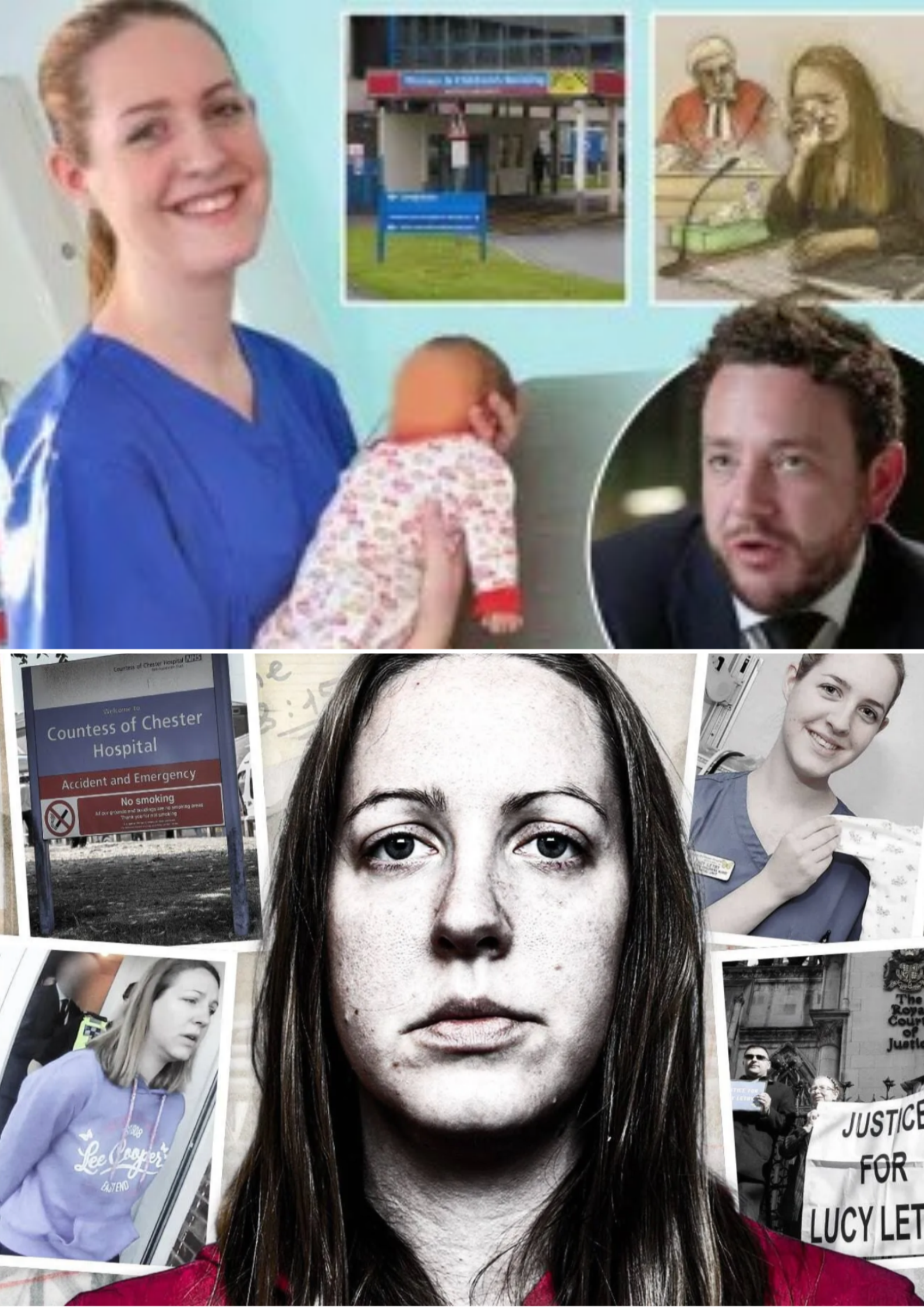
The Lucy Letby case has entered another extraordinary chapter, with renewed debate surrounding the medical evidence used at her trials and a formal review of her convictions continuing in the UK.
Letby, the former neonatal nurse at the Countess of Chester Hospital, remains in prison serving 15 whole-life orders after being convicted of murdering seven babies and attempting to murder seven others between 2015 and 2016.
But while her convictions remain in force, her legal team is continuing to challenge aspects of the evidence presented at trial.
At the centre of the latest developments is the Criminal Cases Review Commission (CCRC), which has been examining a substantial body of new material submitted on Letby’s behalf.
 THE CASE IS NOT OVER
The CCRC received a preliminary application concerning Letby’s convictions in February 2025.
Since then, the commission has received expert reports, legal submissions and further material from her defence team.
In February 2026, the CCRC confirmed that its review was still underway.
The commission stressed that its role is not to decide whether Letby is innocent or guilty. Instead, it investigates potential miscarriages of justice and can refer a case back to the Court of Appeal if it concludes there is a real possibility that a conviction may not be upheld.
That distinction is crucial.
Letby’s convictions have not been overturned.
For now, they remain legally valid.
 INTERNATIONAL EXPERTS HAVE CHALLENGED PARTS OF THE MEDICAL CASE
One of the most significant developments has involved an international group of medical and scientific experts who have questioned parts of the evidence used against Letby.
Canadian neonatologist Dr Shoo Lee, whose earlier research was cited during the prosecution case, has argued that his work was misinterpreted.
A wider group of experts has also raised questions about whether some of the babies’ deaths and collapses could have resulted from natural medical complications or problems with care rather than deliberate harm.
These arguments have been submitted as part of the material being considered in the CCRC review.
However, these are challenges to the prosecution case, not findings by a court that Letby was wrongly convicted.
TWO EXPERTS THEN WITHDREW FROM HER DEFENCE TEAM
The latest development has complicated the picture further.
In September 2026, chemical engineering expert Helen Shannon and bioengineering professor Geoff Chase withdrew from Letby’s defence team.
The pair had previously produced a report challenging aspects of the prosecution’s insulin evidence relating to two babies.
They said they continued to stand by their assessment that it was very unlikely those two babies had been deliberately poisoned.
But they said they could not support some other arguments subsequently being advanced by the defence because, in their view, those arguments were inconsistent with available evidence, science and established physiology.
Their departure does not amount to a finding that Letby’s convictions are correct.
It does, however, show that there are significant disagreements even among experts examining the evidence on her behalf.
THE DEFENCE SAYS THE NEW EVIDENCE IS BROADER
Letby’s barrister Mark McDonald has rejected the suggestion that the case for challenging the convictions depends on a single expert or a single piece of evidence.
He has argued that international experts from different fields have independently identified problems with the scientific evidence used to support the convictions involving two babies and that the defence case rests on the breadth and convergence of that material.
The CCRC has not publicly indicated whether it will ultimately refer the case back to the Court of Appeal.
Its review remains ongoing.
THE THIRLWALL INQUIRY RAISED A DIFFERENT SET OF QUESTIONS
Another major development came with the publication of the Thirlwall Inquiry report into events at the Countess of Chester Hospital.
The inquiry examined what hospital management knew about the cluster of deaths and collapses and whether concerns raised by doctors were acted upon quickly enough.
Lady Justice Kathryn Thirlwall concluded that there had been serious failures by hospital management, including delays in involving police after concerns were raised.
But the inquiry was not established to reconsider Letby’s criminal convictions.
Thirlwall explicitly stated that determining Letby’s guilt or innocence was outside the inquiry’s remit.
This means the inquiry’s findings should not be interpreted as either confirming or overturning the criminal convictions.
WHAT ABOUT THE “LEAKED FILE”?
Claims circulating online about a secret or classified legal file supposedly leaked by a powerful medical organisation should be treated cautiously.
The publicly documented process is different.
The CCRC has confirmed that it has received extensive defence material and expert evidence as part of its formal review.
But there is no reliable confirmation in the sources reviewed that a classified legal file has been leaked or that such a leak has triggered a mass movement demanding Letby’s immediate release.
What is confirmed is that the case continues to generate intense public and professional debate.
QUESTIONS ABOUT THE ORIGINAL MEDICAL EVIDENCE
At the heart of the controversy is a fundamental disagreement over how some of the babies’ medical collapses and deaths should be interpreted.
The prosecution presented evidence that the babies had been deliberately harmed.
Some experts supporting Letby’s challenge have argued instead that the medical evidence can be explained by natural causes, underlying vulnerability or inadequate medical care.
The disagreement is highly technical and involves neonatal medicine, insulin, laboratory testing, air embolism theories and the interpretation of clinical records.
The existence of disagreement does not itself establish that the original jury reached the wrong conclusion.
That question ultimately belongs to the courts.
THE CONVICTIONS STILL STAND
Despite the continuing controversy, there has been no court ruling releasing Lucy Letby or overturning her convictions.
Her previous attempts to challenge the convictions have not succeeded.
The CCRC is now examining the new material and will decide whether the case meets the threshold for referral to the Court of Appeal.
Meanwhile, the Crown Prosecution Service has also confirmed that it will not bring further charges against Letby relating to six additional babies reviewed under the Victims’ Right to Review process. That decision was upheld in August 2026.
WHAT HAPPENS NEXT?
The next major question is whether the CCRC finds that the new evidence creates a real possibility that one or more of Letby’s convictions will not be upheld.
If the commission refers the case, the Court of Appeal would then consider the matter.
If it does not, the existing convictions remain in place unless another legal route succeeds.
For now, neither outcome has been announced.
The case therefore remains at a highly unusual point: the convictions stand, but the evidence behind them continues to face intense scrutiny from competing medical and scientific experts.
And while dramatic claims about secret files and mass protests continue circulating online, the documented story is already significant enough.
A convicted former neonatal nurse remains imprisoned.
Her convictions remain legally valid.
Her defence has submitted extensive new expert material.
The UK’s miscarriage-of-justice watchdog is examining it.
And the scientific debate surrounding some of the evidence used at trial is far from settled.