CHRISTa PIKE UPDATE: DE@TH ROW WOMAN REMAINS UNCONSCIOUS ON VENTILATOR AFTER FAILED EXECUTION
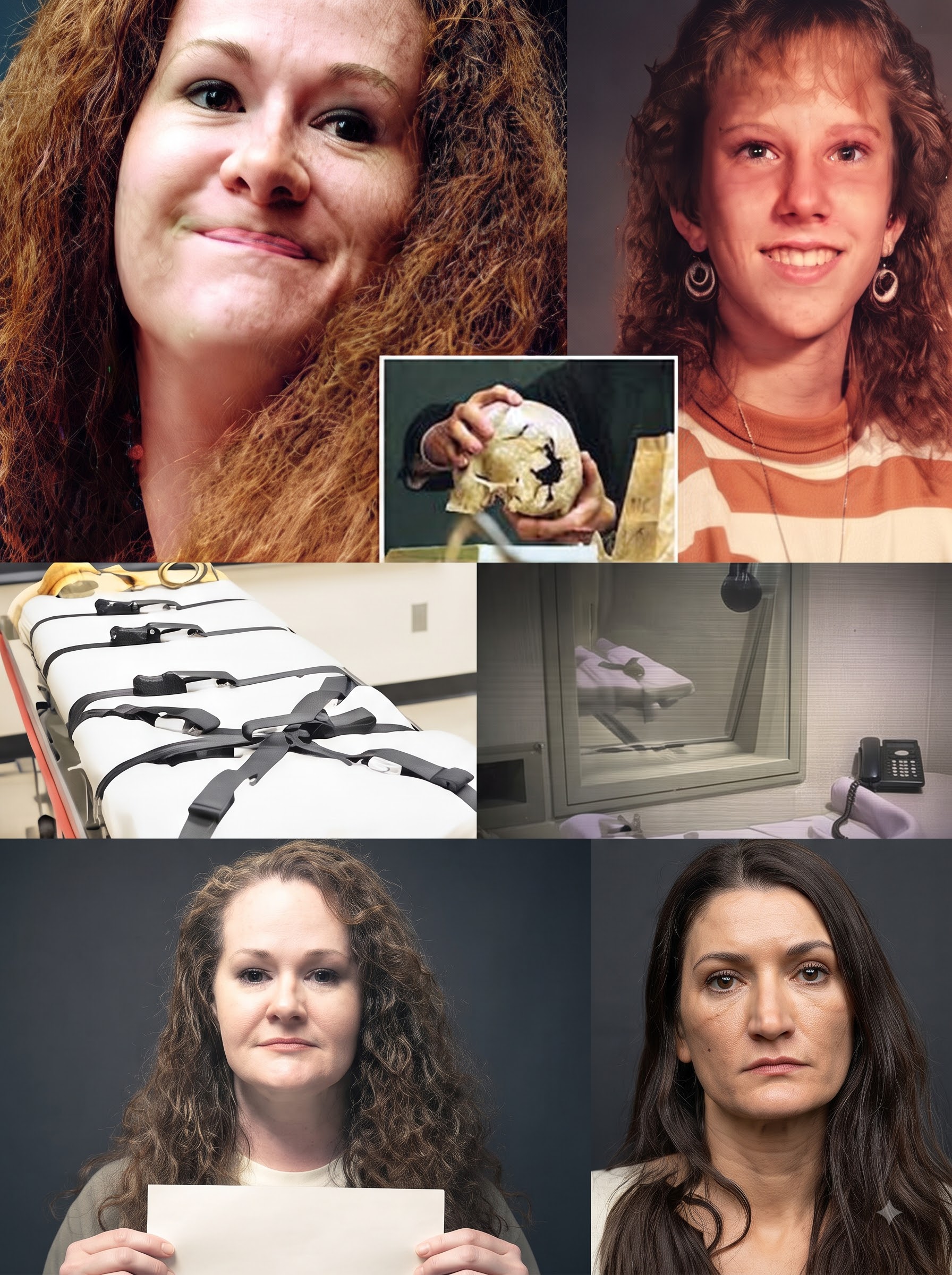
CHRISTa PIKE UPDATE: DEATH ROW WOMAN REMAINS UNCONSCIOUS ON VENTILATOR AFTER FAILED EXECUTION
Christa Pike remains critically ill, unconscious and on a ventilator days after Tennessee’s attempt to carry out her execution failed.
The 50-year-old death row prisoner was taken to a Nashville-area hospital after two doses of pentobarbital were administered during the September 30 execution attempt but failed to end her life.
Her attorneys now say she remains intubated and dependent on a mechanical ventilator while doctors treat the effects of the drugs and injuries sustained during the procedure.
 PIKE REMAINS IN CRITICAL CONDITION
According to a new court filing from Pike’s attorneys, she was still unconscious and receiving life-saving medical treatment as of October 2.
The lawyers said hospital staff were working to clear pentobarbital from her system.
They also reported that Pike arrived at the hospital with both arms swollen, burned and blistered.
The injuries have become a central part of the legal questions now surrounding the failed execution.
WHAT WENT WRONG INSIDE THE EXECUTION CHAMBER?
Pike’s lawyers allege that the intravenous lines used to administer the lethal drug were improperly placed.
Their filing claims the execution team did not realize that the IV lines had failed or that some of the pentobarbital may have entered surrounding tissue rather than Pike’s bloodstream.
The attorneys say Pike had previously warned that her medical conditions could make establishing an IV particularly difficult.
She had small veins and a condition called thrombocytosis, which her lawyers had raised during earlier legal challenges to the execution protocol.
The allegation that the drug entered tissue rather than the bloodstream is currently the attorneys’ account and is subject to investigation.
 TWO DOSES WERE ADMINISTERED
Tennessee’s execution attempt involved two doses of pentobarbital.
But Pike did not die.
Witnesses reported that she continued breathing after the drugs were administered. She eventually lost consciousness but remained alive, and an ambulance was later called to transport her to hospital.
Her survival makes the case highly unusual.
The Associated Press reported that Pike is believed to be the first person known to have survived after lethal-injection drugs were administered during an execution.
HER LAWYERS WANT EVIDENCE PRESERVED
Pike’s legal team has now asked a Tennessee court to require the state to preserve evidence connected to the execution attempt.
That could include medical records, equipment, video or other material that may help establish exactly what happened inside the execution chamber.
The attorneys argue that the evidence could be important in determining whether the state’s procedures were properly followed and whether Pike’s constitutional rights were violated.
At the same time, Tennessee officials maintain a very different position.
The Tennessee Department of Correction said after the failed execution that it followed every step of the state’s lawful, established execution protocol.
That disagreement is likely to become a major focus of the independent review ordered by the state.
TENNESSEE HALTS MORE EXECUTIONS
The failed attempt has already had consequences beyond Pike’s case.
Governor Bill Lee ordered an independent review of what happened and halted the remaining scheduled execution in Tennessee for 2026.
The governor said the circumstances needed to be examined thoroughly and that questions surrounding the procedure needed answers.
It was also the second failed execution attempt in Tennessee in 2026, increasing scrutiny of the state’s execution procedures.
PIKE HAD WARNED OF MEDICAL RISKS
Before the execution, Pike’s attorneys had repeatedly argued that her medical circumstances created additional risks.
They pointed to her small veins and thrombocytosis and argued that establishing reliable intravenous access could be difficult.
Those legal challenges were rejected, and courts ultimately allowed Tennessee to proceed with the execution.
A federal appeals court temporarily halted the execution on September 30, but the U.S. Supreme Court later lifted that stay, allowing Tennessee to proceed before Pike’s death warrant expired.
WHY WAS CHRISTA PIKE ON DEATH ROW?
Pike was sentenced to death for her role in the 1995 killing of 19-year-old Colleen Slemmer, a fellow Job Corps student in Knoxville, Tennessee.
Pike was 18 at the time.
She was convicted of first-degree murder in 1996.
Her attorneys had also argued that her traumatic childhood and history of abuse should have received greater consideration when her sentence was imposed.
Pike spent more than 30 years on death row before the state attempted to carry out her sentence.
WHAT HAPPENS NOW?
For the moment, Pike’s medical condition remains the most immediate concern.
Her attorneys have not provided a prognosis for her recovery.
The independent investigation ordered by Tennessee will also have to examine the execution procedure, while Pike’s legal team continues seeking preservation of evidence and pursuing its claims.
It remains unclear what the long-term consequences of the failed execution will be for Pike’s health or her death sentence.
What is known is that Tennessee attempted to carry out Pike’s execution on September 30.
Two doses of pentobarbital were administered.
She survived.
And days later, she remained in a hospital, unconscious and on a ventilator.
The questions surrounding those final moments inside the execution chamber are now likely to remain at the center of the case for weeks and months to come.