MY MOTHER CALLED THE POLICE OVER “HER” CAR—THEN THE OFFICER LEARNED WHO ACTUALLY OWNED EVERYTHING
PART 1 — GO AHEAD
On Mother’s Day, my mother looked me straight in the eyes and said, “I wish you’d never been my daughter.”
I stood, folded my napkin beside my plate, and answered:
“Then pretend you never had one.”
Ten minutes after I drove away, she texted me in all caps:
BRING MY CAR BACK OR I’M CALLING THE POLICE.
I smiled at the screen.
Then typed two words.
Go ahead.
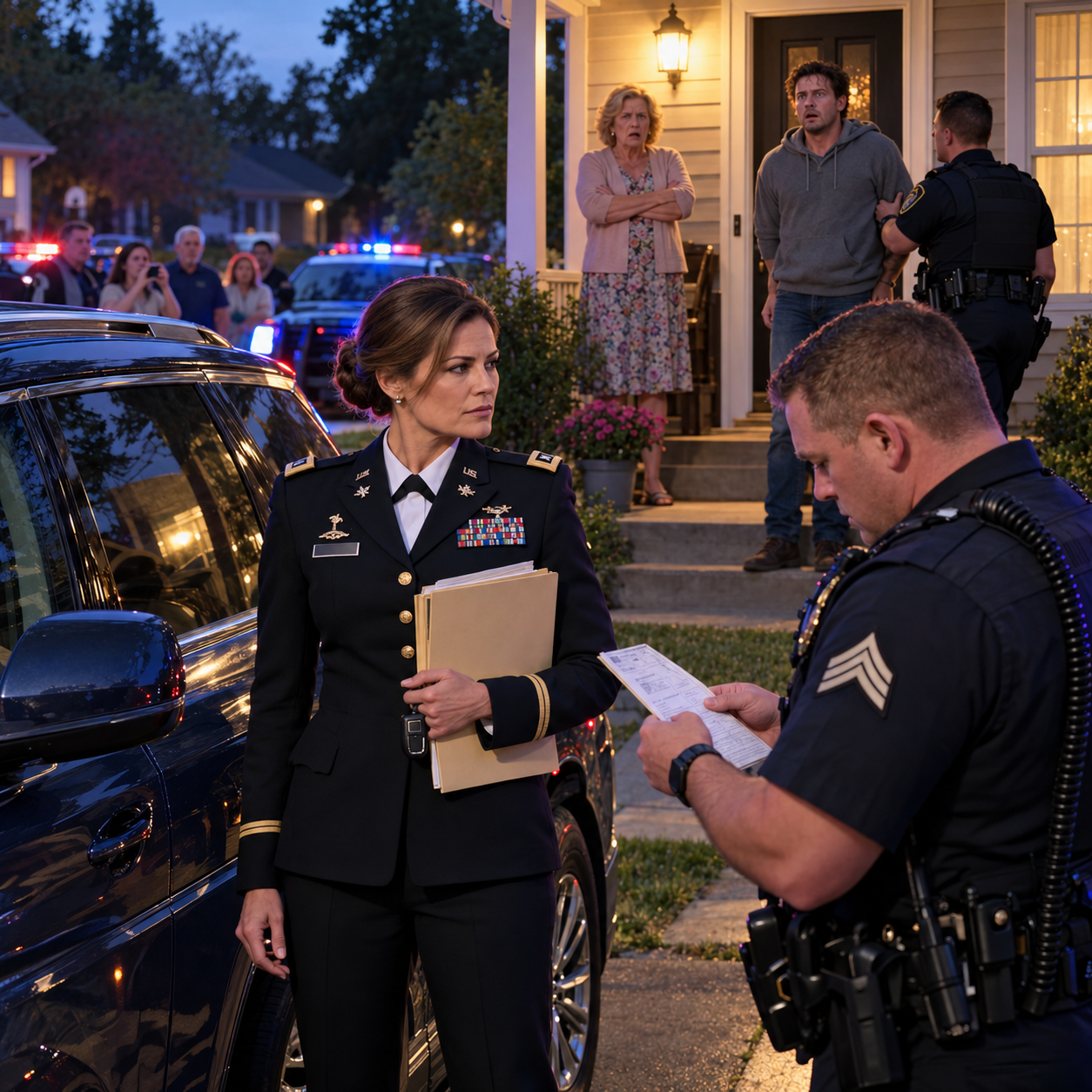
Forty-five minutes later, three police cars were parked outside her house.
My mother stood under the porch light with her arms folded, calm and certain, like the officers had come to return something that belonged to her.
My brother Wade stood behind her with a beer in his hand, already telling the neighbors his version.
Then Mom pointed across the street at my dark-blue SUV.
“She took my car.”
I parked.
Shut off the engine.
And sat there for one second longer than necessary.
What she didn’t know was simple.
The registration was in my glove box.
The insurance card was in my name.
The title was locked in my safe at Fort Campbell.
And that wasn’t the only paperwork connected to my family.
My name is Lieutenant Colonel Lorraine Mercer.
Forty years old.
Eighteen years in the Army.
At home, though, none of that mattered.
At home, I was simply the one who paid.
After my father died, Mom fell behind on the mortgage.
Wade was “between jobs.”
I started sending money.
Temporary, I told myself.
Temporary became seventeen years.
Furnaces.
Dental work.
Gas money.
Phone bills.
Repairs.
Bail.
A $14,300 roof.
In 2014, I bought Mom a three-bedroom house in Beaver Creek, Ohio.
The deed had my name on it.
The keys went to her.
Within a year, everyone called it Judith’s house.
I never corrected them.
Every time I paid for something, Mom said the same thing.
“That’s what family is for.”
I believed her.
Or maybe I needed to.
Then last spring, while I was deployed to Poland, I left my SUV in her garage.
“Start it once a week,” I said.
That was all.
When I came home, the odometer had almost 9,000 extra miles.
The seats smelled like cigarettes.
Fast-food wrappers were shoved beneath the passenger seat.
And somehow, over the course of several months, it had become “Mom’s car.”
I took it back to Kentucky.
Wade called me selfish.
Mom stopped speaking to me for eleven days.
I let it go.
Again.
Then five weeks before Mother’s Day, an email hit my military inbox.
A delinquent credit account had been flagged under my Social Security number.
Balance:
$12,400.
I stared at it.
I had never opened that account.
The statements had been mailed to the Beaver Creek house.
The first charge was for a set of truck tires.
I knew exactly whose truck they were on.
Wade’s.
So I drove north.
Manila folder on the passenger seat.
Every statement printed.
Every charge highlighted.
I sat Wade down at the kitchen table.
He denied it for maybe two minutes.
Then he stopped pretending.
“I was going to pay it back.”
I stared at him.
“You opened a credit card in my name.”
He leaned back.
“Come on, Lorraine.”
Then he said the sentence I still hear sometimes.
“It’s basically family money anyway.”
Mom was standing near the sink.
I waited for her to react.
To yell.
To ask him what he had done.
She didn’t.
She looked at me.
“Don’t call the police.”
That was her first concern.
Not me.
Not identity theft.
Not twelve thousand dollars of debt attached to my name.
Wade.
So I gave him thirty days.
God knows why.
I wrote an agreement in plain English.
He admitted the debt.
Agreed to begin repayment.
Signed his name with my pen.
Thirty days passed.
Nothing.
Still, on Mother’s Day, I drove five hours north.
Lilacs in the back seat.
A photo album for Mom wrapped in blue paper.
I don’t know why I still hoped.
Habit, maybe.
Dinner started normally.
Mom served ham.
Wade drank beer.
Nobody mentioned the credit card.
Eventually, I asked one question.
“Your thirty days ran out last Monday.”
Wade looked down.
I continued.
“Where are we?”
Mom exploded before he could answer.
“For God’s sake, Lorraine.”
I looked at her.
“What?”
“Can you not do this today?”
“He stole my identity.”
“Don’t be dramatic.”
That word.
Dramatic.
I had spent eighteen years making decisions under pressure.
Managing soldiers.
Handling situations where panic got people hurt.
But according to my mother, expecting my brother to repay money he stole was dramatic.
She called me cold.
Ungrateful.
Said the Army had made me hard.
Then, finally, she looked directly across the table at me.
And said:
“I wish you’d never been my daughter.”
Nobody moved.
Wade didn’t defend me.
Mom didn’t take it back.
So I stood.
Folded my napkin.
Placed it neatly beside the plate.
Then said:
“Then pretend you never had one.”
I grabbed my keys.
Walked out.
Drove away.
Ten minutes later, the text arrived.
BRING MY CAR BACK OR I’M CALLING THE POLICE.
I looked at it.
Smiled.
Go ahead.
Now, forty-five minutes later, Sergeant Whitaker stood in front of my mother’s porch asking a very simple question.
“Ma’am, this vehicle comes back registered to Lorraine Mercer.”
He looked at her.
“Is that you?”
Mom’s mouth tightened.
“That’s my daughter.”
Whitaker waited.
“It’s the family car.”
He glanced at his screen.
“Is your name on the title?”
Mom waved one hand toward the house.
The driveway.
The street.
Everything she believed belonged to her.
“Everything here is family. We don’t divide things up with paper.”
That sentence landed harder than the insult at dinner.
Because suddenly I understood the last seventeen years.
The house.
The car.
The money.
My credit.
To her, if I owned it, the family owned it.
If I earned it, the family could use it.
If I objected, I was selfish.
Wade stormed down the steps.
“This is ridiculous.”
Whitaker looked at him.
Wade pointed at me.
“She thinks she’s better than everyone because she wears a uniform.”
Whitaker’s expression didn’t change.
Then he keyed his shoulder mic.
“Send another unit.”
That was the first crack.
I got out of the SUV.
Walked across the street.
Handed Whitaker my military ID.
Then the registration.
Then my phone with a photograph of the title.
He checked everything carefully.
His eyes moved from the documents to Mom.
Then to Wade.
A second officer had arrived and was running names.
Mom kept talking.
Still confident.
Still convinced the police would eventually order me to hand over the keys and apologize.
Wade even smiled.
Then the radio on the second officer’s shoulder came alive.
His expression changed.
He looked at Wade again.
Not casually this time.
Whitaker stopped writing.
My brother’s smile disappeared.
I still had the manila folder in the SUV.
Inside it was Wade’s signed admission.
The $12,400 credit-card history.
And my deployment orders proving I had been in Poland when the account was opened.
But before I could decide whether to go get it, the second officer stepped toward my brother.
He said Wade’s full legal name.
Wade went completely still.
Mom looked at me like I had done something.
I hadn’t.
Not yet.
Then the officer reached for his cuffs.
PART 2 — THE OTHER WARRANT
“What are you doing?”
My mother’s voice changed instantly.
Confidence disappeared.
She stepped off the porch so fast one slipper nearly came off her foot.
The second officer caught Wade’s right wrist.
Wade jerked away.
“Hey. What the hell?”
“Hands behind your back.”
“For what?”
The officer’s answer was calm.
“You have an active bench warrant in Greene County.”
Mom looked at me.
Not at Wade.
At me.
“Lorraine.”
I almost laughed.
Not because any of it was funny.
Because after seventeen years, even my brother’s existing warrant had somehow become my responsibility.
“I didn’t know about it,” I said.
“What warrant?” Mom demanded.
Wade’s face had gone pale.
“It’s nothing.”
The officer secured the second cuff.
“It’s for failure to appear on a suspended-license case and an outstanding property-damage citation.”
“That was handled,” Wade snapped.
Apparently, it had not been.
Neighbors stood in doorways now.
Porch lights flicked on up and down the street.
Wade’s beer bottle remained on the porch railing beside the Mother’s Day flowers I had brought.
Purple lilacs.
Mom’s favorite.
For some reason, seeing them there hurt more than watching my brother get handcuffed.
Sergeant Whitaker turned toward me.
“Ma’am, regarding the vehicle, there’s no issue here. Registration confirms you’re the owner.”
“I told you,” I said quietly.
Mom folded her arms again, rebuilding herself piece by piece.
“She gave it to me.”
“No,” I said.
Her eyes cut toward mine.
“You left it here.”
“While I was deployed.”
“For months.”
“I asked you to start it once a week.”
“That means I was taking care of it.”
“You put nine thousand miles on it.”
Her jaw tightened.
Whitaker looked between us.
“This part is a civil matter unless there’s evidence of theft or unauthorized use. But right now the registered owner is standing here with possession of the vehicle.”
Mom opened her mouth.
I beat her to it.
“And there’s something else.”
Wade turned his head sharply.
I walked back across the street.
Opened the passenger door.
Picked up the manila folder.
When I returned, Wade looked at it and whispered one word.
“Lorraine.”
That was the closest he had come to sounding afraid all evening.
I handed the folder to Whitaker.
“My brother opened a credit account under my name while I was deployed overseas.”
Mom stepped forward.
“No.”
I looked at her.
“You were standing in the kitchen when he admitted it.”
“That was a misunderstanding.”
Whitaker opened the folder.
The first page was the credit report.
The second showed the opening date.
The third showed the address used.
Then came charges.
Truck tires.
A transmission repair.
Sporting goods.
Cash advances.
Two hotel stays.
And a $1,760 electronics purchase I had never noticed before.
At the back was Wade’s signed statement.
Whitaker read it once.
Then again.
His expression hardened.
“This is his signature?”
“Yes.”
Wade struggled against the cuffs.
“I signed that because she was threatening me.”
I turned to him.
“I told you to repay money you stole.”
“She said she’d ruin my life.”
“No. I said I’d file a police report.”
“That’s the same thing!”
Even Whitaker looked at him then.
Mom did what she had always done.
She stepped between consequence and Wade.
“He made a mistake.”
“A twelve-thousand-dollar mistake?” I asked.
“He was desperate.”
“So was I when Dad died.”
Mom flinched.
That stopped her for half a second.
I continued.
“I was twenty-three, making lieutenant pay, and sending half of it home because the mortgage was behind. I didn’t steal anybody’s identity.”
“You always throw money in our faces.”
“No, Mom. I never did. That’s the problem.”
My voice broke on the last word.
I hated that it did.
For eighteen years, I had trained myself to speak clearly under pressure.
Brief generals.
Correct captains twice my age.
Tell families when their soldier had been injured.
Yet there I was, forty years old, standing on a sidewalk trying not to cry because my mother thought theft mattered less than embarrassment.
Whitaker closed the folder.
“Lieutenant Colonel Mercer, have you already reported this account to the creditor?”
“I froze my credit and filed an identity-theft report with the FTC. I hadn’t filed locally yet because I gave him thirty days.”
“Why?”
I looked toward Wade.
Then Mom.
“I thought he was my brother.”
Whitaker nodded slowly.
“You understand that if you make a formal report, this could become a felony investigation.”
“Yes.”
Mom inhaled sharply.
“Lorraine, don’t.”
I had heard that tone before.
When Wade wrecked Dad’s pickup at nineteen.
When he took cash from Mom’s purse.
When he got arrested after a bar fight.
When he borrowed money from me because his electricity was going to be shut off and then posted pictures from a casino three days later.
Don’t make it worse.
Don’t embarrass him.
Don’t make your mother choose.
As though I had been the one creating every crisis.
I looked at Whitaker.
“I want to file the report.”
Mom made a sound like I had struck her.
“After everything I’ve done for you.”
The words were so absurd that for a moment I couldn’t answer.
Then I asked, “What have you done for me, Mom?”
Silence.
Real silence.
Not anger.
Not argument.
A question she apparently had never expected.
She opened her mouth.
Nothing came out.
I nodded.
“That’s what I thought.”
Wade was placed in the rear of the patrol car.
Whitaker explained that another officer would take my statement.
The neighbors slowly disappeared behind their curtains.
Mom stood on the lawn, shoulders rigid.
When the cruiser carrying Wade pulled away, she whispered, “You’re really doing this.”
“No.”
She looked at me.
“He did this.”
“He’s your brother.”
“And I was your daughter an hour ago.”
Her face changed.
For one second, shame appeared.
Then pride buried it.
“You know I didn’t mean that.”
I waited.
That was the closest thing to an apology she offered.
“You said it.”
“I was angry.”
“You’ve been angry at me every time I said no.”
“That isn’t true.”
“Isn’t it?”
I pointed toward my SUV.
“You called the police because I took my own car.”
“I thought—”
“No. You didn’t think. You assumed anything of mine was yours.”
Her lips trembled.
I should have stopped.
But seventeen years was speaking now.
“The car isn’t yours.”
I pointed toward the house.
“And neither is the house.”
She stared at me.
The night seemed to become very still.
“What?”
“The deed is in my name.”
“I know that.”
“Do you?”
“Your father and I—”
“Dad had been dead nine years when I bought it.”
“It was bought for me.”
“Yes.”
I swallowed.
“I bought it so you would have somewhere safe to live. I never said it belonged to Wade. I never said he could live here forever. And I never said my paying for it gave either of you access to my identity.”
She looked toward the front door.
For the first time that evening, I saw fear.
Not fear of police.
Fear of uncertainty.
“You’re throwing me out?”
I wanted to say yes.
Part of me desperately wanted to.
Instead I said, “Not tonight.”
“Lorraine—”
“But things change tonight.”
I drove to a hotel after giving my statement.
At 2:13 a.m., I sat on the edge of a bed beneath an ugly framed print of a sailboat and opened my laptop.
For the first time in seventeen years, I made a list.
Not of what my family needed.
Of what I had paid.
Mortgage.
Property taxes.
Home insurance.
Roof.
HVAC.
Water heater.
Wade’s legal fees.
Mom’s dental implant.
A used Honda she later traded without telling me.
Utilities.
Cash transfers.
Emergency transfers.
Birthdays.
Christmases.
“Loans” that had never been repaid.
I stopped adding when the total crossed $286,000.
That figure did something anger could not.
It made everything quiet.
At 3:04 a.m., I logged into my bank.
I canceled the automatic transfer that went to Mom every month.
Eight hundred dollars.
Then I canceled the payment to her cell-phone plan.
Then the cable.
Then the utility account I had been covering since Dad died.
My finger hovered over the mortgage payment.
I didn’t cancel that.
The house was mine.
I would protect my credit even if nobody else did.
At 3:17 a.m., Mom called.
I watched the phone ring.
Then stop.
She called again.
And again.
The fourth time, I answered.
“Wade needs bail money.”
No hello.
No apology.
I looked at the ceiling.
“Then Wade needs to find bail money.”
“You know he doesn’t have it.”
“Then he can stay there until morning.”
“How can you say that?”
“Easily.”
“This is because of dinner?”
“No.”
I sat up.
“This is because Wade committed identity theft, you defended him, then you called the police and falsely claimed I stole my own vehicle.”
“I never said stolen.”
“You told the police I took your car.”
“It has been at my house.”
“Ownership is not based on proximity, Mom.”
She went quiet.
Then softer:
“I can’t handle all this alone.”
That sentence pierced the armor.
Because once, years earlier, after Dad died, she had said almost exactly the same thing.
I’m scared, Rainy.
I can’t do this alone.
I had been a young officer then.
Homesick.
Grieving.
Desperate to be useful.
So I had stepped in.
And somehow never stepped back out.
“I’m not abandoning you,” I said.
“You already are.”
“No. I’m stopping myself from being used.”
“You think money is everything.”
“No.”
My throat tightened.
“I think respect matters too.”
She hung up.
The next morning, while I was drinking terrible hotel coffee, I received an email from the credit-card investigator.
They had reviewed the deployment documentation.
The account had been opened electronically from an IP address associated with the Beaver Creek residence.
Then my phone rang.
It was Sergeant Whitaker.
His voice was careful.
“Lieutenant Colonel Mercer, there’s something else you should probably know.”
My hand tightened around the coffee cup.
“What?”
“When officers inventoried your brother’s personal property last night, he had several pieces of mail in his truck.”
A pause.
“Mail addressed to you.”
I stopped breathing.
“How much?”
“Enough that I think you should come to the station.”
Twenty minutes later, I was driving there.
And for the first time, the $12,400 credit card no longer felt like the whole story.
It felt like the first page.
PART 3 — THE BOX UNDER WADE’S SEAT
Sergeant Whitaker placed a clear evidence bag on the desk between us.
Inside were six envelopes.
All addressed to me.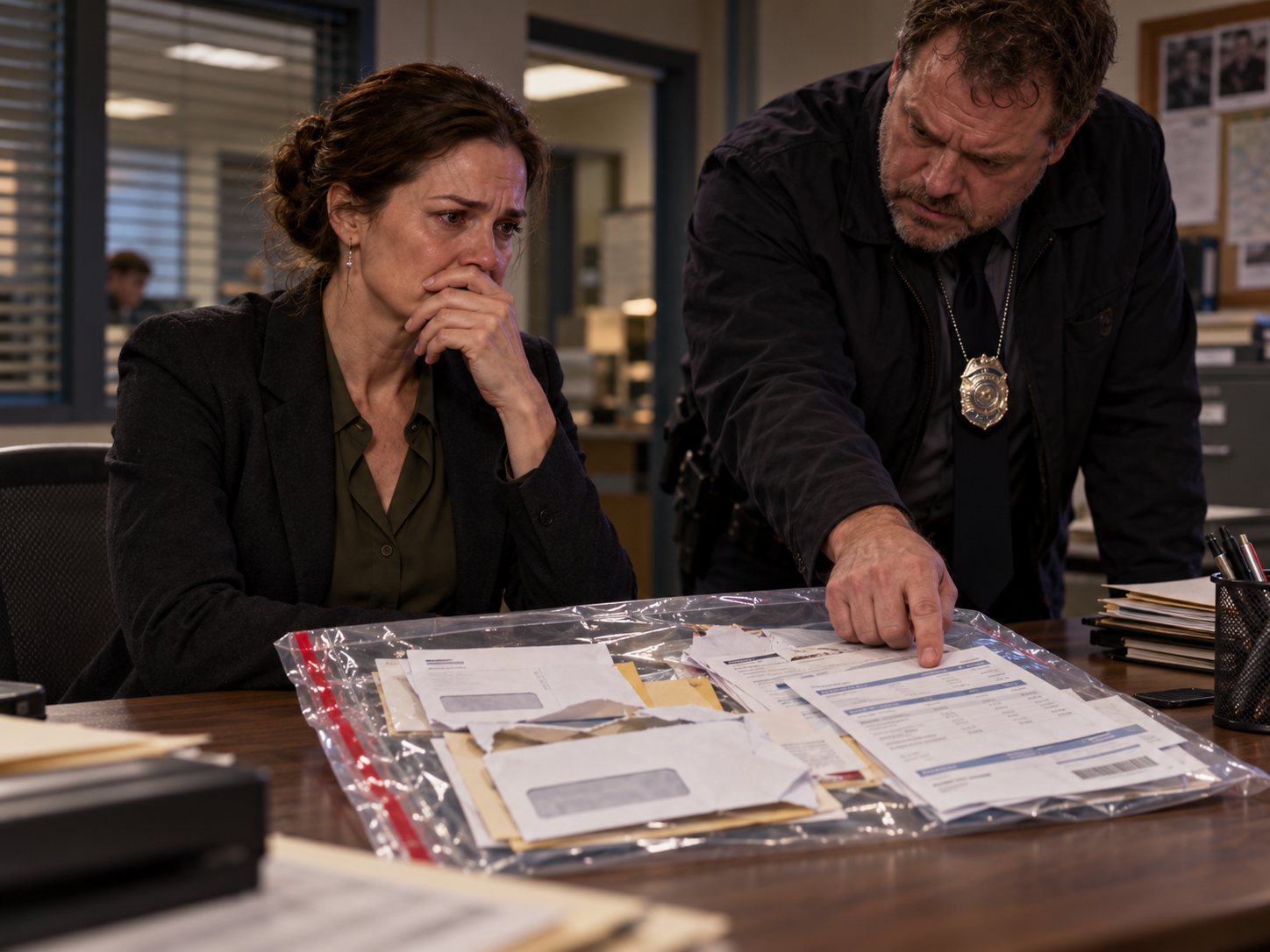
All mailed to the Beaver Creek house.
Two were from banks.
One was from a credit union.
One came from an insurance company.
The final two were from a company I didn’t recognize.
My stomach tightened.
“Where did you find these?”
“Under the rear seat of your brother’s truck.”
I stared at them.
“Opened?”
“Some of them.”
“Can I see?”
Whitaker slid the bag closer but didn’t open it.
“An investigator is being assigned because of the identity-theft report. I don’t want to compromise anything. But I can tell you one letter references a denied personal loan.”
“How much?”
“Twenty-five thousand.”
The room tilted.
I sat back.
“I never applied for a personal loan.”
“That’s why we called.”
There is a particular type of fear you develop in the military.
Not panic.
Calculation.
You immediately begin identifying exposure.
What is compromised?
What is protected?
What can spread?
I pulled out my phone.
“My credit is frozen with all three bureaus.”
“Good.”
“I changed bank passwords five weeks ago.”
“Good.”
“Tax PIN too.”
Whitaker studied me.
“You came prepared.”
“I wish I hadn’t needed to.”
I drove straight to Mom’s house.
She opened the door wearing the same sweater from the night before.
Her eyes were swollen.
“You left him there.”
I walked past her.
“We need to talk.”
“You could’ve paid the bond.”
“I found more accounts.”
She stopped.
That was all I needed.
I turned around slowly.
“You knew.”
“No.”
“Mom.”
“I didn’t know what he was doing.”
“But you knew something.”
She folded her arms.
“He got mail here.”
“My mail.”
“I told him not to touch it.”
“How long?”
She looked away.
“How long?”
“A few months.”
I stared at her.
Maybe I had imagined some point at which the betrayal would become too large to absorb.
Apparently there wasn’t one.
“Why didn’t you tell me?”
“He said it was junk.”
“So you watched him open mail addressed to me and believed him?”
“I didn’t watch him.”
“You just told me you told him not to touch it.”
Her face hardened.
“Don’t interrogate me in my own house.”
That phrase nearly made me laugh.
Instead, I walked into the living room.
The room I had paid to repaint.
The sofa I had helped replace.
The windows I had financed after a winter storm.
Family photographs covered the mantel.
Wade at graduation.
Wade holding his son from a relationship that lasted three years.
Wade at Christmas.
Wade beside Dad’s fishing boat.
There were two pictures of me.
One from high school.
One in dress blues from twelve years earlier.
“You know what’s strange?” I said.
Mom followed me.
“What?”
“I spent half my life trying to earn a place in this room.”
Her expression softened briefly.
“Lorraine…”
“And apparently I was already worth more outside it.”
I turned.
“Did Wade use my information for anything else?”
“I don’t know.”
“You need to think very carefully before you answer.”
“Don’t threaten me.”
“I’m not threatening you.”
My voice stayed low.
“I’m giving you one opportunity to stop protecting him at my expense.”
She sat down.
For the first time, she looked old.
Not guilty.
Not innocent.
Just tired.
“There was a truck.”
I didn’t move.
“What truck?”
“He tried to refinance it last year.”
“With my information?”
“I don’t know.”
“Mom.”
“He asked me for your old tax forms.”
Something cold moved through my chest.
“And what did you do?”
She looked toward the floor.
“I gave him the box from the hall closet.”
I closed my eyes.
The hall closet.
Years earlier, while changing duty stations, I had stored a box of old records there.
Tax returns.
Copies of orders.
Old insurance documents.
A photocopy of my Social Security card.
Enough information to build a person out of paper.
“You gave Wade my financial records?”
“He said he needed proof of household income.”
“He doesn’t live in my household.”
“He lives here.”
“This is my house.”
Her head snapped up.
“There it is again.”
“What?”
“You reminding me.”
“I’m not reminding you to hurt you. I’m telling you because legally, financially, and factually, you have been treating my property and identity like community assets.”
“You bought this house for me.”
“To live in.”
“What’s the difference?”
The question stunned me.
“The difference,” I said slowly, “is that I didn’t give you permission to leverage it, sell it, transfer it, or hand my documents to Wade.”
“I never sold anything.”
I remembered something.
“Did he ever ask you for the deed?”
Mom said nothing.
My heart began pounding.
“Mom.”
“He said he wanted to see whether we could put his name on it.”
I stared at her.
“We?”
“He helps me here.”
“He hasn’t paid rent in six years.”
“He cuts the grass.”
“I pay the property taxes.”
“He’s my son.”
“And I’m your daughter.”
She flinched again.
I was suddenly exhausted.
Not angry.
Exhausted.
I walked toward the hall closet.
The file box was gone.
“When did Wade take it?”
“I don’t know.”
“Where is it?”
“I don’t know.”
“Did you ask?”
“He’s family, Lorraine. I didn’t think—”
I spun around.
“That is exactly the problem.”
My voice finally rose.
“You never think when it’s Wade. You excuse.”
She recoiled.
I lowered my voice again.
“If I had done half of what he’s done, would you have protected me?”
“That’s not fair.”
“Answer me.”
“You’ve always been stronger.”
There it was.
Not love.
Not fairness.
A sentence people use to justify giving less to the person who complains least.
“You didn’t protect me because you thought I could survive without it.”
“I didn’t say that.”
“You didn’t have to.”
I left before I said something I couldn’t take back.
That afternoon, I met with a civilian attorney named Rachel Donnelly.
She specialized in property and financial fraud.
Her office smelled faintly of peppermint tea, and she listened without interrupting as I laid seventeen years across her conference table.
When I finished, she removed her glasses.
“Lorraine, I’m going to ask you something that may sound harsh.”
“Go ahead.”
“Why is your brother living in a house you own?”
“My mother lives there.”
“That wasn’t my question.”
I looked away.
“He needed somewhere to stay after his divorce.”
“When was that?”
“Six years ago.”
Rachel waited.
I sighed.
“I know.”
“No, I don’t think you do.”
She pulled the deed from the documents I had brought.
“You are the sole owner. Your mother does not have a life estate. Your brother does not have a lease. From what you’ve shown me, you purchased the property and have paid the expenses continuously.”
“Yes.”
“If someone is attempting to use your house as collateral or represent an ownership interest that doesn’t exist, we need to secure the title.”
She recommended a title lock, county alerts, and immediate review of recorded documents.
Then her eyes moved to Wade’s signed debt acknowledgment.
“This is useful.”
“For the credit card?”
“Very.”
I hesitated.
“I don’t want my mother homeless.”
Rachel leaned back.
“Setting boundaries and making an elderly parent homeless are not the same thing.”
“She’s sixty-eight, not ninety.”
“Then let’s treat her like a capable adult.”
That sentence stayed with me.
Capable adult.
I had spent years treating Mom as though every problem around her needed me.
Maybe she had encouraged it.
Maybe I had too.
We drafted a formal occupancy agreement.
Mom could remain in the house.
I would continue paying property taxes and structural insurance.
She would take responsibility for utilities, groceries, phone, cable, and ordinary living expenses.
Wade had thirty days to vacate after release.
He would not be permitted access to my mail, financial records, vehicle, or accounts.
Mom would not give him a key after he left.
It seemed simple on paper.
Families rarely are.
Wade was released the next afternoon after resolving the bench warrant.
He called before I had even left Rachel’s office.
“You’re enjoying this, aren’t you?”
“No.”
“You got me arrested on Mother’s Day.”
“You were arrested because you had a warrant.”
“You reported the card.”
“Correct.”
“Mom says you’re kicking me out.”
“I’m giving you thirty days.”
“I live there.”
“You don’t own it.”
“You think because you paid for everything—”
I closed my eyes.
That phrase again.
“Because I paid for the house, Wade, I legally own the house.”
“Dad would be disgusted with you.”
That one landed.
He knew it would.
Our father, Raymond Mercer, had believed fiercely in family.
He also believed in work.
Responsibility.
Returning borrowed tools cleaner than you received them.
Keeping promises.
I heard his voice sometimes when I polished my boots.
Do the right thing when nobody’s watching, Rainy.
I looked out Rachel’s office window.
“Dad would have made you repay the money.”
Wade went quiet.
Then his voice changed.
Meaner.
“You really think Mom loves you after this?”
I felt the old wound open.
Then something unexpected happened.
It didn’t control me.
“I think Mom’s feelings are Mom’s responsibility.”
I hung up.
Three days later, Rachel called me.
“Are you sitting down?”
“Yes.”
“We found a document filed with the county recorder last November.”
My grip tightened around the phone.
“What document?”
“A quitclaim deed.”
I stood anyway.
“To whom?”
“From you…”
She paused.
“…to your brother.”
For several seconds, the world was silent.
“That’s impossible.”
“I know.”
“I never signed anything.”
“I know.”
“I was in Poland.”
“I know.”
My heart began beating so hard I could hear it.
“Is it valid?”
“Not if it’s fraudulent. But Lorraine, someone filed a notarized deed transferring your house to Wade Mercer.”
I thought of the missing file box.
The opened mail.
Mom giving him my records.
The loan applications.
“What do we do?”
“We challenge it immediately.”
“Who notarized it?”
“That’s the interesting part.”
Rachel’s voice became very quiet.
“The notary commission number listed on the document belongs to a woman who died eight months before the deed was supposedly signed.”
I sat back down.
Suddenly, this was no longer about a credit card.
Wade hadn’t just borrowed my identity.
He had tried to take the house.
And when I called Mom, she answered after one ring.
Before I could say anything, she whispered:
“I know why you’re calling.”
PART 4 — WHAT MOM KNEW
I drove to Beaver Creek that evening.
Not because Rachel advised it.
She specifically advised me not to confront Wade alone.
But Wade wasn’t there.
Mom was.
I found her sitting at the kitchen table with Dad’s old coffee mug between both hands.
No coffee.
Just the mug.
The same chipped brown cup he had used every morning for twenty-seven years.
She looked smaller than she had three days earlier.
“I didn’t sign it,” she said.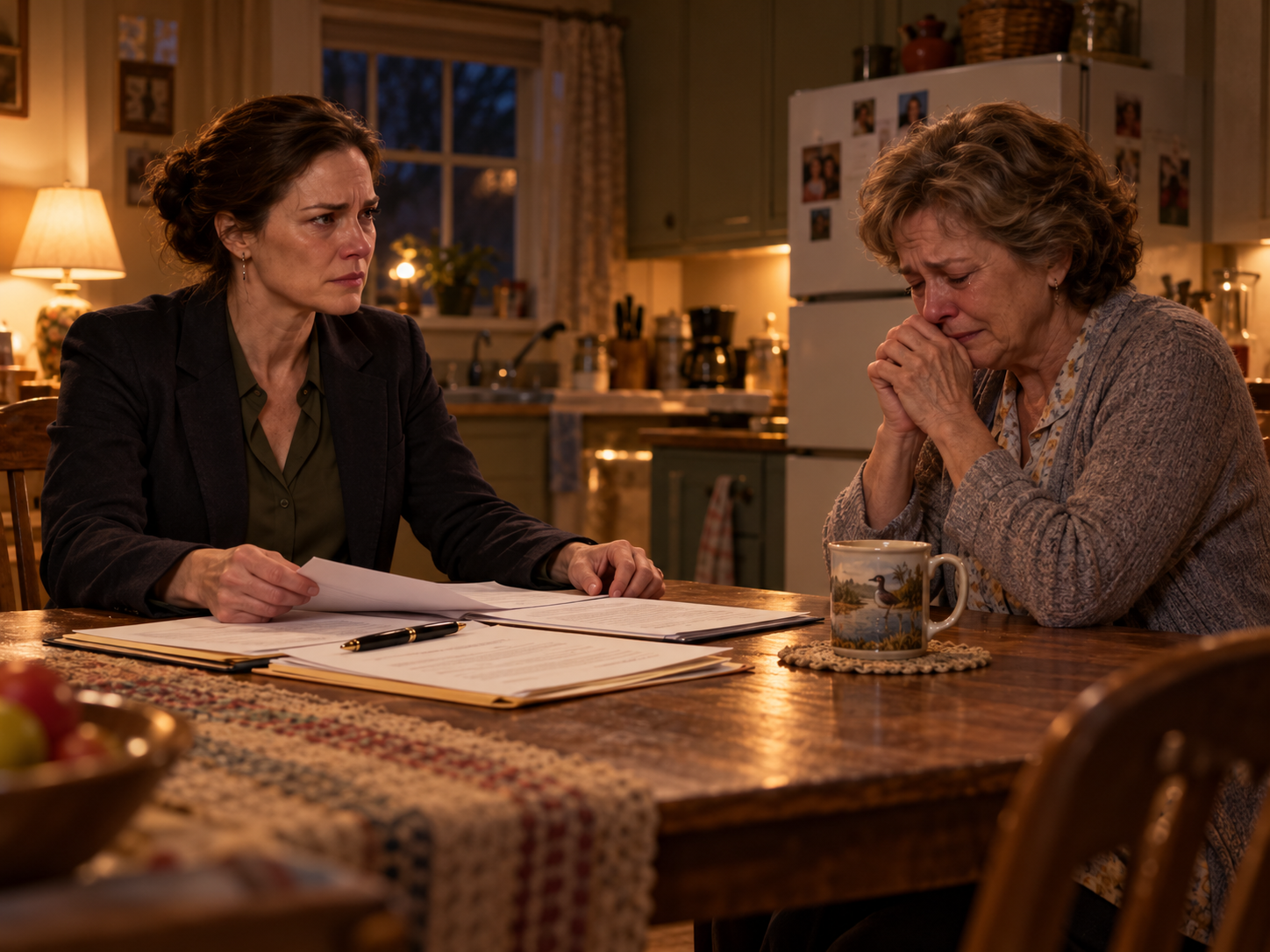
I set my keys on the table.
“I didn’t ask if you signed it.”
“I need you to know that.”
“Did you know Wade filed a deed?”
Her eyes filled.
“Yes.”
The word nearly took my legs out from under me.
I pulled out a chair.
“When?”
“After he did it.”
“How long after?”
“A few weeks.”
“And you didn’t tell me.”
“He said it was temporary.”
I laughed once.
A short, empty sound.
“A temporary transfer of real estate?”
“He said he needed the house on paper so he could qualify for a business loan.”
“With a forged deed.”
“I didn’t know it was forged then.”
“Mom, I was in Poland.”
“I know.”
“So how did you think I signed it?”
She looked down.
That was the answer.
She knew.
Maybe not every detail.
But enough.
“Did you help him?”
“No.”
“Did you give him my documents?”
Her silence stretched.
“You already know I did.”
“Did you give him a sample of my signature?”
“No.”
“Anything I had signed?”
She looked toward a kitchen drawer.
I followed her eyes.
Inside were old birthday cards.
Checks.
Notes.
Years of my handwriting.
My stomach turned.
I sat down opposite her.
“Why?”
She began crying.
I had seen Mom cry at Dad’s funeral.
At her sister’s funeral.
When her old Labrador died.
But rarely because of something she had done.
“Wade came to me and said he had a chance to start a hauling company,” she said. “He said if he could get financing, he could finally get back on his feet.”
“So you gave him my documents.”
“I thought you would help him.”
“Then why didn’t you ask me?”
“You would have said no.”
The honesty of that answer hurt more than another lie.
“Exactly.”
She covered her face.
“I thought once the business started, he’d fix everything.”
“He forged a deed.”
“I know.”
“He opened credit in my name.”
“I know.”
“He tried to borrow against my property.”
“I know.”
“And when I discovered the first account, you told me not to call police.”
Her shoulders shook.
“I was trying to keep this family together.”
“No.”
I stood.
“You were trying to keep Wade from consequences.”
She looked up.
“There’s a difference.”
“I’m your mother.”
“And I’m your daughter.”
I pressed both hands against the table.
“When did keeping the family together ever include protecting me?”
She stared at me.
I saw the moment the question reached somewhere deeper than anger.
She whispered, “You never needed protecting.”
I sat down again.
“Every child needs their mother sometimes.”
“I didn’t mean—”
“Yes, you did.”
My voice was quieter now.
“You thought because I was responsible, you could ask more of me. Because Wade struggled, you gave him more. Because I survived everything, you assumed I could survive one more thing.”
Tears slid down her cheeks.
“He reminded me of your father.”
“No.”
Mom looked startled.
“Dad struggled sometimes,” I said. “Dad made mistakes. But Dad didn’t steal from me.”
She looked at the mug.
“I was scared Wade would leave.”
“And you weren’t scared I would?”
That question broke something.
She began sobbing.
Not elegantly.
Not quietly.
For years, I had imagined an apology as something clean.
A sentence.
I was wrong.
I’m sorry.
Please forgive me.
Real regret looked uglier.
It shook.
It struggled to speak.
“I knew you would come back,” she said through tears.
I almost didn’t understand.
“What?”
“You always came back.”
Mother’s Day.
Christmas.
Hospital visits.
Roof repairs.
Funerals.
Emergencies.
I had come back from Germany.
Kuwait.
South Korea.
Poland.
Fort Hood.
Fort Campbell.
No matter what happened, Lorraine came back.
“I thought…”
She wiped her face.
“I thought I could be angry and you would still come back.”
I looked at her for a long time.
“That isn’t love, Mom.”
She nodded.
“I know.”
“No. It’s certainty without care.”
She cried harder.
For the first time in my life, I didn’t move around the table to comfort her.
That mattered.
Not because I wanted her to suffer.
Because I finally understood that another person’s pain was not always mine to fix.
When she became calm enough to speak, I placed the occupancy agreement on the table.
“What is this?”
“The new rules.”
Her eyes moved down the page.
“You’re charging me rent?”
“No. I’m not.”
“Utilities?”
“Yes.”
“I can’t afford all of this.”
“You get Social Security. You have Dad’s survivor benefit. You’ve also been receiving eight hundred dollars a month from me.”
Her eyes lifted.
“That stopped.”
“Yes.”
Fear crossed her face.
“What am I supposed to do?”
“Budget.”
She stared.
It sounded cruel because I had never asked it of her before.
But it wasn’t cruel.
It was adult.
“You can stay here,” I continued. “I’ll continue taxes, homeowner’s insurance, and major structural repairs because the property is mine. You cover your living expenses.”
“And Wade?”
“He leaves.”
“He has nowhere to go.”
“He’s forty-four.”
“He’s your brother.”
“That isn’t housing policy.”
Despite everything, Mom almost smiled.
It disappeared quickly.
“What if I refuse?”
I hated the next sentence.
But I said it anyway.
“Then Rachel begins formal termination of occupancy.”
“You’d evict your own mother?”
“I’m giving you a choice that includes staying.”
Her eyes filled again.
“Under your rules.”
“Under boundaries.”
“They sound like the same thing.”
“They feel the same when you’re used to having none.”
She looked at the agreement for several minutes.
Then signed.
Not happily.
But she signed.
Wade did not.
When he learned the forged deed had been discovered, he disappeared for two days.
On the third, investigators found him at a motel outside Dayton.
The financial-crimes detective called me afterward.
Wade had admitted filing the deed.
Not immediately.
But enough evidence existed.
The fake notarization.
Electronic records.
A scanned signature lifted from an old insurance form.
A loan broker who remembered him.
And Mom’s statement.
That last part surprised me.
“You gave a statement?” I asked her on the phone.
A long pause.
“Yes.”
“Why?”
“Because you were right.”
I didn’t know what to say.
She continued.
“I kept thinking I was protecting my son.”
Her voice trembled.
“But I was helping him become someone who could do worse things.”
That was the first time she had said it without an excuse afterward.
Wade was charged with identity fraud, forgery-related offenses, and attempted financial fraud connected to the property filing.
The prosecutors did not treat him like a criminal mastermind.
He wasn’t one.
He was a forty-four-year-old man who had spent decades learning that someone else would soften the landing.
Until nobody did.
He called me from county jail.
I almost declined.
Then I answered.
“Lorraine.”
His voice sounded different.
No beer.
No swagger.
No audience.
“Wade.”
“Mom gave them a statement.”
“Yes.”
“She turned on me.”
“No.”
I looked out the window of my quarters.
“She stopped lying for you.”
“You did this to her.”
I nearly hung up.
Then he said, “I hate you.”
I closed my eyes.
“That’s okay.”
He went silent.
Maybe he expected me to fight.
“I don’t hate you,” I said.
“Bullshit.”
“I’m angry with you. I don’t trust you. I may not trust you for a very long time. But I don’t hate you.”
“Then drop the charges.”
“I can’t control the prosecutor.”
“You can tell them you don’t want this.”
“I won’t.”
“So much for family.”
I breathed slowly.
“Family should have been the reason you didn’t do it.”
He hung up.
For weeks, everything got worse before anything got better.
That’s the part people leave out when they tell stories about boundaries.
They make it sound triumphant.
You say no.
You walk away.
Music rises.
Credits roll.
Reality is quieter.
Mom called because she couldn’t figure out online bill pay.
I talked her through it once.
The second time, she figured it out herself.
Her cable was disconnected because she forgot the due date.
I did not call and fix it.
She paid the reconnection fee.
Wade’s belongings were boxed after the thirty-day deadline.
Rachel arranged for a third party to supervise collection.
Mom cried while he loaded his clothes into a borrowed truck.
I stayed in Kentucky.
That was the hardest part.
Not rescuing people can feel cruel when rescuing them has been your identity.
At work, I became quieter.
One afternoon, my command sergeant major, Elena Ruiz, entered my office carrying two coffees.
She placed one down.
“You look like hell, ma’am.”
“Thank you, Sergeant Major.”
“Respectfully.”
“Of course.”
She sat.
Ruiz had served with me long enough to know when not to ask permission.
I told her more than I intended.
Not every detail.
Enough.
When I finished, she said, “My mother used to call me the strong one.”
I looked up.
“She meant it as a compliment.”
“So did mine.”
Ruiz nodded.
“Funny how often ‘the strong one’ becomes shorthand for ‘the one we don’t have to take care of.’”
That sentence followed me for months.
The court eventually voided the fraudulent deed.
My name remained sole titleholder.
The credit-card company removed the account from my credit history.
The attempted loan was formally recorded as fraudulent.
The legal process against Wade continued.
Then, in October, I received a letter.
Not a text.
Not a phone call.
A letter.
The return address was a residential treatment and employment program in Columbus where Wade had been released pending final disposition.
I left it unopened for three days.
When I finally read it, the first line was:
I keep wanting to explain why I did it, but every explanation sounds like an excuse.
I kept reading.
He wrote about debt.
Gambling.
Pride.
Feeling like a failure next to me.
Resenting every uniform photo Mom displayed to relatives while simultaneously living off money I sent.
He admitted something I had never known.
Dad had once told him, during one of their last arguments before Dad died:
“You keep waiting for Lorraine to carry what belongs to you.”
Wade wrote:
I hated him for saying it. Then he died, and you carried everything anyway. So I decided Dad had been wrong. I thought if you kept saving us, that meant we were entitled to be saved.
Near the end, he wrote:
I am not asking you to forgive me. I am paying back the credit card through the restitution plan. It will take years. I know that. I just want there to be one thing in my life that I finish without you finishing it for me.
I sat at my desk for a long time.
Then I folded the letter.
I didn’t call him.
Not yet.
But I didn’t throw it away either.
Two weeks later, Mom called.
“I found something of your father’s.”
“What?”
“A letter.”
My heart shifted.
“For me?”
“I think so.”
“Why do you think so?”
“Because your name is on it.”
I drove to Ohio that Saturday.
The house looked different.
Not physically.
The same white siding.
Same maple tree.
Same porch.
But Wade’s truck was gone.
His tools were gone.
His boots weren’t beside the door.
Mom opened it wearing jeans and a cardigan.
No accusation.
No emergency.
She handed me a yellow envelope.
Dad’s handwriting crossed the front.
Rainy.
The nickname almost undid me.
“Where was it?”
“Behind the bottom drawer in his desk.”
I sat at the kitchen table.
The same place where Wade had signed his admission months earlier.
I opened it.
Dad had written the letter shortly after his cancer diagnosis.
He wrote about being proud of me.
About how Mom worried more about Wade because Wade seemed lost.
Then came a paragraph that made me stop.
I worry your mother and I have made a mistake with you. We are so proud of how capable you are that we forget capable people get tired. We ask because you say yes. Wade asks because he expects yes. Those are not the same thing. Don’t spend your life proving you love us by carrying things we should carry ourselves.
I read it twice.
Then pressed the page against my mouth.
Mom sat opposite me.
“I’m sorry,” she whispered.
This time, there was no but.
No Wade.
No anger.
No explanation.
Just:
“I’m sorry.”
I cried.
So did she.
But forgiveness did not arrive like a flood.
It arrived like a door unlocking.
Not opening.
Just unlocking.
For now, that was enough.
PART 5 — WHAT FAMILY IS FOR
A year after the Mother’s Day police call, I drove north again.
Same highway.
Same five hours.
Different woman behind the wheel.
My SUV had been professionally cleaned months earlier.
No cigarette smell.
No wrappers.
No reminder except for the odometer.
I used to resent those nine thousand miles.
Now they felt like tuition.
Expensive lessons often do.
The Beaver Creek house came into view just after noon.
Mom was already outside.
She had planted lilacs beside the porch.
I noticed that immediately.
“You’re early,” she said.
“Army habit.”
“You always say that.”
“Because it remains true.”
She smiled.
Our relationship had changed.
That is different from saying it was healed.
Healing suggests returning to what existed before.
I didn’t want that.
We built something new.
Mom paid her own utilities now.
She complained about electric rates.
I listened sympathetically.
I did not offer money.
She switched to a cheaper phone plan.
Canceled premium cable.
Started volunteering three mornings a week at a food pantry.
Eventually, she took a part-time job at a garden center during spring.
The first time she called to tell me she had bought a new microwave with money she saved herself, I had to sit down afterward.
She sounded proud.
I realized I had denied her something all those years too.
Competence.
I had thought helping meant preventing discomfort.
Sometimes helping means letting people discover they can survive discomfort.
Inside the house, the dining table was set for three.
I stopped in the doorway.
“Three?”
Mom nodded.
“If you’re okay with it.”
I already knew.
Wade.
My shoulders tightened automatically.
“He’s coming?”
“For lunch.”
“Why didn’t you tell me?”
“Because I was afraid you wouldn’t come.”
I looked at her.
She immediately shook her head.
“No. That was wrong.”
Then she corrected herself.
“I should have told you. You deserved the choice.”
That small sentence told me more than any apology.
She was learning.
“When?”
“Half an hour.”
I considered leaving.
I had every right.
Instead, I placed the pie I had brought on the counter.
“Half an hour.”
Mom exhaled.
Wade arrived twenty-seven minutes later.
For a second, when I saw him through the window, I barely recognized him.
He had lost weight.
His beard was trimmed.
He wore work boots and a dark gray shirt with a small embroidered logo from a commercial HVAC company.
No beer.
No swagger.
He entered quietly.
“Lorraine.”
“Wade.”
Mom hovered.
I looked at her.
“You don’t have to referee.”
She nodded and went into the kitchen.
Wade sat across from me.
For several seconds, neither of us spoke.
Then he placed an envelope on the table.
“What’s this?”
“Restitution statement.”
“I already get notices from the court.”
“I know.”
He pushed it toward me.
“I’m eleven months current.”
I looked at the page.
He was.
Every payment.
Not large.
But consistent.
“I have about thirty-two months left on the card balance.”
“Good.”
“And the legal fees they ordered.”
“I know.”
He rubbed his palms against his jeans.
“I got promoted.”
I glanced at the company logo.
“To what?”
“Crew lead.”
“Congratulations.”
“Thanks.”
Silence again.
Then he looked at me.
“I was jealous of you.”
“I know.”
“No.”
His jaw tightened.
“I don’t think you do.”
I waited.
“Everybody talked about Lorraine.”
His voice carried no accusation now.
“Lorraine got into college. Lorraine got commissioned. Lorraine went overseas. Lorraine got promoted.”
“You thought Mom favored me?”
“No.”
He gave a sad laugh.
“She favored me. That was almost worse.”
I frowned.
“She expected nothing from me.”
That silenced me.
“She worried about me. Excused me. Gave me money when she had it. Asked you when she didn’t. And every time I screwed up, she acted like it was because I was struggling.”
He looked toward the kitchen.
“After a while, struggling became the only thing I was good at.”
I thought of all the years I had envied his place in Mom’s heart.
Maybe favoritism had damaged us both differently.
That didn’t excuse him.
Understanding is not absolution.
“I still chose to steal from you,” he said.
“Yes.”
He nodded.
“I forged your signature.”
“Yes.”
“I was going to borrow against the house.”
“Yes.”
“I could have wrecked your credit.”
“Yes.”
His eyes reddened.
“I’m sorry.”
I looked at him.
“What do you want me to say?”
“Nothing.”
“Do you want forgiveness?”
“Eventually.”
He swallowed.
“But I know wanting it doesn’t mean I get it.”
For years, Wade had demanded everything immediately.
Money.
Rescue.
Trust.
That sentence felt more significant than the apology.
I nodded.
“I don’t trust you.”
“I know.”
“You’re not getting a key to this house.”
He almost smiled.
“I know.”
“You will never have access to my financial information again.”
“Definitely know.”
“And if Mom asks me to cover something for you—”
“She won’t.”
From the kitchen Mom called, “I can hear you.”
For the first time in a long time, the three of us laughed.
It surprised all of us.
Lunch was awkward.
Then less awkward.
Mom served ham.
Of course she did.
At one point I realized it was nearly a year to the day since the dinner that had blown our family apart.
I looked at the folded napkin beside my plate.
Mom noticed.
Her smile faded.
“I think about what I said every day.”
I looked at her.
“You don’t have to.”
“I do.”
“No.”
I shook my head.
“You need to remember it. You don’t need to punish yourself every day.”
Her eyes filled.
“You came anyway.”
“Today?”
“No.”
Her voice broke.
“For seventeen years.”
I understood.
I reached across the table.
She took my hand.
“I shouldn’t have made you prove you were my daughter by paying for us.”
“No.”
“And I shouldn’t have used Wade’s problems as an excuse to neglect yours.”
“No.”
“I love you.”
There had been a time when those words would have fixed everything for me.
Now I knew love was not the same as access.
Love was not ownership.
Love was not obligation without limit.
But it still mattered.
“I love you too.”
Wade looked down at his plate.
I reached my other hand toward him.
He stared at it.
“Don’t make this weird,” I said.
He laughed.
Then took it.
We sat there for maybe five seconds.
Three imperfect people around a table where so much damage had happened.
Nobody magically repaired.
Nobody absolved.
But nobody pretending either.
That was better.
Later, Wade left first.
Before climbing into his truck, he turned back.
“Hey, Lorraine?”
“Yeah?”
“I bought it myself.”
I looked at the truck.
An aging white Ford with a dented rear bumper.
I smiled.
“Good.”
He grinned.
“Payment’s terrible.”
“Welcome to adulthood.”
He laughed and drove away.
Mom and I sat on the porch.
The lilacs moved gently in the afternoon wind.
After a while, she said, “Do you remember that night?”
“I remember most of it.”
“Three police cars.”
“Technically, one came later.”
She gave me a look.
“Very funny.”
“I try.”
She hesitated.
“I really thought it was my car.”
“I know.”
“I know how ridiculous that sounds.”
“Now?”
“Yes.”
“Back then?”
“No.”
She rubbed her hands together.
“I think I had started believing that anything you brought into this family became ours.”
“That’s exactly what I thought.”
“I was wrong.”
“Yes.”
She looked at me.
“You could occasionally make this easier.”
I smiled.
“I’ve spent seventeen years making things easier.”
She laughed.
“Fair.”
The next morning, before driving back to Kentucky, I stopped at Dad’s grave.
I hadn’t planned to stay long.
I ended up sitting on the grass beside the stone for almost an hour.
I told him things.
Not because I thought he could hear.
Because there are some conversations grief never lets you finish.
I told him Wade had a job.
Mom was paying her own electric bill.
The house was secure.
My credit was clean.
I had recently been selected for colonel.
I saved that one for last.
“You would’ve liked the ceremony,” I said.
Wind moved through the trees.
I smiled.
“And no, I’m not buying anybody a car.”
On my drive back to Fort Campbell, I thought about Dad’s letter.
Don’t spend your life proving you love us by carrying things we should carry ourselves.
For years, I thought strength meant carrying more.
More pressure.
More responsibility.
More people.
The Army had taught me something different, though it took me eighteen years to apply it at home.
Good leaders do not do everyone else’s job.
They build people capable of carrying their own.
Sometimes that means helping.
Sometimes that means teaching.
Sometimes it means standing beside someone while they struggle.
And sometimes it means refusing to pick up what they keep throwing at your feet.
Three months later, I stood on a parade field beneath a hard Kentucky sun while an eagle was pinned to my uniform.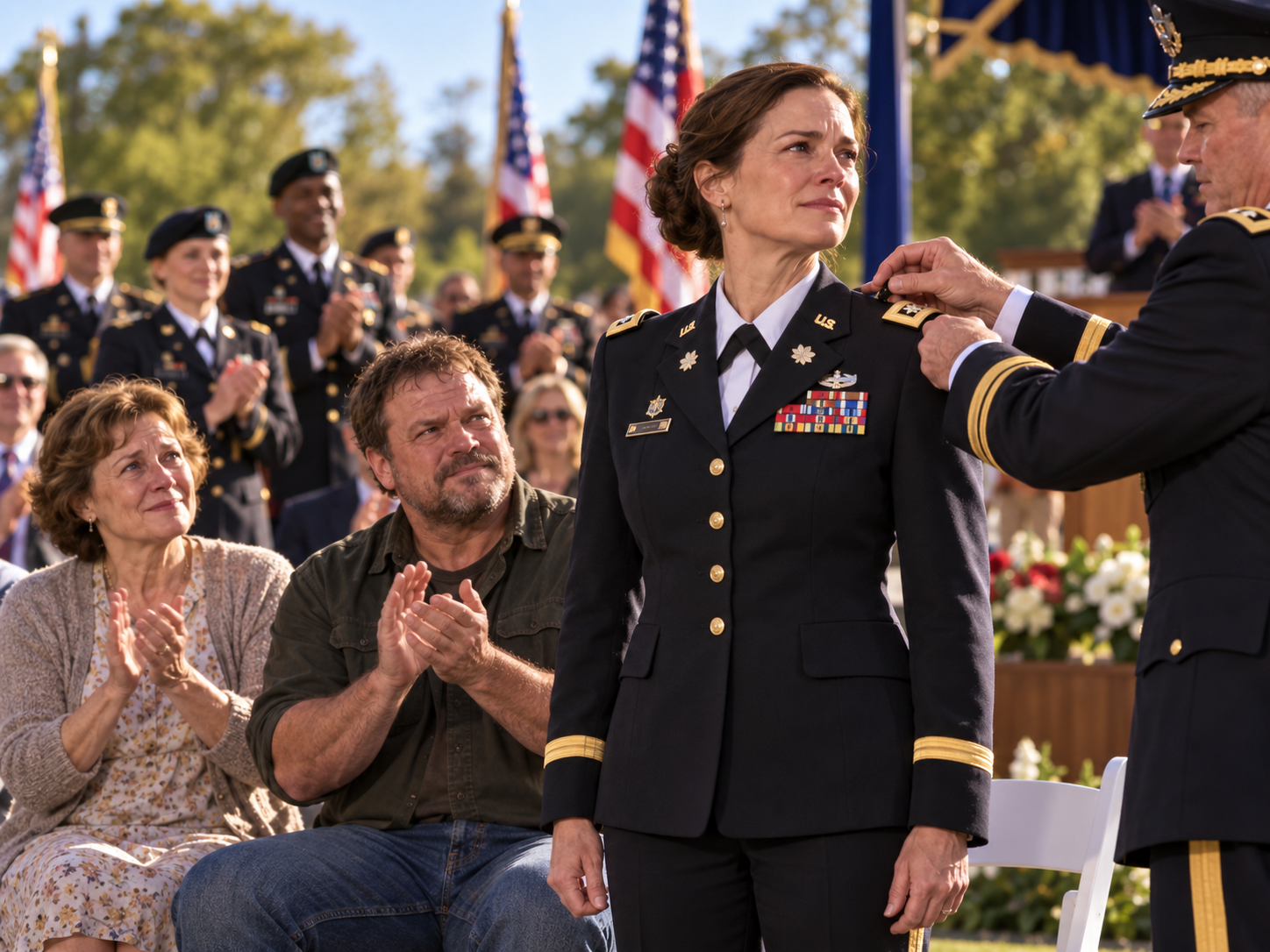
Colonel Lorraine Mercer.
Mom sat in the front row.
Wade sat beside her.
They had driven down together.
I had not paid for the gas.
That mattered more than anyone else would understand.
After the ceremony, soldiers and families moved across the field.
Mom hugged me.
Then stepped back.
“I’m proud of you.”
I smiled.
“Thank you.”
No reference to sacrifice.
No joke about me being too important.
No request for money.
Just pride.
Wade waited until she walked away.
Then handed me a small box.
Inside was Dad’s old wristwatch.
I looked up.
“I thought Mom had this.”
“She gave it to me after he died.”
“Why?”
“Because I asked.”
He shrugged.
“Of course.”
He looked embarrassed.
“I had it repaired.”
I turned the watch over.
On the back was a new engraving.
Three words.
CARRY YOUR OWN.
My throat closed.
“You remembered?”
“Dad said it all the time.”
“He did.”
Wade shoved his hands into his pockets.
“I figured you should have it.”
I fastened the watch around my wrist.
“Thank you.”
He nodded.
Then, awkwardly:
“Colonel.”
“Don’t start.”
He laughed.
That evening, Mom, Wade, Sergeant Major Ruiz, and several friends joined me for dinner.
When the check came, Mom reached for her purse.
“I’m paying for mine.”
Wade pulled out his wallet.
“Mine too.”
I looked at both of them.
For seventeen years, I would have grabbed the bill before anyone else could touch it.
Automatically.
Almost anxiously.
Providing had become reflex.
This time, I left it on the table.
Ruiz noticed.
She smiled into her water glass.
Nobody made a speech.
Nobody needed to.
A waiter divided the check three ways.
Mom complained about the price of iced tea.
Wade told her she sounded eighty.
She threatened to hit him with her purse.
I laughed harder than the joke deserved.
Because ordinary felt extraordinary now.
Months later, on Mother’s Day, I returned to Beaver Creek.
Not because I felt obligated.
Because I wanted to.
I brought lilacs.
Not a mortgage payment.
Not a check.
Not a replacement appliance.
Flowers.
Mom opened the door.
She hugged me.
Then she looked over my shoulder toward the driveway.
“That SUV still running?”
“Perfectly.”
She smiled.
“Good.”
A beat passed.
Then she added, “Not that I’m asking to borrow it.”
We both laughed.
Over lunch, Wade arrived carrying dessert he had bought with his own money.
Nobody fought.
Nobody asked for a rescue.
Nobody mentioned who owed whom.
At one point, Mom reached across the table.
“Do you remember what you told me last Mother’s Day?”
I knew immediately.
Then pretend you never had one.
“Yes.”
“I’m glad I couldn’t.”
Her voice was soft.
“So am I.”
She squeezed my hand.
I looked around the room.
At Mom.
At Wade.
At Dad’s old mug sitting on a shelf.
At the house I still owned but no longer used as leverage or proof of love.
For most of my adult life, I had misunderstood one sentence.
That’s what family is for.
I thought it meant you paid.
Fixed.
Rescued.
Forgave before anyone apologized.
Carried everyone because you were the strongest one in the room.
I was wrong.
Family should be where help is given without entitlement.
Where love does not erase accountability.
Where forgiveness does not require forgetting.
Where the strongest person is still allowed to be tired.
And where saying no does not mean you stopped loving someone.
Sometimes it means you finally loved them enough to stop helping them destroy themselves.
My mother once told me she wished I had never been her daughter.
A year later, she stood beside me on the porch as I prepared to drive home.
She touched the colonel insignia on my shoulder gently.
Then said, “I spent too many years being proud of what you could do for us.”
I looked at her.
She smiled through tears.
“I should have been proud of you just because you were you.”
I couldn’t answer immediately.
So I hugged her.
Not because everything had been forgotten.
It hadn’t.
Not because everything had been forgiven.
Some parts were still getting there.
I hugged her because we had finally learned something none of us understood before.
A family can survive boundaries.
A family can survive consequences.
A family can even survive the truth.
What it cannot survive forever is one person carrying everyone else.
I climbed into my SUV.
My SUV.
Mom stood on the porch and waved.
Wade lifted one hand from beside his dented truck.
I started the engine.
Dad’s watch rested against my wrist.
CARRY YOUR OWN.
For the first time in seventeen years, everybody was.
And somehow, instead of pulling us apart, that was the thing that finally brought us home.