LUCY LETBY CASE ERUPTS AGAIN: NEW EVIDENCE PUTS BRITAIN’S MOST CONTROVERSIAL NURSE CONVICTION UNDER FRESH SCRUTINY
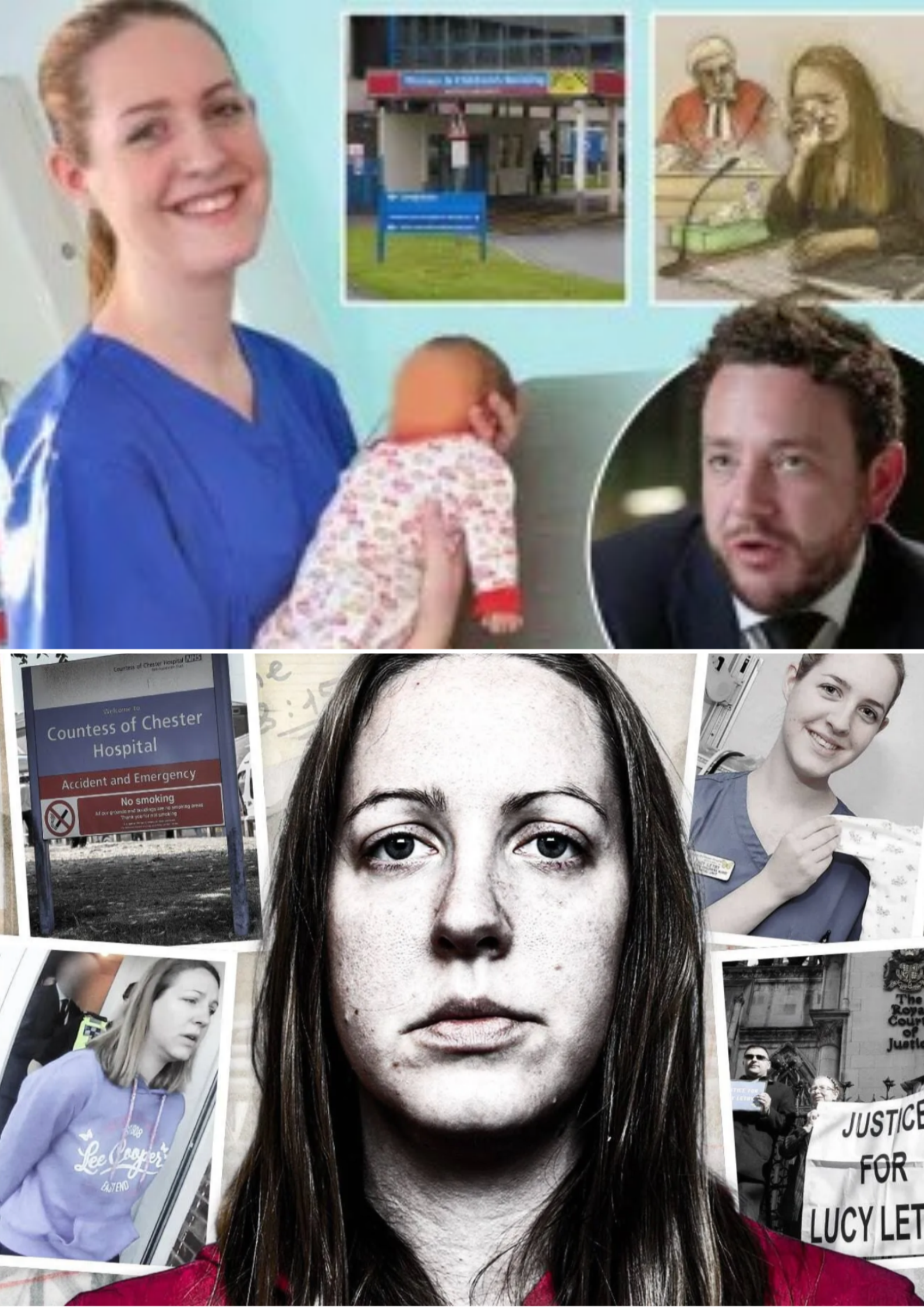
LUCY LETBY CASE ERUPTS AGAIN: NEW EVIDENCE PUTS BRITAIN’S MOST CONTROVERSIAL NURSE CONVICTION UNDER FRESH SCRUTINY
New medical, statistical and disclosure questions are now being examined as Lucy Letby’s legal team seeks another review of her convictions.
Lucy Letby remains behind bars, serving 15 whole-life sentences after being convicted of murdering seven babies and attempting to murder seven others at the Countess of Chester Hospital.
But the legal battle surrounding her case is far from over.
New challenges to the evidence have intensified in 2026, with medical experts, statisticians, former police investigators and politicians raising questions about how the original investigation was conducted — while the Criminal Cases Review Commission continues to examine Letby’s application.
 THE STATISTICAL EVIDENCE IS BACK UNDER THE SPOTLIGHT
One of the most controversial aspects of the case has been the way patterns in the neonatal unit were interpreted.
Critics of the prosecution argue that the concentration of deaths and collapses around Letby’s shifts was treated as powerful evidence without sufficiently accounting for other possible explanations, including staffing patterns, the condition of the babies and the hospital’s wider clinical problems.
Sir David Davis has publicly criticised aspects of the investigation, saying police failed to appoint appropriate medical and statistical experts and that important alternative lines of inquiry were not properly pursued.
His intervention was based partly on reviews by former senior police investigators who later questioned aspects of the original case.
THEN CAME THE DISCLOSURE QUESTIONS
In July 2026, BBC investigators reported that maternity notes belonging to babies involved in the case had been seized by Cheshire Police.
The documents contained information about the mothers’ pregnancies, labour and births.
According to the BBC, those records were not reviewed by the prosecution’s chief medical expert and were not disclosed to Letby’s defence before the trial.
That discovery has added another layer to the continuing debate over whether all potentially relevant medical information was properly considered.
 EXPERTS HAVE CHALLENGED THE ORIGINAL MEDICAL INTERPRETATION
A group of international medical experts has also questioned aspects of the prosecution’s medical evidence.
Canadian neonatologist Dr Shoo Lee and other specialists have argued that some of the babies’ collapses and deaths could have alternative medical explanations, including natural causes or inadequate medical care.
The claims have become part of the material being examined in connection with Letby’s attempt to reopen her case.
But there is an important complication.
In September 2026, two experts who had been involved with Letby’s defence team withdrew over concerns that some arguments being advanced were inconsistent with available evidence, established science and physiology.
That means the scientific debate surrounding the case remains highly contested.
THE CCRC IS STILL REVIEWING THE CASE
The Criminal Cases Review Commission confirmed in February 2026 that its review of Letby’s convictions was ongoing.
The commission said it had received multiple expert reports and further submissions, including additional material as recently as January 2026.
It also stressed that the CCRC does not decide whether someone is guilty or innocent. Its role is to determine whether new evidence or arguments create a real possibility that a conviction would not be upheld and, if appropriate, refer the case back to an appeal court.
So far, there has been no official decision overturning Lucy Letby’s convictions.
AND THE CONTROVERSY ISN’T GOING AWAY
The case has now developed into a fierce dispute over medicine, statistics, police procedure and disclosure of evidence.
At the same time, the Thirlwall Inquiry has identified serious failures at the Countess of Chester Hospital, including missed opportunities to respond to concerns raised by doctors. The inquiry’s findings have further intensified questions about what was happening inside the neonatal unit during the period covered by the convictions.
For Letby, however, the legal position remains unchanged for now.
She remains convicted.
Her appeal has not been overturned.
And the CCRC has not yet announced whether her case will be sent back to the Court of Appeal.
What happens next could depend on whether the new medical, statistical and disclosure arguments are ultimately considered strong enough to create a genuine possibility that the convictions cannot safely stand.
The evidence is being challenged. The case is being reviewed. But the verdict has not yet been overturned.